Best Bedroom Gadgets for Light Sensitive Sleepers Who Wake Early: 12 Blackout Picks for Darker Mornings
As an Amazon Associate, we earn from qualifying purchases made through links on this page, at no extra cost to you. This helps support our work and keeps our guides free to read.
A quick note on prices: prices change often, so we never quote a fixed price here. Please check the latest price on Amazon before you buy, using the yellow buttons in this guide. The product pictures in this article are original illustrations created for this guide, not manufacturer photos.
Introduction
If you are looking for the best bedroom gadgets for light sensitive sleepers who wake early, you already know the pattern by heart: a thin line of daylight slips round the edge of the curtain at half past five, it registers behind your closed eyelids, and that is the day started — two hours before the alarm, with no realistic hope of drifting off again. For a light sensitive sleeper, dawn is not a gentle wake-up. It is an intruder that arrives earlier every week from spring onwards.
This guide rounds up twelve bedroom blackout solutions built around one goal: a room that stays properly, completely dark until the moment you choose otherwise. The heart of the list is the gadgets to block light while sleeping at every point it sneaks in — a contoured mask that blacks out the world at your eyes, blinds and films that seal the window itself, a strip that closes the bright gap under the door, and tiny stickers that extinguish the standby lights glowing across the room. Light is persistent stuff; it only takes one gap.
Every pick here was chosen against the real test of any blackout sleep mask or blackout blind: not how dark the fabric looks in a product photo, but how little light reaches your pillow at 6 a.m. on a bright morning. Edges matter more than materials, and honest fitting matters more than either — a superb curtain hung with a glowing halo round its frame is just expensive decor. If you have ever lain there cataloguing every leak — the gap at the top of the blind, the crack under the door, the charger light blinking by the wall — this list works through them one by one, in the order most sleepers should fix them.
We have been honest about the trade-offs, too. A mask is personal blackout you have to be willing to wear, total blackout film turns a window into a wall, and a genuinely dark room also removes the natural dawn cue your body uses to surface — which is why the final section talks about pairing all this darkness with an alarm you trust. Read the pros and cons, fix the biggest leak first, and your mornings start when you say they start.
How We Chose
We chose these twelve products by one test: does this gadget remove light, rather than merely dim it or move it somewhere else? A pick earned its place if it closes a real leak — at the eyes, at the window, around the door, or from the small electronics that glow all night — and keeps it closed at the brightest hour of the morning. Anything that leaked at every edge in practice was left out.
We also favoured renter-friendly designs: suction cups, magnets, static cling and tension fittings over screws wherever the product type allows, because most light sensitive sleepers cannot rebuild a window frame to solve a dawn problem. Nothing here carries a medical promise — these are light-management tools, not treatments. Finally, we spread the picks across the layers of the room, from the mask you wear to the blind you motorise, so the list reads as a complete plan for learning how to make a bedroom completely dark, one leak at a time.
Quick List
- Contoured Blackout Sleep Mask — personal blackout that works whatever the window is doing.
- Portable Blackout Blinds with Suction Cups — stick-on blackout for any window, at home or away.
- Blackout Curtain Panels — the classic full-window treatment, in colours that suit the room.
- Smart Motorised Blackout Blinds — sealed, scheduled darkness that opens itself at your wake time.
- Blackout Window Film — total blackout cut to fit the glass exactly, edges and all.
- Magnetic Blackout Curtain Kit — a blackout panel that seals on with magnets and comes off in seconds.
- Light Blocking Door Seal Strip — closes the bright line under the bedroom door.
- Bluetooth Sleep Mask with Headphones — blackout for your eyes and private audio for your ears, in one band.
- No-Drill Blackout Roller Blind — a tidy recess-fit blind with no screws and no landlord drama.
- Automatic Curtain Opener Motor — makes your existing curtains close fully, on a schedule.
- LED Light Blocking Stickers — tiny stickers that extinguish standby lights and charger glows.
- Red Amber Motion Sensor Night Light — safe light for night-time trips, in colours that will not fully wake you.
1. Contoured Blackout Sleep Mask

A Contoured Blackout Sleep Mask is the fastest, cheapest and most reliable darkness in this entire guide, because it blacks out the light at the last possible point: your eyes. The contoured design moulds two raised cups over your eye sockets instead of pressing a flat band against your lids, so you can blink freely, your lashes never brush the fabric, and the seal around the nose and cheeks does the actual light-blocking work. Whatever the window, the curtains or the season are doing, a well-fitted mask travels with you.
Fit is the whole game with any blackout sleep mask. Look for a deep nose bridge cut or an adjustable nose flap — the gap beside the nose is where most masks leak — and a wide, fully adjustable strap that stays put without squeezing. Side sleepers should check the strap sits above the ear rather than across it. This is also the one pick here that works in hotels, on planes and in spare rooms, which makes it the natural first purchase: buy the mask today, and the window treatments further down this list can follow when you are ready.
Pros
- 👍 Complete darkness at the eyes, whatever the window is doing.
- 👍 Contoured cups mean no pressure on eyelids or lashes.
- 👍 Works at home, in hotels and on planes — total portability.
- 👍 The cheapest effective blackout you can buy.
Cons
- 👎 Some sleepers simply dislike wearing anything on their face.
- 👎 A poor nose fit lets a sliver of light in at the bridge.
- 👎 Straps can tangle hair or slip on very smooth pillowcases.
Best for: every light sensitive sleeper — and the essential first buy before any window treatment.
Check Price And User Reviews on Amazon
2. Portable Blackout Blinds with Suction Cups

Portable Blackout Blinds with Suction Cups are a sheet of blackout fabric edged with suction cups that sticks directly to the window glass, covering it edge to edge with no frame, no rod and no fixings. Because the fabric sits on the glass itself, it kills the halo of light that leaks around ordinary blinds and curtains — the exact leak that wakes light sensitive sleepers. Cut it generously, press it on at night, peel it off in the morning if you want your daylight back.
This is the pick shift workers swear by: daytime sleepers need the same total darkness at noon that the rest of us want at dawn, and our guide to gadgets for people who work night shifts treats a stick-on blackout layer as non-negotiable equipment. The honest limits are the suction cups themselves — they grip best on clean, smooth glass, lose enthusiasm on textured panes, and want an occasional re-press. Overlap the fabric well past the glass edges, and you get one of the darkest, cheapest window fixes on this list.
Pros
- 👍 Sits on the glass, so it seals the edges other blinds leak from.
- 👍 No tools, no drilling, nothing permanent — renter friendly.
- 👍 Packs into a bag for travel, hotels and spare rooms.
- 👍 Can be layered behind existing curtains for double blackout.
Cons
- 👎 Suction cups need clean, smooth glass to hold well.
- 👎 Cups may need re-pressing every few days.
- 👎 Cut it too small and the edges leak — measure generously.
Best for: renters, night-shift sleepers and travellers who need real blackout anywhere.
Check Price And User Reviews on Amazon
3. Blackout Curtain Panels

Blackout Curtain Panels are the traditional answer and still the backbone of most dark bedrooms: heavy, tightly woven panels with a blackout lining that hang across the whole window and frame. Done properly — wide enough to gather well past the glass on both sides, long enough to brush the floor or the sill, and hung close to the wall — blackout curtains for bedroom windows block the great majority of morning light while also softening street noise and cutting drafts.
The honest catch is that curtains fail at their edges, not in their middle. Light pours over the top of the rod, slips down the sides, and meets in a glowing line where the two panels close. Experienced dark-sleepers fix this with a wrap-around rod that returns the fabric to the wall, a pelmet over the top, and panels wide enough to overlap in the centre. Get those details right and curtains do something no film or blind can: they make the room feel like a bedroom rather than a bunker, in colours that match the rest of it.
Pros
- 👍 Covers the whole window and frame in one treatment.
- 👍 Also softens outside noise and blocks drafts.
- 👍 Huge choice of colours and fabrics to suit the room.
- 👍 Machine washable panels on most designs.
Cons
- 👎 Light leaks at the top, sides and centre without extra fixes.
- 👎 Needs a rod and wall fixings — less renter friendly.
- 👎 Heavy panels need sturdy brackets, especially at full width.
Best for: your own bedroom, where curtains can go up once and stay up.
Check Price And User Reviews on Amazon
4. Smart Motorised Blackout Blinds

Smart Motorised Blackout Blinds are the full-gadget answer: a blackout roller blind fitted inside the window recess, driven by a quiet motor you control from a remote, an app or a voice assistant, with schedules that close the blind at bedtime and open it at your chosen wake time. Measured accurately and fitted inside the recess, the fabric sits close to the frame on all four sides, which is exactly where ordinary blinds fail — the result is the most complete window blackout on this list.
The scheduling is the real magic for a light sensitive sleeper, because it works both ends of the night: it closes itself fully every evening, and in the morning it can open at the time you actually want to wake — which pairs beautifully with the approach in our guide to wake up light gadgets for heavy sleepers: total darkness until the appointed minute, then light on your terms instead of the sun’s. The honest costs are money and measuring — this is the priciest pick here, the motor needs charging or power, and a badly measured blind leaks like any other.
Pros
- 👍 Recess fit seals the window edges better than any curtain.
- 👍 Schedules close it nightly and open it at your wake time.
- 👍 Remote, app and voice control — no leaving the bed.
- 👍 No dangling cords to fuss with or for kids to grab.
Cons
- 👎 The most expensive option in this guide.
- 👎 Motor needs charging or a power point nearby.
- 👎 Measuring must be exact — a small blind leaks like a cheap one.
Best for: gadget lovers who want darkness and daylight both running on a schedule.
Check Price And User Reviews on Amazon
5. Blackout Window Film

Blackout Window Film takes the most literal approach of all: a sheet of opaque film applied directly to the glass, cut to the exact size of the pane, so there are no edges left for light to leak through because there are no edges at all. Static-cling versions go on with soapy water and a squeegee, stay put for as long as you want them, and peel off cleanly when you move or change your mind — no adhesive, no residue, no trace.
Film earns its place among these gadgets to block light while sleeping for the windows nothing else fits: the small bathroom transom glowing over the landing, the odd-shaped pane above the bedroom door, the narrow side window that no blind is made for, the skylight that turns the whole ceiling into a lamp at dawn. The trade-off is total. A filmed window is a wall — you lose the view and the daylight from that pane all day, not just at night — and a patient, bubble-free application takes a little practice. For a streetlight-facing pane, that is a price many light sensitive sleepers pay gladly.
Pros
- 👍 Cut to the exact pane, so there are no leaking edges at all.
- 👍 Static-cling versions peel off cleanly — fully reversible.
- 👍 Fits awkward, small and oddly shaped windows nothing else suits.
- 👍 One of the cheapest per-window fixes on this list.
Cons
- 👎 Blocks that window’s light and view all day, not just at night.
- 👎 Bubble-free fitting takes patience on the first try.
- 👎 Adhesive versions are harder to remove than static-cling ones.
Best for: small, awkward or streetlight-facing windows that defeat every blind.
Check Price And User Reviews on Amazon
6. Magnetic Blackout Curtain Kit

A Magnetic Blackout Curtain Kit is a blackout panel with magnetic strips sewn or clipped around its border, matched by a second set of strips fixed around the window frame. Offer the panel up and the magnets snap it into a sealed, edge-to-edge cover; pull one corner in the morning and the whole thing comes away in seconds and folds into a drawer. It is blackout with an on/off switch — darkness at night, a normal window by day.
For renters it is close to perfect, and it follows the same no-damage philosophy as the picks in our guide to no-drill smart home gadgets for renters: on metal window frames the panel often sticks directly with no strips at all, and on other frames the matching strips are usually adhesive rather than screwed. The honest limits are size and storage — very large windows may need two panels with a join that can leak, and you need somewhere to put a big sheet of fabric every morning. Within those limits, few bedroom blackout solutions seal this completely while asking this little of the room.
Pros
- 👍 Magnets seal all four edges — no halo of light around the frame.
- 👍 On at night, off in seconds each morning.
- 👍 No drilling on metal frames; adhesive strips elsewhere.
- 👍 Folds away into a drawer or pouch when not in use.
Cons
- 👎 Very wide windows may need two panels with a leaky join.
- 👎 You need storage space for the panel each day.
- 👎 Magnet strength varies — heavy fabric needs strong strips.
Best for: renters who want a sealed blackout at night and a normal window by day.
Check Price And User Reviews on Amazon
7. Light Blocking Door Seal Strip
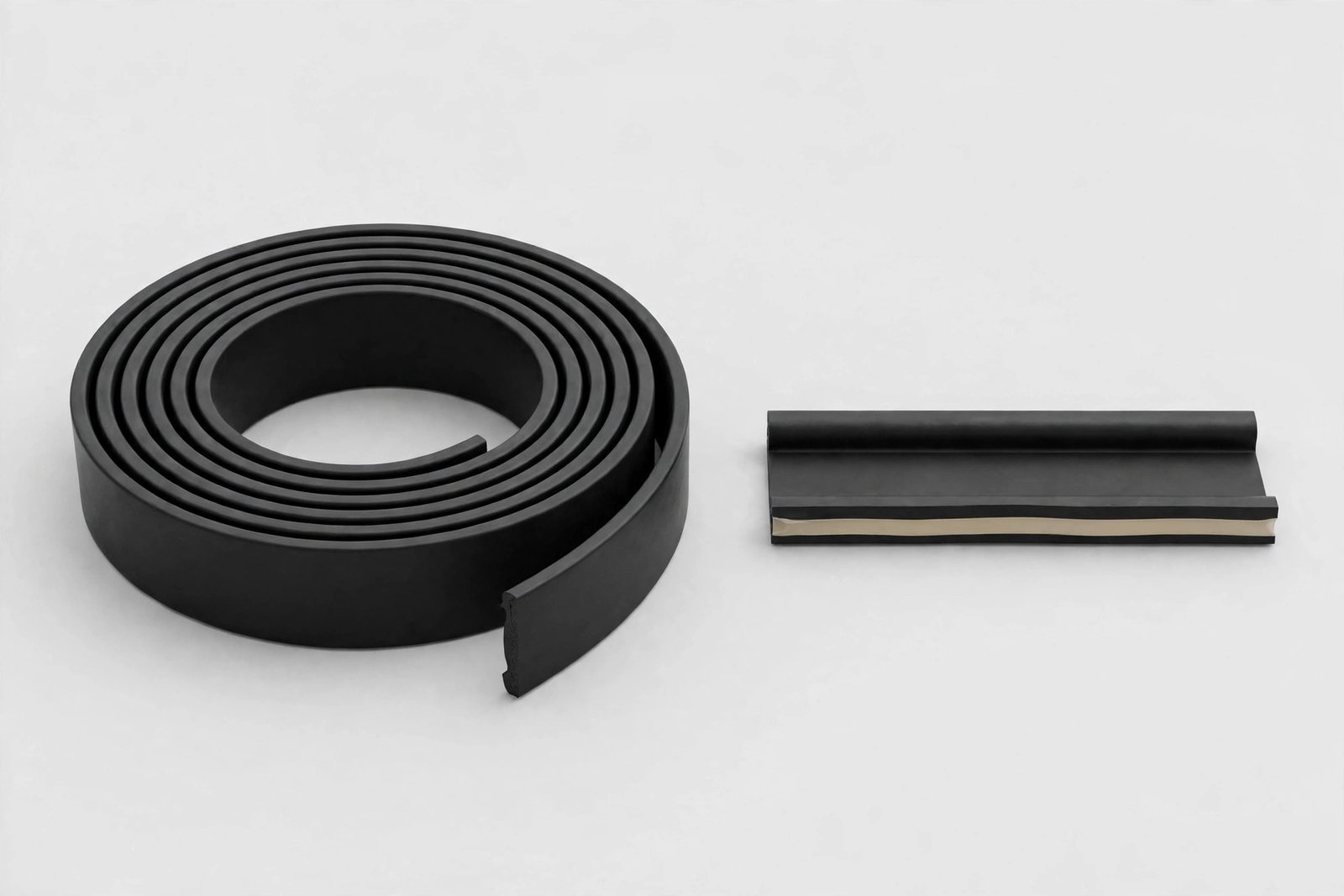
A Light Blocking Door Seal Strip fixes the leak most people forget until the windows are done: the bright line under the bedroom door, and the glowing seams around its frame, fed by a hallway or landing light that burns all night. A flexible, self-adhesive strip along the bottom of the door — and, on the worst offenders, up the sides — closes the gap completely. In a dark-adapted room, that single line of light is astonishingly bright; closing it is often the difference between dark and actually dark.
It is a humble gadget with side benefits: the same seal that blocks light also blocks the draft under the door and muffles a surprising amount of hallway sound, which makes it a quiet ally of the picks in our guide to bedroom gadgets for couples who sleep differently, where one partner’s early start lights the landing at 5 a.m. Fitting is peel, stick and trim, but measure your gap first — a strip sized for a wide gap will drag on a tight one — and give the adhesive a clean, dry surface and a day to cure before judging it.
Pros
- 👍 Kills the bright line under the door completely.
- 👍 Also blocks drafts and muffles hallway noise.
- 👍 Peel-and-stick fitting takes minutes, no tools.
- 👍 One of the cheapest fixes in this entire guide.
Cons
- 👎 Must match your door gap — too thick and the door drags.
- 👎 Adhesive struggles on dusty or uneven door bottoms.
- 👎 Very worn strips need replacing after a year or two.
Best for: bedrooms off bright hallways, landings and streetlit halls.
Check Price And User Reviews on Amazon
8. Bluetooth Sleep Mask with Headphones
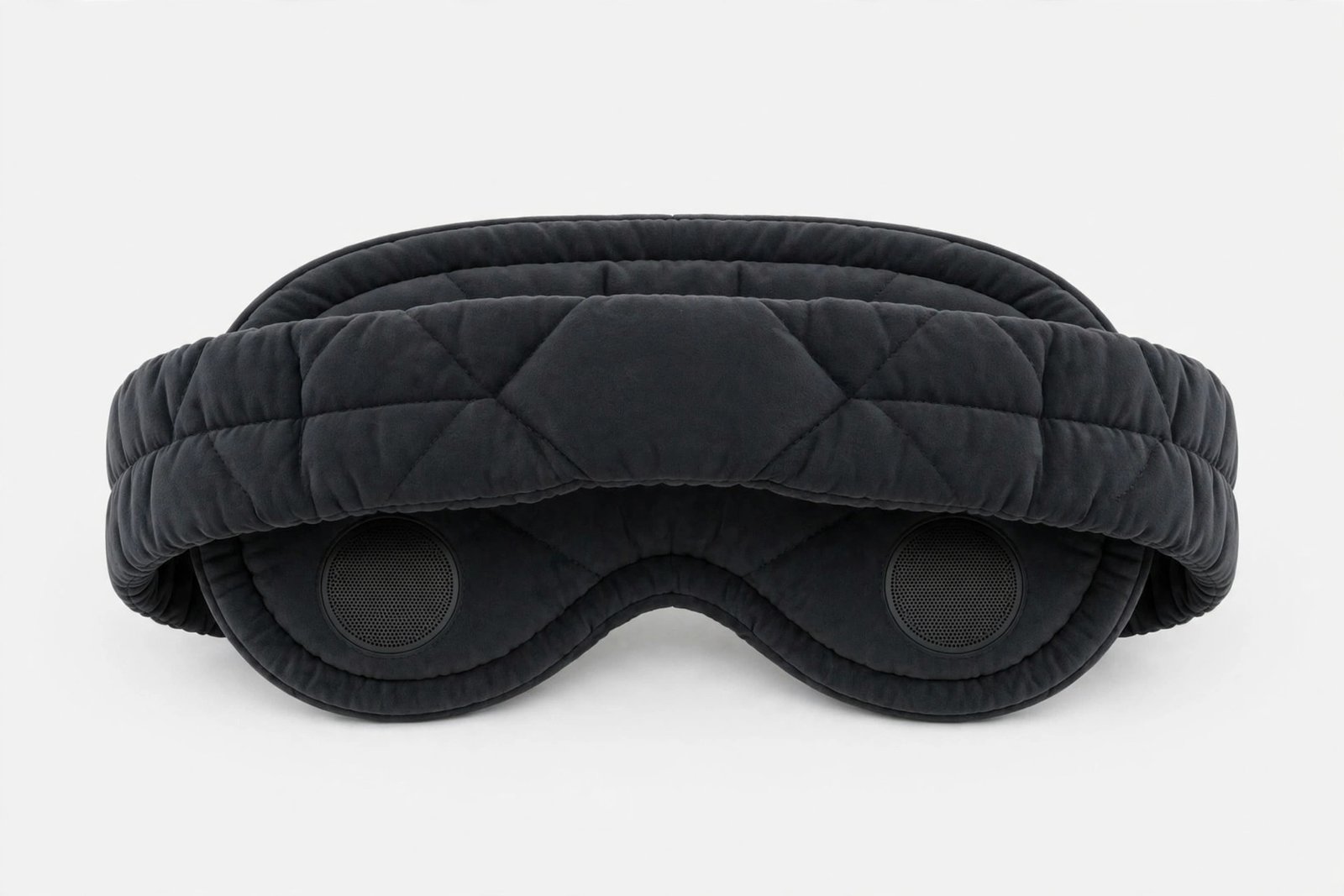
A Bluetooth Sleep Mask with Headphones combines the two senses in one band: a blackout mask that seals the light out, with flat speakers built into the fabric over your ears, playing whatever helps you sleep — a podcast, an audiobook, rain sounds, or the white noise that smooths over a partner’s snoring. Flat speakers matter here: unlike earbuds, they do not dig in when you roll onto your side, so the mask stays comfortable and stays in place through the night.
Readers of our guide to bedroom gadgets for couples who sleep differently will recognise the idea — there it was a headband keeping one partner’s audio private; here the band also happens to be a full blackout mask, which makes it the natural upgrade for light sensitive sleepers whose problem is light and sound together. Look for a version where the electronics slide out so the mask itself can be washed, and check the battery honestly covers a full night. Sound quality is fine for speech and sleep sounds rather than hi-fi music — which, at 11 p.m., is exactly the point.
Pros
- 👍 Blackout and private audio in a single gadget.
- 👍 Flat speakers stay comfortable for side sleepers.
- 👍 Masks a snoring partner as well as the morning light.
- 👍 Most designs let you remove the electronics for washing.
Cons
- 👎 Another battery to keep charged.
- 👎 Sound quality suits speech and sleep sounds, not music lovers.
- 👎 Warmer and bulkier than a plain sleep mask.
Best for: light sensitive sleepers who are woken by light and noise alike.
Check Price And User Reviews on Amazon
9. No-Drill Blackout Roller Blind

A No-Drill Blackout Roller Blind gives you the neat, permanent look of a fitted blind with none of the holes: it mounts inside the window recess on tension fittings or strong adhesive brackets, and comes down again without a mark when you move. Fitted inside the recess, the fabric sits close to the frame, so a well-measured no-drill blind blocks nearly as much light as its screwed-in equivalent — at a fraction of the landlord-related risk.
This is the natural home for the fitting advice in our guide to no-drill smart home gadgets for renters: measure the recess in three places, because old frames are rarely square, and be honest about the side gaps — a blind a centimetre too narrow leaks down both edges like a door left ajar. Get the fit right, and proper bedroom blackout solutions do not have to involve a drill.
Pros
- 👍 Looks like a permanent fitted blind, removes without a trace.
- 👍 Recess fit blocks far more light than a face-fixed blind.
- 👍 Smooth, simple one-hand operation, day after day.
- 👍 No tools, no screws, no deposit-risking holes.
Cons
- 👎 Uneven recesses leave thin light gaps at the sides.
- 👎 Adhesive brackets dislike steam and textured surfaces.
- 👎 Sizes come in fixed ranges — very wide windows may not suit.
Best for: renters who want a proper blind’s finish without touching a drill.
Check Price And User Reviews on Amazon
10. Automatic Curtain Opener Motor

An Automatic Curtain Opener Motor is a small robot that clips onto your existing curtain rod or track and physically pulls your curtains open and closed — on a timer, from an app, or by voice. For a light sensitive sleeper, its real job is not the opening; it is the closing. Curtains drawn by hand get left a few centimetres apart at the centre and a hand’s width short at the wall, and those lazy gaps are exactly where dawn gets in. A motor closes them fully, to the same sealed position, every single night.
Set the schedule once — closed at bedtime, opened at your wake time — and the weakest link in most blackout curtains for bedroom setups quietly disappears. It is also the friendliest option for anyone who already owns good curtains they love: nothing about the window treatment changes, the motor simply does the nightly job properly. The honest limits: most setups need one motor per curtain panel, rod and track compatibility varies more than listings admit, and the battery wants charging every few weeks. Check your rod type carefully before ordering.
Pros
- 👍 Closes curtains fully every night — no lazy centre gap.
- 👍 Timers, app and voice control for both ends of the night.
- 👍 Works with the curtains you already own and like.
- 👍 Opening on schedule gives you a chosen, gentle wake time.
Cons
- 👎 Usually one motor per panel, so pairs cost double.
- 👎 Rod and track compatibility varies — check before buying.
- 👎 Battery needs charging every few weeks.
Best for: anyone whose good curtains never quite get closed properly by hand.
Check Price And User Reviews on Amazon
11. LED Light Blocking Stickers
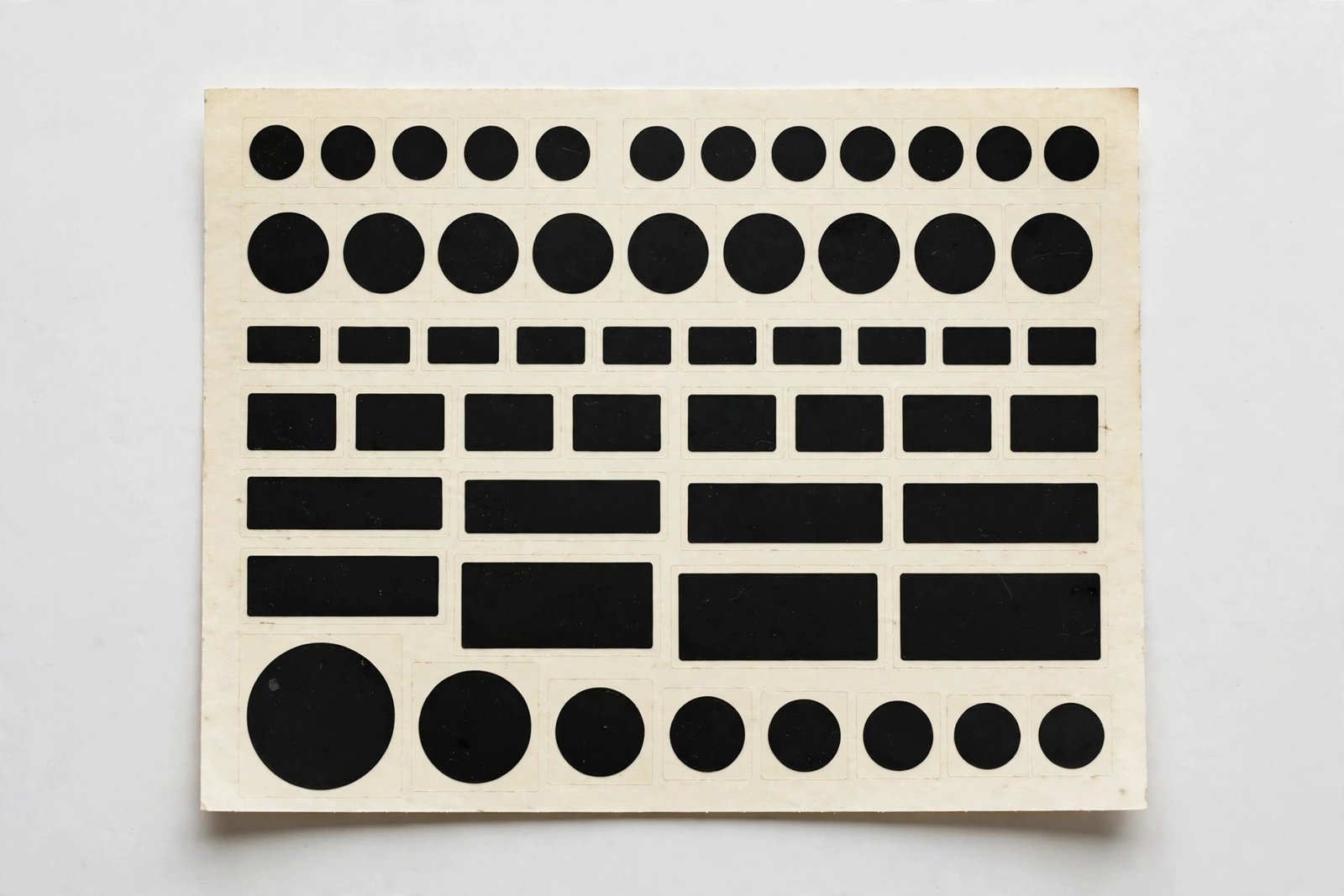
LED Light Blocking Stickers are the smallest gadgets in this guide and, in a gadget-filled bedroom, possibly the most satisfying: small matte stickers, in full-blackout and dimming versions, that you place over the standby lights, charging indicators and status LEDs glowing from every device in the room. The television’s red eye, the charger’s green blink, the air purifier’s blue panel — individually trivial, but to dark-adapted eyes at 3 a.m. they add up to a constellation, and some of them blink.
The dimming versions are the connoisseur’s choice: they cut a harsh LED down to a soft ember, so you can still tell a device is on without it lighting the ceiling. Full-blackout versions erase the light entirely, which suits chargers and routers whose status you never actually read. Application takes minutes, the stickers peel off without residue, and one sheet usually covers every device in the house. This is the finishing layer of learning how to make a bedroom completely dark: the windows and door make it dark; these stickers make it stay dark at the level your eyes actually notice.
Pros
- 👍 Extinguishes dozens of tiny device glows in minutes.
- 👍 Dimming versions keep status lights readable but soft.
- 👍 Peel off cleanly with no residue on your devices.
- 👍 One inexpensive sheet covers the whole room and more.
Cons
- 👎 Fiddly to place neatly on the very smallest LEDs.
- 👎 Full-blackout versions hide status lights you might want.
- 👎 Does nothing for window or door light — a finishing layer only.
Best for: gadget-filled bedrooms lit by a galaxy of standby lights.
Check Price And User Reviews on Amazon
12. Red Amber Motion Sensor Night Light
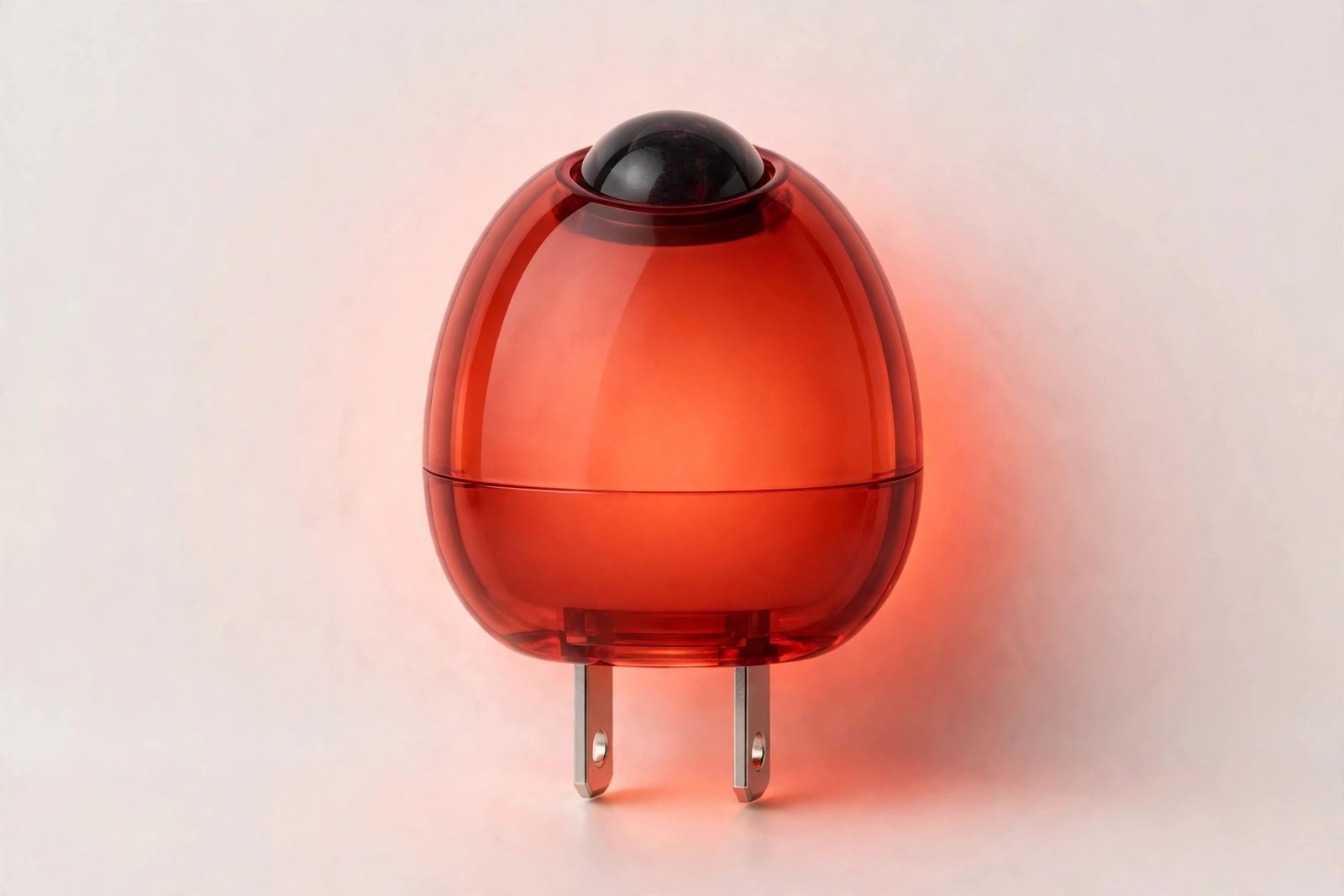
A Red Amber Motion Sensor Night Light is the one product in this guide that makes light instead of blocking it — deliberately, and in the colours that disturb sleep least. Total blackout has a practical problem: sooner or later someone needs the bathroom, a glass of water, or to check on a child, and the choice becomes stumbling in the dark or blasting the whole house awake with white light. A motion-sensor light in the hallway or bathroom that glows deep red or amber solves it — enough light to move safely, in a tone your sleepy eyes and your sleeping partner can both forgive.
Red and amber light feel dramatically gentler at night than white or blue light at the same brightness, so a trip down the hall does not leave you wide awake — most people fall back asleep far more easily after red light than after a bathroom’s full white glare. Plug-in models with a dusk-to-dawn sensor double as the landing light, which pairs neatly with the door seal above: the hall can glow softly all night while not a line of it reaches your pillow. Choose a model whose sensor you can angle away from the bed itself, because a light that triggers when you roll over defeats the entire purpose of this list.
Pros
- 👍 Safe light for night trips without waking the house.
- 👍 Red and amber tones feel far gentler on sleepy eyes.
- 👍 Motion sensor means no fumbling for switches half-asleep.
- 👍 Makes it easier to fall back asleep after a night-time trip.
Cons
- 👎 It manages necessary light — it is not a blackout product.
- 👎 Sensors vary; pets and passing movement can trigger it.
- 👎 Needs a socket or battery changes in the hallway or bathroom.
Best for: households with children, guests, or a bathroom at the end of a dark hall.
Check Price And User Reviews on Amazon
Buying Guide
1. Work in Layers: Eyes First, Then Window, Then Door
The most common mistake in chasing darkness is spending the whole budget on one heroic window treatment while light pours in everywhere else. Work the layers in order of impact per pound spent. Layer one is your eyes: a well-fitted mask gives you complete blackout tonight, whatever state the room is in. Layer two is the window — blinds, film, a magnetic kit or blackout curtains for bedroom windows — which does the heavy work for the whole room and anyone sharing it. Layer three is the leaks: the door gap, the standby lights, the hallway glow. Most sleepers find the mask plus one good window layer solves nine-tenths of the problem; the sealing gadgets finish it.
2. Edges Are Everything — Measure Like You Mean It
Almost every disappointing blackout purchase fails at the edges, not in the fabric. Before buying anything that goes on a window, measure the glass and the recess in three places each — old frames are rarely square — and decide whether the treatment sits inside the recess (neater, closer to the frame, less leak) or over the face of the wall (more forgiving of odd sizes, but light escapes behind it). Overlap everything: fabric past the glass, panels past the frame, film to the very edge of the pane. When you are comparing bedroom blackout solutions, a modest product fitted generously will beat a premium product fitted meanly, every single dawn.
3. Renting? The No-Drill Route to a Dark Room
Renters are better served than they used to be. Suction-cup blackout sheets and static-cling film grip the glass itself; magnetic kits snap to metal frames or adhesive strips; tension-fit roller blinds sit in the recess without a single screw; and the humble mask needs no permission from anyone. Together they can take a rented bedroom from bright at dawn to genuinely dark with zero damage and zero deposit risk. Keep the packaging and removal instructions, and the room can be handed back exactly as you found it — the full no-drill philosophy runs through our guide to no-drill smart home gadgets for renters.
4. Pair Darkness With a Wake-Up Plan — and Check the Details
A truly dark room removes the sunrise cue entirely, which is the point — but it means your wake-up now depends on an alarm, so make it a kind one: a wake-up light inside the room can simulate the dawn you have blocked out at the window, firing at your chosen hour instead of the sun’s. Four final checks before buying any of these gadgets to block light while sleeping: sizes against your actual window or door gap; power (does the motorised pick need charging, and is there a socket?); washability for masks and fabrics that live against skin; and returns, because fit is personal and a mask that leaks on your face shape is worth sending back. One honest note: these gadgets manage light, nothing more — if your eyes are ever painfully sensitive to light, that is worth an eye check rather than a darker bedroom.
Conclusion
The best bedroom gadgets for light sensitive sleepers who wake early all make the same promise: the sun no longer sets your schedule. A contoured mask blacks out the world at your eyes tonight; a sealed window layer — film, magnets, a fitted blind or properly overlapped curtains — keeps the dawn out of the room itself; a strip under the door and stickers on the standby lights close the last small leaks. None of it needs rebuilding the bedroom, and for renters, none of it needs a drill.
If you buy one thing, buy the mask — it works everywhere, immediately. If you buy three, add the window layer that suits your tenure (suction cups or magnets for renters, a fitted or motorised blind for owners) and the door seal that finishes the hallway problem. Whatever you choose, check the latest price on Amazon before you buy, measure twice before ordering anything that fits a window, and enjoy waking up at the time on your alarm clock instead of the time on the calendar.
More Guides You’ll Like
If you share the bed with someone whose light habits differ from yours, our guide to bedroom gadgets for couples who sleep differently covers split bedding, silent alarms and private light from the other side of the argument. Sleeping through the day instead? Our roundup of gadgets for people who work night shifts treats daytime blackout as the serious business it is. Renters will find the same no-damage thinking across our picks of no-drill smart home gadgets for renters, while the flip side of this guide — adding light back, on purpose, at the right hour — lives in our guide to wake up light gadgets for heavy sleepers. And if your early waking has less to do with light and more to do with heat, our guide to bedroom gadgets for hot sleepers who overheat at night covers the cooling side of the same problem.
FAQs
What is the quickest way to make a bedroom completely dark?
Start with your eyes and the glass. A well-fitted contoured sleep mask gives you personal blackout the first night you wear it, and a suction-cup or magnetic blackout layer on the window itself stops the light for the whole room. Those two alone solve most early waking. Then walk the room at the brightest hour of the morning and fix what is left: the line under the door, the glowing standby lights, the gap at the top of the blind. Learning how to make a bedroom completely dark is mostly that final audit — darkness is a list of small leaks, closed one by one.
Do blackout curtains alone stop early morning light?
Mostly — but rarely completely. The fabric itself blocks light well; the failures are the halo over the top of the rod, the lines down the sides, and the bright seam where the panels meet. Wrap-around rods, a pelmet or valance over the top, and panels wide enough to overlap in the middle close most of it. Many light sensitive sleepers also pair blackout curtains for bedroom windows with a stick-on blackout sheet or a mask, treating the curtains as the room’s main layer and something else as the guarantee.
Will a sleep mask work if I sleep on my side?
Yes, with the right design. Choose a contoured mask with deep eye cups, which holds its seal when your face turns into the pillow, and a wide strap that sits flat above your ear rather than across it. Some side sleepers prefer masks with the strap split or positioned higher at the back of the head. The blackout sleep mask test is simple: fitted properly, you should be able to open your eyes under it in a lit room and see nothing. If light creeps in at the nose, adjust the nose bridge area first — that is where most leaks live.
How can I black out a rented bedroom without drilling?
Easily, these days. Suction-cup blackout sheets stick straight to the glass, magnetic kits snap onto metal frames or discreet adhesive strips, static-cling blackout film covers awkward panes, and tension-fit roller blinds sit inside the recess with no fixings at all. Every one of those bedroom blackout solutions removes cleanly when you leave. Add the mask and a door seal strip — both completely property-neutral — and a rented room can be as dark as an owned one.
Why do I still wake early even with blackout curtains?
Because curtains are only one layer. Check the usual suspects in order: light over the top and down the sides of the curtains themselves; the bright gap under the bedroom door from a hallway light; standby LEDs and charger lights glowing across the room; and bright light in the last hour before bed, which leaves you sleeping lightly. Work through the gadgets to block light while sleeping in this guide layer by layer, and test the room at its brightest moment, not at midnight.
Should I pair blackout gadgets with an alarm or wake-up light?
Yes — total darkness removes your natural wake signal along with the unwanted one, so choose your replacement deliberately. A simple alarm works; a wake-up light inside the room works better, because it rebuilds the dawn on your schedule, inside your blackout, at the hour you picked. That pairing — blackout at the window, simulated sunrise at the nightstand — is the complete system for a light sensitive sleeper: no light until you say so, then exactly the light you asked for.