

How to Remove Pet Hair from Your Home
Pet hair is the price of sharing a home with an animal, and it gets everywhere: on the sofa, in the carpet, on dark clothes, in the corners of rooms you thought were clean, and occasionally in your food. It is also a problem that is fought in the wrong place — with a quick vacuum when guests are coming, while the hair builds up in the places the vacuum never reaches. Learning how to remove pet hair from your home properly is less about buying a more powerful machine and more about understanding where hair collects, how it sticks, and how a short daily habit beats a frantic weekly blitz.
The key fact about pet hair is that it does not simply fall and lie still. It clings — to fabric through static, to carpet fibres through friction, to hard floors through a thin film of grease and dust — and it migrates on air currents, on shoes and on the pets themselves, so a room that was clean yesterday can look furry again by the evening. A system that works accepts this and fights it at three points: at the source, by grooming the pet; on surfaces, by loosening hair before collecting it; and in the air, by catching what floats. What follows is a practical guide to all three, room by room, with the tools and habits that actually make a difference.
Start by accepting that pet hair removal is a maintenance task, not a deep clean. A home with a shedding dog or a moulting cat will never be hair-free, and aiming for perfection is a recipe for frustration. What a good system delivers is a home that looks and feels clean to live in, where the sofa is comfortable to sit on and the carpet does not shed onto your socks. Ten minutes a day, in the right places, achieves that far better than an hour on a Saturday.
Grooming at the Source: Less Hair Shed, Less Hair to Clean
The most effective pet hair removal happens before the hair reaches the floor. Regular grooming removes loose hair from the animal in a controlled way, instead of letting it fall wherever the pet happens to be. For most dogs and cats, a short brushing session two or three times a week — daily during heavy shedding seasons in spring and autumn — catches the loose undercoat that would otherwise end up on the sofa, and it has the side benefit of spreading the pet’s natural oils through the coat, which keeps it healthier and shedding less.
The right tool matters more than the frequency. A slicker brush works well for long coats, a rubber grooming glove or mitt is excellent for short-coated dogs and cats that dislike brushes, and a de-shedding tool reaches the undercoat on heavy shedders. Brush outside or over a hard floor where the hair can be swept up in seconds, and keep the sessions short and pleasant — a pet that learns grooming is a calm, treat-filled ritual will sit still for it, while one that is chased and wrestled will hide at the sight of the brush.
Bathing helps too, but only in moderation. A bath with a gentle pet shampoo loosens dead hair and washes it away in one go, and for many dogs a monthly bath noticeably reduces shedding for a week afterwards. Over-bathing strips the coat’s oils and can make shedding worse, so monthly is a sensible ceiling for most pets, and cats — who groom themselves — rarely need a bath at all unless a vet advises it.

Loosening Hair Before You Collect It
The biggest mistake in pet hair removal is trying to vacuum hair that is still clinging to a surface. A vacuum cleaner, however powerful, struggles with hair that is woven into carpet pile or stuck to upholstery by static — it passes over the top and leaves most of it behind. The trick is to loosen the hair first, then collect it, and the tools for loosening are simple and cheap.
On carpets and rugs, a rubber broom or a rubber squeegee is the single most effective tool most pet owners have never tried. Dragged slowly across the carpet, the rubber creates friction and static that balls the hair up into loose rolls, which can then be picked up by hand or vacuumed in seconds. The same trick works on stairs, where hair collects in the corners and on the tread edges that a vacuum head never quite reaches. For upholstery, a damp rubber glove — the ordinary household kind — rubbed in circles over the fabric lifts hair into clumps that peel off easily, and it costs almost nothing.
On hard floors, the problem is different: hair does not cling, it drifts, gathering in corners, under furniture and along skirting boards. A dry dust mop or a microfibre mop collects it far better than a broom, which tends to push it into the air and let it resettle elsewhere. A quick daily pass with a mop keeps hard floors genuinely hair-free, and it takes only a few minutes.
Vacuuming Properly for Pet Hair
Once hair is loosened, vacuuming works — but only if the machine is set up for the job. A vacuum with a motorised brush head, sometimes called a beater bar, agitates carpet pile and lifts hair that a suction-only head leaves behind. If your vacuum has adjustable height, set it to the carpet setting for rugs and low for hard floors, and go slowly: a fast pass over a carpet misses hair, while a slow pass with overlapping strokes gives the brush time to lift it. Empty the dust container or change the bag before it is full, because a vacuum with a full container loses suction exactly when you need it most.
Frequency beats intensity. A ten-minute vacuum of the high-traffic areas — the living room, the hallway, the pet’s favourite sleeping spot — every day or two keeps hair from working its way deep into carpet fibres, where it becomes much harder to remove. A weekly deep vacuum of the whole house then stays manageable instead of becoming a chore that takes an hour.

Furniture, Clothes and the Places Hair Hides
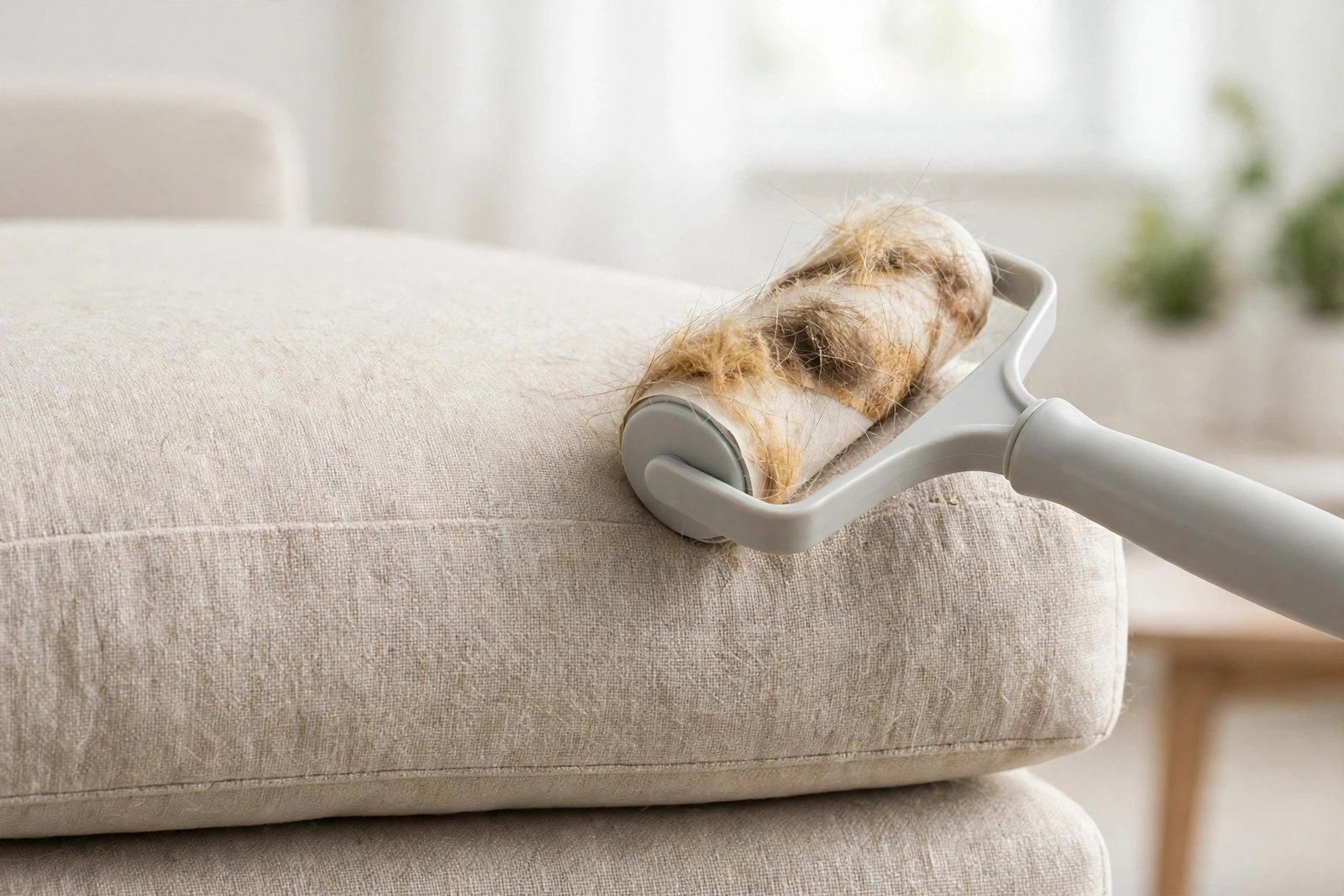
Upholstered furniture is where pet hair is most visible and most annoying, because it is where people sit. The daily habit that matters most is simple: a quick pass with a lint roller or a damp rubber glove over the sofa cushions each evening, before the hair works its way into the weave. Washable throws and covers are the strategic answer — a throw over the pet’s favourite cushion can be shaken out and washed weekly, which is far easier than cleaning the sofa itself, and it protects the upholstery from the oils in the pet’s coat as well as the hair.
Clothes need their own system. A lint roller by the front door, used on the way out, is the single most reliable habit for pet owners who wear dark colours. For clothes in the wash, a top tip is to tumble-dry pet-hairy clothes for ten minutes on a low heat before washing, or to add a damp cloth to the dryer — the tumbling and the heat loosen hair and trap it in the lint filter instead of letting it redeposit on every other garment. And check the washing machine’s filter regularly, because pet hair collects there and can slow drainage over time.
Then there are the hidden places: the car, where hair embeds itself in seat fabric and floor mats; the pet’s bed, which should be washed weekly because it holds more hair than any other single item in the house; and the air itself, where fine hair and dander float and resettle. A washable cover on the pet bed, a rubber glove on the car seats, and a regular dusting of shelves and skirting boards — where airborne hair settles — close the loop.
Daily Habits That Keep Pet Hair Under Control
The homes that stay ahead of pet hair are not the ones with the most expensive equipment — they are the ones with the best habits, and the habits are small. Groom the pet a few times a week. Run a quick vacuum or mop over the high-traffic areas most days. Keep a lint roller by the door and one by the sofa. Shake out the pet’s bedding weekly. These are five-minute jobs, and together they prevent the slow accumulation that turns into a weekend deep clean.
Train the pet, gently, to keep the hair where it can be managed. A pet bed in the pet’s favourite spot concentrates most of the shedding in one washable place, and most pets will choose a comfortable bed over the sofa if it is put where they already like to sleep. A blanket on the sofa arm where the cat always sits does the same thing. This is not about keeping pets off furniture — it is about giving them a defined place whose covering can be washed, so the furniture itself stays clean.
Finally, manage expectations honestly. A home with a heavy-shedding breed will never look like a home without pets, and that is fine — the goal is a home that feels clean and comfortable, not a showroom. Seasonal shedding peaks in spring and autumn are the hardest weeks, and it helps to increase grooming and vacuuming during those periods rather than fighting the same battle at the same intensity all year.

Final Thoughts
Removing pet hair from your home is a system of small habits rather than a single heroic clean. Groom at the source so less hair reaches the floor; loosen hair from carpets and upholstery before you vacuum, with a rubber broom or a damp glove; vacuum slowly and often rather than fast and rarely; and protect the furniture and the clothes with washable covers and a lint roller by the door. None of these steps is difficult on its own, and together they keep a pet household genuinely comfortable.
Start with the two habits that give the fastest return: a short grooming session a few times a week, and a quick daily pass over the high-traffic floors and the sofa. Most pet owners notice the difference within a week — less hair on clothes, a sofa that is pleasant to sit on, and a house that no longer announces the pet before you do.
More Guides You’ll Like
For the hardware that makes pet hair removal easier — rubber brooms, pet vacuums, lint rollers and grooming tools — see our product guide to the Best Cleaning Gadgets for Homes with Pets and Pet Hair, which rounds up twelve picks that earn their place in a pet household. And for calmer starts at the other end of the day, see How to Speed Up Your Morning Routine, which applies the same night-before, no-queue thinking to the morning rush.
Frequently Asked Questions
What is the best way to remove pet hair from a carpet?
Loosen it first with a rubber broom or rubber squeegee, which balls the hair up through friction, then vacuum it up. A vacuum with a motorised brush head, used slowly with overlapping strokes, lifts far more hair than a suction-only head. Daily short vacuums of high-traffic areas beat a single long weekly session.
How do I get pet hair off a sofa?
Rub a damp rubber glove in circles over the upholstery to lift the hair into clumps, then pick them up or vacuum them away. A lint roller works for a quick pass before guests arrive. For lasting protection, use a washable throw on the pet’s favourite cushion and wash it weekly.
How often should I groom my pet to reduce shedding?
Two or three times a week for most dogs and cats, and daily during heavy shedding seasons in spring and autumn. Use a slicker brush for long coats or a rubber grooming glove for short coats, brush outside or over a hard floor, and keep sessions short and pleasant so the pet cooperates.
Why does pet hair keep coming back the day after I clean?
Because hair clings to fabric through static, migrates on air currents and on the pet itself, and settles in places a quick vacuum never reaches — under furniture, along skirting boards and on the underside of cushions. A short daily habit in the high-traffic areas, plus regular grooming at the source, keeps it under control far better than a weekly deep clean.



2 Comments