

Best Bedroom Gadgets for Hot Sleepers Who Overheat at Night: 12 Cooling Picks That Actually Cool You Down
As an Amazon Associate, we earn from qualifying purchases made through links on this page, at no extra cost to you. This helps support our work and keeps our guides free to read.
A quick note on prices: prices change often, so we never quote a fixed price here. Please check the latest price on Amazon before you buy, using the yellow buttons in this guide. The product pictures in this article are original illustrations created for this guide, not manufacturer photos.
Introduction
If you are searching for the best bedroom gadgets for hot sleepers who overheat at night, you know the routine: kicking the duvet off at 2 a.m., flipping the pillow hunting for a cool patch, one leg out of the covers like a thermostat. The problem is rarely the room alone — it is the warm layer of air and bedding trapped around your body, and ordinary bedding cannot move it. Gadgets do: the right equipment cools the surface you lie on, moves air exactly where you sleep, and adjusts without you getting up.
This guide rounds up twelve cooling gadgets for hot sleepers built around that idea. The core of the list is the cooling mattress pad in its powered forms — pads that circulate air or chilled water across the sleep surface, so the bed itself runs cool instead of slowly warming up under you. Around them sit the airflow picks: a bed fan for hot sleepers that slides air under the sheet, smart fans you can schedule from your phone, and the cooling pillow for hot sleepers that ends the nightly pillow-flipping contest.
We have kept the list honest about what each gadget can and cannot do. A fan moves air; it does not lower the room’s temperature. A gel pillow feels cool at first touch, then warms through. Only the portable air conditioner on this list truly cools a room, and it charges you in noise and window space for the privilege. Read the pros and cons, match the gadget to the way you overheat — hot surface, hot room, muggy air, or a partner who sleeps at a different temperature — and you will find how to stay cool in bed at night stops being a mystery and becomes a setup.
One promise before we start: nothing here claims to treat anything. Every pick below is judged purely as equipment — how directly it cools you, how quietly it runs at 3 a.m., and how little it asks of the person sleeping next to you.
How We Chose
We chose these twelve products by one test: does this gadget actively cool the sleeper, or does it just rearrange warm air and hope? A pick earned its place if it cools the sleep surface directly, moves air across the body in a way an ordinary fan cannot, removes heat or humidity from the room, or gives the hot sleeper independent control of their side of the bed. Passive bedding with “cooling” in its name and nothing else behind it was left out — everything here plugs in, switches on, circulates, chills or blows.
We also favoured night-friendly details: genuinely quiet low settings, because a loud gadget just swaps one broken night for another; sleep timers, so the cooling can ease off once you are asleep; remotes you can work half-asleep; and washable covers wherever the product touches the bed. Finally, we spread the picks across the whole problem — surface, airflow, room and humidity.
Quick List
- Electric Cooling Mattress Pad with Remote — a powered pad that cools the sleep surface itself, adjusted from your pillow.
- Bed Fan with Under-Sheet Airflow — a slim fan at the foot of the bed that slides air under the top sheet.
- Water Cooling Mattress Pad System — chilled water circulated through the pad for the strongest, steadiest cooling here.
- Cooling Gel Pillow — a cool-touch gel surface for the pillow flipper in every hot sleeper.
- Phase Change Cooling Pillow — heat-absorbing material that greets you with a genuinely cold first touch.
- Smart Tower Fan with App Control — scheduled, oscillating airflow you set from your phone before bed.
- Quiet Bedside Fan with Sleep Timer — a small, near-silent breeze aimed at your pillow only.
- Dual Zone Electric Blanket — split the bedding: warmth on your partner’s side, nothing on yours.
- Portable Air Conditioner for Bedroom — the only pick that truly lowers the room temperature.
- Evaporative Air Cooler with Remote — water-cooled airflow that shines in dry heat and sips electricity.
- Dehumidifier with Humidity Display — pulls the muggy weight out of the air so every other gadget works better.
- Electric Cooling Throw Blanket — a powered cooling layer for naps, sofas and your side of the bed.
1. Electric Cooling Mattress Pad with Remote
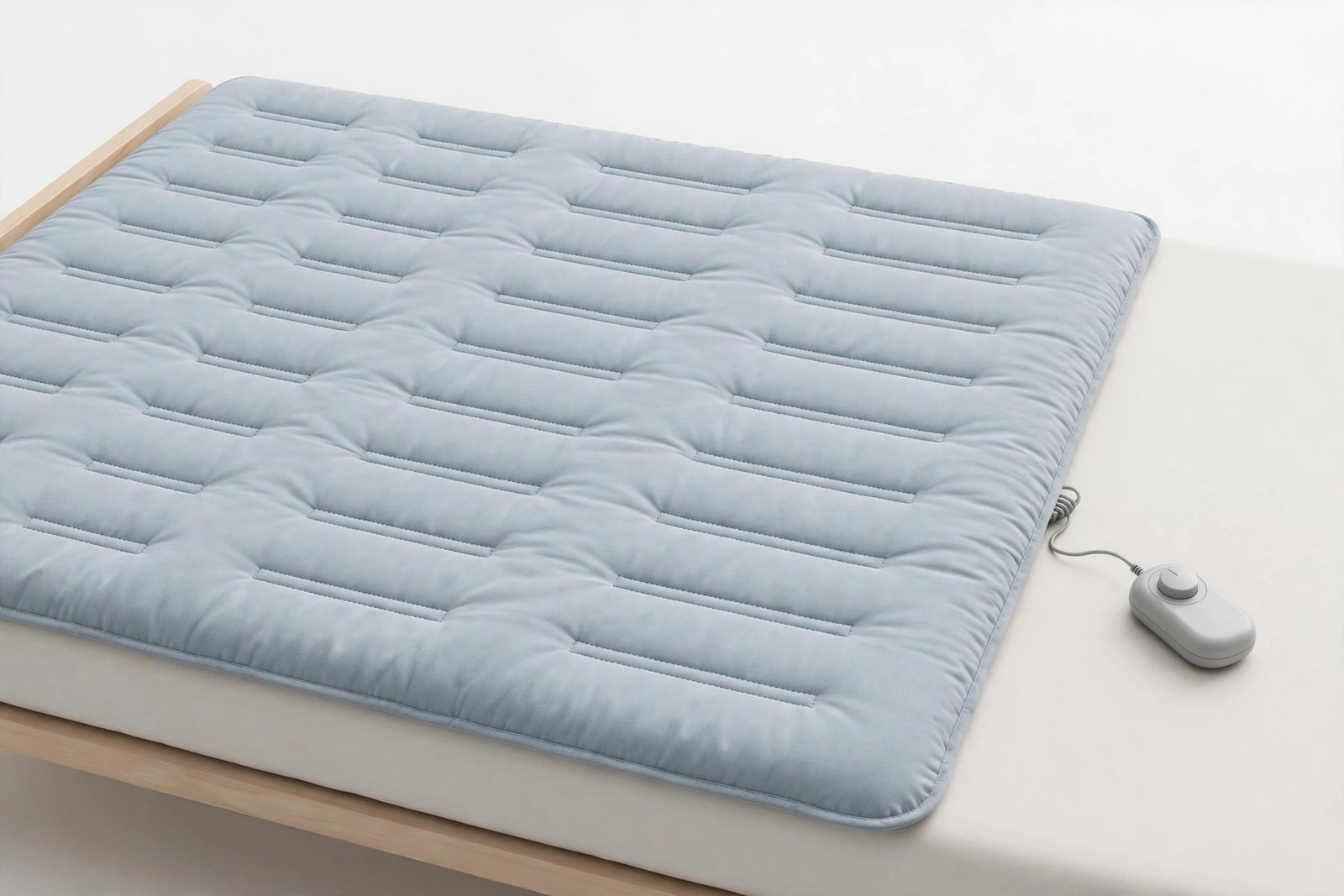
An Electric Cooling Mattress Pad with Remote attacks the problem at the exact point it happens: the surface under your body. The pad lies over the mattress like a fitted topper, and a small bedside unit pushes cooled air — or circulates cooled fluid, depending on the design — through channels in the pad, carrying your body heat away instead of letting the mattress soak it up and radiate it back at you. Because it cools the bed rather than the room, it works even in a warm bedroom, and the remote means the 3 a.m. adjustment happens from the pillow, not on your feet.
Look for the details that decide whether it stays in the bed: a timer or auto shut-off so the pad can ease off once you are asleep, a cover you can remove and wash, and a half-bed or dual-zone size if only one of you overheats. Among cooling gadgets for hot sleepers, this style of powered cooling mattress pad is the most direct fix of all — the one upgrade that changes the temperature of the thing you actually touch all night.
Pros
- 👍 Cools the sleep surface itself, not just the air around the bed.
- 👍 Remote control lets you adjust the level without getting up.
- 👍 Timers and auto shut-off on most powered models.
- 👍 Half-bed sizes cool one side without touching your partner’s.
Cons
- 👎 The bedside unit takes floor or nightstand space.
- 👎 You can faintly feel the pad’s channels through thin sheets.
- 👎 Costs more than any passive cooling topper.
Best for: hot sleepers whose mattress itself feels like a radiator by midnight.
Check Price And User Reviews on Amazon
2. Bed Fan with Under-Sheet Airflow
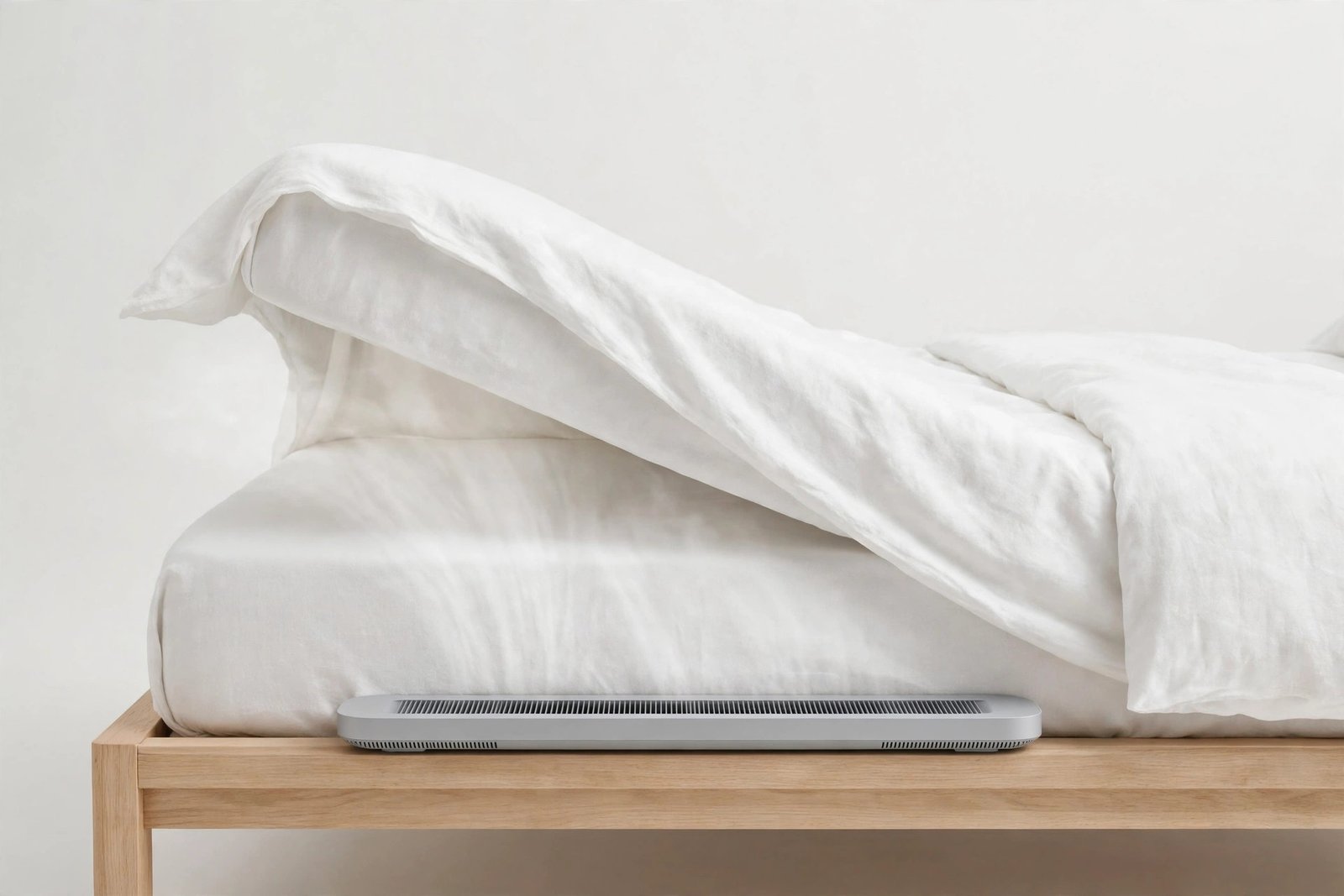
A Bed Fan with Under-Sheet Airflow is the specialist of this list: a slim unit that sits at the foot of the bed and blows a gentle stream of room air under the top sheet, along your body and out. That trapped layer of warm, still air under the covers is exactly what makes a hot sleeper feel swaddled in heat, and this is the one gadget designed to strip it away. The sheet lifts slightly, the air keeps moving, and the bed stops behaving like a greenhouse.
It is also considerate in a shared bed: the airflow travels under your sheet, on your side, so a cooler-sleeping partner is not blasted by a room fan all night. A remote saves you diving to the foot of the bed to change the speed. As a bed fan for hot sleepers it does one job and does it precisely — if your problem is heat trapped under the covers rather than a hot room, this is the most targeted pick here.
Pros
- 👍 Removes the trapped hot air layer under the covers.
- 👍 Airflow stays on your side of the bed.
- 👍 Gentle, even breeze rather than a blast in the face.
- 👍 Small footprint at the foot of the bed.
Cons
- 👎 It moves room air — a very hot room limits what it can do.
- 👎 Restless sleepers can knock it out of alignment.
- 👎 The sheet needs enough slack to let the air travel.
Best for: sleepers who overheat under the covers even in a reasonably cool room.
Check Price And User Reviews on Amazon
3. Water Cooling Mattress Pad System
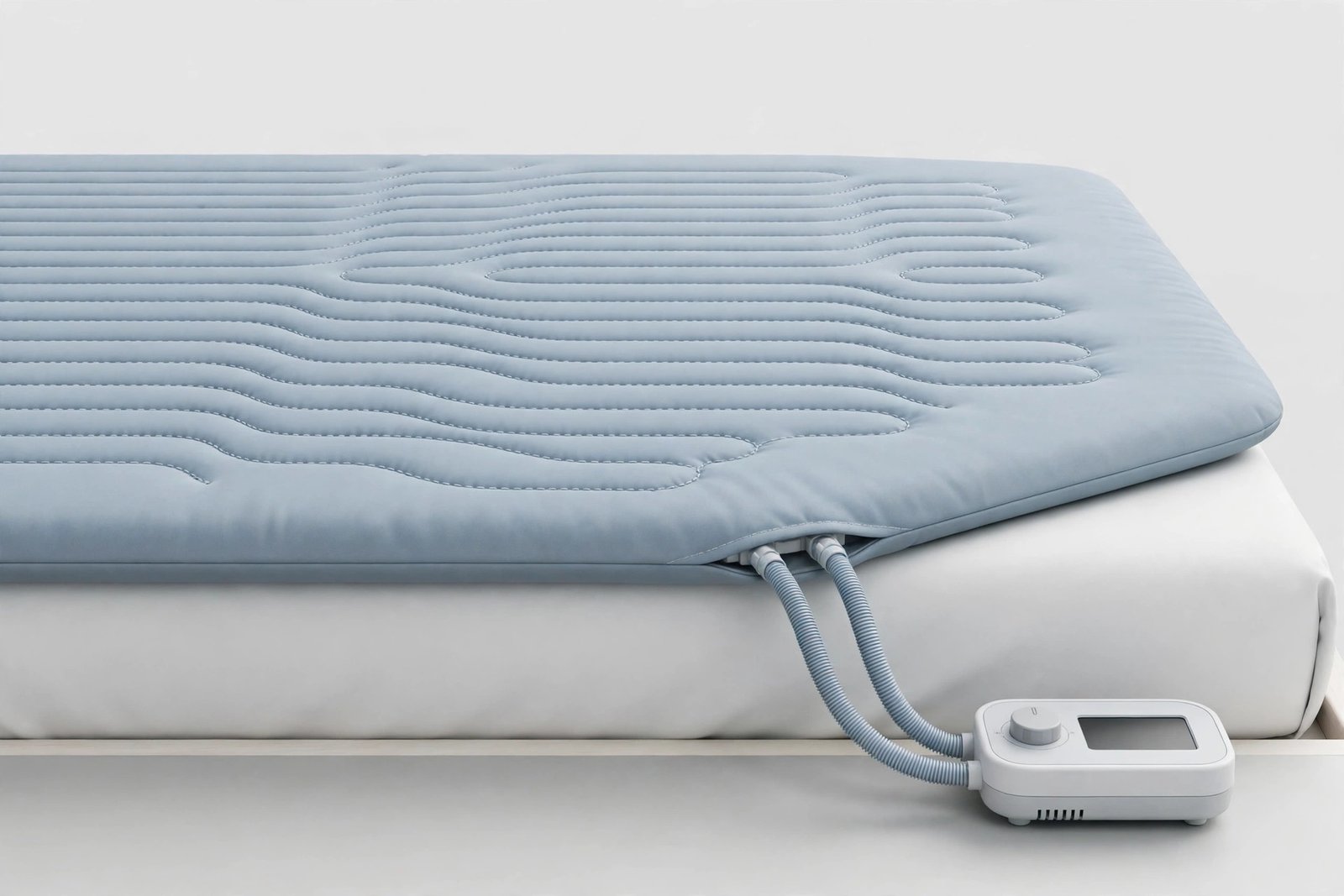
A Water Cooling Mattress Pad System is the heavy-duty version of the idea: a bedside unit chills water and circulates it through a network of soft channels in the pad, holding the sleep surface at a steady cool temperature all night. Where an air-based pad takes the edge off, a water system genuinely sets the bed’s temperature — and because water holds temperature so well, the surface feels evenly cool from shoulder to feet, with no warm patches where you have been lying longest.
The trade-offs are commitment and upkeep: the reservoir needs topping up, the system wants an occasional clean, and the first setup takes longer than unboxing a fan. The pumps on good systems are very quiet, more hum than buzz, and most offer dual-zone versions. For the sleeper who has tried everything else on this list, a water-based cooling mattress pad is usually the end of the search.
Pros
- 👍 The strongest, steadiest cooling of any pick in this guide.
- 👍 Even temperature across the whole sleep surface.
- 👍 Quiet pump — the cooling happens without fan noise at the bed.
- 👍 Dual-zone versions give each partner their own setting.
Cons
- 👎 Reservoir needs topping up and the system needs occasional cleaning.
- 👎 The most expensive style of cooling pad here.
- 👎 Tubes and a bedside unit to accommodate.
Best for: the hottest sleepers, who need the bed itself held at a cool temperature all night.
Check Price And User Reviews on Amazon
4. Cooling Gel Pillow
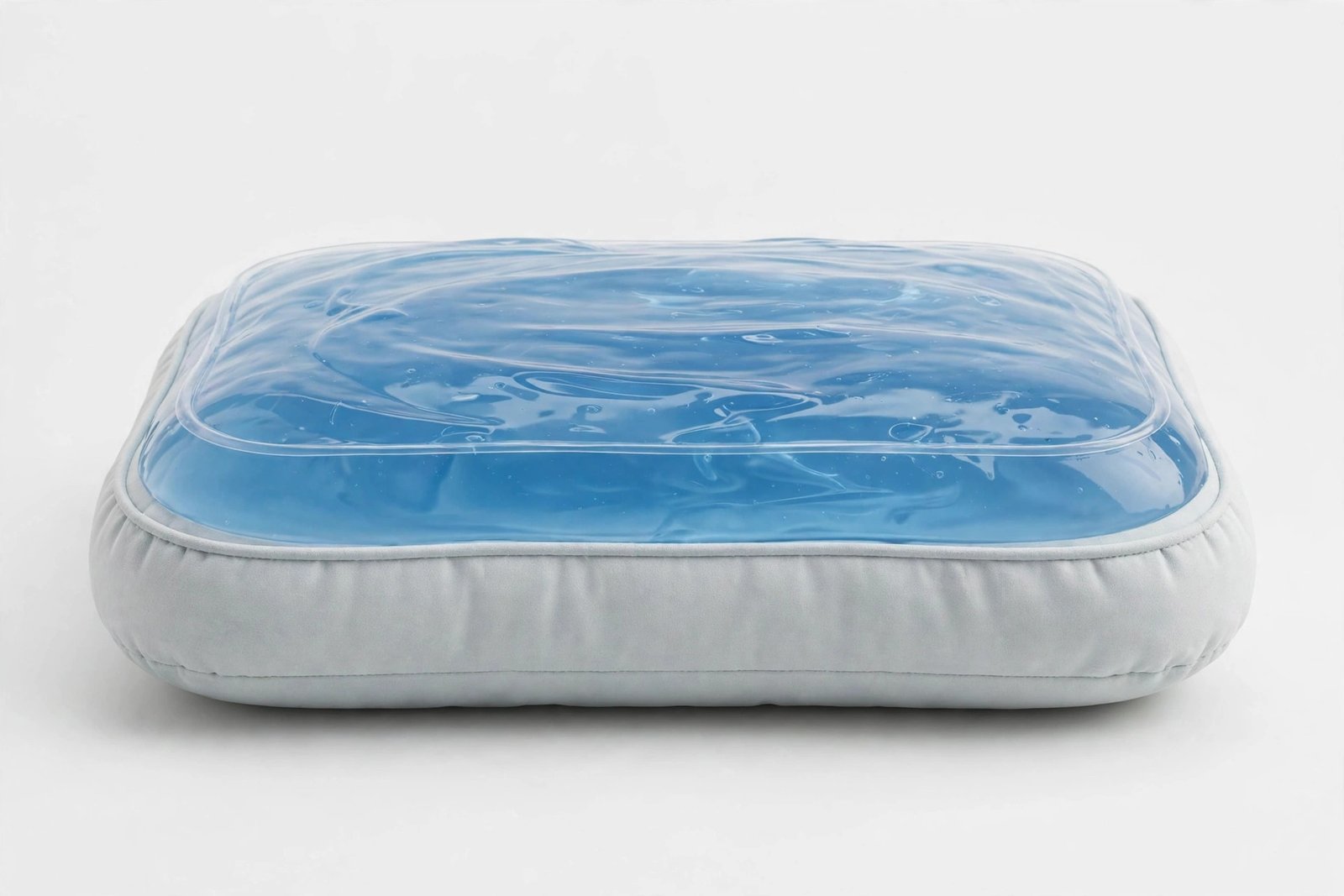
A Cooling Gel Pillow is the simplest gadget-free zone of this guide — a pillow with a layer of cooling gel across its sleeping surface that feels distinctly cold to the touch and draws heat away from your head and neck. Your head is where you notice heat first and where the pillow-flipping ritual begins; a gel surface stretches the cool side of the pillow from thirty seconds to a good part of the night, and for many hot sleepers that first hour is the difference between drifting off and lying there radiating.
We chose the same style for our guide to bedroom gadgets for couples who sleep differently, because a pillow is beautifully local: yours runs cool, your partner’s stays ordinary, and nobody negotiates. Be honest about the limit — the gel warms through during the night, so treat it as a falling-asleep aid rather than an all-night system, and pair it with a pad or fan if you overheat at 3 a.m. too. A washable cover is the detail to insist on in any cooling pillow for hot sleepers.
Pros
- 👍 Genuinely cold first touch helps you fall asleep faster.
- 👍 No power, no noise, no setup at all.
- 👍 Only your pillow changes — your partner is unaffected.
- 👍 The cheapest meaningful upgrade in this guide.
Cons
- 👎 The gel warms through during the night.
- 👎 Heavier than a standard pillow.
- 👎 Foam versions can feel firm to stomach sleepers.
Best for: pillow flippers whose overheating starts at the head and shoulders.
Check Price And User Reviews on Amazon
5. Phase Change Cooling Pillow

A Phase Change Cooling Pillow uses materials science instead of gel: phase-change material woven into or coated on the cover absorbs heat as it melts at a set temperature, which is a technical way of saying the surface actively swallows warmth instead of just feeling cold for a moment. The result is a cool touch that lasts noticeably longer than a plain cool-feel fabric, and it re-solidifies as it cools — during the day, or on the side you are not lying on — resetting itself without a freezer, a plug or any effort from you.
Set expectations honestly: like every passive technology, it absorbs a finite amount of heat, so on the hottest nights it buys you the first stretch of sleep rather than the whole night. Where it shines is consistency — no cold shock, no clammy gel feel, just a surface that stays on the cool side of neutral. Look for a pillow where the treatment covers both sides, so the inevitable flip still lands on a working surface. It is the thinking sleeper’s cooling pillow for hot sleepers: quiet technology, zero moving parts.
Pros
- 👍 Actively absorbs heat rather than just feeling cool at first.
- 👍 Resets itself during the day — no power or freezing needed.
- 👍 Feels like an ordinary pillow, with no gel slab sensation.
- 👍 Cool effect lasts longer than plain cool-touch fabrics.
Cons
- 👎 Absorbs a finite amount of heat on very hot nights.
- 👎 The cooling effect fades gradually with washing over time.
- 👎 Subtler than gel — no dramatic cold first touch.
Best for: hot sleepers who want a normal-feeling pillow that quietly runs cool.
Check Price And User Reviews on Amazon
6. Smart Tower Fan with App Control
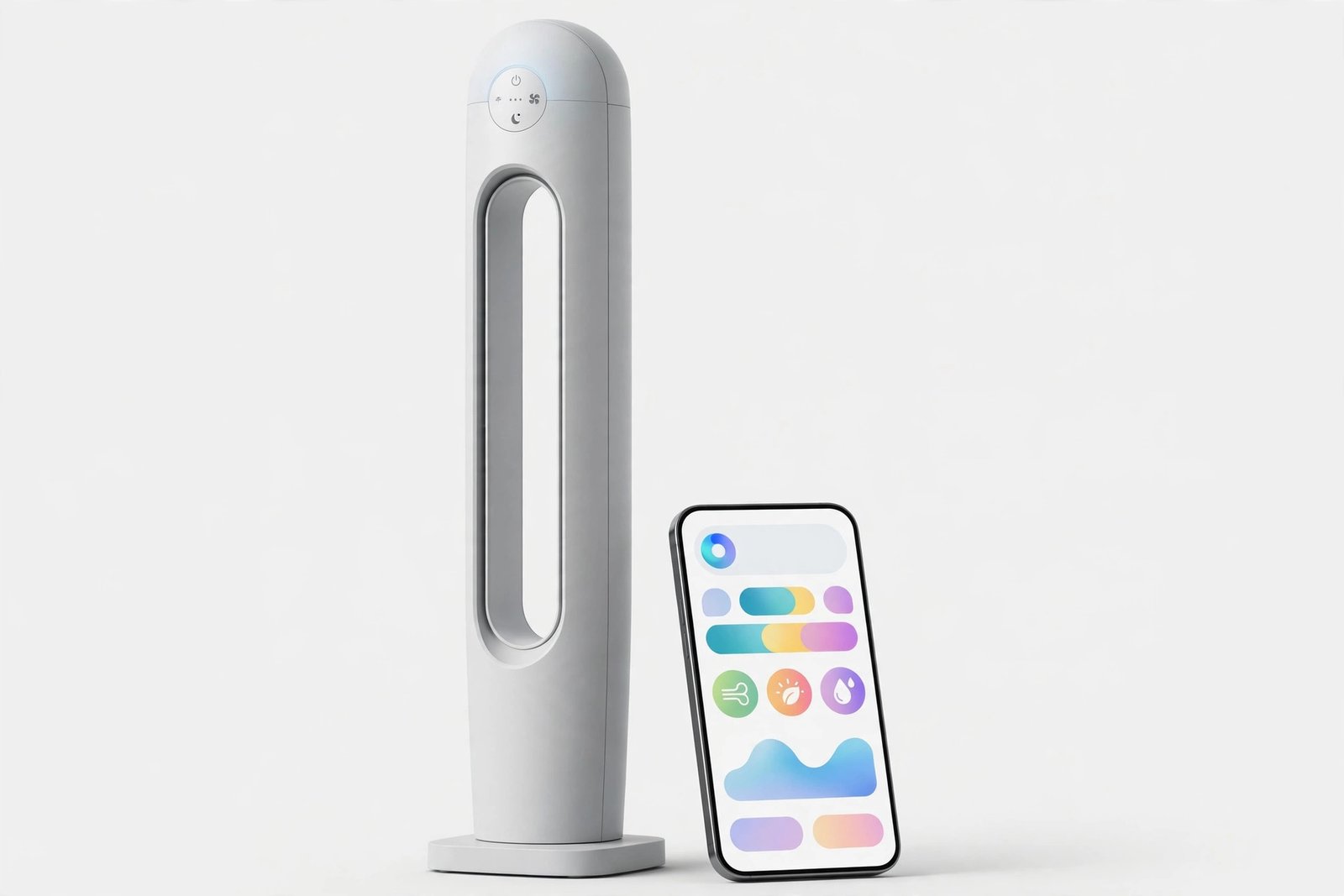
A Smart Tower Fan with App Control brings scheduling to the oldest cooling gadget of all. Set it from your phone to start before bedtime so the room is already moving air when you get in, oscillate gently through the first hours, then drop to its quietest setting — or switch off entirely — once you are asleep. Some models react to the room temperature, speeding up on a hot night and calming down on a mild one, which is exactly the kind of set-and-forget behaviour a hot sleeper needs at 3 a.m.
The tower format suits bedrooms: a small floor footprint and a breeze spread at bed height. App and voice control sound like luxuries until the first night you change the speed without sitting up. Be honest about what it is, though — like every fan, it cools people, not rooms, by helping sweat evaporate; pair it with a cooling pad if your mattress is the heat source. For all-round, whole-room airflow with brains, this is the fan to beat among cooling gadgets for hot sleepers.
Pros
- 👍 Schedules and temperature modes run the night for you.
- 👍 Adjust speed and oscillation from the bed by app or voice.
- 👍 Oscillation spreads the breeze across the whole bed.
- 👍 Slim tower footprint suits small bedrooms.
Cons
- 👎 Needs Wi-Fi and an app for the smart features.
- 👎 Moves air rather than cooling it — a hot room stays hot.
- 👎 Tall towers can wobble on thick carpet.
Best for: hot sleepers who want the whole room’s airflow automated around their sleep.
Check Price And User Reviews on Amazon
7. Quiet Bedside Fan with Sleep Timer

A Quiet Bedside Fan with Sleep Timer is the minimalist’s answer: a small fan on the nightstand, aimed at your pillow, running at a whisper. Personal airflow is surprisingly effective — a gentle stream across your face and shoulders convinces your body the room is cooler than it is — and a small fan delivers it without moving air over your partner’s side of the bed at all. The sleep timer is the feature to insist on: set it for an hour or two, and the fan fades out once you are asleep instead of droning into the small hours or running up the bill until morning.
Its soft, steady sound does a second job, too: gentle white noise smooths over household sounds — and, as our guide to gadgets for people who snore and their partners explains, over a partner’s snoring as well. Judge models by their lowest setting, not their highest. For hot sleepers in small rooms, this little fan is often the first gadget that actually stays in the bedroom.
Pros
- 👍 Personal breeze at the pillow, without cooling your partner.
- 👍 Sleep timer turns it off once you are asleep.
- 👍 Gentle noise masks household sounds and light snoring.
- 👍 Tiny footprint and the lowest running costs here.
Cons
- 👎 Cools only the sleeper it is aimed at.
- 👎 “Quiet” varies — cheap models whine on low settings.
- 👎 Takes a corner of the nightstand.
Best for: light sleepers who overheat and need cooling that stays gentle and local.
Check Price And User Reviews on Amazon
8. Dual Zone Electric Blanket
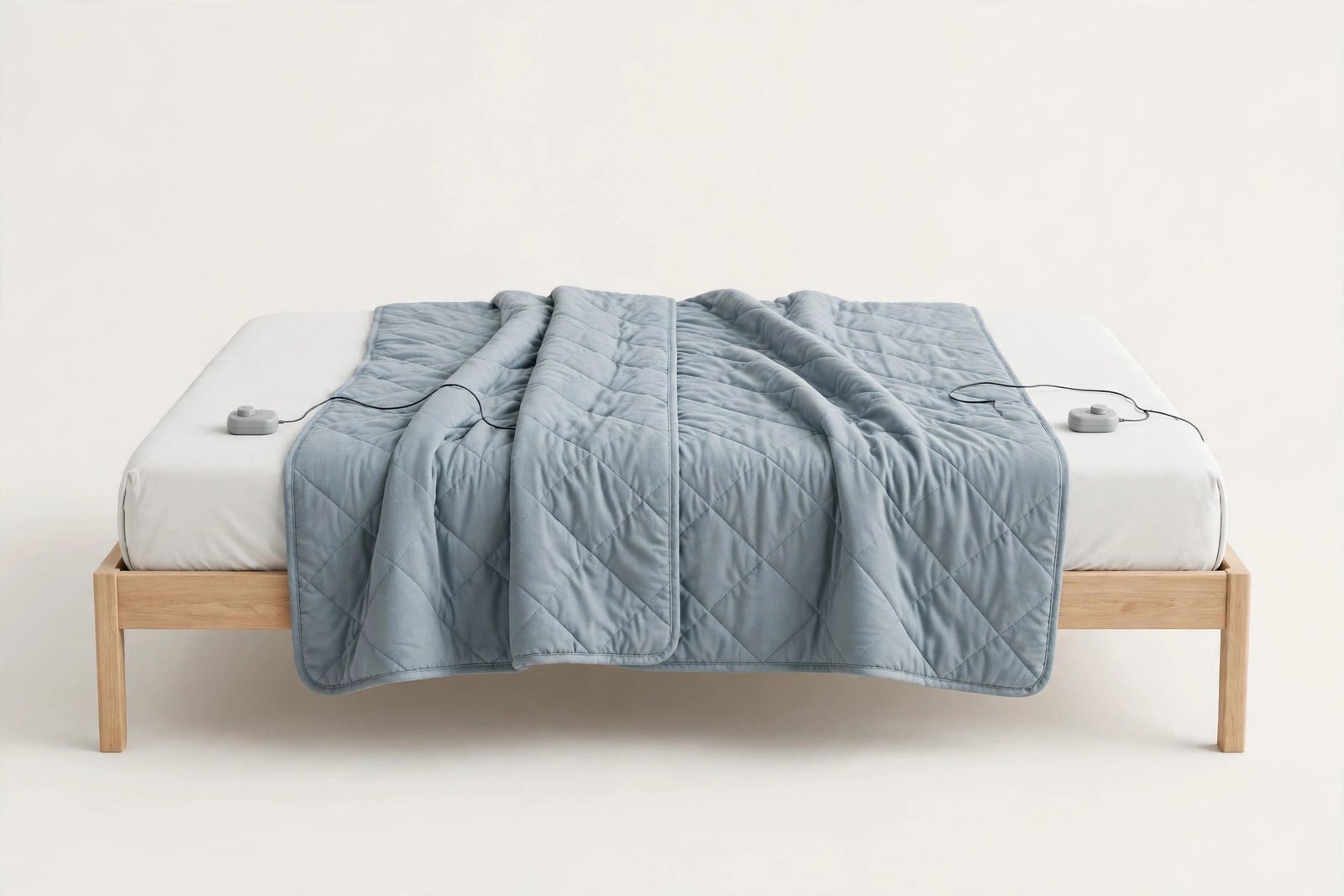
A Dual Zone Electric Blanket on a hot sleeper’s list needs one honest sentence up front: it is a heating product, and its value here is separation. In most couples, the hot sleeper’s real enemy is not the room — it is the thick shared duvet their cold-blooded partner insists on. A dual zone blanket splits the bed into two climates: your partner runs their side at a gentle warmth, and your side stays switched off entirely, giving you a far thinner, lighter layer than the duvet ever allowed. Less insulation on your side means less trapped heat, which for many hot sleepers is the whole battle.
This is the same split-the-bed thinking at the heart of our guide to bedroom gadgets for couples who sleep differently: stop averaging two people’s temperatures into one compromise layer. Look for controllers that are easy to adjust half-asleep, an auto shut-off for peace of mind, and a blanket that detaches from its cables for washing. You will need a socket on each side of the bed. It will not chill your side — nothing here pretends it does — but paired with any fan or pad on this list, it removes the duvet problem completely.
Pros
- 👍 Ends the shared-duvet war — each side runs its own climate.
- 👍 Your switched-off side is far thinner and cooler than a winter duvet.
- 👍 Your partner gets real warmth without you paying for it in heat.
- 👍 Auto shut-off timers on most models.
Cons
- 👎 It does not actively cool — it only frees you from shared insulation.
- 👎 Needs a socket within reach on both sides of the bed.
- 👎 Controllers must be detached before washing.
Best for: hot sleepers whose partner is always cold and controls the duvet.
Check Price And User Reviews on Amazon
9. Portable Air Conditioner for Bedroom

A Portable Air Conditioner for Bedroom is the heavyweight: the only appliance in this guide that genuinely lowers the temperature of the room itself. Everything else manages heat at the surface or moves air around; this extracts heat and sends it out of the window through its exhaust hose. For a bedroom that bakes all day in a top-floor flat, a rental where you cannot install a fixed unit, or a heatwave week when fans stop being funny, it is the difference between coping and sleeping.
Go in with open eyes about the trade-offs. It needs a window sealing kit for the hose, it hums at a volume light sleepers will notice, and it is the thirstiest appliance here on electricity and floor space. A timer helps — blast the room cool before bed, then let it switch off once the room is down. Day sleepers lean on these heavily, as our guide to gadgets for people who work night shifts covers, because sleeping through a hot afternoon is the hardest version of this problem. Buy it for the room, and every other gadget on this list suddenly has an easier job.
Pros
- 👍 Actually lowers the room temperature — nothing else here can.
- 👍 Transforms top-floor and sun-baked bedrooms.
- 👍 Also dehumidifies as it cools.
- 👍 No permanent installation — suits renters.
Cons
- 👎 Needs a window kit for the exhaust hose.
- 👎 Noticeable compressor hum for light sleepers.
- 👎 Highest running costs and floor space in this guide.
Best for: bedrooms that are genuinely hot rooms, where surface cooling alone cannot keep up.
Check Price And User Reviews on Amazon
10. Evaporative Air Cooler with Remote

An Evaporative Air Cooler with Remote sits between a fan and an air conditioner: it draws room air through water-soaked pads, and the evaporation strips heat from the airstream, so the breeze that reaches you is genuinely cooler than the air around it — not just moving. In dry heat the effect is impressive and the running costs are a fraction of a compressor unit’s. The remote, oscillation and a sleep timer make it a proper bedside citizen rather than a daytime appliance borrowed for the night.
Climate is the honest deciding factor. Evaporation works brilliantly where the air is dry and poorly where it is already humid — in a muggy bedroom it can even make the air feel heavier. The tank needs refilling every night or two in hot weather, and the pads want an occasional rinse. If your heat is dry heat, this is the best value cooling on the list; if your nights are humid, skip ahead to the dehumidifier and the fans.
Pros
- 👍 Delivers air that is genuinely cooler than the room’s.
- 👍 Far cheaper to run than an air conditioner.
- 👍 No window hose or installation needed.
- 👍 Remote, oscillation and sleep timer included on most models.
Cons
- 👎 Loses its power — and can add mugginess — in humid climates.
- 👎 Water tank needs regular refilling.
- 👎 Cooling pads need occasional rinsing to stay fresh.
Best for: hot sleepers in dry climates who want cooler-than-room air without AC costs.
Check Price And User Reviews on Amazon
11. Dehumidifier with Humidity Display

A Dehumidifier with Humidity Display cools nothing directly — and yet, in a muggy bedroom, it can change the night more than a new fan. Humid air holds heat against your skin and stops sweat evaporating, which is your body’s main cooling system; pull the moisture down and the same room temperature suddenly feels several degrees kinder, while every fan and cooling pad in this guide starts working the way it was supposed to. The display matters more than it sounds: it tells you the actual humidity, so you stop guessing whether tonight is a fan night or a muggy-night problem.
Models with a built-in humidistat switch off when the room reaches your set level, keeping running costs and noise honest through the night. The tank needs emptying, or a drain hose if your setup allows one. Think of it as the support act: if your overheating comes with sticky air and windows that mist, this is how to stay cool in bed at night — dry the air first, and let the simpler gadgets finish the job.
Pros
- 👍 Makes the same temperature feel noticeably cooler on the skin.
- 👍 Helps every fan and cooling pad work more effectively.
- 👍 Humidity display replaces guessing with a number.
- 👍 Humidistat models switch off at your target level.
Cons
- 👎 Does not lower the temperature itself.
- 👎 Water tank needs emptying on humid nights.
- 👎 Pointless in already-dry bedrooms.
Best for: muggy, humid bedrooms where the air itself feels heavy and sticky.
Check Price And User Reviews on Amazon
12. Electric Cooling Throw Blanket

An Electric Cooling Throw Blanket closes the list with the most flexible format: a powered throw — typically a small fan unit feeding cooled air through the blanket’s channels — that you can drape over your legs on the sofa, carry to the bed for the first hot hour, or lay over just your side of the mattress. It is the cooling layer that travels, which makes it the natural companion to the wind-down picks in our sibling guide to smart bedroom gadgets for a relaxing bedtime routine: cool down on the sofa, arrive at bed already comfortable, and the night starts ahead instead of behind.
Be realistic about scale: a throw covers a body zone, not a whole bed, and air-fed designs depend on the little fan unit staying unblocked by cushions or bedding. Within those limits it earns its place — for naps in a hot spare room, for one partner who wants cooling without rebuilding the whole bed, or as the trial run before committing to a full cooling pad. Set the controller before you settle, let the timer end it once you are asleep, and it quietly does its work.
Pros
- 👍 Portable cooling — sofa, bed, spare room, wherever you overheat.
- 👍 Covers just your side or your legs, nothing more.
- 👍 A low-commitment way to try powered cooling.
- 👍 Controller and timer keep it simple at bedtime.
Cons
- 👎 Covers one body zone rather than the whole bed.
- 👎 The fan unit must stay unblocked to feed the air channels.
- 👎 Not a substitute for a full cooling pad for the hottest sleepers.
Best for: naps, sofa evenings, and hot sleepers who want cooling that moves with them.
Check Price And User Reviews on Amazon
Buying Guide
1. Cool the Sleep Surface First, Then the Room
The most common buying mistake hot sleepers make is starting with the room. A cooler room helps, but you do not sleep on the room — you sleep on a mattress that has spent all day absorbing heat and all night absorbing yours. That is why the powered cooling mattress pad sits at the top of this guide, in both its air and water forms: it is the only category that changes the temperature of the surface in direct contact with your body. Add airflow second (a bed fan or tower fan to strip away the warm air layer), and treat room cooling — the portable air conditioner — as the final layer for rooms that genuinely bake, not the first purchase.
2. Match the Gadget to How You Overheat
“Hot sleeper” covers at least four different problems, each with a different fix. Warm bed? Surface heat — a cooling pad or, at minimum, a cooling pillow. Covers trapping air? An airflow problem — a bed fan for hot sleepers or a well-aimed tower fan. A genuinely hot bedroom? Only air conditioning truly answers it, with an evaporative cooler as the dry-climate alternative. Sticky air rather than hot air? Humidity — and the dehumidifier is the surprise hero. Buying for the wrong problem is how good gadgets end up in the cupboard.
3. Noise, Timers and Controls: What to Check Before You Buy
Three checks separate a gadget you will use nightly from one you will abandon by Friday. First, noise at the lowest setting — read reviews for the words “hum” and “whine”, because a fan that drones just trades one broken night for another. Second, a sleep timer or auto shut-off: most people need the most cooling in the first two hours, and a gadget that eases off saves electricity and stops you waking cold at 4 a.m. Third, controls you can operate half-asleep — a remote by the pillow, a simple dial, an app schedule set once and forgotten. Finally: washable covers on anything that touches the bed, and count your sockets before you order.
4. Build the Hot Sleeper Setup in Stages
You do not need all twelve picks; the sensible build order follows the layers of the problem. Start at the surface: a cooling pillow for hot sleepers if your head overheats, a powered pad if your whole body does. Add airflow next — the bed fan if the covers trap your heat, the quiet bedside fan if you need moving air at the pillow. Then split the bedding if a partner’s temperature differs from yours. Save the room-level appliances for last — for most hot sleepers, surface plus airflow is the whole answer.
Conclusion
The best bedroom gadgets for hot sleepers who overheat at night all follow the same logic: take the heat away from the body first, and the room second. A cooling pad chills the surface you lie on, a bed fan strips the warm air out from under the covers, a smart fan keeps the room’s air moving on a schedule you set once, and a split blanket ends the war over a duvet built for two different thermostats. Most of this list can be running tonight.
If you buy one thing, make it the fix for your biggest heat source — for most hot sleepers that is the sleep surface, so start with a powered cooling pad or at least a proper cooling pillow. If you buy two, add the airflow layer that matches your bed. Whatever you choose, check the latest price on Amazon before you buy, confirm the size against your actual bed, and give any new setup three or four nights before you judge it: bodies notice temperature changes faster than they adjust to them.
More Guides You’ll Like
Overheating is often one half of a two-person problem — our guide to bedroom gadgets for couples who sleep differently covers the other half, from dual zone bedding to silent alarms for mismatched schedules. If a partner’s snoring is what keeps you up once you are finally cool, see our picks of gadgets for people who snore and their partners. Sleeping through the hottest part of the day instead? Our roundup of gadgets for people who work night shifts is built around exactly that. And once the temperature is sorted, a gentler start helps too — our guide to wake up light gadgets for heavy sleepers covers the morning end, while our look at smart bedroom gadgets for a relaxing bedtime routine rounds out the evening wind-down.
FAQs
What is the best gadget for hot sleepers who overheat at night?
For most people, a powered cooling mattress pad — it is the only category that cools the surface you actually lie on, all night, at a level you control from the pillow. If your overheating is mainly under the covers, a bed fan is the more targeted buy, and if just your head runs hot, start with a cooling pillow and upgrade only if you need to. The best of these cooling gadgets for hot sleepers is the one matched to where your heat builds up, which is why the Buying Guide above starts there.
Do cooling mattress pads really work?
Powered ones genuinely do — an air or water cooling mattress pad continuously carries heat away from the sleep surface instead of letting the mattress store it, and most hot sleepers feel the difference the first night. Manage expectations on two fronts: the cooling is strongest where your body contacts the pad, and a pad cannot fix a bedroom so hot that the air itself is the problem. Passive “cooling” toppers are a different, weaker category — a cool first feel that fades — which is why this guide only includes pads with a motor behind them.
Is a bed fan better than a normal fan for hot sleepers?
For under-the-covers heat, yes. A normal fan cools your face and the top of the duvet; a bed fan for hot sleepers sends its air under the sheet, along your body, exactly where the warm layer builds up — and it does it on your side only, which partners appreciate. A tower fan is the better choice when the whole room needs moving air or you want oscillation and scheduling. Plenty of hot sleepers end up with both: the tower for the room, the bed fan for the bed.
How can I stay cool in bed at night without air conditioning?
Work in layers. Cool the surface (a powered pad or a cooling pillow for hot sleepers), move the air (a bed fan or a quiet bedside fan on a timer), lighten your side of the bedding (split covers or a dual zone setup instead of one thick duvet), and dry the air if the room is muggy (a dehumidifier makes every other layer work better). In dry climates an evaporative cooler adds genuinely cooler air without an AC’s running costs. Most hot sleepers find two of those layers are enough — how to stay cool in bed at night is a system, not a single product.
What if my partner is always cold while I overheat?
Split everything you can. Separate duvets or a dual zone blanket give each of you your own insulation; a half-bed cooling pad chills only your side; a bed fan aims its air at your pillow only. The mistake is the compromise setting — a medium duvet and a medium room temperature that leave one of you cold and the other still hot. Two single-purpose setups beat one averaged one, every night.
Are cooling gadgets noisy to sleep with?
The pads are the quietest category — their pumps and fan units are designed to sit at the bedside of a sleeping person, and most hot sleepers stop noticing them within a night or two. Fans vary the most: a quality quiet model on its lowest setting is a soft hush that many people find actively soothing, while cheap fans can whine. The portable air conditioner is the loudest pick here by a distance. Whatever you choose, a sleep timer is your friend — the gadget only needs to earn its keep until you are asleep.


One Comment