

Best Energy Saving Gadgets to Cut Heating and Cooling Bills
Affiliate Disclosure: As an Amazon Associate, we earn from qualifying purchases made through links on this page, at no extra cost to you. This helps support our work and keeps our guides free to read.
A quick note on prices: prices change often, so we never quote a fixed price here. Please check the latest price on Amazon before you buy, using the yellow buttons in this guide. The product pictures in this article are original illustrations created for this guide, not manufacturer photos.
Heating and cooling a home is the biggest energy job most households pay for, and it runs all year — the boiler in winter, the fan or the air conditioner in summer. The best energy saving gadgets to cut heating and cooling bills attack that cost from every side: they heat only the room you are in, switch things off when nobody needs them, and show you exactly where the warm air is escaping. A single gadget rarely transforms a bill on its own, but a small set of them, fitted in the right rooms, can make a real difference over a whole season.
The simplest place to start is the thermostat. A smart thermostat to lower heating bills learns when you are home, turns the heating down when you are out, and stops the boiler heating an empty house. Pair it with radiator valves in the bedrooms, a plug that shows what each heater actually uses, and a fan that moves warm air around the room, and you have a home that heats people instead of empty rooms. These are energy saving gadgets for the home in the truest sense: they fit the home you already have, need no rewiring, and most are working within an hour of opening the box.
Winter is where the savings are easiest to find. Gadgets that cut heating costs in winter work by stopping waste: a thermal camera that shows the cold draught around a window frame, a radiator valve that closes in the spare room, an infrared panel that warms the chair you sit in instead of the whole room. Once you can see where the heat goes, you can stop paying to heat the hallway, the spare bedroom and the gap under the front door.
Summer needs the same thinking in reverse. Ways to save on cooling bills at home start with shade and air movement before the air conditioner ever switches on: a ceiling fan that stirs the air, blinds that close against the afternoon sun, and a controller that runs the air conditioner only when the room is actually warm. And through it all, smart plugs that monitor energy use keep an honest record of what each heater, fan and dehumidifier costs to run, so you can see which gadgets earn their keep. The twelve gadgets below cover the whole year, from the coldest week of winter to the hottest afternoon of summer.
How We Chose
Every gadget here had to pass one test first: does it cut the heating or cooling you actually pay for, rather than just looking clever? That ruled out gadgets that heat a whole house to warm one room, fans that blow air without moving it where it matters, and controllers that need a new boiler or a rewired home. What survived fits the home you already have, works with the heating and cooling you already own, and pays for itself by stopping waste.
We also weighed everyday practicality: gadgets that are simple to fit, easy to programme, and honest about what they use. A thermostat you cannot programme is no better than a dial, a plug that hides its readings is no use at all, and a heater with no thermostat will run all day if you forget it. Where a gadget needs a phone app or a home hub, we say so plainly.
Quick List
- Smart Thermostat — the brain that heats the house only when you need it.
- Smart Radiator Thermostat Valves — a different temperature in every room.
- Smart Plug with Energy Monitoring — see what each heater and fan really costs.
- Thermal Imaging Camera for Finding Draughts — see where the warm air escapes.
- Portable Oil-Filled Radiator with Thermostat — steady warmth for one room at a time.
- Ceramic Tower Fan Heater with Thermostat — fast heat for a cold room, then it stops.
- Smart Ceiling Fan with Remote Control — stir the air in summer, push warm air down in winter.
- Smart Air Conditioner Controller — run the air conditioner only when the room needs it.
- Smart Vent Booster Fan — push warm or cool air into the room that never gets enough.
- Smart Dehumidifier with Humidistat — dry air feels warmer and costs less to heat.
- Infrared Panel Heater with Thermostat — warm the person, not the whole room.
- Electric Window Blind Motor Kit — blinds that close against the summer sun on their own.
1. Smart Thermostat

If you buy only one gadget from this guide, make it a Smart Thermostat. It replaces the dial or timer on the wall and takes over the heating schedule: it learns when you wake, leave and come home, then heats the house for those hours and lets it rest for the rest. A smart thermostat to lower heating bills works by cutting the hours the boiler runs, not by making the house colder while you are in it — the rooms are warm when you need them.
Use the holiday mode before a trip so the heating drops to frost protection. Most models fit a standard boiler in under an hour, and the app shows the heating history so you can see which mornings the boiler ran longest. For a home heated on a fixed timer today, this one gadget changes the most.
Pros
- 👍 Heats the house only when you are home
- 👍 Learns your routine and adjusts itself
- 👍 Holiday mode stops heating an empty house
- 👍 App shows exactly when the boiler ran
Cons
- 👎 Needs a compatible boiler and wiring
- 👎 Takes a week or two to learn your routine
- 👎 Some features need the phone app
Best for: any home still heated on a fixed timer, as the first gadget to fit.
Check Price And User Reviews on Amazon
2. Smart Radiator Thermostat Valves

A house rarely needs every room at the same temperature, and Smart Radiator Thermostat Valves are the gadget that fixes it. Each valve replaces the manual valve on a radiator and sets that room on its own schedule: the living room warm in the evening, the bedroom cooler at night, the spare room barely heated at all. They are the natural partner to a smart thermostat to lower heating bills, because the thermostat sets the whole house and the valves fine-tune each room.
Fit them on the radiators in the rooms you use least first — the spare bedroom, the study, the dining room on weekdays — and you stop paying to heat rooms that sit empty. They screw on in minutes with no plumber, and most run on batteries that last a heating season.
Pros
- 👍 A different temperature in every room
- 👍 Stop heating rooms that sit empty
- 👍 Fit in minutes with no plumber
- 👍 Batteries last a whole heating season
Cons
- 👎 One valve per radiator adds up in a big house
- 👎 Batteries need replacing each year
- 👎 Some radiators need an adapter to fit
Best for: homes with rooms that sit empty, and families who want different temperatures.
Check Price And User Reviews on Amazon
3. Smart Plug with Energy Monitoring

You cannot cut what you cannot see, and a Smart Plug with Energy Monitoring is the gadget that shows it. It sits between the socket and any heater, fan or dehumidifier, and the app shows exactly how much power that appliance uses. Smart plugs that monitor energy use turn a vague feeling — that old heater must be expensive — into a real number you can act on.
Plug one into the portable heater first, then move it around the house: the fan in summer, the dehumidifier in the damp room, the spare heater in the study. Set a timer so the appliance switches itself off at bedtime, and use the reading to decide which appliance deserves to stay and which one should be replaced. For a home full of plug-in heaters and fans, this small plug finds the waste.
Pros
- 👍 Shows what each appliance really costs to run
- 👍 Timers switch appliances off automatically
- 👍 Move it from room to room to test each gadget
- 👍 Works with heaters, fans and dehumidifiers
Cons
- 👎 One plug monitors only one appliance
- 👎 Needs Wi-Fi to show live readings
- 👎 Not made for very high-power appliances
Best for: homes with plug-in heaters and fans, and anyone who wants real numbers.
Check Price And User Reviews on Amazon
4. Thermal Imaging Camera for Finding Draughts

Warm air escapes through gaps you cannot see, and a Thermal Imaging Camera for Finding Draughts makes them visible. Point it at a window, a door or a wall on a cold evening and the screen shows the cold patches in blue and the warm patches in red — the draught under the front door, the gap around the window frame, the cold corner by the floor. It is one of the most useful gadgets that cut heating costs in winter, because it shows you exactly where to seal, draught-proof and insulate instead of guessing.
Walk the house slowly on a cold evening with the heating on, and note every cold patch. A strip of draught excluder on the worst door and a seal around the worst window often matter more than a new heater. Use the camera again after the fixes to check they worked — the blue patches should shrink.
Pros
- 👍 Shows draughts you cannot feel or see
- 👍 Tells you exactly where to seal and insulate
- 👍 Checks whether your fixes actually worked
- 👍 Useful for the whole house in one evening
Cons
- 👎 Works best on a cold evening with heating on
- 👎 Small screen can be hard to read in bright light
- 👎 A specialist tool you may use only a few times a year
Best for: older homes, draughty rooms, and anyone planning draught-proofing.
Check Price And User Reviews on Amazon
5. Portable Oil-Filled Radiator with Thermostat

Sometimes one room is cold and the rest of the house is fine, and a Portable Oil-Filled Radiator with Thermostat is the honest answer. It warms that one room — the study, the bedroom, the corner where you work — without firing up the whole central heating system. The thermostat is the part that saves the money: it switches the radiator off when the room reaches temperature and back on when it cools, so it holds a steady warmth.
Wheel it into the room you are using, set the thermostat, and let it work quietly in the background. Oil-filled radiators keep giving off warmth for a while after they switch off, which is why they suit a room you sit in for hours. Among energy saving gadgets for the home, this is the workhorse — simple, silent, and easy to move to whichever room needs it next.
Pros
- 👍 Warms one room without heating the whole house
- 👍 Thermostat holds a steady temperature
- 👍 Silent, with no fan noise
- 👍 Wheels make it easy to move room to room
Cons
- 👎 Takes a while to warm a cold room
- 👎 Heavy to lift up stairs
- 👎 Heats only the room it sits in
Best for: a cold study, bedroom or home office used for hours at a time.
Check Price And User Reviews on Amazon
6. Ceramic Tower Fan Heater with Thermostat
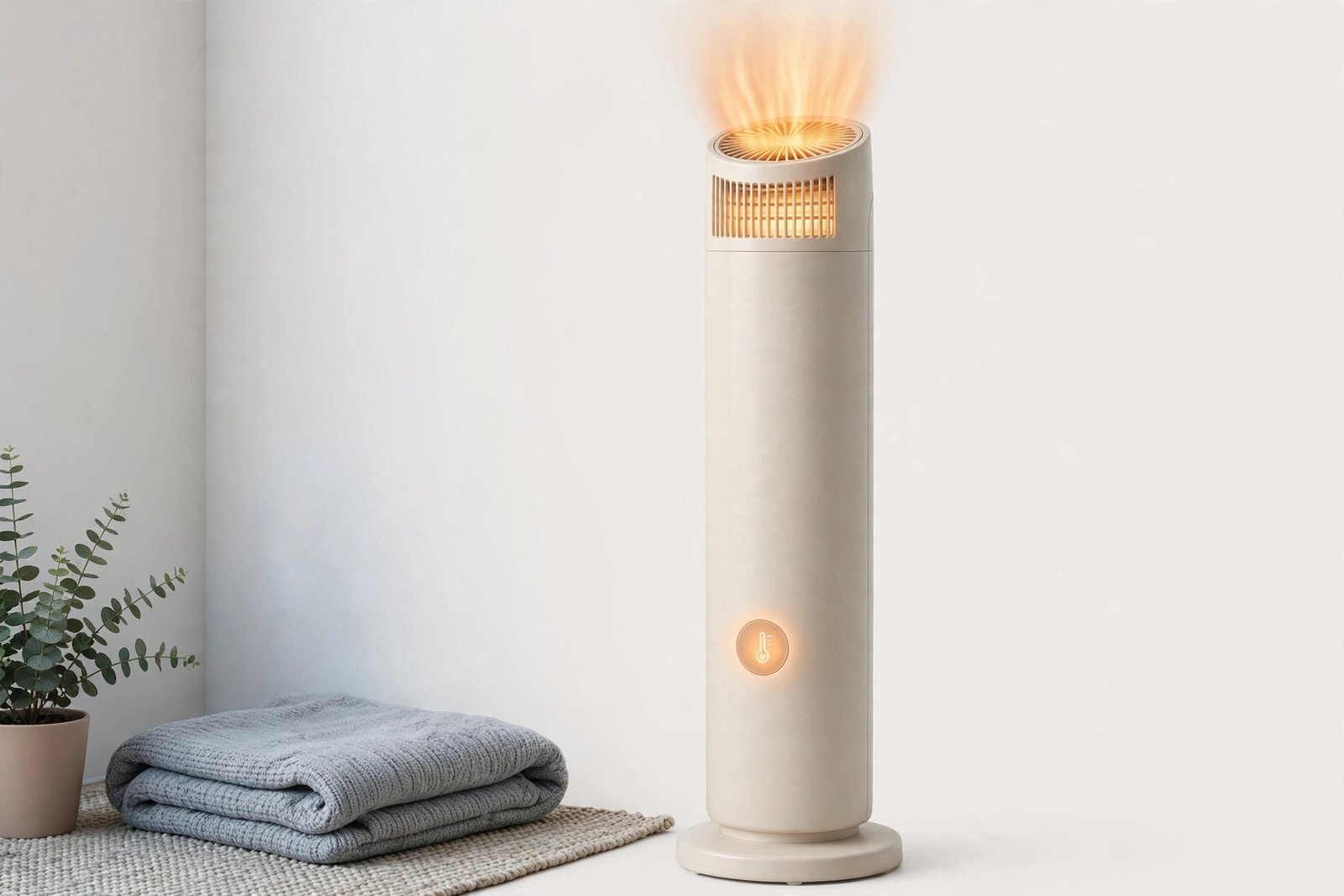
When a room is cold right now, you do not want to wait an hour for warmth, and a Ceramic Tower Fan Heater with Thermostat is built for that moment. The ceramic element heats up fast, the fan pushes the warm air across the room, and the tall tower shape spreads it evenly instead of blasting one spot. Set the thermostat and the heater does the rest: it warms the room quickly, then cycles off to hold the temperature.
Use it for the first cold hour of the morning, for the bathroom before a shower, or for the living room on an evening when the central heating is off. The timer is worth setting every time — an hour of warmth, then off — because a fan heater left running is the fastest way to undo the savings.
Pros
- 👍 Heats a cold room in minutes
- 👍 Thermostat stops it running all day
- 👍 Tall shape spreads warmth evenly
- 👍 Timer switches it off on its own
Cons
- 👎 Fan noise on the highest setting
- 👎 Best for short bursts, not all-day heat
- 👎 Warmth fades fast once it switches off
Best for: quick heat in a bathroom, bedroom or living room in short bursts.
Check Price And User Reviews on Amazon
7. Smart Ceiling Fan with Remote Control
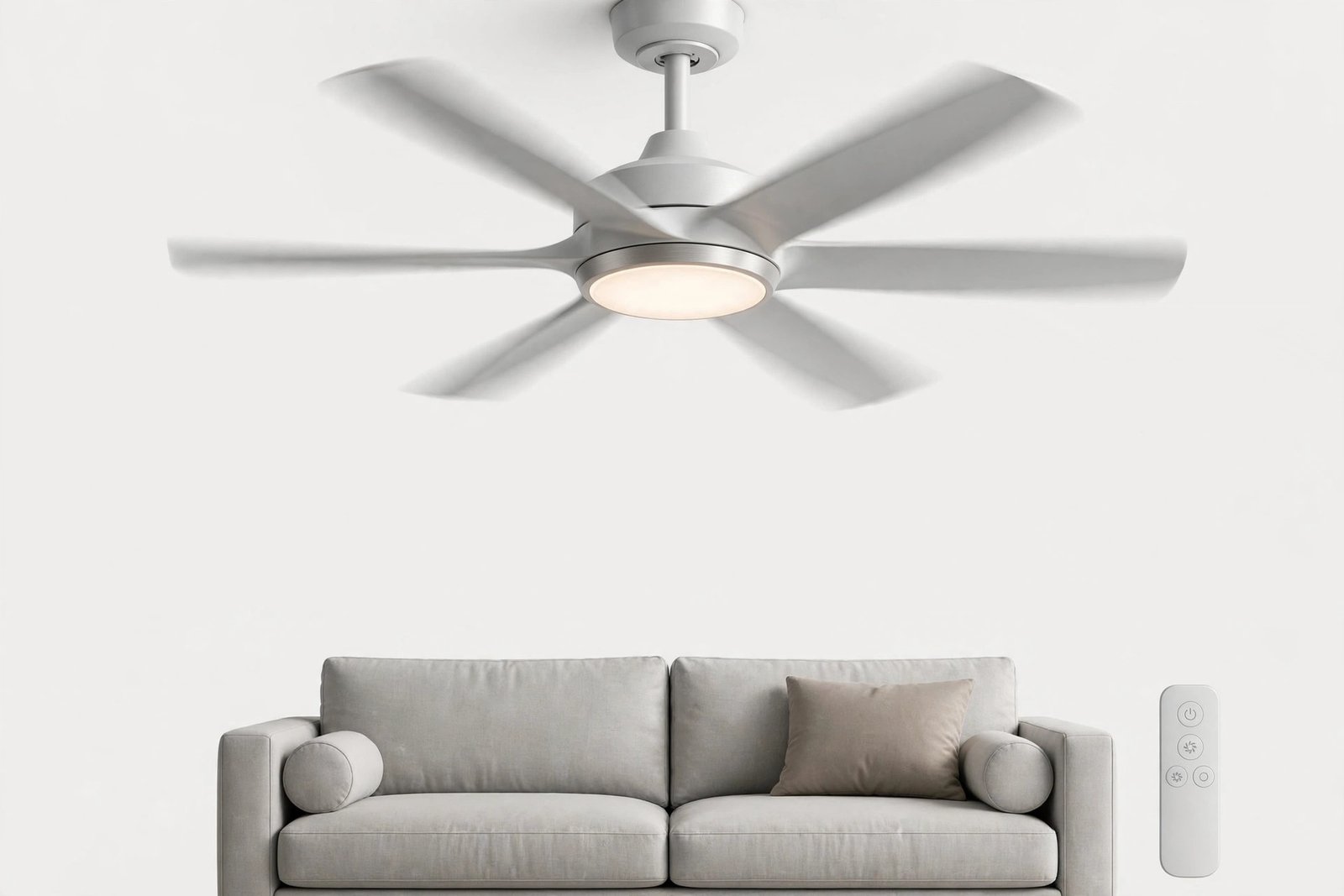
A ceiling fan does two jobs, and a Smart Ceiling Fan with Remote Control does both. In summer it stirs the air so the room feels cooler without the air conditioner, and in winter it runs in reverse, gently pushing the warm air that gathers at the ceiling back down to where people sit. That second job is the one most people miss — and it is one of the simplest ways to save on cooling bills at home, because a fan uses far less power than an air conditioner.
Use the remote or the app to set the speed, set a sleep timer, and switch the direction with the seasons: forward for a cooling breeze in summer, reverse for a slow push of warm air in winter. A fan does not cool the air itself, so switch it off when you leave the room — it cools people, not empty rooms.
Pros
- 👍 Cools people in summer without air conditioning
- 👍 Pushes warm air down in winter
- 👍 Remote and app control from anywhere in the room
- 👍 Sleep timer switches it off on its own
Cons
- 👎 Needs a ceiling fitting and a safe install
- 👎 Does not cool the air, only the people in it
- 👎 Low ceilings leave little room for a fan
Best for: bedrooms and living rooms used through summer and winter.
Check Price And User Reviews on Amazon
8. Smart Air Conditioner Controller

Most air conditioners are either on full blast or off, and a Smart Air Conditioner Controller adds the middle ground. It sits on the wall, talks to the air conditioner, and runs it to a set temperature on a schedule: cool the bedroom before bedtime, ease off overnight, and switch off when the room is empty. It turns a simple on-off machine into one of the most practical ways to save on cooling bills at home, because it stops the air conditioner running at full power for hours nobody needs.
Set the temperature a degree or two higher than you think you need, and let the fan and the blinds do the rest — most rooms feel comfortable sooner than expected once the air is moving. Use the app to check the room temperature before you get home, and switch the cooling on only if the room is genuinely hot.
Pros
- 👍 Runs the air conditioner only when needed
- 👍 Schedules cooling around bedtime and mornings
- 👍 Check and control the room from the phone
- 👍 Works with the air conditioner you already own
Cons
- 👎 Needs a compatible air conditioner model
- 👎 Some features need Wi-Fi and the app
- 👎 One controller per room adds up
Best for: bedrooms and living rooms with an air conditioner that runs all summer.
Check Price And User Reviews on Amazon
9. Smart Vent Booster Fan
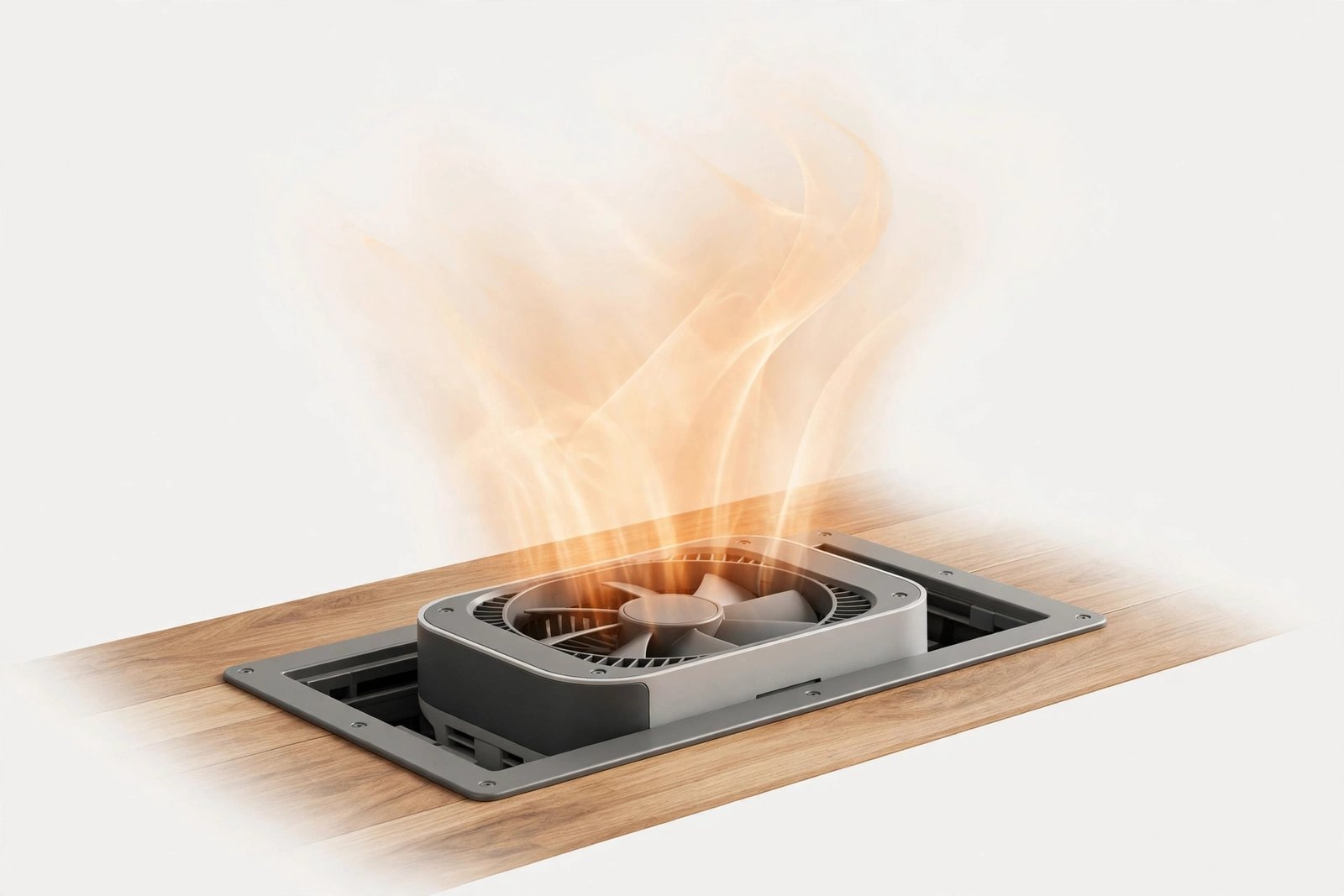
Every house has one room that never gets enough heat in winter or enough cool air in summer, and a Smart Vent Booster Fan is made for it. It fits into the vent in that room and pulls more of the heated or cooled air through, so the far bedroom or the back office finally gets its share. Its own thermostat switches the fan on when the air in the duct is warm or cool, and off when it is not.
Fit it in the vent of the room that is always a few degrees behind the rest of the house. It will not fix a blocked duct or a broken system, but it evens out the rooms that the main system reaches last. Pair it with smart plugs that monitor energy use on the portable heaters that room used to need.
Pros
- 👍 Evens out the room that never gets enough air
- 👍 Switches itself on and off with the duct temperature
- 👍 Can replace a portable heater in that room
- 👍 Fits a standard vent with no ductwork changes
Cons
- 👎 Only fits standard vent sizes
- 👎 Fan noise on the highest speed
- 👎 Will not fix a blocked or broken duct
Best for: the far bedroom or back office that is always too cold or too warm.
Check Price And User Reviews on Amazon
10. Smart Dehumidifier with Humidistat

Damp air feels colder than dry air at the same temperature, and a Smart Dehumidifier with Humidistat fixes the damp. It pulls moisture out of the air in the room that always feels clammy — the basement room, the bathroom, the bedroom with the cold wall — and the humidistat switches it off once the air reaches the level you set. Dry air warms up faster, so the room needs less heating to feel comfortable.
Set the target humidity, empty the tank or fit the drain hose, and let it run on its own schedule. The app shows the humidity trend, so you can see the damp room drying out over a week. It is a quiet gadget that does its best work unnoticed, in the room that used to feel cold.
Pros
- 👍 Dry air feels warmer and heats faster
- 👍 Humidistat switches it off at the target level
- 👍 Helps the damp room that never feels warm
- 👍 App shows the humidity trend over time
Cons
- 👎 Tank needs emptying unless a drain hose is fitted
- 👎 Fan noise in a quiet bedroom
- 👎 Works room by room, not for the whole house
Best for: damp bedrooms, basement rooms and bathrooms that always feel cold.
Check Price And User Reviews on Amazon
11. Infrared Panel Heater with Thermostat

Most heaters warm the air, and the air warms you — slowly, and only after the whole room is heated. An Infrared Panel Heater with Thermostat skips the middle step: the panel warms the person and the chair in front of it, like sunlight through a window. It is one of the smartest gadgets that cut heating costs in winter, because it heats the spot you sit in rather than the air above your head.
Mount it on the wall behind the desk or beside the reading chair, and it warms that spot within minutes. It suits a home office, a reading corner or a bedroom where one person sits still for hours. For a room used by one person at a time, it is the most direct heating in this guide.
Pros
- 👍 Warms the person, not the whole room
- 👍 Heats its spot within minutes
- 👍 Flat panel mounts neatly on the wall
- 👍 Silent, with no fan and no moving parts
Cons
- 👎 Warms only the spot in front of the panel
- 👎 Needs a wall space near where you sit
- 👎 Less useful in a room where people move around
Best for: a home office desk, a reading chair, or one person sitting still.
Check Price And User Reviews on Amazon
12. Electric Window Blind Motor Kit

The afternoon sun can turn a room into an oven, and an Electric Window Blind Motor Kit stops it before the air conditioner has to. The small motor fits onto the blinds you already own and closes them on a schedule or a light sensor, so the sunny windows are shaded through the hottest hours and opened again in the evening. Among energy saving gadgets for the home, this is the quiet summer saver — it does its work while you are out.
Set the schedule to the sun, not the clock: close the west-facing blinds in the afternoon, open them again when the sun drops, and let the winter sun in to warm the room for free. The kit fits most roller blinds in minutes and runs on a rechargeable battery. For a home with big sunny windows, it is the gadget that keeps the air conditioner switched off longest.
Pros
- 👍 Shades sunny windows before the room overheats
- 👍 Schedule and light sensor work on their own
- 👍 Fits the blinds you already own
- 👍 Lets winter sun in to warm the room for free
Cons
- 👎 Only fits standard roller blinds
- 👎 Battery needs recharging every few months
- 👎 One kit per window adds up
Best for: sunny west-facing rooms and big windows that overheat in summer.
Check Price And User Reviews on Amazon
What to Look for Before You Buy
Start with the thermostat. A smart thermostat to lower heating bills is the one purchase that touches every room, so check that it fits your boiler and that you can programme it without the phone app. If it does not fit, the radiator valves and plug-in heaters here still work on their own.
Judge every gadget by what it stops. Energy saving gadgets for the home earn their keep by switching things off, closing blinds, or heating one room instead of five — so look for a thermostat, a timer and a sensor on every gadget you buy. Gadgets that cut heating costs in winter all share that habit: they stop themselves, on a schedule or at a set temperature.
Think about the house before the gadget. Smart plugs that monitor energy use will show you which heater is the expensive one, and a thermal camera will show you which window is the draughty one — but both are telling you to fix the house first. Seal the worst draughts, close the blinds on the sunny side, and let the gadgets manage the rest. Ways to save on cooling bills at home work the same way: shade and air movement first, then the air conditioner, and only for the hours the room is used.
Buy for the rooms you use, not the house you imagine. The bedroom and the living room matter most, then the study and the kitchen. Fit the thermostat and the valves first, add the plugs and the camera to find the waste, then finish with the heaters, fans and blinds for the rooms that still need them. Check the readings after a month.
Final Thoughts
A warm house in winter and a cool one in summer does not need a bigger boiler or a bigger air conditioner — it needs the heating and cooling you already have, aimed at the rooms that matter. A smart thermostat to lower heating bills, valves on the radiators, and energy saving gadgets for the home that switch themselves off are the whole job.
Start with the thermostat and the radiator valves if your home is heated on a fixed timer — those two change the winter most — then add the plugs, the camera and the fans. Gadgets that cut heating costs in winter and smart plugs that monitor energy use work together: one stops the waste, the other proves it. And ways to save on cooling bills at home are the same habit in reverse: shade first, air movement second, and the air conditioner only for the hours the room is genuinely hot. Fit them one room at a time, and let the house get warmer, cooler and cheaper to run.
More Guides You’ll Like
Next in this batch, read our sibling guides Best Kitchen Storage Gadgets for People Who Buy in Bulk and Best Garage Gadgets for Home Mechanics and DIY Repairs. For more on keeping a cold house warm, see Best Gadgets for Drafty Old Houses and Cold Rooms and Best Personal Heating Gadgets for People Who Are Always Cold.
Frequently Asked Questions
What is the best first gadget for cutting heating bills?
A smart thermostat to lower heating bills is the best first buy, because it controls the whole heating system rather than one room. It heats the house only when you are home, drops to frost protection when you are away, and shows you when the boiler runs. After that, add smart radiator valves for the rooms you use least, and smart plugs that monitor energy use on any portable heaters.
Do energy saving gadgets really cut heating costs in winter?
Yes — gadgets that cut heating costs in winter work by stopping waste, not by making the house colder while you are in it. A thermostat cuts the hours the boiler runs, radiator valves stop heating empty rooms, and a thermal camera shows you the draughts to seal. Energy saving gadgets for the home pay for themselves over a season by heating people and rooms that are actually used.
How can I save on cooling bills at home without an air conditioner?
Ways to save on cooling bills at home start with shade and air movement: close the blinds on sunny windows during the afternoon, run a ceiling fan to stir the air, and open windows in the evening when the outside air cools down. A smart ceiling fan uses far less power than an air conditioner, and an electric blind motor can close the blinds on its own while you are out. Only run the air conditioner for the hours the room is genuinely hot.
Are smart plugs that monitor energy use worth buying?
Yes, especially if you use portable heaters, fans or a dehumidifier. Smart plugs that monitor energy use show you exactly what each appliance costs to run, so you can spot the expensive one and replace it, or set a timer so it switches off at bedtime. They are cheap, they fit any standard socket, and one plug moved around the house can test every appliance in turn.



One Comment