

Best Garden Gadgets for People with Bad Backs
Affiliate Disclosure: As an Amazon Associate, we earn from qualifying purchases made through links on this page, at no extra cost to you. This helps support our work and keeps our guides free to read.
A quick note on prices: prices change often, so we never quote a fixed price here. Please check the latest price on Amazon before you buy, using the yellow buttons in this guide. The product pictures in this article are original illustrations created for this guide, not manufacturer photos.
Gardening should feel like a pleasure, not a punishment for your back. The best garden gadgets for people with bad backs do the hard work for you — they cut, dig, lift, carry and water with a motor instead of your muscles, so you can enjoy the garden without bending double, hauling heavy loads or spending the evening aching on the sofa. If your back troubles you, check with a doctor or physiotherapist before starting garden work, and stop and rest if anything hurts. With the right kit, a bad back does not have to mean giving up the garden you love.
The trick is choosing tools that keep you upright and let the motor do the pushing. Lightweight electric garden tools for bad backs are built around that idea: a light body you can hold with one hand, a long handle that reaches the ground while you stand tall, and a battery or cord that supplies the power your back used to supply.
This guide gathers twelve powered helpers that cover the whole garden, from pruning the roses to watering the beds. Electric pruners for easy garden work take the grip strength out of cutting, while garden tools that save your back in general — powered carts, long-handle trimmers, auto-rewind hose reels — take the bending, lifting and dragging out of the rest of the job. And lightweight garden gadgets for older gardeners are not only for older gardeners: anyone who wants to garden for years without wearing out their back will feel the difference on the very first afternoon.
You do not need all twelve tools to feel the benefit. Most gardeners with a sore back need a powered pruner and a long-handle trimmer first, then a powered cart or a watering system to take over the heaviest daily chores. Powered garden tools for small gardens are especially good value, because a small garden needs only a light, compact tool — and a light tool is exactly what a bad back wants. Start with the job that hurts most, pick the tool that fixes it, and add the rest as your garden grows.
How We Chose
Every tool here had to pass one test first: does it genuinely reduce bending, lifting or force, or does it just add a motor to the same old strain? That ruled out heavy petrol machines, short-handle tools that force you to stoop, and gadgets that look clever but still need a strong grip or a bent back to use. What survived is light enough to carry comfortably, long enough to use standing up, and powered enough that the motor does the work.
We also weighed everyday practicality: a battery that lasts a normal gardening session, a weight you can lift with one hand, handles that adjust to your height, and controls that are easy to reach without twisting. Where a tool needs charging, we say so plainly, and where a corded model suits a small garden better than a battery one, we say that too.
Quick List
- Lightweight Electric Pruner — one squeeze cuts a thick branch — no grip strain.
- Electric Garden Tiller — turns the soil while you simply walk behind it.
- Powered Weeder — pulls weeds out by the root without bending down.
- Electric Garden Cart with Powered Wheels — hauls soil and plants while the motor pushes.
- Cordless Hedge Trimmer — shapes the hedge at arm height, standing tall.
- Electric Leaf Blower — clears the lawn and path without raking or bending.
- Long-Handle Electric Grass Trimmer — edges the lawn while you stand upright.
- Electric Garden Hose Reel with Auto Rewind — winds the hose away at the touch of a button.
- Cordless Garden Sprayer — waters and feeds plants without carrying a heavy can.
- Electric Drip Watering System with Timer — waters the beds for you, on a timer.
- Electric Pole Saw — cuts high branches from the ground, no ladder needed.
- Electric Lawn Aerator for Small Gardens — airs the lawn with a motor, not your back.
1. Lightweight Electric Pruner

If you buy only one tool from this guide, make it a Lightweight Electric Pruner. A normal pair of secateurs needs a hard squeeze for every cut, and a thick branch can take three or four squeezes — that is exactly the kind of repeated grip strain that leaves hands aching and backs tense. An electric pruner cuts the same branch with one gentle pull of the trigger, the motor doing the work while your hand simply guides the blades.
It is one of the best examples of lightweight electric garden tools for bad backs: the body weighs little, the blades open and close on their own, and you can prune a whole rose bed standing upright, reaching into the bush without crouching or twisting. Electric pruners for easy garden work are also kind to wrists and fingers, so a long pruning session feels like light work instead of a chore. Keep a spare battery charged, and the pruner will cut all afternoon.
Pros
- 👍 Cuts thick branches with one gentle trigger pull
- 👍 Light body that is easy to hold for a long session
- 👍 Reaches into bushes without crouching or bending
- 👍 Kind to wrists, fingers and grip strength
Cons
- 👎 Battery needs charging between long sessions
- 👎 Blades need cleaning after sappy plants
- 👎 Costs more than a manual pair of secateurs
Best for: pruning roses, shrubs and fruit bushes without grip strain.
Check Price And User Reviews on Amazon
2. Electric Garden Tiller

Digging is the job most likely to hurt a bad back, and an Electric Garden Tiller takes it over completely. Instead of driving a fork into the soil and levering it up, bend after bend, you simply walk slowly behind the tiller while its powered tines churn the earth into a soft, plantable bed. The motor turns the soil, breaks up clods and mixes in compost, and your back stays upright the whole time.
Choose a light, compact model for a small or medium garden, because a big heavy tiller is hard to turn at the end of each row. Garden tools that save your back do not come any clearer than this one: a job that used to take a sore afternoon now takes a gentle hour.
Pros
- 👍 Turns soil without digging, bending or levering
- 👍 Breaks up clods and mixes compost in one pass
- 👍 Compact models are easy to turn and store
- 👍 Prepares a bed in a fraction of the time
Cons
- 👎 Needs a power socket or a charged battery
- 👎 Struggles in very hard, dry or stony soil
- 👎 Can be awkward to carry up garden steps
Best for: preparing vegetable beds and new borders without digging.
Check Price And User Reviews on Amazon
3. Powered Weeder

Weeding means kneeling, bending and pulling, over and over — the worst combination for a sore back. A Powered Weeder changes the job entirely: you stand upright, press the head onto the weed, and the powered head twists or pulls it out by the root. No kneeling on a pad, no bent-over tugging, and no weeds snapping off at the stem to grow back next week.
It is a small, light tool, and it suits paths, patios and beds where weeds pop up between paving or among the plants. Electric pruners for easy garden work get the praise, but a powered weeder quietly saves just as much bending in a weedy spring. Use it after rain, when the soil is soft and the roots come out cleanly, and empty the head often so it keeps gripping well.
Pros
- 👍 Pulls weeds out by the root while you stand upright
- 👍 No kneeling, bending or tugging at stubborn roots
- 👍 Light and easy to carry around the garden
- 👍 Works between paving stones and in beds
Cons
- 👎 Best in soft soil after rain
- 👎 Small head means one weed at a time
- 👎 Battery models need regular charging
Best for: weeding paths, patios and beds without kneeling.
Check Price And User Reviews on Amazon
4. Electric Garden Cart with Powered Wheels
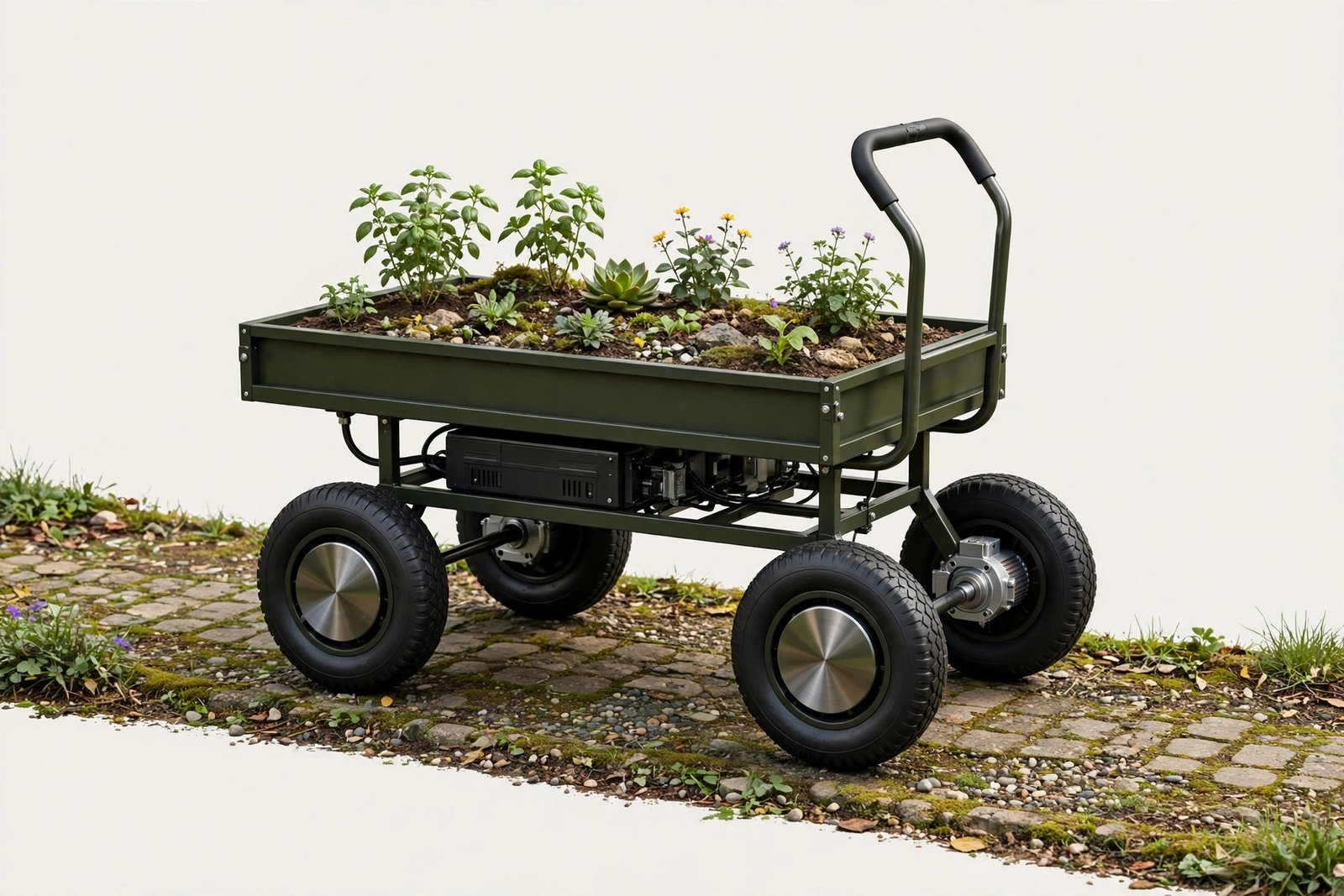
Carrying is the hidden strain in gardening: bags of compost, pots of plants, buckets of weeds, all lifted and lugged from one end of the garden to the other. An Electric Garden Cart with Powered Wheels carries the load instead. You load it at a comfortable height, press a button, and the powered wheels push the weight along the path while you simply steer.
Look for a cart with a tipping bed, so you can empty soil or leaves without lifting the load at all. Garden tools that save your back are often the simplest ones, and a powered cart is the best example: it turns the heaviest job in the garden into a gentle walk.
Pros
- 👍 Powered wheels push heavy loads for you
- 👍 Tipping bed empties soil without lifting
- 👍 Loads at a comfortable standing height
- 👍 Frees you from carrying bags and buckets
Cons
- 👎 Needs charging between heavy days
- 👎 Wide body needs a clear path to pass
- 👎 Heavier to store than a plain wheelbarrow
Best for: moving compost, plants and garden waste without carrying.
Check Price And User Reviews on Amazon
5. Cordless Hedge Trimmer

A hedge needs cutting from top to bottom, and a manual trimmer means hours of reaching, stretching and squeezing. A Cordless Hedge Trimmer is light enough to hold at shoulder height without strain, and the powered blades slice through growth with a smooth sweep, so you guide the tool rather than forcing it through every branch.
Lightweight garden gadgets for older gardeners often start with the hedge trimmer, because hedge cutting is one of the first jobs that gets harder with age — and one of the easiest to fix with a powered tool. Lightweight electric garden tools for bad backs like this one also keep you off the ladder for low and medium hedges, since the long blade reaches up while your feet stay on the ground. Cut a little at a time, step back often, and let the blades do the work.
Pros
- 👍 Light enough to hold at shoulder height
- 👍 Powered blades slice through growth smoothly
- 👍 Long blade reaches high without a ladder
- 👍 Cordless design moves freely around the hedge
Cons
- 👎 Battery limits very long cutting sessions
- 👎 Thick old branches may need a saw instead
- 👎 Vibration can tire arms on a big hedge
Best for: shaping low and medium hedges while standing tall.
Check Price And User Reviews on Amazon
6. Electric Leaf Blower

Raking leaves means bending over a rake for an hour, sweeping the same patch again and again. An Electric Leaf Blower clears the lawn and the path in minutes, standing upright, with a stream of air doing the sweeping for you. Point it, walk slowly forward, and watch the leaves gather into a neat pile at the edge of the lawn.
Pick the lightest model that still moves wet leaves, because a heavy blower defeats the purpose. Electric pruners for easy garden work and a light blower make a good pair for autumn: prune first, blow second, and the garden is tidy without a single bent-over hour.
Pros
- 👍 Clears leaves in minutes without raking
- 👍 Light models are easy to carry and aim
- 👍 Keeps you standing upright the whole time
- 👍 Also clears paths, patios and driveways
Cons
- 👎 Noisy, so best used at a kind hour
- 👎 Wet, stuck leaves may need a second pass
- 👎 Corded models need an outdoor socket
Best for: clearing autumn leaves from lawns, paths and patios.
Check Price And User Reviews on Amazon
7. Long-Handle Electric Grass Trimmer
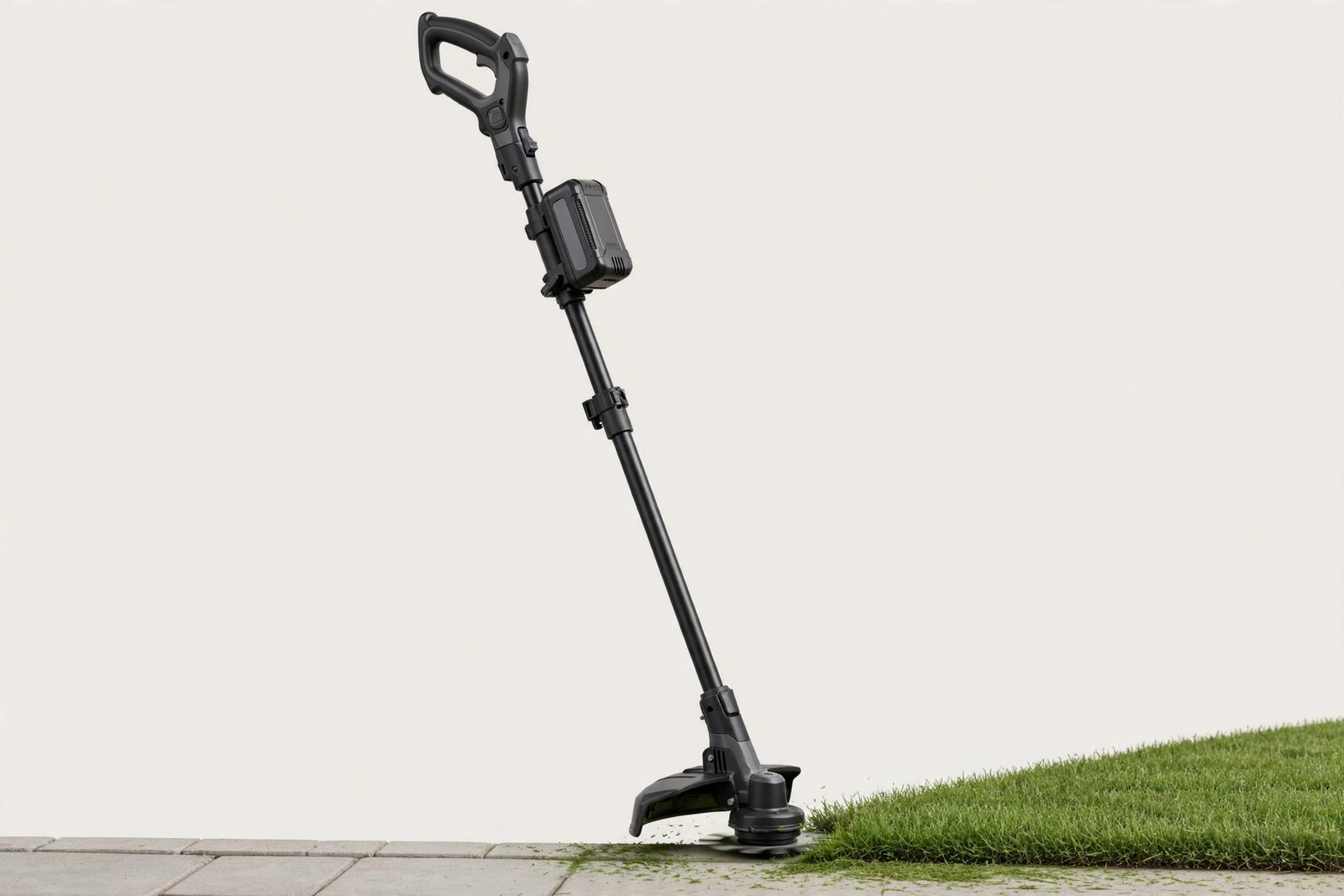
The edges of the lawn are where a mower cannot reach, and trimming them by hand means crouching along every border. A Long-Handle Electric Grass Trimmer has a long shaft and an adjustable handle, so you walk along the edge standing tall while the spinning head cuts a neat line. It is the tool that turns the fiddliest job in the garden into a gentle stroll.
Look for a model with a telescopic shaft you can set to your own height, and a head that tilts so you can edge without twisting your wrists. Powered garden tools for small gardens often include a trimmer like this, because small lawns have plenty of edges and very little room for a big machine. Lightweight electric garden tools for bad backs are built for exactly this kind of work: long, light, and powered at the cutting end.
Pros
- 👍 Long shaft keeps you standing upright
- 👍 Adjustable handle fits your height
- 👍 Cuts neat edges the mower cannot reach
- 👍 Light head is easy to guide along borders
Cons
- 👎 Line needs replacing as it wears down
- 👎 Can throw up stones and cuttings
- 👎 Corded models need care with the cable
Best for: edging lawns and borders without crouching.
Check Price And User Reviews on Amazon
8. Electric Garden Hose Reel with Auto Rewind

A garden hose is heavy when it is full of water, and winding it back onto a reel by hand means bending, pulling and coiling for ten minutes. An Electric Garden Hose Reel with Auto Rewind winds itself away at the touch of a button, the motor reeling the hose in smoothly while you stand beside it. Watering the garden stops being a chore that ends with a wrestling match.
Mount it near the tap, at a height you can reach without bending, and choose a hose long enough to reach the far bed without dragging. Garden tools that save your back include the quiet ones like this: no lifting, no coiling, no dragging a heavy hose across the lawn. It also keeps the hose tidy and out of the way, so there is nothing to trip over on the path.
Pros
- 👍 Rewinds the hose itself at a button press
- 👍 No bending, pulling or coiling by hand
- 👍 Keeps the hose tidy and off the path
- 👍 Mounts at a comfortable reaching height
Cons
- 👎 Needs power near the tap
- 👎 Hose length limits how far it reaches
- 👎 Motor adds weight if you move it often
Best for: watering beds and paths without dragging a heavy hose.
Check Price And User Reviews on Amazon
9. Cordless Garden Sprayer

A watering can is heavy, and carrying it back and forth to the tap is a strain in itself. A Cordless Garden Sprayer carries the water for you in a tank on your back or on wheels, and sprays it gently over the plants with a powered pump — no lifting a full can, no tipping it at arm height, and no slopping water down your legs.
It suits watering, feeding and treating plants alike, because the spray reaches under leaves and into the soil without you bending into the bed. Lightweight garden gadgets for older gardeners make watering a pleasure again, and a cordless sprayer is one of the best of them: fill the tank once, walk the beds at your own pace, and let the pump do the pouring. Rinse the tank after feeding, so the nozzle stays clear.
Pros
- 👍 Pumps water for you — no lifting a heavy can
- 👍 Gentle spray reaches under leaves easily
- 👍 Tank carries enough for a whole bed
- 👍 Cordless design moves freely around plants
Cons
- 👎 Tank is heavy when fully filled
- 👎 Needs cleaning after plant feeds
- 👎 Battery needs charging between uses
Best for: watering, feeding and treating plants without carrying cans.
Check Price And User Reviews on Amazon
10. Electric Drip Watering System with Timer

Watering every day is the chore that never ends, and it is the chore that keeps bending you over the beds. An Electric Drip Watering System with Timer waters for you: thin drip lines carry water to the base of each plant, and a timer switches the flow on and off at the hours you choose. Set it once, and the beds water themselves while you enjoy the garden.
It is one of the kindest powered garden tools for small gardens, because a small garden needs only a short run of drip line, and the timer takes over the daily watering completely. Drip watering also suits the plants, since water goes to the roots instead of the leaves, and the soil stays evenly damp.
Pros
- 👍 Waters the beds automatically on a timer
- 👍 Water goes to the roots, not the leaves
- 👍 No daily bending over beds with a can
- 👍 Easy to extend as the garden grows
Cons
- 👎 Needs setting up at the start of the season
- 👎 Drippers can block if the water is dirty
- 👎 Timer needs batteries or mains power
Best for: watering beds and pots automatically, every day.
Check Price And User Reviews on Amazon
11. Electric Pole Saw

Cutting a high branch normally means a ladder, a saw, and a lot of reaching overhead — a combination no bad back enjoys. An Electric Pole Saw puts a powered saw on the end of a long pole, so you stand on the ground, raise the pole, and cut the branch while your feet stay flat and your back stays straight. It is the safest way to reach the high growth.
Choose a light model with a pole that extends to the height you need, and always cut with the saw resting on the branch, never forcing it. Garden tools that save your back do not get more direct than this: the pole does the reaching, the motor does the cutting, and you stay safely on the ground. Lightweight garden gadgets for older gardeners often include a pole saw for exactly this reason — it takes a ladder job and turns it into a standing job.
Pros
- 👍 Cuts high branches while you stay on the ground
- 👍 No ladder and no overhead reaching
- 👍 Light pole is easy to raise and aim
- 👍 Powered chain cuts thick branches cleanly
Cons
- 👎 Long pole can be awkward in a tight garden
- 👎 Falling branches need a clear drop zone
- 👎 Chain needs oiling and occasional sharpening
Best for: cutting high branches safely from the ground.
Check Price And User Reviews on Amazon
12. Electric Lawn Aerator for Small Gardens

A compacted lawn grows thin and patchy, and aerating it by hand means driving a fork into the turf hundreds of times. An Electric Lawn Aerator for Small Gardens does the same job with a motor: you walk slowly behind it while its powered tines punch small holes across the lawn, letting air, water and feed reach the roots. The lawn breathes again, and your back never bends once.
It is one of the best powered garden tools for small gardens, because a small lawn needs only a light, compact aerator, and a light machine is easy to push, turn and store. Aerate in spring or autumn, when the soil is soft, and follow with a light feed so the grass grows back thick and green. Lightweight electric garden tools for bad backs like this one turn a job you would put off for years into a gentle afternoon walk.
Pros
- 👍 Aerates the lawn without fork work
- 👍 Lets air, water and feed reach the roots
- 👍 Light and compact for a small garden
- 👍 Easy to push, turn and store
Cons
- 👎 Works best in soft soil after rain
- 👎 Needs a clear lawn with no toys or stones
- 👎 Tines need cleaning after each use
Best for: reviving a thin, compacted lawn without digging.
Check Price And User Reviews on Amazon
What to Look for Before You Buy
Start with weight, because a powered tool that is too heavy to lift is no help at all. Pick the tool up before you buy if you can, hold it at working height for a minute, and ask yourself whether you could carry it around the garden for an hour. Lightweight electric garden tools for bad backs are worth seeking out by name: a tool that weighs little, balances well in the hand, and has a handle you can grip without squeezing hard will get used every week, while a heavy one will sit in the shed. If your back troubles you, check with a doctor or physiotherapist before starting garden work, and stop and rest if anything hurts.
Next, look at handle length and adjustability. A tool that is too short forces you to bend, and a tool that is too long forces you to reach — either way, your back pays for it. Garden tools that save your back almost always have a long or telescopic handle you can set to your own height, so you work standing tall with your arms relaxed. Electric pruners for easy garden work are the one exception, since they are held in the hand, but even there a comfortable grip and a light body matter more than raw cutting power. Try the handle, adjust it, and make sure it locks firmly before you buy.
Think about power next: battery or corded, and how long a charge lasts. A battery tool is free to move around the garden, which suits a bigger plot, but it needs charging and it runs out mid-job if the battery is small. A corded tool never runs out, which suits a small garden near a socket, but the cable needs care so you do not trip over it or cut it. Powered garden tools for small gardens are often best as corded models, because the garden is small enough for a cable and the tool stays light without a big battery. Whichever you choose, check the run time against a normal session in your garden, and keep a spare battery charged if you garden for long stretches.
Finally, buy for the job that hurts most, not for the whole garden at once. If pruning hurts, start with the electric pruner; if carrying hurts, start with the powered cart; if watering hurts, start with the drip system. Lightweight garden gadgets for older gardeners work best when they are bought one at a time, tried in the real garden, and kept only if they genuinely make the job easier. Test each tool on a small job first, rest between jobs, and build your kit slowly — a garden full of light, powered helpers is worth far more than a shed full of heavy tools you avoid using.
Final Thoughts
A sore back does not have to end your gardening, and it does not have to shrink your garden either. Lightweight electric garden tools for bad backs, electric pruners for easy garden work, and garden tools that save your back all work on the same simple idea: let the motor do the hard part, and keep your own body upright, relaxed and comfortable while you garden. Start with the pruner and the trimmer, add the powered cart or the drip watering system next, and your garden will feel like yours again.
Take it gently, build your kit one tool at a time, and enjoy the garden at your own pace. Lightweight garden gadgets for older gardeners and powered garden tools for small gardens are made for exactly this kind of slow, comfortable gardening — short sessions, plenty of rests, and tools that do the heavy work for you. Choose the tool that fixes the job that hurts most, try it on a small task first, and let the garden grow back into the pleasure it was always meant to be.
More Guides You’ll Like
For more comfort-first gardening ideas, see our batch sibling Best Garden Gadgets for Balcony Gardeners in the City and our batch sibling Best Garage Gadgets for Home Mechanics and DIY Repairs, plus the live guides Best Solar Lighting Gadgets for Patios and Pathways and Best GPS Trackers for Dogs Who Escape from the Garden Often.
Frequently Asked Questions
What are the best garden tools for someone with a bad back?
The best tools are light, long-handled and powered, so the motor does the work while you stay upright. Lightweight electric garden tools for bad backs — such as an electric pruner, a long-handle trimmer and a powered cart — take the bending, lifting and gripping out of the job. Start with the tool that fixes the job that hurts most, and add the rest one at a time. If your back troubles you, check with a doctor or physiotherapist before starting garden work.
Are electric pruners really easier on your hands and back?
Yes. Electric pruners for easy garden work cut a thick branch with one gentle trigger pull, instead of the hard, repeated squeezes a manual pair needs. That saves your grip, your wrists and your shoulders, and because you are not straining with each cut, your back stays relaxed too. They are one of the first tools to try if pruning leaves you aching, and they suit rose beds, shrubs and small fruit trees alike.
How can I garden without bending over all the time?
Use garden tools that save your back by design: long-handle trimmers that reach the ground while you stand tall, powered weeders that pull weeds without kneeling, and drip watering systems that water the beds for you. Raised beds also help, since they bring the plants up to a comfortable working height. Work in short sessions, rest often, and stop if anything hurts.
Are powered garden tools suitable for older gardeners and small gardens?
Yes — lightweight garden gadgets for older gardeners are made to be light, simple and easy to hold, and powered garden tools for small gardens are usually compact models that are easy to carry, turn and store. A small garden needs only a light tool, and a light tool is exactly what an older gardener or anyone with a sore back wants. Choose cordless models for freedom of movement, or corded models for a small garden near a socket.

One Comment