Best TV Sound Gadgets for Apartments Without Disturbing Neighbors: 12 Low-Volume Picks for Clear Sound After Dark
As an Amazon Associate, we earn from qualifying purchases made through links on this page, at no extra cost to you. This helps support our work and keeps our guides free to read.
A quick note on prices: prices change often, so we never quote a fixed price here. Please check the latest price on Amazon before you buy, using the yellow buttons in this guide. The product pictures in this article are original illustrations created for this guide, not manufacturer photos.
Introduction
If you are looking for the best tv sound gadgets for apartments without disturbing neighbors, you know the nightly negotiation by heart: the dialogue drops to a whisper, so the volume goes up; an explosion or a car chase follows, so the volume crashes back down; and somewhere between the two, a neighbour’s knock, a roommate’s complaint or a wakeful child in the next room settles the argument for you. Apartment walls were not built for modern television sound, which swings from mumbling to mayhem in a single scene.
The good news is that the fix is rarely “louder.” It is “closer” and “clearer.” Every pick in this guide works on one of those two ideas: bring the sound to your ears so the room stays quiet — wireless tv headphones, near-ear speakers, a small speaker on the arm of the sofa — or clean the sound up so it stays intelligible at a modest volume, with a soundbar with night mode, proper tv dialogue clarity settings and bass you can turn down before it travels through the floor. Either way, you hear more while everyone else hears less.
We have thought about the real apartment situations behind this search: the film fan whose partner goes to bed at ten, the flat-sharer catching up on a series after midnight, the parent finishing a drama once the kids are finally asleep, and anyone whose downstairs neighbour has politely mentioned the action films. These are courtesy problems, not hearing problems — if your household’s issue is hearing the TV comfortably in a regular house, that is a different list — so everything here is judged on how clearly it plays at low volume and how little of it escapes your room.
We have been honest about the trade-offs, too. Headphones shut the room out completely, which is bliss for one viewer and awkward for two; soundbars share the sound but depend on settings you have to actually switch on; and bass is the neighbour problem in disguise, because low frequencies travel through walls and floors that stop voices easily. Read the pros and cons, decide whether your evenings are solo or shared, and start there — the sections below work through both routes in order.
How We Chose
We chose these twelve products by one test: does this gadget let you hear television clearly at a volume that would not bother the people on the other side of your walls, floor or bedroom door? A pick earned its place if it moves the sound closer to the listener, lifts dialogue out of the mix so voices stay clear without turning everything up, or tames the parts of TV sound — bass rumble and sudden loud peaks — that travel furthest and annoy most.
We also favoured apartment-friendly details: no drilling and no permanent installation, remotes with the important buttons on them rather than buried in an app, volume controls that work in fine steps at the quiet end of the range, and connections that suit the televisions people actually own, including older sets with only a headphone socket or an optical output. Finally, we spread the picks across the ways apartments actually watch — one person alone, two people sharing a sofa, and a whole room at a sociable but sensible volume.
Quick List
- Wireless TV Headphones with Charging Dock — full cinema sound in your ears and total silence for everyone else.
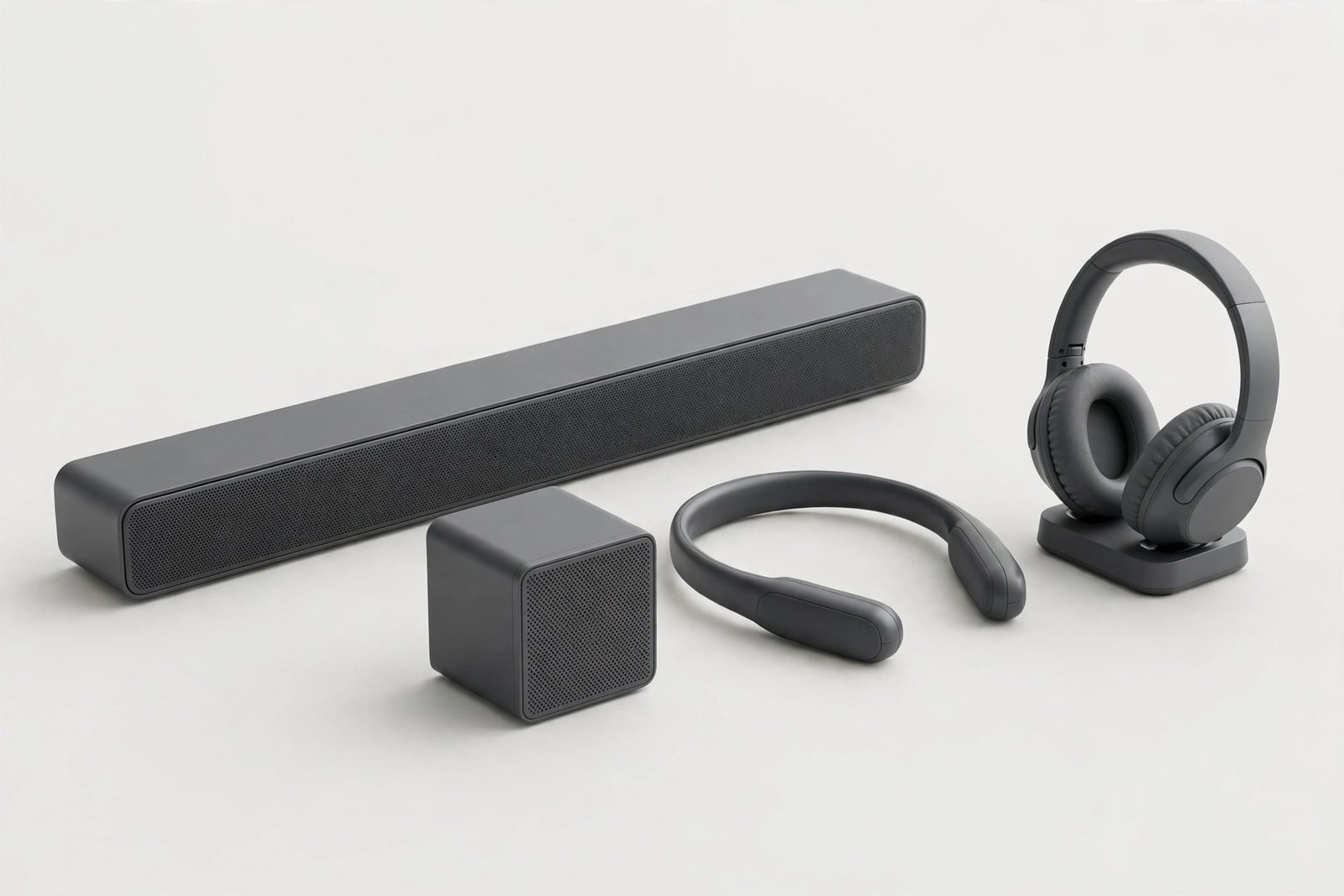
- Soundbar with Night Mode and Dialogue Mode — shared sound with the loud peaks flattened and the voices lifted.
- Wearable Neckband TV Speaker — near-ear sound that leaves your ears open and the room quiet.
- Portable Wireless TV Speaker — a small speaker that sits beside you, so the TV itself can stay low.
- Soundbar with Wireless Subwoofer and Bass Control — proper movie weight with a bass dial you can turn down at night.
- Bluetooth TV Audio Transmitter — turns almost any TV into a wireless one for the headphones you already own.
- Two-Person Wireless TV Headphone Set — two pairs, one transmitter, a film for two that nobody else hears.
- Compact Soundbar for Small Apartments — clear, modest sound sized for small rooms and small TV stands.
- Wireless TV Earbuds with Transmitter — the discreet in-ear route to private late-night viewing.
- Soundbar with Adjustable Centre Channel — a separate volume control for the channel the voices live on.
- Soundbar with Automatic Volume Levelling — evens out whispering scenes, loud adverts and sudden explosions.
- Soundbase Speaker with Dialogue Mode — a sturdy under-TV speaker with no separate subwoofer to thump the floor.
1. Wireless TV Headphones with Charging Dock
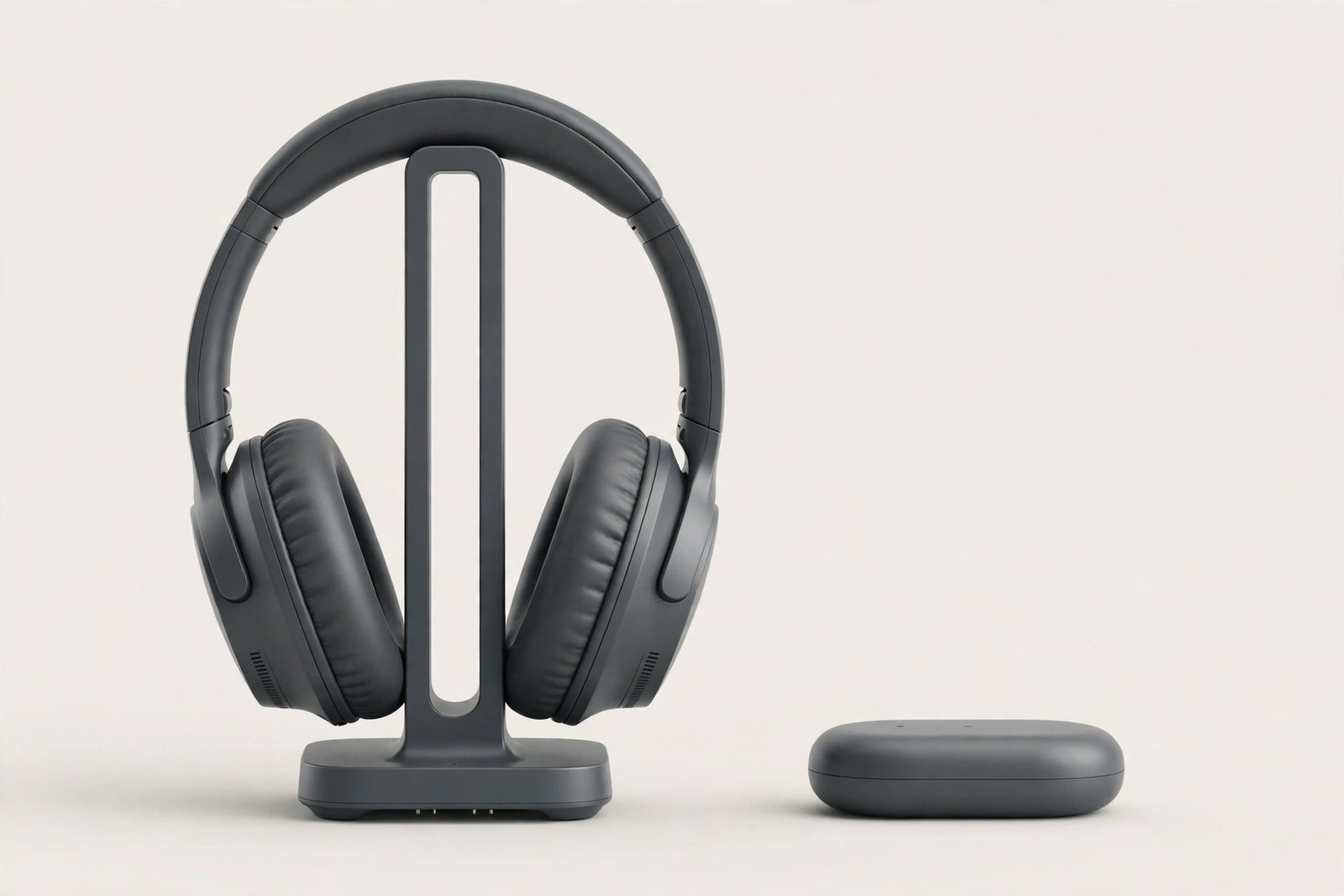
Wireless TV Headphones with Charging Dock are the complete answer when you are the only person awake: the sound leaves the television entirely and arrives in your ears at whatever volume you like, while the room — and the flat above, below and beside you — hears nothing at all. Dedicated TV headphones connect to a dock that plugs into your TV’s optical or headphone output, and the dock doubles as the charger, so the headphones live on it beside the TV and are always ready for the late film.
Dedicated sets beat ordinary Bluetooth headphones for television in two ways: the connection is tuned for low delay, so lips and voices stay in sync, and the range is built for living rooms, so a trip to the kitchen does not drop the sound. Volume lives on the earcup, where it should be. For anyone wondering how to hear the tv without turning it up for the whole building, this is the benchmark everything else on this list is measured against — private, clear and completely silent to everyone else.
Pros
- 👍 Total silence for neighbours, roommates and sleeping family.
- 👍 Low-delay connection keeps dialogue in sync with lips.
- 👍 Dock keeps them charged and in one obvious place.
- 👍 Your volume is yours alone — no compromise setting.
Cons
- 👎 One viewer only, unless you buy a two-pair set.
- 👎 You will not hear the doorbell, the phone or a child calling.
- 👎 Earcups can feel warm during a long summer film.
Best for: solo late-night viewing — the single most neighbour-proof purchase in this guide.
Check Price And User Reviews on Amazon
2. Soundbar with Night Mode and Dialogue Mode

A Soundbar with Night Mode and Dialogue Mode is the shared-viewing answer: two settings on one remote that reshape television sound for thin walls. Night mode compresses the dynamic range — quiet passages are lifted slightly and loud ones are capped — so the film stops swinging between inaudible and antisocial. Dialogue mode does the complementary job, boosting the frequencies voices live in so words stay clear against music and effects without raising the overall volume at all.
Used together, they change what a reasonable volume can do: a drama at ten o’clock stays understandable in your room and unremarkable outside it. Look for both modes on the remote as real buttons rather than app-only settings, because the feature you have to dig for at midnight is the feature you will not use. This is also the natural first step up for the movie-night setup we round up in our guide to living room gadgets for movie nights at home — the same Friday-night film, tuned for the neighbours you actually have.
Pros
- 👍 Night mode caps the loud peaks that carry through walls.
- 👍 Dialogue mode lifts voices without raising overall volume.
- 👍 Everyone on the sofa hears the same improved sound.
- 👍 One remote button transforms late-evening viewing.
Cons
- 👎 Night mode flattens big action scenes by design.
- 👎 Sound still plays into the room — not silent like headphones.
- 👎 Mode names and quality vary a lot between brands.
Best for: couples and flat-shares who watch together after nine and want shared, considerate sound.
Check Price And User Reviews on Amazon
3. Wearable Neckband TV Speaker
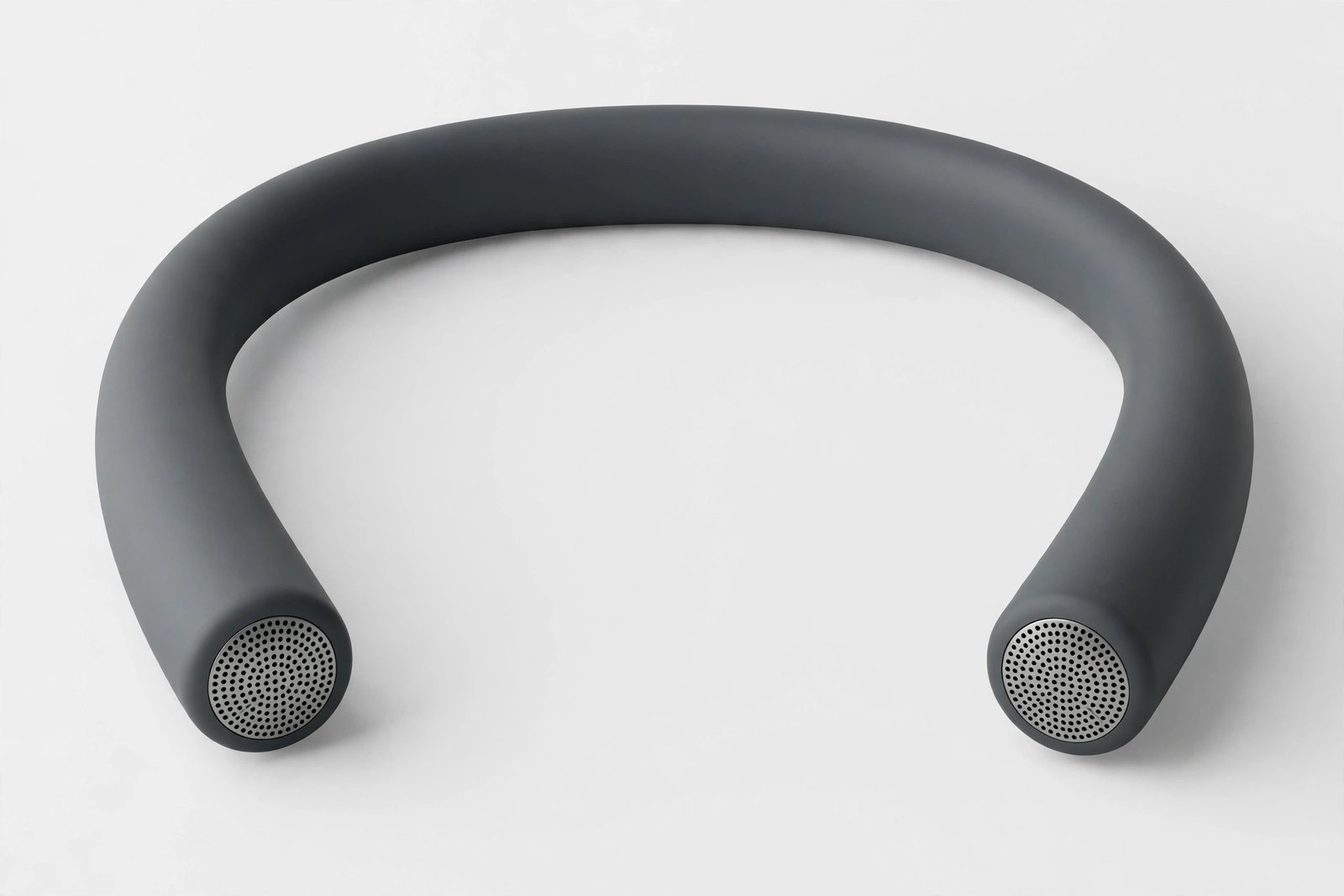
A Wearable Neckband TV Speaker rests on your shoulders and fires the sound upwards from two small speakers either side of your neck, creating a personal bubble of clear audio a few inches from your ears. Because the speakers are so close, the volume they need is tiny — and because your ears stay uncovered, you still hear the doorbell, the kettle and anyone talking to you, which is exactly what headphones take away.
It is the middle path of this guide: private-ish without being isolating, and clear at levels the rest of the room experiences as a murmur. Neckband speakers suit viewers who dislike things in or over their ears, and anyone who watches with a partner who prefers the ordinary TV speakers running quietly at the same time — most televisions and transmitters can feed both. Battery life varies, so check it covers your longest viewing session, and favour designs light enough to forget you are wearing by the second episode.
Pros
- 👍 Near-ear clarity at a fraction of normal room volume.
- 👍 Ears stay open — hear the doorbell and conversation.
- 👍 Nothing in or over your ears to get warm or sore.
- 👍 Partner can keep the TV speakers on quietly alongside.
Cons
- 👎 Some sound does escape — a murmur, not silence.
- 👎 Bass is modest by design; films feel lighter.
- 👎 Needs charging between long viewing sessions.
Best for: viewers who want personal, clear sound without the isolation of headphones.
Check Price And User Reviews on Amazon
4. Portable Wireless TV Speaker
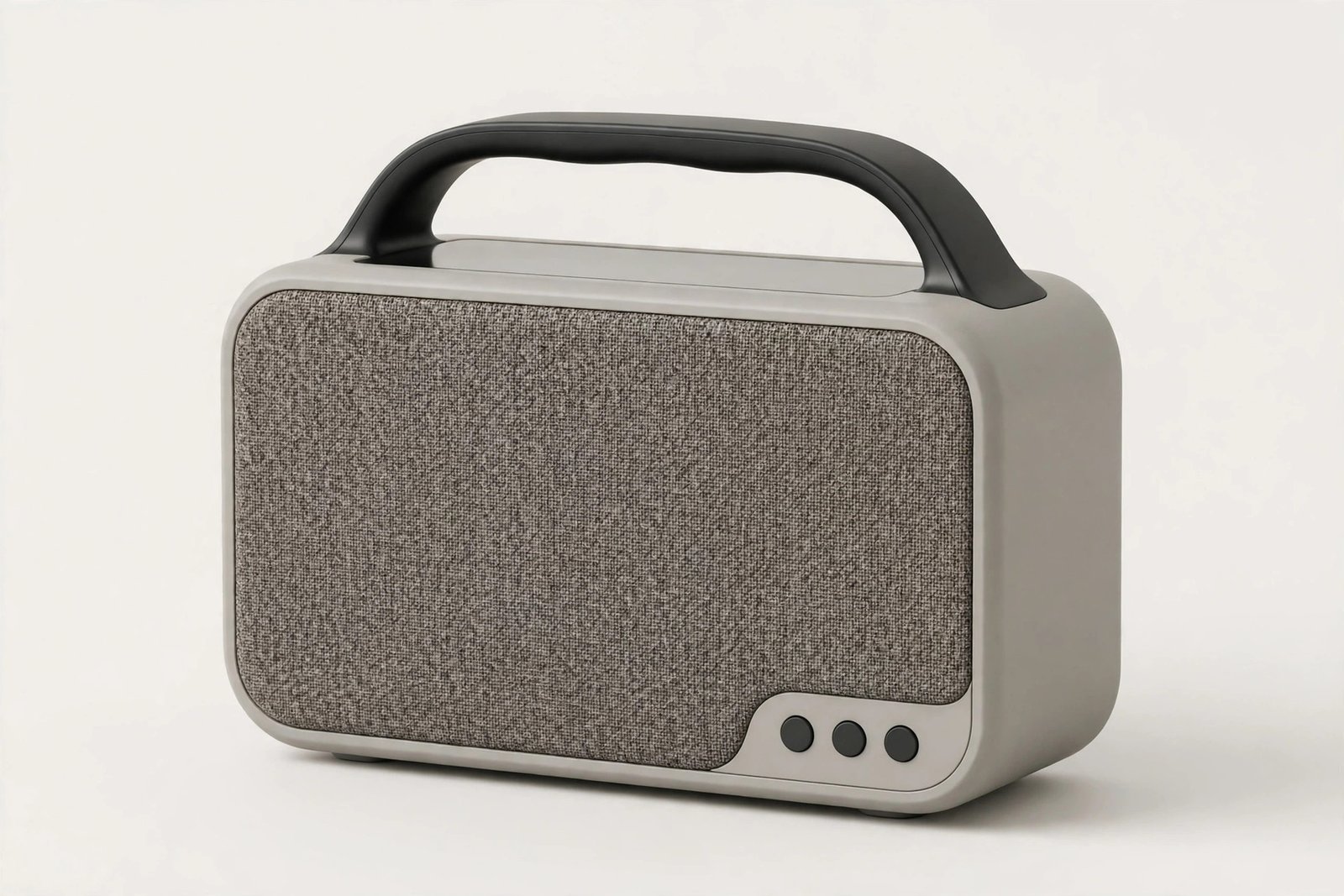
A Portable Wireless TV Speaker takes the simplest idea in this guide and does it well: instead of turning the television up so its sound survives the trip across the room, move a small speaker to the arm of your sofa and let it play quietly right beside you. A small transmitter by the TV sends the audio wirelessly, the speaker runs on a rechargeable battery, and a big friendly volume dial — not a phone app — does the adjusting.
Proximity is doing all the work here: sound that starts a foot from your ear does not need to fill the room, cross the room or leak through the wall behind the television. It is the most sociable of the personal options, because two people on the same sofa both hear it clearly while the flat stays quiet, and it moves to a kitchen table or a bedside without complaint. Check the wireless range covers your room layout and that the transmitter suits your TV’s outputs — optical and headphone-socket versions cover nearly everything.
Pros
- 👍 Close sound means genuinely low volume for the room.
- 👍 Big simple controls — no app, no pairing rituals nightly.
- 👍 Both sofa viewers hear it clearly, unlike headphones.
- 👍 Portable between sofa, kitchen and bedside.
Cons
- 👎 Small speaker means modest bass and scale.
- 👎 Battery needs regular charging to stay sofa-ready.
- 👎 One more small box to find a home for.
Best for: anyone who keeps turning the TV up mainly because the sofa is far from the screen.
Check Price And User Reviews on Amazon
5. Soundbar with Wireless Subwoofer and Bass Control
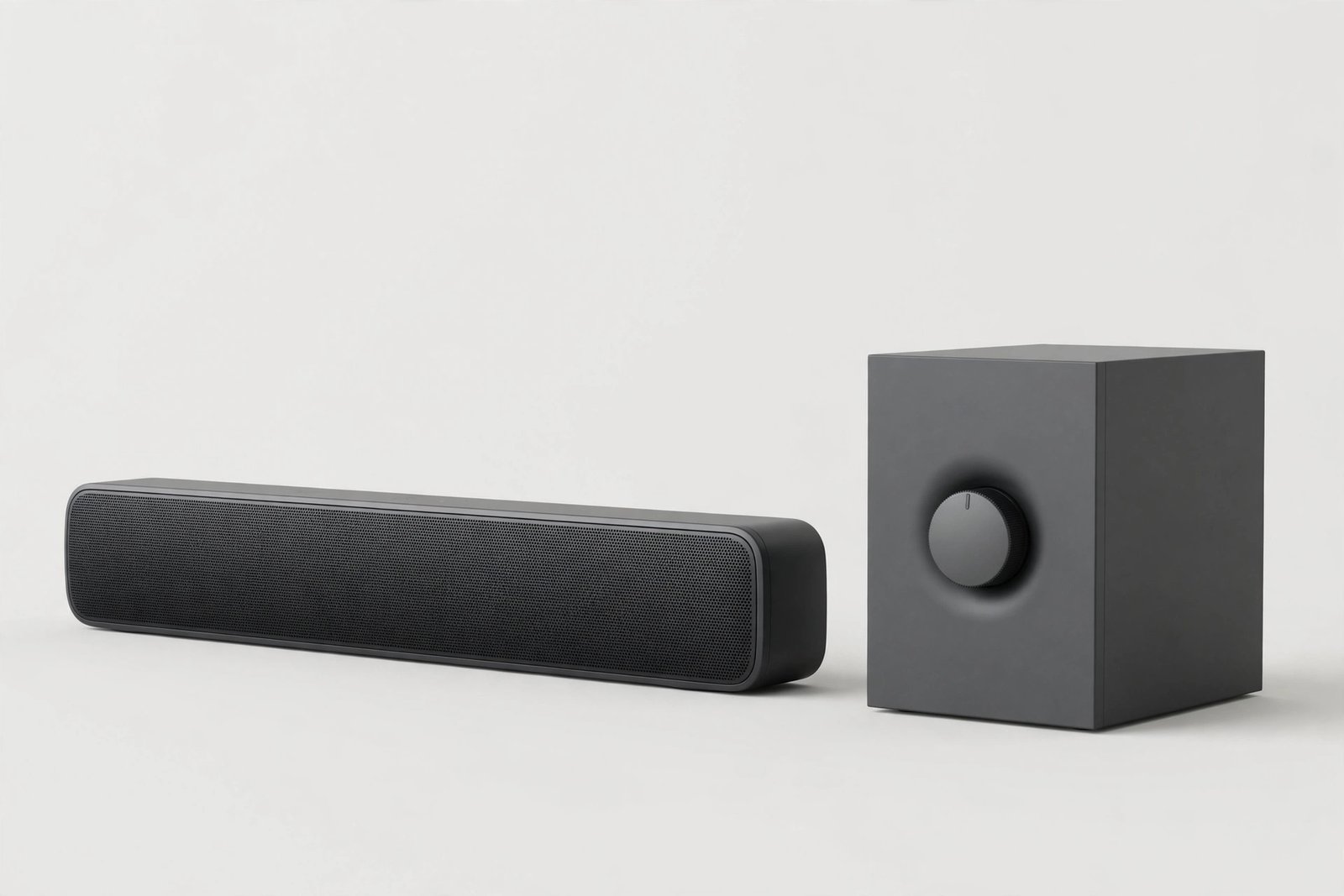
A Soundbar with Wireless Subwoofer and Bass Control is for the film fan who refuses to give up proper movie sound — but understands the apartment rule: bass is what travels. Voices stop at a wall; low rumble goes through the floor and introduces your action film to the neighbour below. A separate wireless subwoofer with its own bass level on the remote lets you run the full setup on a Saturday afternoon, then dial the bass right down for the weeknight viewing, keeping the bar’s clarity while the floor stays out of it.
The details to check are control and placement. The bass adjustment should live on the remote, not in a menu, and it should go low enough to matter — some subwoofers also have their own rear dial for a permanent ceiling on the rumble. Placement helps too: a subwoofer on a rug or a mat, away from the shared wall and off a bare corner, sends noticeably less through the structure. Paired with the night mode on the bar itself, this is how tv sound without disturbing others still gets to feel like cinema.
Pros
- 👍 Full movie sound by day, tamed bass by night.
- 👍 Separate subwoofer level on the remote.
- 👍 Wireless sub can sit on a rug away from shared walls.
- 👍 The bar keeps dialogue clear at sensible volumes.
Cons
- 👎 The sub still needs floor space and a power socket.
- 👎 Forget to turn the bass down and it is the worst offender here.
- 👎 Costs more than a bar-only setup.
Best for: film fans in flats who want real cinema weight — with a bass dial they actually use.
Check Price And User Reviews on Amazon
6. Bluetooth TV Audio Transmitter

A Bluetooth TV Audio Transmitter is the smallest gadget in this guide and the one that unlocks the rest: a matchbox-sized box that plugs into your TV’s optical, headphone or RCA output and broadcasts the sound to the wireless headphones or earbuds you already own. Most televisions either lack Bluetooth entirely or restrict it to one device with noticeable delay; a proper transmitter fixes both, and the better ones connect two pairs of headphones at once.
Two specifications matter and both are about manners. Low-latency support keeps voices in step with the picture — without it, dialogue drifts and no volume setting will save the evening. And dual-link pairing means a partner’s headphones join yours for a shared, silent film. A transmitter is also the tidy heart of a wire-free setup: ours pairs naturally with the picks in our guide to cordless gadgets for a clutter-free TV setup, where the same little boxes keep the whole entertainment corner free of trailing cables.
Pros
- 👍 Works with the headphones and earbuds you already own.
- 👍 Gives older, non-Bluetooth TVs a wireless upgrade.
- 👍 Dual-link models feed two listeners at once.
- 👍 Tiny, cheap and hidden behind the TV.
Cons
- 👎 Needs low-latency headphones too, or voices lag.
- 👎 Headphone volume control depends on your headphones.
- 👎 One more pairing step the first time you set it up.
Best for: anyone with good wireless headphones already and a TV that will not talk to them.
Check Price And User Reviews on Amazon
7. Two-Person Wireless TV Headphone Set

A Two-Person Wireless TV Headphone Set solves the obvious flaw in the first pick on this list: films are better together. Two matched pairs of headphones share one transmitter and usually one dual charging dock, so a couple can watch at midnight volume — each with their own volume control, which quietly ends the other great sofa argument — while the flat, the kids and the neighbours hear nothing whatsoever.
Matched sets matter because both pairs are tuned to the same low-delay connection; mixing one dedicated pair with a random Bluetooth set invites sync problems. This is also the setup that saves households on opposite schedules: one partner home late, the other (or a night-shift worker in the family, the audience of our guide to gadgets for people who work night shifts) already asleep — the film plays in full, in two ears, in total silence everywhere else. Check that both pairs charge from the one dock, and that each keeps its own volume memory.
Pros
- 👍 Shared films with complete silence for everyone else.
- 👍 Independent volume for each viewer.
- 👍 One transmitter and one dock — a tidy matched setup.
- 👍 Both pairs tuned for the same low-delay connection.
Cons
- 👎 Costs more than a single pair, obviously.
- 👎 Talking to each other means lifting an earcup.
- 👎 Guests and third viewers are left out.
Best for: couples in flats and houses with sleeping children — date-night volume, nobody else’s problem.
Check Price And User Reviews on Amazon
8. Compact Soundbar for Small Apartments
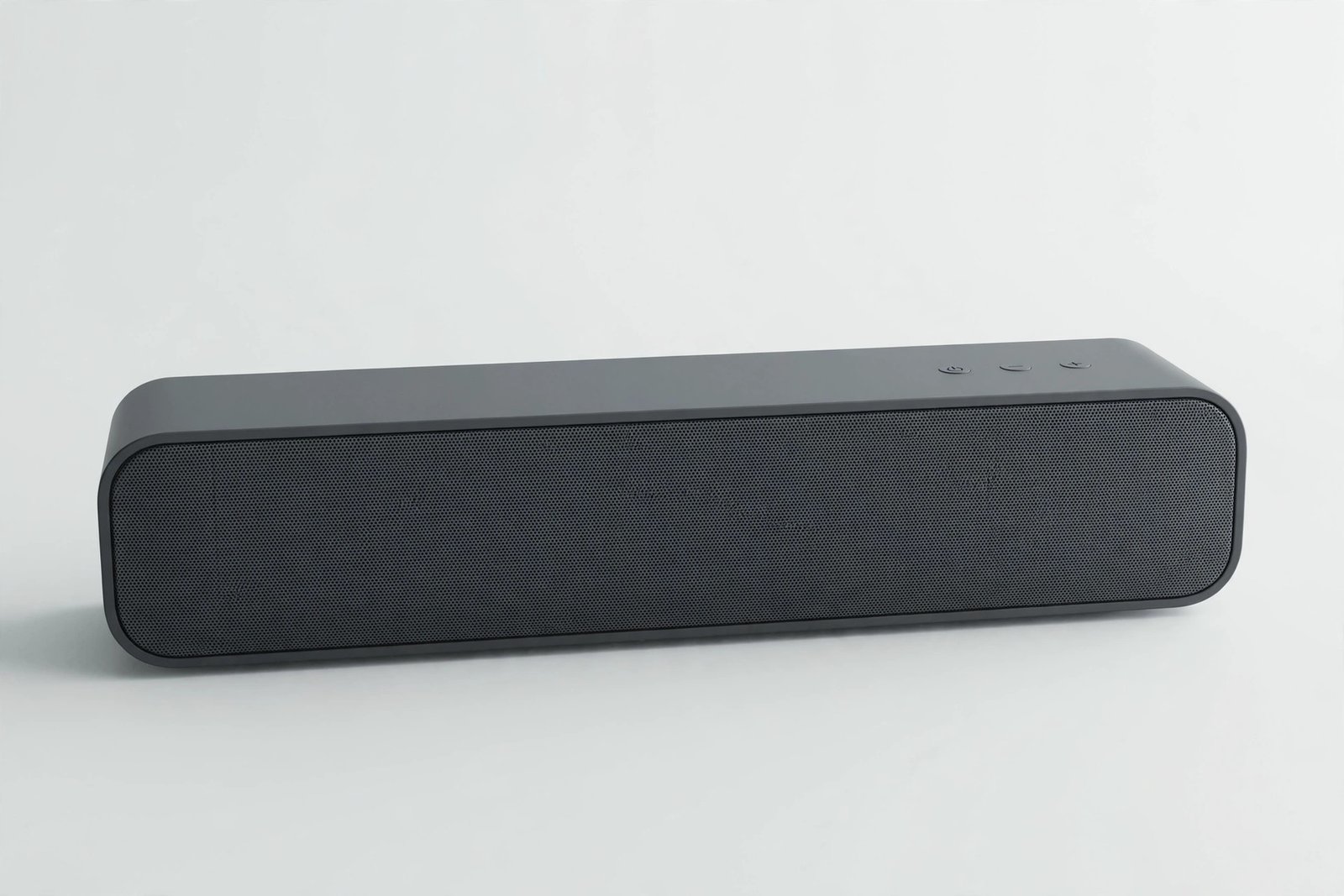
A Compact Soundbar for Small Apartments starts from a truth about television speakers: they are small, they point at the wall behind the TV, and their dialogue is muddy at exactly the low volumes apartment life demands. A short soundbar — sized for a 32-to-43-inch TV and a small stand — points the sound at you instead, with drivers voiced for clarity rather than cinema scale, so ordinary programmes sound clear at volumes your TV alone could never manage.
Small is a feature here, not a compromise: a compact bar suits the room’s proportions, leaves space on a small stand, and is honestly matched to how loud an apartment should ever get. Look for a dialogue or voice mode even at this size, an optical or HDMI ARC connection for one-remote control with your TV remote, and a design that sits in front of the screen without blocking its sensor. It is the natural centrepiece of a modest movie-night corner like the ones in our movie night gadgets guide — scaled to the flat, not the showroom.
Pros
- 👍 Clearer dialogue than TV speakers at the same low volume.
- 👍 Sized for small stands and small rooms.
- 👍 HDMI ARC means your TV remote controls it.
- 👍 No subwoofer, so no bass through the floor.
Cons
- 👎 Will not fill a big room or thrill action fans.
- 👎 Basic models may lack a proper night mode.
- 👎 Very wide TVs can dwarf the smallest bars.
Best for: small flats and spare-room TVs where the built-in speakers are the whole problem.
Check Price And User Reviews on Amazon
9. Wireless TV Earbuds with Transmitter

Wireless TV Earbuds with Transmitter are the discreet version of the headphone route: a small transmitter plugs into the TV, and a pair of in-ear buds — the same style you would wear on a train — carry the sound. They are the pick for warm rooms, side-lying viewers, and anyone who simply dislikes the clamped feeling of over-ear headphones during a three-hour film; in bed, a single bud in the upward ear is the classic way to finish a series while a partner sleeps beside you in genuine silence.
The buying checks are specific. The transmitter must be a low-latency one made for television, because ordinary phone earbuds on a TV’s built-in Bluetooth can lag behind the picture badly enough to spoil dialogue. Battery life needs to cover your longest session with the case as backup, and a transparency or pass-through setting is worth having if you still want to hear a child or the door. Volume steps at the quiet end matter more with in-ears than anything else — one coarse step too loud is the difference between comfortable and fatiguing.
Pros
- 👍 Lightest, coolest way to watch privately in silence.
- 👍 One bud works for side-lying viewing in bed.
- 👍 Case keeps them charged beside the TV.
- 👍 Doubles as your everyday earbuds away from the TV.
Cons
- 👎 Easy to lose; the case needs a fixed home.
- 👎 In-ear fit is personal — some ears refuse all buds.
- 👎 Shorter battery per session than big headphones.
Best for: warm rooms, bed-based viewing and anyone who dislikes over-ear headphones.
Check Price And User Reviews on Amazon
10. Soundbar with Adjustable Centre Channel
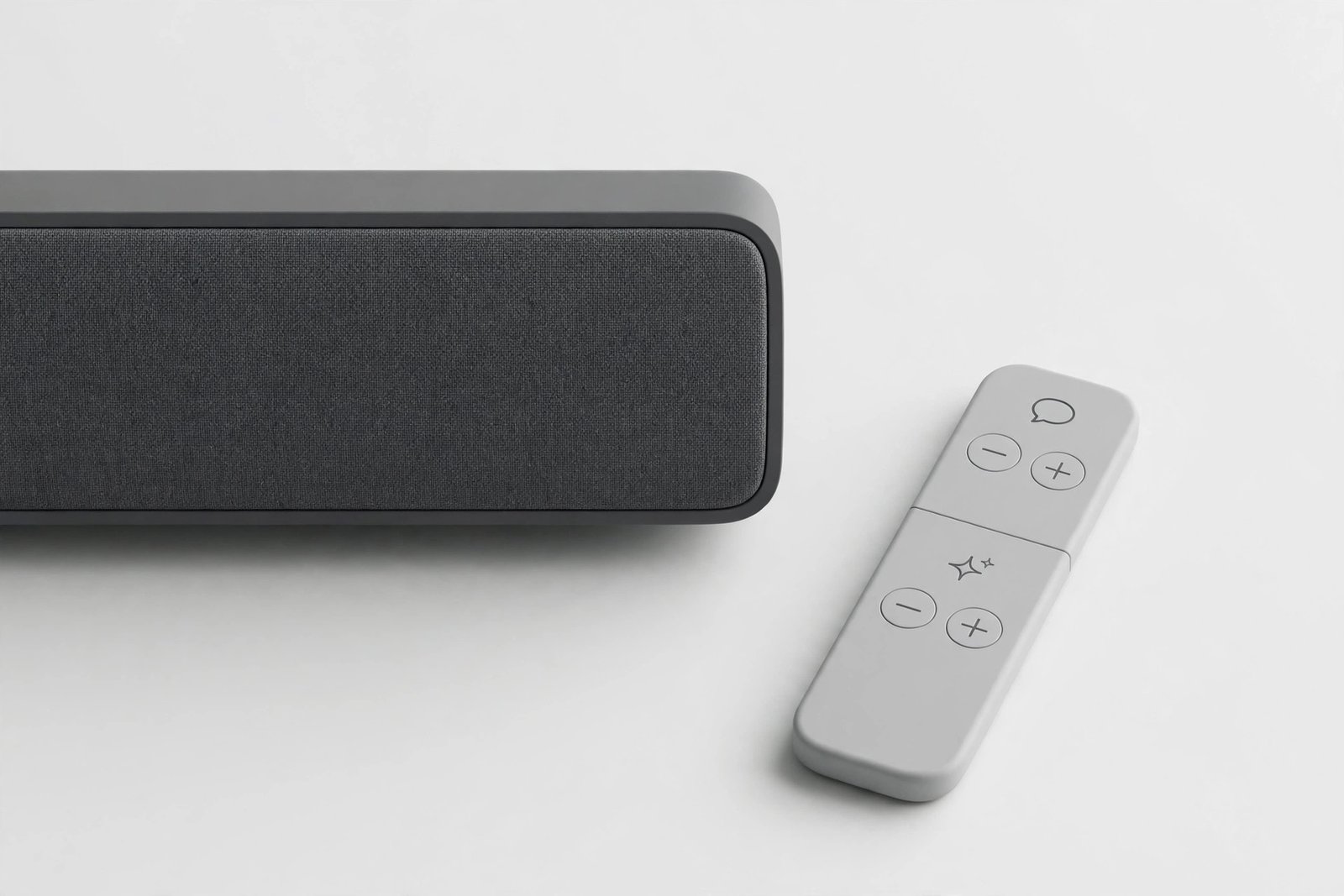
A Soundbar with Adjustable Centre Channel attacks the actual mechanics of unclear television: in films and dramas, nearly all dialogue sits in the centre channel, while music, weather and explosions live in the left, right and effects channels. On a bar with a separate centre-channel volume, you do not turn the programme up — you turn the voices up, leaving everything else exactly where it was. The overall volume in the room barely changes; the words simply step forward.
It is the most surgical tool in this guide, and once you have lived with it, blanket volume buttons feel crude. Look for the centre adjustment on the remote (some bars label it dialogue level), a useful range of steps, and settings memory so the bar wakes up the way you left it. Centre control plus night mode is the combination to hunt for if your budget stretches — one handles the words, the other handles the bangs, and between them an apartment evening needs nothing louder.
Pros
- 👍 Raises voices specifically, not the whole soundtrack.
- 👍 Room volume stays put while clarity jumps.
- 👍 Works on every programme, not just quiet dramas.
- 👍 Settings memory keeps your balance saved.
Cons
- 👎 A step up in price from basic soundbars.
- 👎 Too much centre sounds unnatural — restraint needed.
- 👎 Older stereo content uses the centre channel less.
Best for: drama and film lovers whose one complaint is “I can’t hear what they’re saying.”
Check Price And User Reviews on Amazon
11. Soundbar with Automatic Volume Levelling
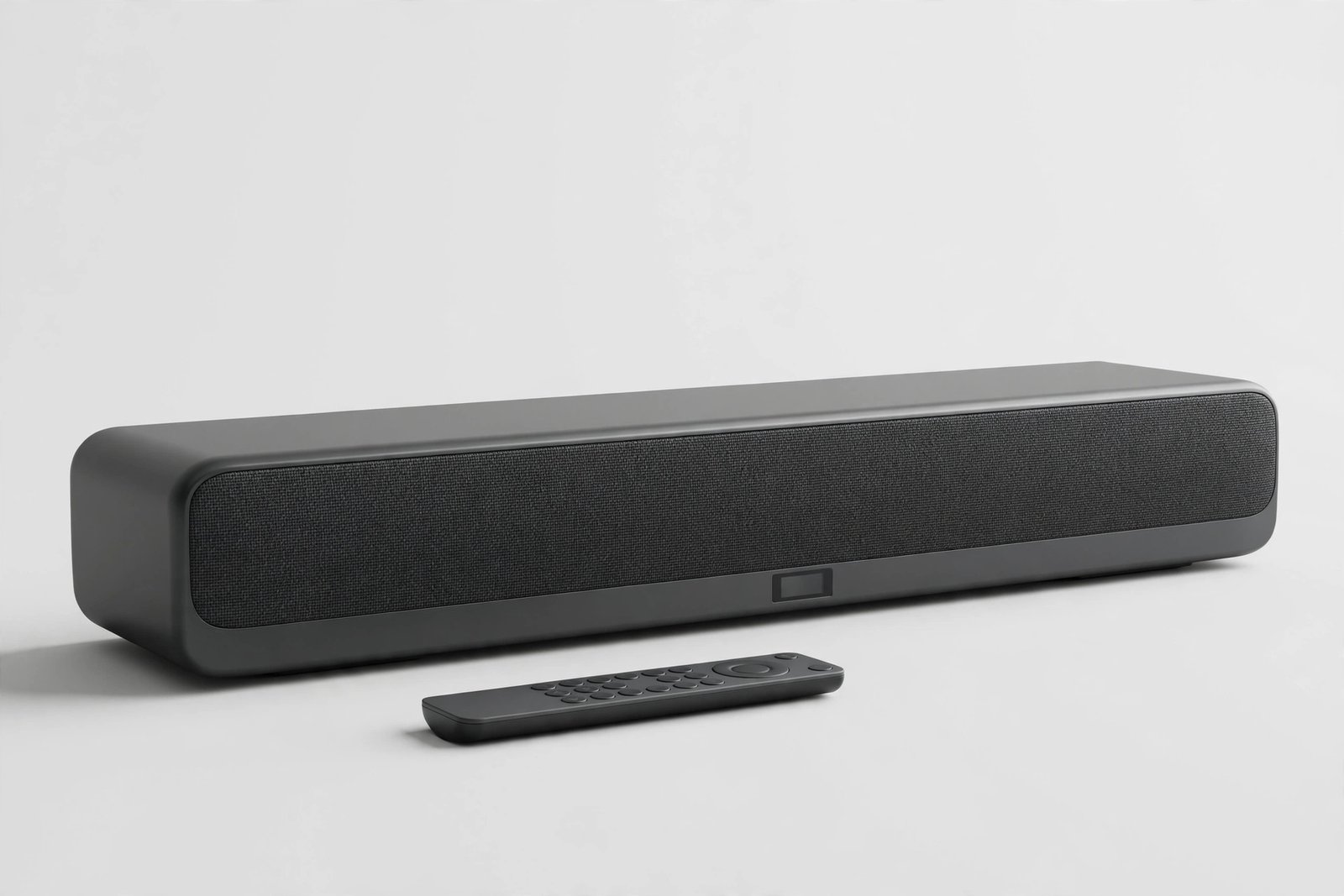
A Soundbar with Automatic Volume Levelling watches the soundtrack so your thumb does not have to. The levelling circuit — the feature behind half the “why are adverts so loud” complaints being answered — constantly evens out the programme: whispered scenes come up a touch, shouting matches, explosions and brash advert breaks are pulled down, and the average volume stays exactly where you set it. For apartment viewing, that stability is the whole point, because it is the peaks, not the average, that go through walls.
Levelling differs from a simple night mode in that it works scene by scene, all evening, including the channel-hopping and streaming-app roulette where every service mixes its sound differently. It is the set-and-forget pick: switch it on once and the remote mostly stays on the table. Check that the feature can be adjusted or defeated for music programmes, where a flattened dynamic range can feel lifeless, and that it works on all inputs — some bars apply it only to broadcast TV and not to HDMI or streaming sources.
Pros
- 👍 Ends the volume yo-yo between scenes and channels.
- 👍 Caps the loud peaks that actually disturb neighbours.
- 👍 Tames loud advert breaks automatically.
- 👍 Set it once; no nightly remote riding.
Cons
- 👎 Music and concerts can sound flattened.
- 👎 May not apply to every input on cheaper models.
- 👎 Very aggressive levelling can pump audibly.
Best for: channel-hoppers and advert-plagued broadcast viewing in thin-walled homes.
Check Price And User Reviews on Amazon
12. Soundbase Speaker with Dialogue Mode
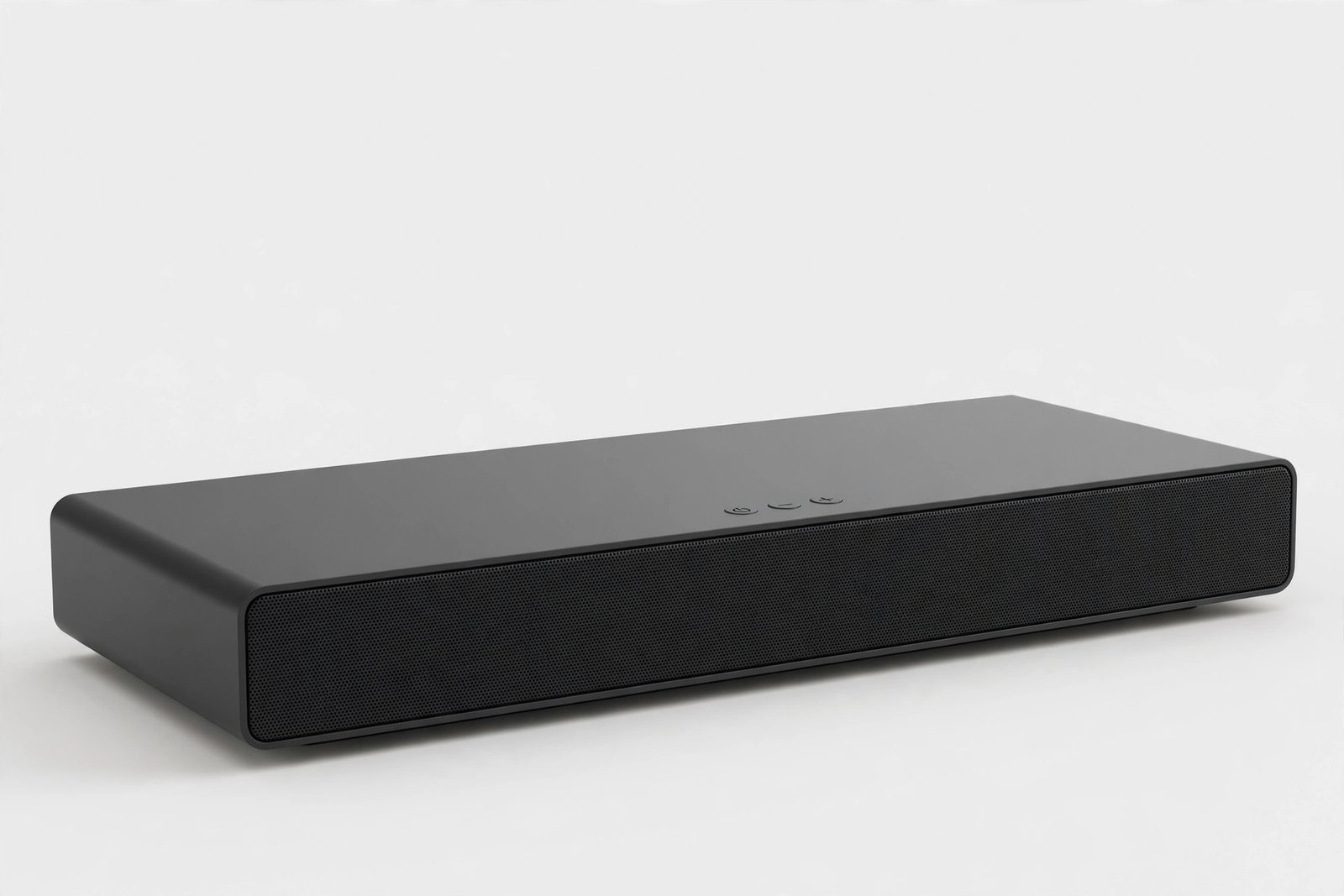
A Soundbase Speaker with Dialogue Mode closes this guide with the tidiest footprint of all: a flat, sturdy platform your television stands on, with the speakers built into its front. Everything is in the one box — no separate subwoofer thumping the floor, no bar to balance on a narrow stand, no wall mounting to negotiate with a landlord — and the built-in bass, while present, is voiced for a single room rather than for exciting the building’s structure.
That single-room honesty is exactly its apartment virtue, and a dialogue mode on the remote completes the picture: voices forward, everything else polite. Soundbases suit smaller televisions best — check the maximum screen size and weight the platform is rated for, since your TV literally stands on it — and they shine in rented flats where the setup must be simple, reversible and finished in ten minutes, the same no-fuss thinking behind our guide to space saving gadgets for studio apartments. As tv sound without disturbing others goes, it is the quiet all-rounder: clear, contained and completely self-contained.
Pros
- 👍 One box, no subwoofer, nothing to mount or hide.
- 👍 Contained bass that stays in the room.
- 👍 Dialogue mode keeps voices clear at low volume.
- 👍 Ten-minute setup; ideal for rented flats.
Cons
- 👎 Limited to the TV sizes and weights it can carry.
- 👎 Less cinematic scale than a bar-and-sub setup.
- 👎 The category is smaller — fewer models to choose from.
Best for: renters and minimalists who want one tidy box under the TV and nothing else.
Check Price And User Reviews on Amazon
Buying Guide
1. Decide First: Private Sound or Shared Sound
Every pick in this guide belongs to one of two families, and choosing between them is the real decision. Private sound — headphones, earbuds, neckband speakers, a speaker beside your chair — removes your viewing from the room entirely, so volume stops being a negotiation at all. Shared sound — soundbars and soundbases — keeps the social shape of television but relies on clarity features: dialogue modes, centre-channel control, night mode and levelling. Solo viewers and opposite-schedule households should start with private sound; couples and families who watch together should start with a clarity soundbar and add private options for the late sessions.
2. Clarity Beats Loudness — Look for the Right Features
When you compare soundbars, shop by feature names, not wattage. The apartment features, in rough order of value, are: a dialogue or voice mode; night mode or dynamic-range compression; a separate centre-channel level; automatic volume levelling; and a bass control that goes genuinely low. Those five do more for how to hear the tv without turning it up than any amount of power. For headphone routes, the equivalent shopping list is low latency, a dock or case that lives by the TV, and fine-grained volume at the quiet end of the dial.
3. Bass Is the Neighbour Problem — Manage It Deliberately
Thin walls stop voices far better than they stop bass, and floors barely stop it at all. If your setup has a subwoofer, give it a level control and use it after dark; put the sub on a rug or mat rather than bare boards, keep it out of corners and away from the wall you share with a neighbour’s bedroom, and remember that a soundbase or a bar alone may be the honest answer for a small flat. The gadgets in our clutter-free TV setup guide help here too — fewer boxes and cables usually means fewer things rattling against the wall.
4. Check the Connections Before You Buy Anything
Four quick checks save most returns. First, outputs: does your TV have optical, HDMI ARC, or only a headphone socket — and does the gadget you want accept it? Second, delay: for anything wireless carrying dialogue, low-latency support on both the transmitter and the headphones is what keeps lips and voices together. Third, remotes: the features that matter — night mode, dialogue, bass — should be buttons, not app screens. Fourth, if you rent, favour everything in this guide over anything that wants wall-mounting; the no-install thinking runs through our roundup of no-drill smart home gadgets for renters as well.
Conclusion
The best tv sound gadgets for apartments without disturbing neighbors all share one insight: the volume was never the point. Bring the sound close — headphones for one, a matched pair for two, a speaker on the arm of the sofa — and the room can stay silent. Or clean the sound up — dialogue lifted, peaks levelled, bass on a leash — and a modest shared volume turns out to be enough for everyone on your side of the wall and unnoticeable on the other side of it.
If you buy one thing, make it match your evenings: the headphone dock for the solo viewer, the night-mode soundbar for the shared sofa. If you buy two, you have probably covered every hour of the day between them. Whatever you choose, check the latest price on Amazon before you buy, confirm the connections against your actual television, and enjoy the film at the volume you wanted — not the volume the walls allowed.
More Guides You’ll Like
Building the full apartment cinema around these picks? Our guide to living room gadgets for movie nights at home covers the lighting, seating and snack-side upgrades that complete the evening, while our roundup of cordless gadgets for a clutter-free TV setup tidies the cables and remotes behind the screen. Small flat? The same close-and-clear thinking runs through our picks of space saving gadgets for studio apartments. And if the listener you are buying for is a senior who wants the TV clearer and louder for themselves in a regular house, that is a different guide written for exactly them: our roundup of tv listening gadgets for seniors.
FAQs
How can I watch TV late at night without disturbing anyone?
Take the sound out of the room. Wireless TV headphones are the complete solution — full volume for you, silence for everyone else — and a matched two-pair set does the same for couples. If headphones are not for you, the next best stack is a soundbar with night mode switched on, the bass turned down, and the speaker or bar as close to your seat as the room allows. The principle behind every option is the same: the closer the sound starts to your ears, the quieter the room stays.
Why is dialogue so quiet but the action scenes so loud?
Films and dramas are mixed for cinemas, where the gap between a whisper and an explosion is part of the drama. At home that gap becomes the volume yo-yo. The fixes are the features in this guide: dialogue mode or a raised centre channel lifts the voices specifically, night mode and volume levelling compress the gap itself, and headphones sidestep the whole problem by putting the mix inches from your ears. Turning the television up is the one fix that helps least — it raises the explosions by exactly as much as the words.
Do I need a soundbar, or will headphones alone do?
It depends on how you watch. If your late viewing is mostly solo, headphones alone genuinely do — they are cheaper than most soundbars and perfectly silent to everyone else. If you watch together, a soundbar is the shared foundation; many apartment households end up with both, the bar for the evening and a headphone set for the last episode after everyone else has gone to bed. Start with the one that matches most of your viewing and add the other when the gap shows.
Will a subwoofer always annoy the neighbours?
Not always — but it is the part of any system most likely to, because low frequencies travel through floors and walls that block speech. You can keep a subwoofer in an apartment if you manage it: a proper level control turned down at night, placement on a rug away from shared walls and corners, and night mode engaged so the peaks never arrive in the first place. If your flat is small or the walls are notoriously thin, be honest with yourself and choose a bar-only or soundbase setup instead.
My TV has no Bluetooth. Can I still use wireless headphones?
Yes — that is exactly what a Bluetooth TV transmitter or a dedicated headphone dock is for. Both plug into an output your TV already has (optical, HDMI ARC on some models, or the humble headphone socket) and handle the wireless side themselves. Choose a low-latency transmitter and the picture and sound will stay in step. It is one of the cheapest upgrades in this guide and it works on televisions a decade old.
What is the best setup for a couple where one person goes to bed early?
Split the evening. Watch the shared programme together on the soundbar at a sociable volume, then hand over to headphones — a two-pair set if you sometimes both stay up, a single pair for the night owl — when the first viewer goes to bed. If the sleeper is in the same room rather than the next one, a single earbud or a neckband speaker at its lowest setting keeps the sound personal without the full isolation of over-ear headphones.