Best Solar Power Banks for Beach Lovers Spending Long Days Outdoors
Affiliate Disclosure: As an Amazon Associate, we earn from qualifying purchases made through links on this page, at no extra cost to you. This helps support our work and keeps our guides free to read.
A quick note on prices: prices change often, so we never quote a fixed price here. Please check the latest price on Amazon before you buy, using the yellow buttons in this guide. The product pictures in this article are original illustrations created for this guide, not manufacturer photos.
A long beach day is brutal on phone batteries: photos, music, maps and a screen at full brightness against the glare can drain a healthy phone by mid-afternoon, miles from the nearest socket. That is exactly why choosing the best solar power banks for beach lovers spending long days outdoors matters: the right bank keeps your phone, speaker and camera alive from the first swim to the last sunset photo, using the one thing a beach never runs out of — sunshine.
Be honest about how solar charging works, though, because it shapes every pick here. The solar panel on a power bank is a top-up, not a refill: a single small panel gathers energy slowly, and even on a bright day it adds a useful trickle rather than a full charge. The smart routine is to charge the bank fully from a wall socket before you leave, then let a good solar charger for beach days replace what you use while it sits in the sun. Treated that way, solar stretches a big battery across a whole weekend instead of one afternoon.
Beach conditions also sort the good banks from the fragile ones very quickly. Sand works its way into open ports, splashes and the odd wave test every seal, and bags get dropped on hard promenades and pebbles. A waterproof solar power bank with sealed port covers and a rubberised shell shrugs off the environment that would quietly kill a smooth, glossy indoor charger. Capacity matters too: one phone for a lazy afternoon needs far less than a group sharing music, photos and navigation all day — the longer the day, the more a high capacity solar power bank earns its place in the bag.
So this guide favours honest, practical designs: generous capacity, panels worth unfolding, water and dust protection, and enough ports for a friend’s phone or the beach speaker. Every pick below explains who it suits and what to check before you buy — and most double up beyond the beach, as a solar phone charger for camping weekends or a rugged power bank for travel days.
How We Chose
We judged every solar power bank on beach usefulness rather than headline numbers. Capacity had to be genuinely useful for long days out, the solar panel had to be large enough to deliver a meaningful top-up in real sunshine, and the build had to tolerate sand, splashes and knocks. Banks that paired a tiny decorative panel with an enormous battery were left out, because the panel on those can never keep up.
We also weighed the everyday details: how many devices can charge at once, whether ports are protected when not in use, and how clearly the remaining charge is shown. A built-in torch, hanging clip or set of built-in cables earned extra credit, because those are the features people actually use between swims.
Quick List
- High-Capacity Solar Power Bank with Dual USB Ports — a big wall-charged reserve with solar top-up for two devices at once.
- Waterproof Solar Power Bank with Built-In Torch — splash-proof charging plus a torch for the walk back at dusk.
- Rugged Drop-Proof Solar Charger with Carabiner Clip — clips to your bag so the panel faces the sun while you swim.
- Fold-Out Solar Panel Power Bank with Four Panels — a much larger panel area for the fastest solar top-up in this guide.
- Solar Power Bank with Wireless Charging Pad — cable-free top-ups for phones resting on your towel.
- Compact Solar Power Bank with LED Battery Display — pocket-sized power with a clear percentage readout.
- Solar Power Bank with Three Ports for Sharing — keeps the whole group’s phones and speaker going together.
- Dustproof Solar Power Bank with Sealed Port Covers — rubber flaps keep sand out of every socket.
- Solar Power Bank with Hand Crank Backup — a last-resort crank for when battery and sunshine both run out.
- Slim Solar Power Bank with USB-C Fast Charging — thin, light and quick to refill before the next beach day.
- Solar Power Bank with Built-In Charging Cables — no loose cables to lose in the sand.
- Jumbo Solar Power Bank with Camping Light — the group basecamp pick, with a lantern for beach evenings.
1. High-Capacity Solar Power Bank with Dual USB Ports
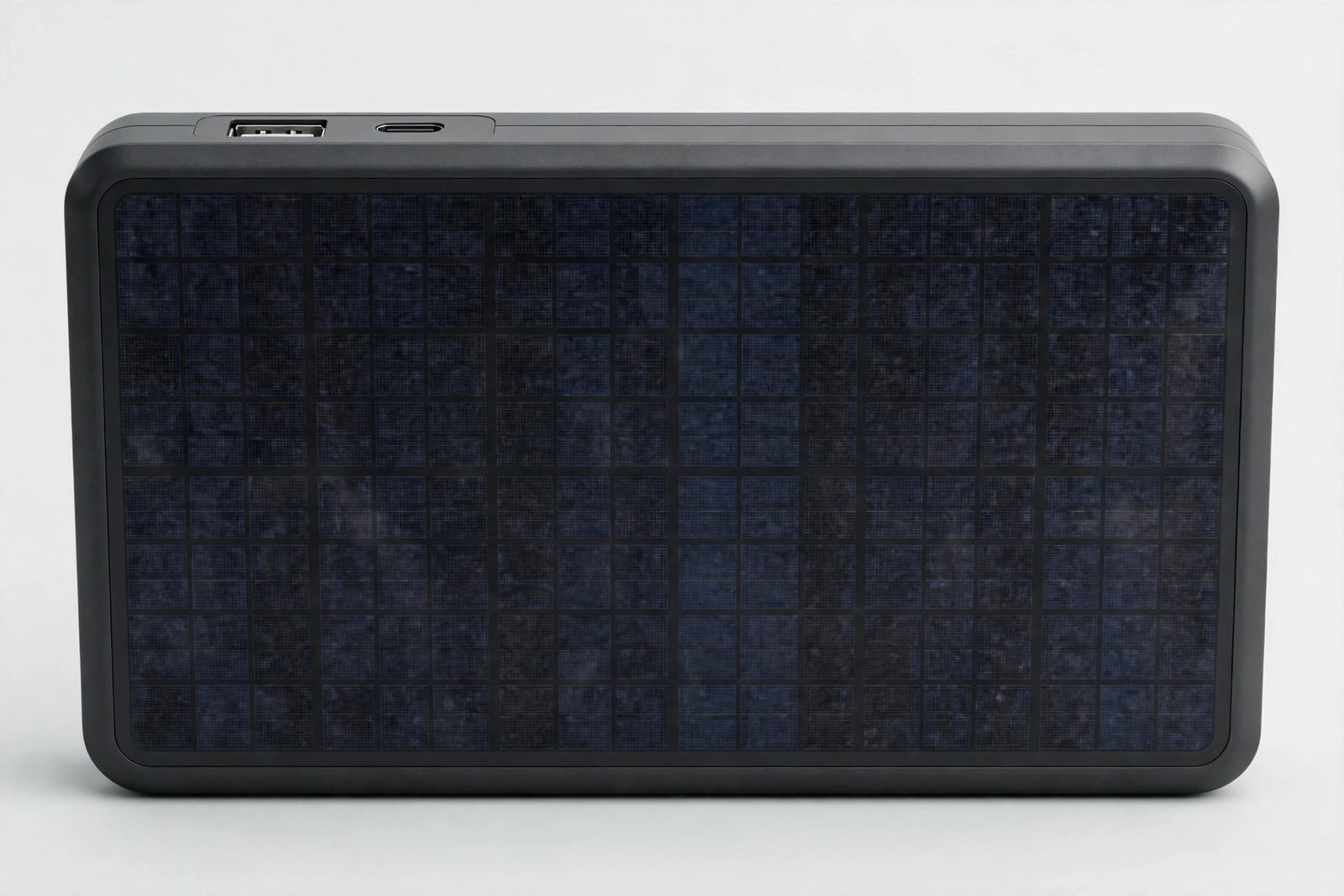
Start with the workhorse. A High-Capacity Solar Power Bank with Dual USB Ports in the 30,000 mAh class carries enough wall-charged reserve for several full phone charges, which is what actually gets a group through a long day. The panel then does its quiet job on top: left facing the sun on your towel or cool box, this kind of high capacity solar power bank replaces a meaningful slice of what the morning’s photos and music used up.
Two ports matter more than they sound: one can feed your phone while the other keeps the beach speaker alive, and nobody negotiates for the cable. The trade-off is weight — a bank this size is a deliberate carry, not a pocket item — so check the dimensions if your bag is already full. A clear battery indicator you can read in sunshine is worth having at this capacity.
Pros
- 👍 Several full phone charges in reserve
- 👍 Two ports charge phone and speaker together
- 👍 Solar top-up stretches the reserve all weekend
- 👍 Clear indicator readable in bright sun
Cons
- 👎 Noticeably heavy in a beach bag
- 👎 Takes a long time to refill from empty
- 👎 Too bulky for a pocket
Best for: couples and small groups who want one dependable bank for the whole day.
Check Price And User Reviews on Amazon
2. Waterproof Solar Power Bank with Built-In Torch
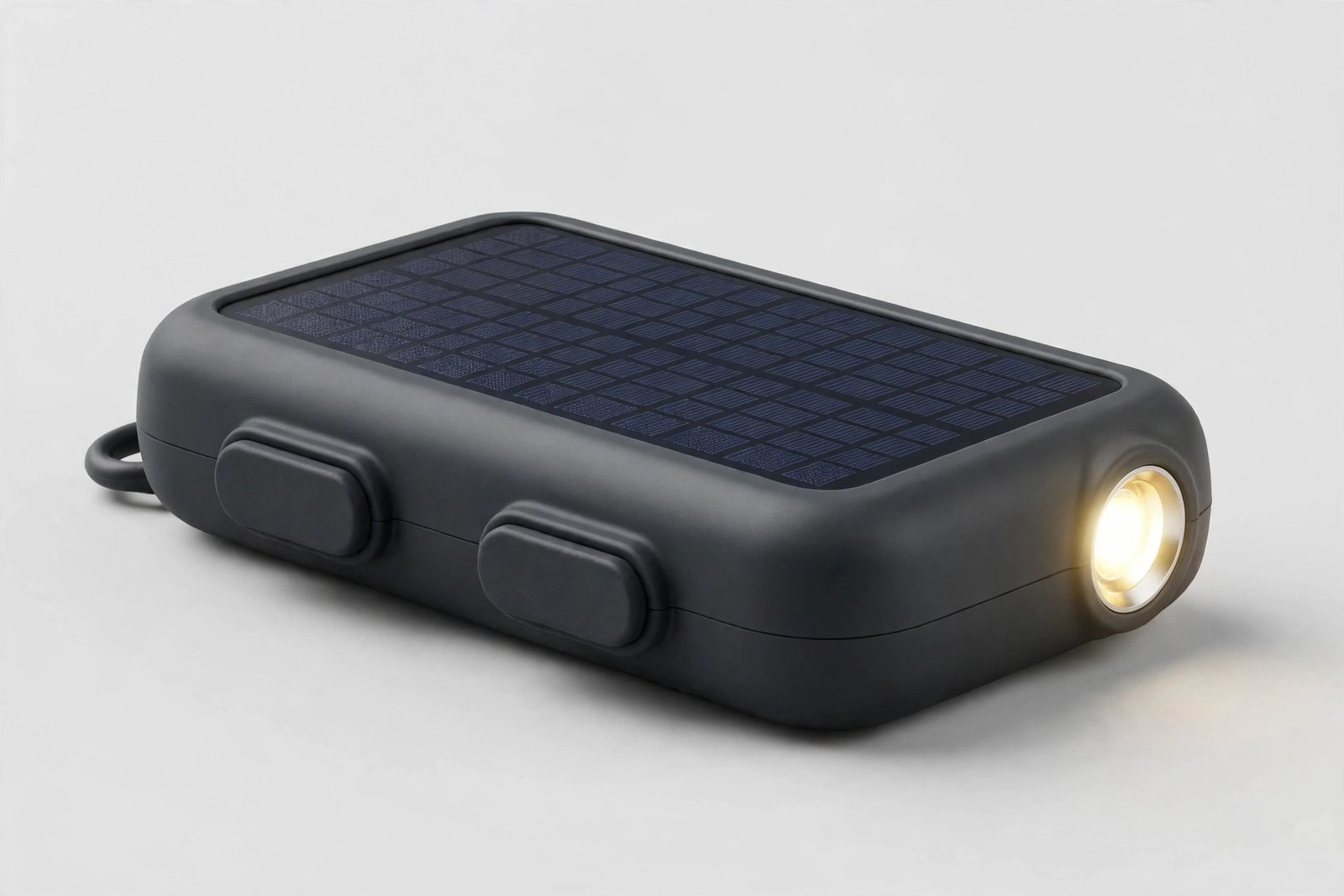
If your beach days end with a walk back along the shore at dusk, the Waterproof Solar Power Bank with Built-In Torch earns its place twice over. Its sealed shell is built to shrug off splashes, spray and light rain, so it can sit near the water’s edge without a plastic bag for protection, and the torch handles the unlit path, the car park and the hunt for dropped keys in the sand.
Check the water-resistance rating carefully before you buy, because “waterproof” on a listing can mean anything from splash-proof to safe for brief dips, and the rating only holds with the port covers fully closed. The torch is usually brighter than a phone light and saves your phone battery for the journey home. Like every pick here, charge it at home first and let the panel top it up through the day.
Pros
- 👍 Sealed shell shrugs off splashes and spray
- 👍 Built-in torch for evenings and emergencies
- 👍 Happy sitting near the water’s edge
- 👍 Solar top-up keeps it ticking over
Cons
- 👎 Protection only works with covers closed
- 👎 Torch drains the reserve if left on
- 👎 Usually mid-sized capacity
Best for: beach lovers who stay past sunset and walk back in the dark.
Check Price And User Reviews on Amazon
3. Rugged Drop-Proof Solar Charger with Carabiner Clip
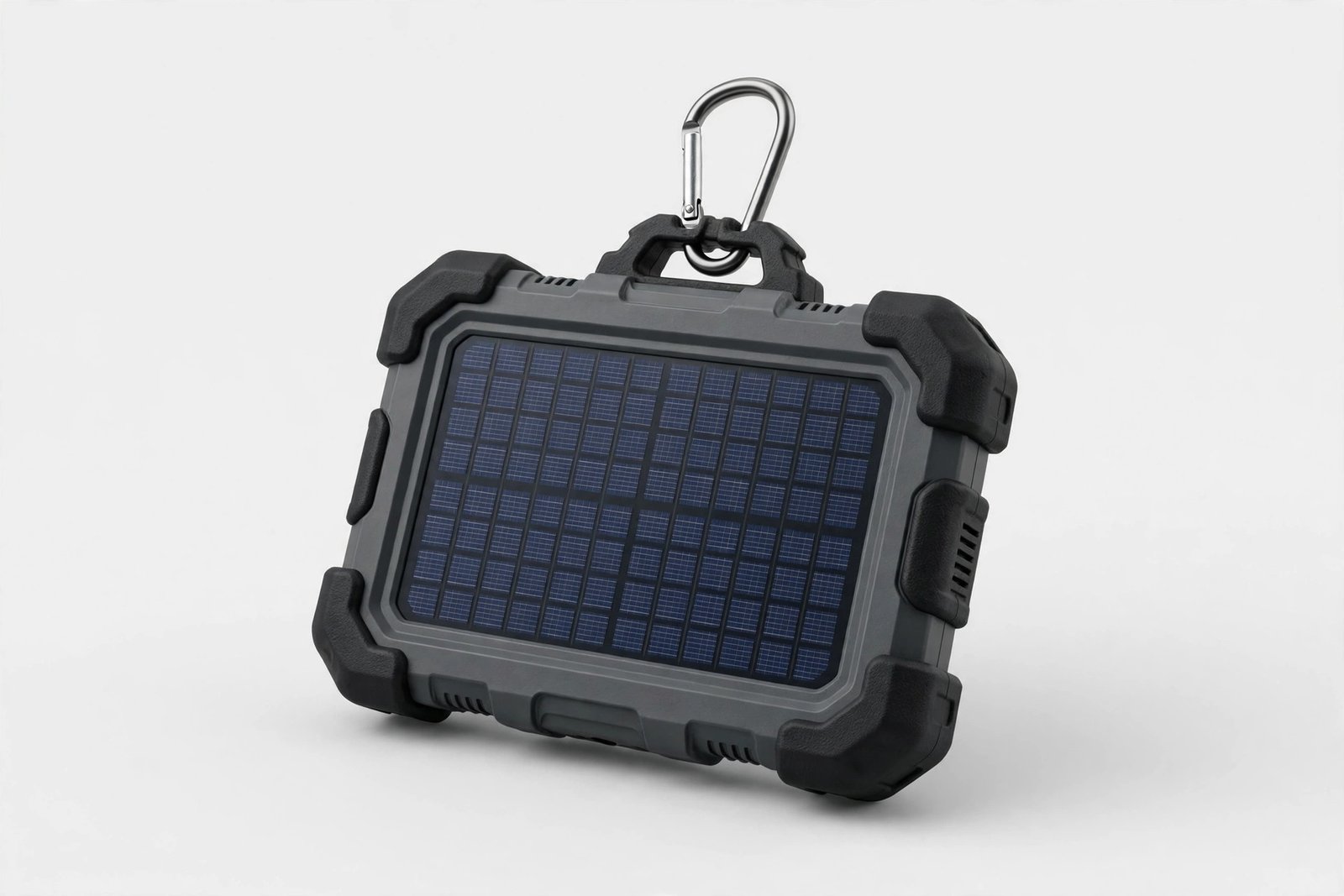
The smartest solar charging position is not flat on a towel, where people step on it and shade it — it is hanging in full sun. The Rugged Drop-Proof Solar Charger with Carabiner Clip clips to a beach bag, parasol pole or tent guy-line, so its panel faces the sky for hours while you swim. Thick rubber corner bumpers handle the drops onto pebbles, decking and tarmac that beach gear inevitably suffers.
This is the rugged power bank for travel pattern at its most practical: everything is built to be knocked about and carried outdoors, rather than cosseted in a desk drawer. Capacity is usually mid-range, which suits a phone or two rather than a whole group, and the clip means it also earns its keep on hikes and festival weekends. Check that the carabiner is metal rather than thin plastic, because it carries the full weight of the bank all day.
Pros
- 👍 Clips up to face the sun for hours
- 👍 Rubber bumpers survive drops on hard ground
- 👍 Keeps the panel off the sand entirely
- 👍 Doubles as a hiking and festival charger
Cons
- 👎 Mid-range capacity for one or two phones
- 👎 Chunky shape is not pocket friendly
- 👎 Cheap clips on some models flex under weight
Best for: active beachgoers who want the panel charging while they swim and play.
Check Price And User Reviews on Amazon
4. Fold-Out Solar Panel Power Bank with Four Panels
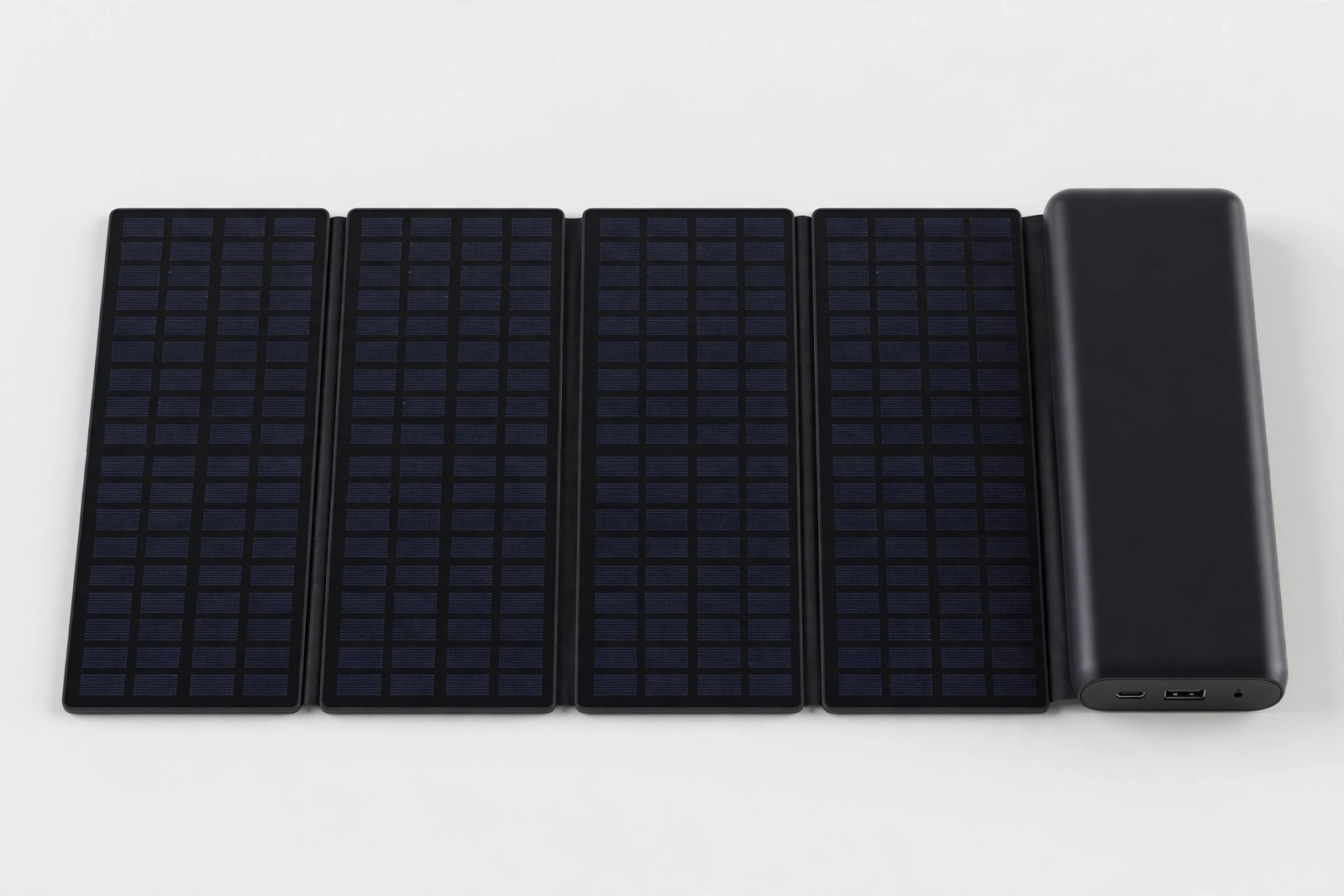
Solar charging speed is mostly a question of panel area, and that is where the Fold-Out Solar Panel Power Bank with Four Panels changes the maths. Unfolded on a beach mat or the roof of a cool box, its four panels gather several times the energy of a single phone-sized panel, so a sunny afternoon can replace a genuinely useful share of a charge instead of a token trickle. Folded, it is still only about the size of a chunky paperback.
It is still not a wall socket — expect hours of good sun for a full refill, not minutes — but for multi-day trips it is the closest thing here to solar charging that keeps up. The hinges are the weak point, so look for reinforced stitching or a solid folding frame, and keep grit out of the folds when you pack it away.
Pros
- 👍 Several times the panel area of single-panel banks
- 👍 Fastest solar top-up in this guide
- 👍 Folds down to a manageable size
- 👍 Ideal for multi-day trips away from sockets
Cons
- 👎 Needs space and still air to stay unfolded
- 👎 Hinges are the long-term weak point
- 👎 Still slower than any wall charger
Best for: long weekends and camping-and-beach trips where solar has to do real work.
Check Price And User Reviews on Amazon
5. Solar Power Bank with Wireless Charging Pad
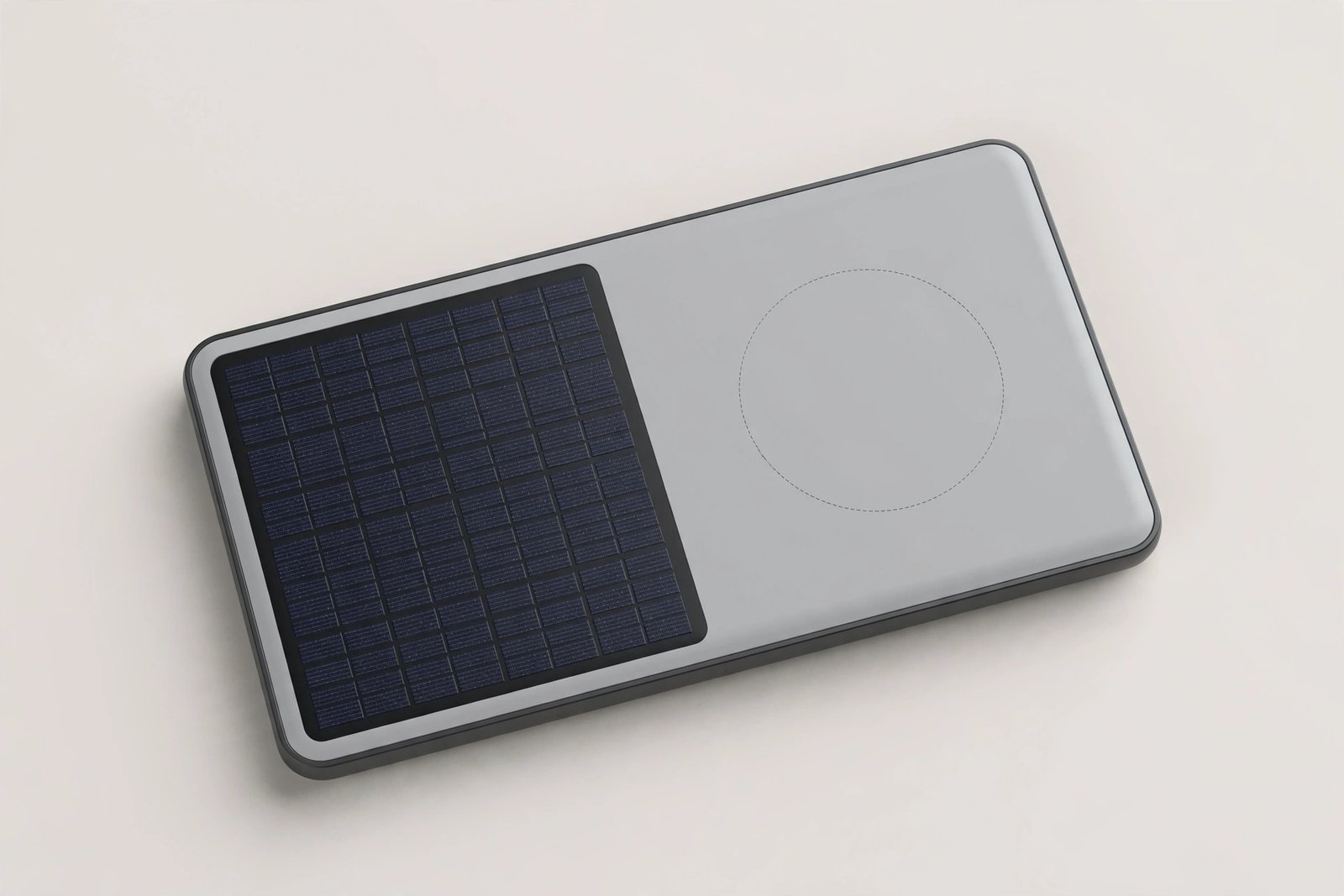
Cables and sand are natural enemies, so the Solar Power Bank with Wireless Charging Pad takes a different route: rest your phone on the pad and it charges with no leads to drop in the sand or plug into a gritty port. For quick top-ups between swims it is wonderfully simple, and wireless earbuds cases and some watches can share the pad too.
Wireless charging is slower than a cable, and alignment matters — a thick waterproof phone case can block the connection, so test your case at home first. Treat the pad as the convenient option and keep a cable in the bag for a fast, full recharge. The sealed body also wipes clean easily after a day of sunscreen and salt spray.
Pros
- 👍 No cables to lose or fill with sand
- 👍 Quick, simple top-ups between swims
- 👍 Charges earbuds cases and some watches too
- 👍 Sealed surface wipes clean easily
Cons
- 👎 Slower than charging by cable
- 👎 Thick cases can block the connection
- 👎 Phone must sit still and aligned
Best for: cable-free top-ups for phones and earbuds on a tidy beach setup.
Check Price And User Reviews on Amazon
6. Compact Solar Power Bank with LED Battery Display
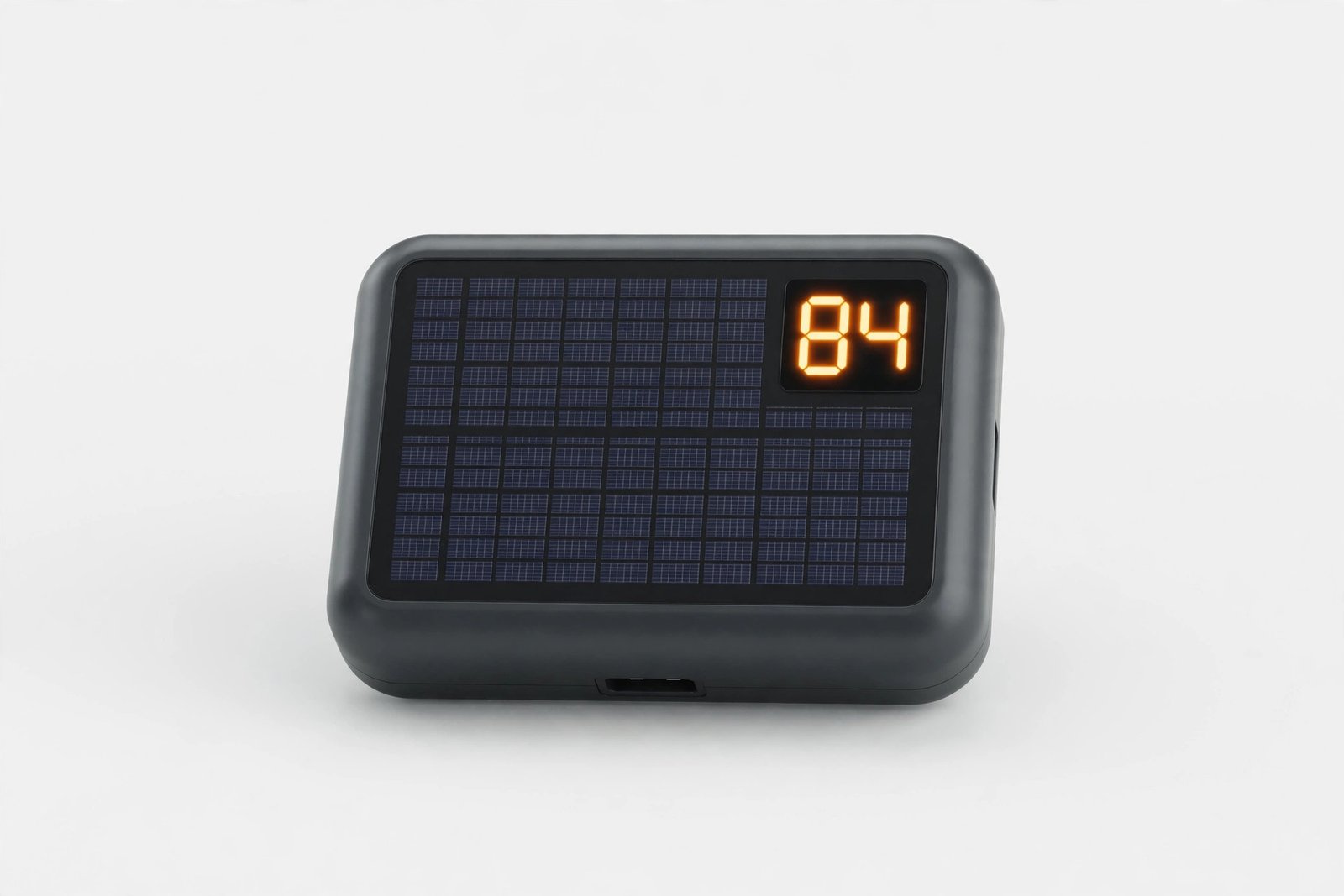
Not every beach trip is an expedition. For a morning session or a few hours after work, the Compact Solar Power Bank with LED Battery Display is the one that actually gets carried, because it slips into a shorts pocket or small dry pouch. Its standout feature is the percentage display: instead of guessing from four vague dots, you know exactly how much is left and can ration it.
Capacity is modest — think one full phone charge plus a top-up — so this is a personal bank rather than a group one. The small panel is purely an emergency trickle, useful for keeping the bank itself topped up in a sunny window between trips. As a solar charger for beach days that stay short and simple it makes a lot of sense, and it doubles neatly as an everyday carry charger the rest of the week.
Pros
- 👍 Pocket-sized and genuinely light
- 👍 Percentage display ends the guessing
- 👍 Enough for one phone and a top-up
- 👍 Doubles as an everyday carry charger
Cons
- 👎 Not enough for a group or a full weekend
- 👎 Tiny panel is an emergency trickle only
- 👎 Usually a single output port
Best for: solo beachgoers and short sessions who travel light.
Check Price And User Reviews on Amazon
7. Solar Power Bank with Three Ports for Sharing
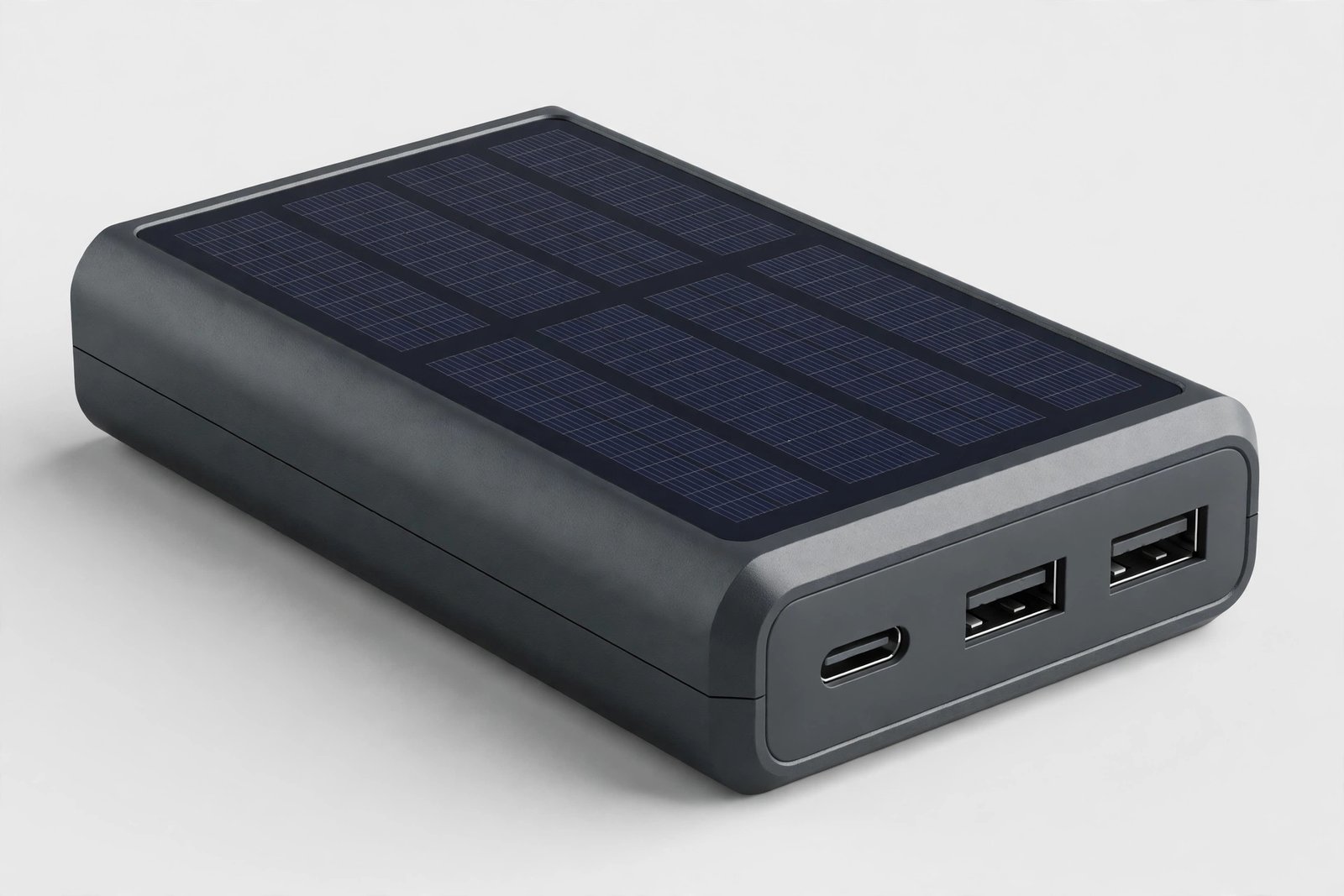
Beach days are social, and batteries fail socially too — usually three phones hit low at the same moment. The Solar Power Bank with Three Ports for Sharing is built for that moment, running a phone, a friend’s phone and the Bluetooth speaker at the same time. Parked in the middle of the group’s towels with its panel in the sun, it becomes the camp power station everyone quietly depends on.
The total output is shared: three devices together each charge more slowly than one alone, so use all three ports for top-ups and give one phone the bank to itself for a fast, full recharge. A design like this also needs a proper wall refill the night before a big group day. Short cables keep the setup tidy.
Pros
- 👍 Three devices charge at the same time
- 👍 Perfect hub for a group of towels
- 👍 Big reserve suits a full social day
- 👍 Panel keeps topping up while it shares
Cons
- 👎 Output is shared, so charging slows down
- 👎 Heavy for one person to carry far
- 👎 Everyone’s cables end up in your bag
Best for: groups of friends whose phones and speaker all need feeding at once.
Check Price And User Reviews on Amazon
8. Dustproof Solar Power Bank with Sealed Port Covers
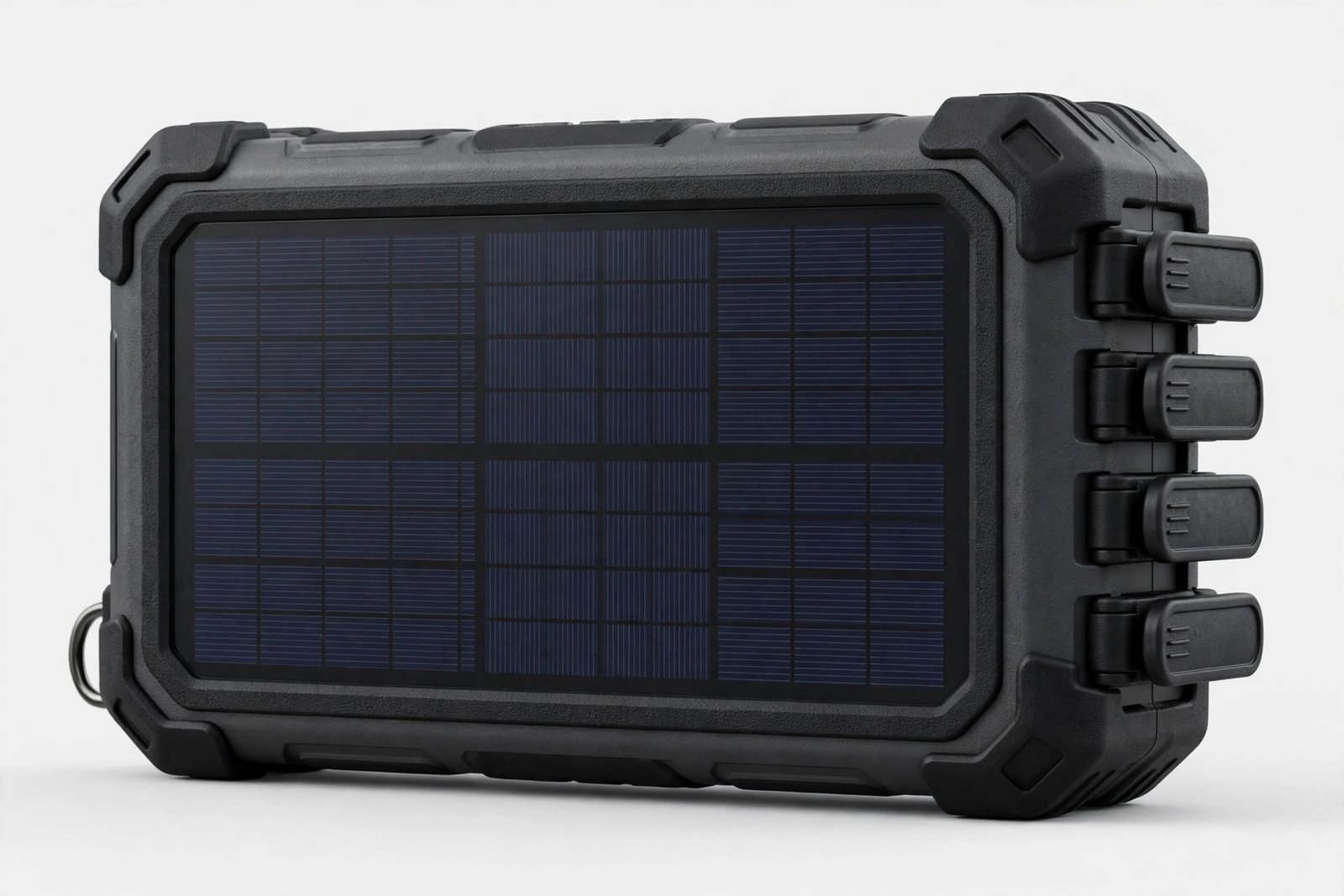
Ask anyone who charges on the beach what actually breaks first and the answer is the ports: one gust of wind-blown sand and every socket is full of grit that grinds against connectors. The Dustproof Solar Power Bank with Sealed Port Covers answers that directly, with thick rubber flaps that seal every input and output when it is not charging, keeping sand and dust out of the places that matter.
The covers also splash-proof the ports, which makes this a quietly sensible waterproof solar power bank for windy, exposed beaches. The only discipline it asks is to close the flaps when you unplug — make it a habit and the ports stay clean for years. Check the covers are attached rather than loose, because a detached flap is a lost flap.
Pros
- 👍 Sealed covers keep sand out of ports
- 👍 Splash protection for the sockets too
- 👍 Ports stay clean and reliable for years
- 👍 Tough shell suits windy, exposed beaches
Cons
- 👎 Covers are fiddly with sandy fingers
- 👎 Only protects when you remember to close them
- 👎 Slightly bulkier than a smooth bank
Best for: windy, sandy beaches where grit gets into absolutely everything.
Check Price And User Reviews on Amazon
9. Solar Power Bank with Hand Crank Backup
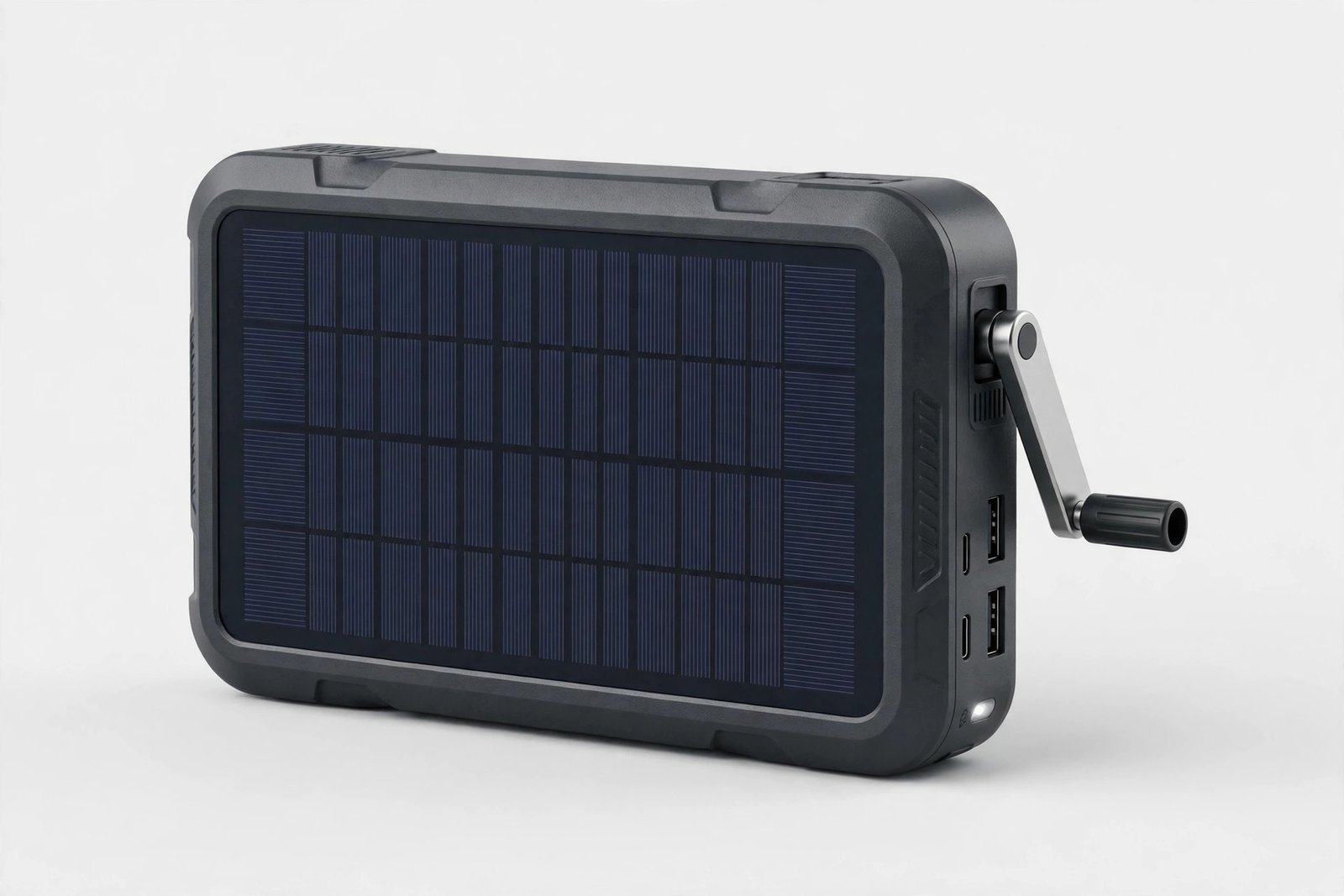
Every charging method in this guide depends on something — a wall socket the night before, or sunshine on the day. The Solar Power Bank with Hand Crank Backup adds a third option that depends on nothing but you: a fold-out crank that generates a small amount of power by hand. It is the same idea that makes it a useful solar phone charger for camping trips and emergency kits as well as beach bags.
Set expectations honestly: cranking is slow, tiring work that produces enough for an emergency call, a few messages or a short torch session — not a full charge. Its real value is insurance: on a remote beach or a long coastal walk, knowing you can always make that one important call is worth the modest extra bulk. Most crank models also bundle a torch, which suits the emergency role well.
Pros
- 👍 Emergency power with no sun or socket
- 👍 Enough for a vital call or messages
- 👍 Often bundles a torch as well
- 👍 Great for remote beaches and boat days
Cons
- 👎 Cranking is slow and tiring
- 👎 Output is emergency-sized only
- 👎 Crank mechanism adds bulk
Best for: remote beaches, boat trips and anyone who likes a backup for the backup.
Check Price And User Reviews on Amazon
10. Slim Solar Power Bank with USB-C Fast Charging
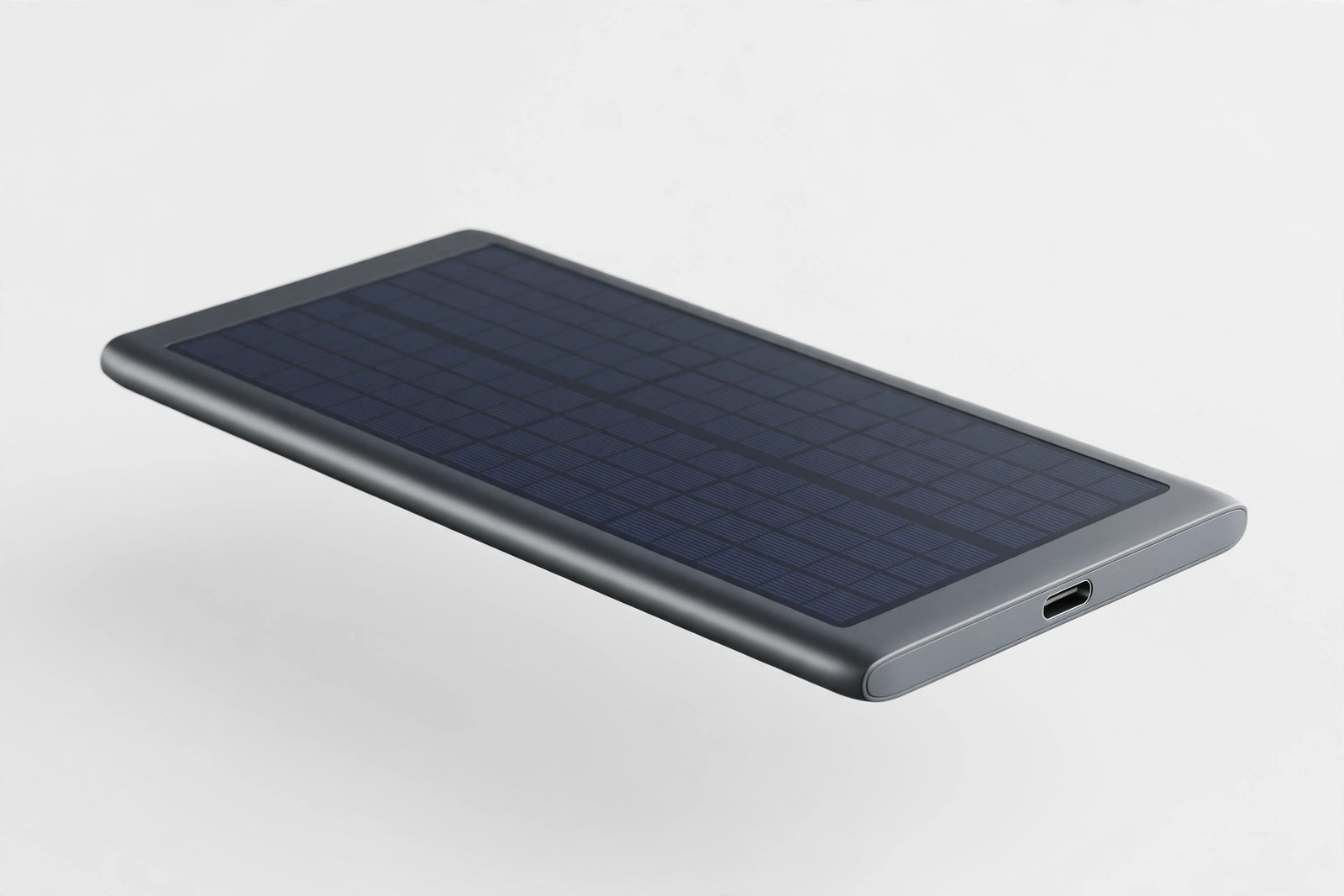
The beach is only half the story — the bank also has to refill quickly between trips. The Slim Solar Power Bank with USB-C Fast Charging uses one modern port both ways: fast charging out to your phone during the day, and a fast refill for the bank itself when you plug it in the evening before. Its thin body slides into the flat pocket of a beach bag where a chunky rugged model would never fit.
That slimness is the compromise: there is less room for heavy armour, so keep this bank in a pouch rather than clipped to a bag in the sun and rain. Treat its panel as a light top-up and its real talent as speed. If your phone supports fast charging, check the USB-C output matches what your phone can accept before you buy.
Pros
- 👍 Fast charging out and fast refill in
- 👍 Thin body fits flat bag pockets
- 👍 One USB-C cable does everything
- 👍 Light enough for everyday carry too
Cons
- 👎 Less drop protection than rugged models
- 👎 Panel is a light top-up only
- 👎 Single port on most slim designs
Best for: organised beachgoers who refill overnight and travel with a small bag.
Check Price And User Reviews on Amazon
11. Solar Power Bank with Built-In Charging Cables
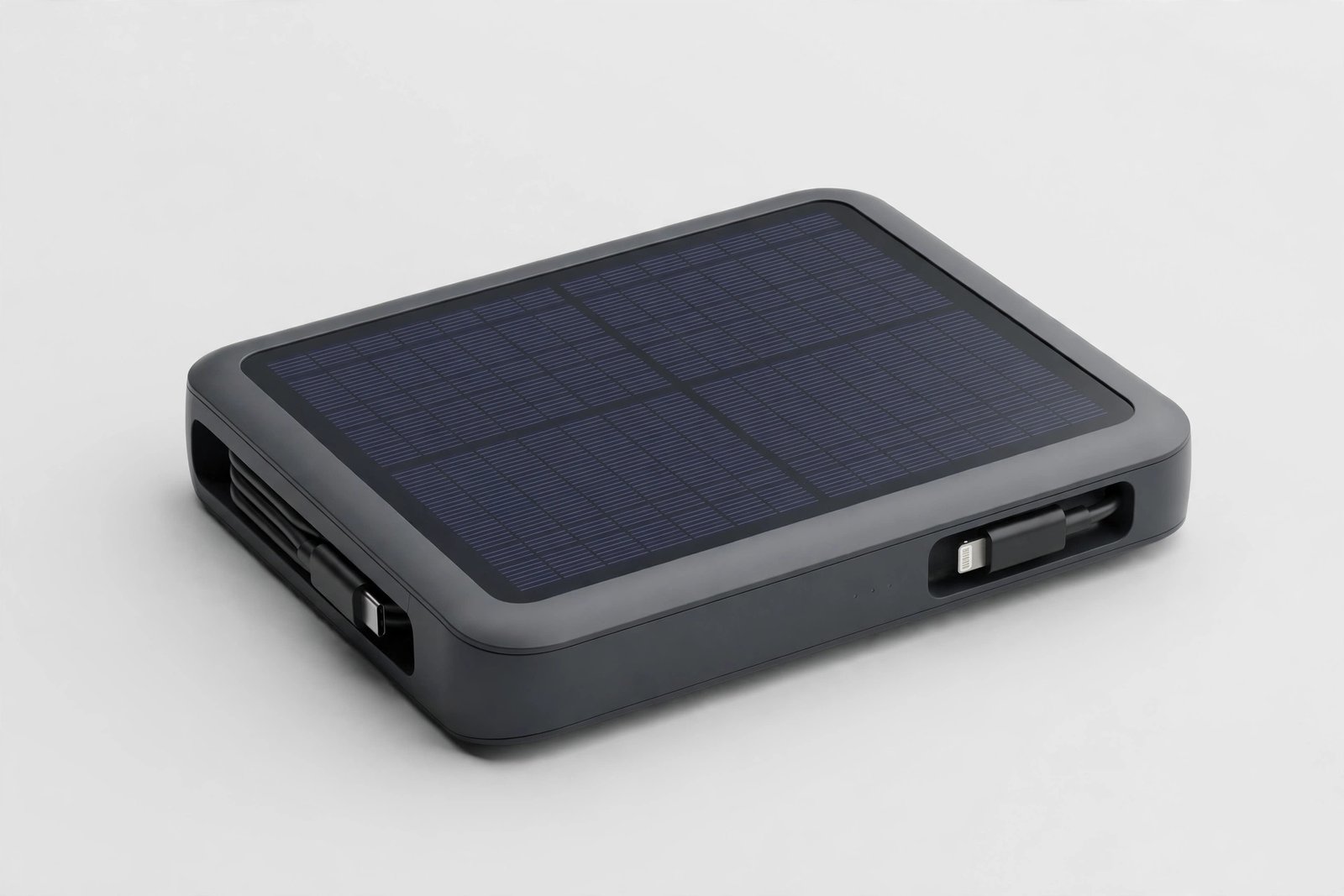
The most common beach charging failure is not a flat bank — it is a forgotten cable, left in the car or at home. The Solar Power Bank with Built-In Charging Cables removes that failure entirely: short cables for the main phone types tuck into slots in its body, always attached, never tangled, never left behind. Many designs add a third built-in lead for refilling the bank itself, so the whole kit is one object.
Built-in cables are short by design — fine for a phone resting beside the bank, awkward if you want to use the phone in your hands while it charges. They are also the part most likely to wear out, so check the bank still has a standard port as a fallback; the good ones do. For grab-and-go simplicity, though, nothing else here comes close.
Pros
- 👍 Cables can never be forgotten or lost
- 👍 No tangles in the beach bag
- 👍 Covers both main phone types
- 👍 One object is the whole charging kit
Cons
- 👎 Short cables limit using the phone while charging
- 👎 Built-in leads are the wear-out part
- 👎 Check for a standard port as backup
Best for: forgetful packers who want grab-and-go charging with zero loose leads.
Check Price And User Reviews on Amazon
12. Jumbo Solar Power Bank with Camping Light
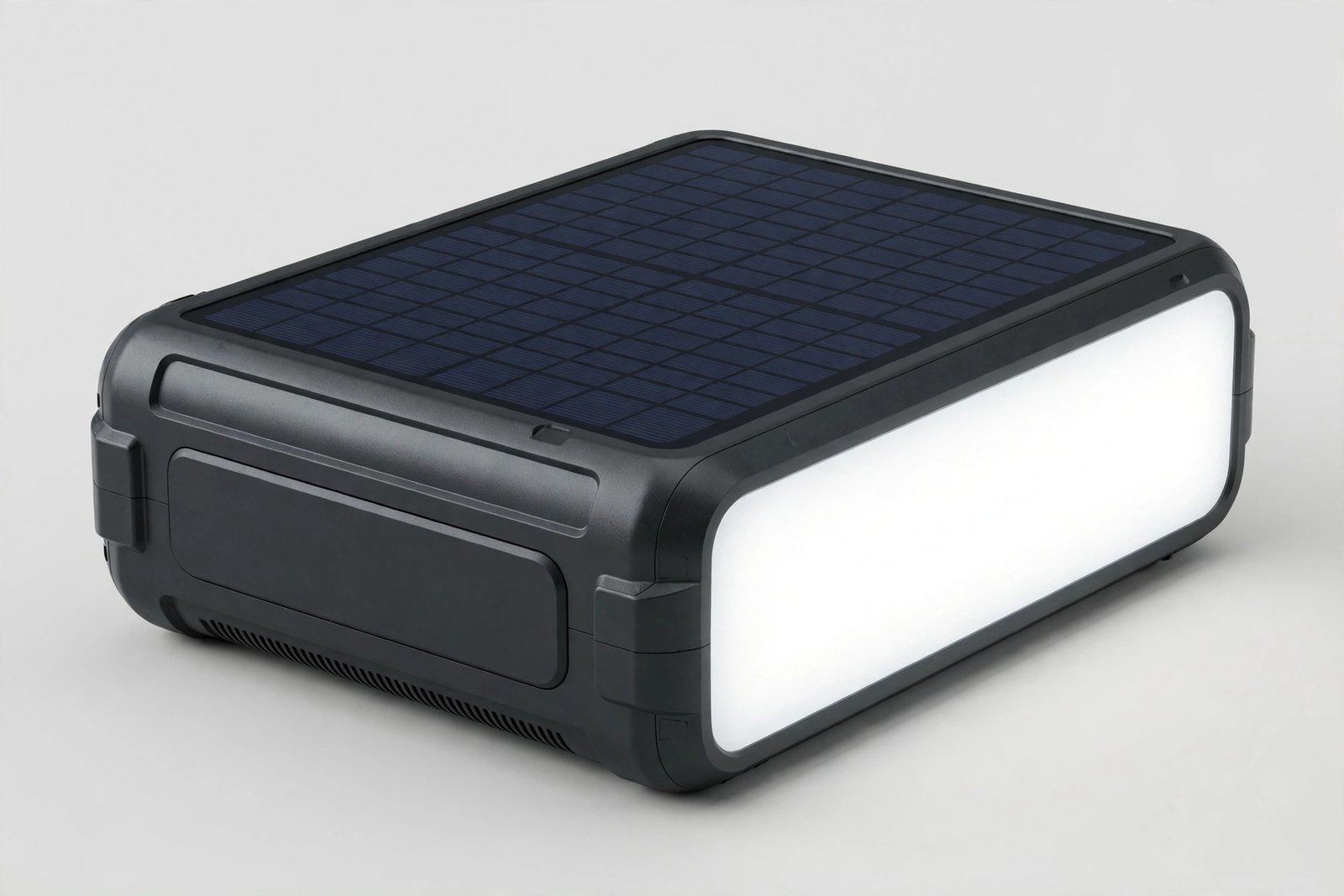
Finally, the heavyweight. A Jumbo Solar Power Bank with Camping Light pairs the biggest capacity in this guide with a wide lantern-style light panel, and it is made for groups who set up a proper base: towels, shade, cool box, speaker, and evenings that drift into a beach barbecue after dark. Through the day it feeds phones and speakers; after sunset the light panel takes over, lighting the whole setup without draining anyone’s phone torch.
You will feel its weight on the walk from the car, so it suits beaches with a short carry or a trolley for your gear. The light usually offers a few brightness levels — use the lowest that does the job and the reserve lasts far longer. Keep it shaded when it is not charging, because big batteries and hot sun are not friends.
Pros
- 👍 Biggest reserve in this guide
- 👍 Lantern light for beach evenings
- 👍 Feeds the whole group’s gadgets
- 👍 Replaces a separate camping light
Cons
- 👎 Heavy on a long walk from the car
- 👎 Overkill for one person
- 👎 Needs shade when not charging
Best for: big groups and beach evenings that run long past sunset.
Check Price And User Reviews on Amazon
What to Look for Before You Buy
Be honest about solar charging speed
The most important thing to understand is that a solar panel is a top-up system. A single panel the size of the bank gathers a slow trickle — useful across a long sunny day, but nowhere near a wall refill. If solar input genuinely matters to you, panel area is the specification that counts, which is why fold-out designs gather so much more. Whatever you choose, start every beach day with the bank fully charged from the wall.
Match capacity to your group
For one phone used lightly, a compact bank around the 10,000 mAh class is plenty. For one heavy user, or a couple sharing, look at the 20,000 mAh class. For groups feeding several phones plus a speaker, a high capacity solar power bank in the 30,000 mAh class or above makes the day stress-free. Remember that some energy is always lost in conversion, so treat the printed capacity as an upper guide rather than a promise, and size up rather than down.
Check water, sand and drop protection
Look for a stated water-resistance rating rather than a vague “waterproof” claim, and remember the rating only applies with port covers closed. On sandy beaches, sealed port covers are worth as much as any water rating, because grit in a socket causes more real-world failures than splashes do. Rubber bumpers help with drops onto hard ground, and a wrist strap or clip keeps the bank out of the sand.
Count ports, cables and charging speeds
Decide how many devices will realistically charge at once and choose the port count to match, knowing that total output is shared between them. USB-C is the port that matters most now: it fast-charges modern phones and refills the bank itself quickly overnight. Built-in cables remove the forgotten-cable problem entirely, while a wireless pad removes cables from the equation altogether for gentle top-ups. A clear battery display, ideally a percentage, saves you from guessing how much of the day is left in the bank.
Heat, safety and simple care
Batteries and heat are poor companions. A solar charger for beach days should have its panel in the sun, but where the design allows, keep the battery body shaded — under a towel or parasol edge — and always follow the manufacturer’s guidance on temperature and water exposure. Afterwards, brush sand off before opening port covers, wipe away salt spray with a slightly damp cloth, and store the bank partly charged if it will sit unused for weeks. Those small habits easily double a bank’s useful life.
Final Thoughts
The pattern running through every pick in this guide is simple: the wall socket does the heavy lifting the night before, and the sun does the stretching on the day. Choose a solar charger for beach days that matches your group size and your beach’s conditions — sealed and rugged for wild, sandy shores; slim and fast for tidy day trips; fold-out panels when you are off-grid for days — and dead phones stop being part of the seaside routine.
Start with three honest questions: how many devices, how long is the day, and how rough is the beach? Answer those and the right bank picks itself from the twelve above. Charge it fully before you leave, park its panel in the sun while you swim, and let it keep the music playing, the camera ready and the group chat alive until the light finally goes.
More Guides You’ll Like
If your beach kit needs more than power, start with our guide to the Best Waterproof Gadgets for Beach Vacations, which covers speakers, dry bags and cases that shrug off sand and splashes just as happily as the banks above. For trips that go beyond the beach, Best Portable Chargers for Travel rounds up compact banks built for flights, trains and long journeys, and when you are back home, Best GaN Chargers Under $50 will refill any bank in this guide far faster than the sun ever could — ready for the next day out.
Frequently Asked Questions
How long does a solar power bank take to charge fully in the sun?
Much longer than most people expect. A typical single-panel bank can need several days of good sunshine to fill a large battery from empty by solar alone, because the panel is small and its output is a trickle. Fold-out designs are several times faster but still measure a full refill in sunny days, not hours. Wall-charge before your trip and treat solar as a top-up that replaces what you use during the day.
Can I leave my power bank in direct sun all day at the beach?
The panel needs sun, but the battery itself prefers shade, because high heat stresses batteries and shortens their life. Where you can, angle the panel into the sun while the body of the bank sits in light shade — under a parasol edge or the lip of a cool box — and never leave any power bank inside a hot parked car. Always follow the manufacturer’s guidance for your specific model, since temperature limits vary between designs.
Are solar power banks really waterproof?
Some are, to a stated rating, and some are only splash-resistant — the difference matters. Check the IP rating on the listing rather than trusting the word “waterproof”, and remember that any rating assumes the port covers are fully closed. A waterproof solar power bank that has been in the sea should be rinsed gently with fresh water afterwards, following the manufacturer’s instructions, because dried salt is corrosive and works its way into seals and ports over time.
What capacity do I need for a full day at the beach?
For one phone with light use, the 10,000 mAh class is enough for a full day with something in reserve. Heavy use — lots of photos, video, music and navigation — or two people sharing points to the 20,000 mAh class, while groups with a speaker to feed as well should look at 30,000 mAh and above. As a rugged power bank for travel days too, a mid-to-large bank is the most flexible single purchase.