How to Start a Balcony Garden in the City
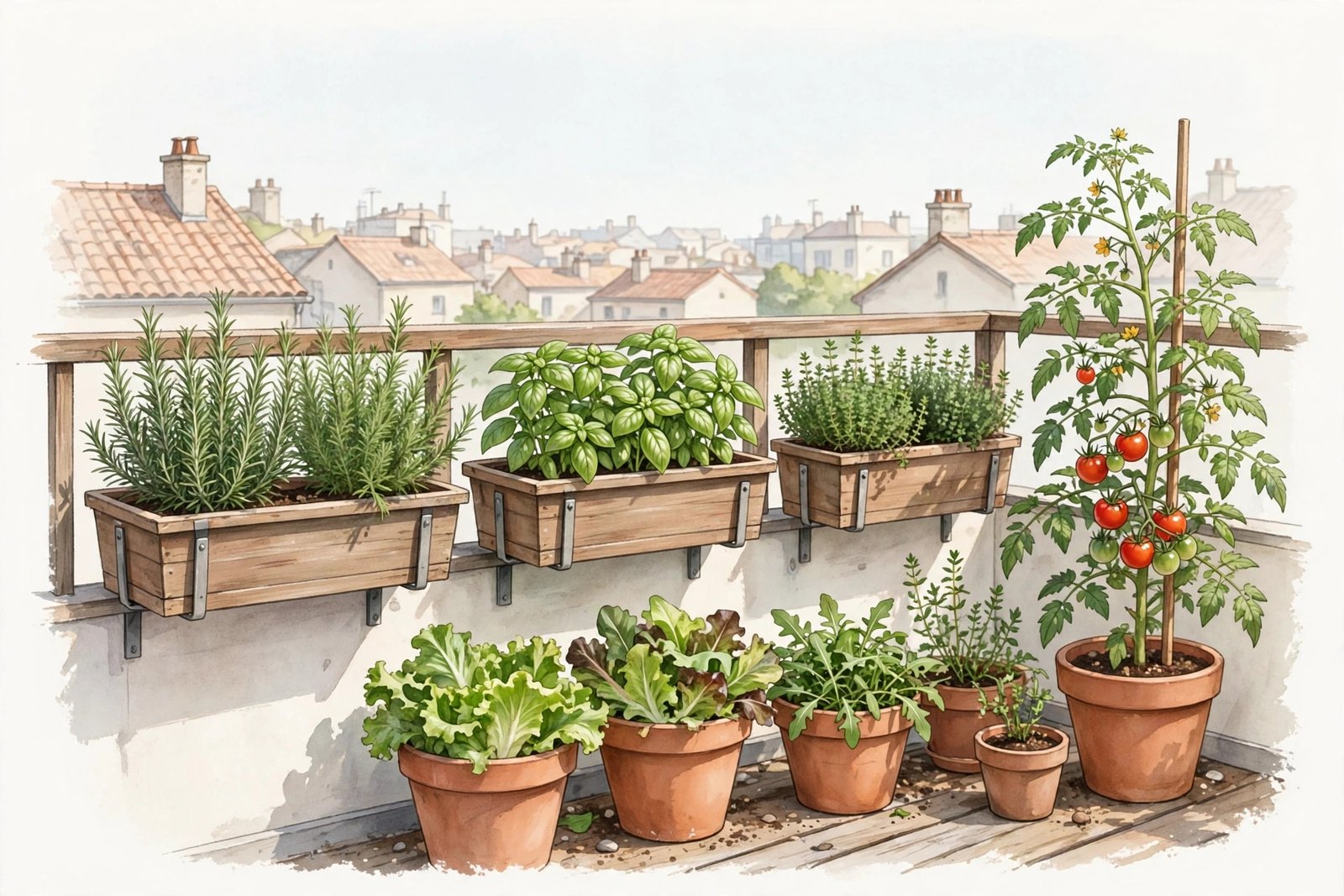
A balcony is a small space, but it is a real garden waiting to happen, and learning how to start a balcony garden in the city is mostly about reading the space you have and choosing plants and containers that suit it. A few pots of herbs by the kitchen door, a rail planter full of salad leaves, a tomato plant in the sunniest corner — that is a garden, and it will give you fresh leaves, bright flowers and a greener view for months of the year. You do not need experience, a big budget or a lot of space to start.
The method in this guide works on any city balcony, from a tiny Juliet balcony to a wide terrace. First, read your balcony before you plant anything: how much sun it gets, how windy it is, and how much weight it can safely hold. Second, choose containers that fit a small space — pots, rail planters and vertical pockets that use the walls and the railings, not just the floor. Third, pick plants that forgive beginners, so your first season is a success rather than a lesson in what went wrong. And fourth, set up a simple watering and feeding routine, so the plants stay healthy with a few minutes a day. Start small, learn what works, and grow from there.
Read Your Balcony Before You Plant
The most important thing about a balcony garden is the balcony itself, and the first job is to watch it for a few days before you buy a single plant. Note which parts get direct sun and for how long: a south-facing balcony in full sun suits tomatoes, peppers and herbs, while a north-facing balcony in shade suits leafy salads, mint and ferns. Most city balconies are somewhere in between, with a few hours of sun in the morning or the afternoon — and that is enough for a surprising range of plants, as long as you choose them for the light you actually have.
Wind is the other thing to watch. A high balcony, especially on a tall building, can be very windy, and wind dries out pots quickly and snaps tender stems. If your balcony is windy, choose sturdy, low-growing plants, shelter the pots behind the railing or a screen, and use heavier pots that will not blow over. A simple windbreak — a bamboo screen or a row of tough shrubs in pots — can calm the wind enough for more delicate plants to thrive behind it.
Weight matters more than most beginners realise. Wet soil is heavy, and a balcony has a weight limit — so check with your building management if you are unsure, and always use lightweight potting compost rather than heavy garden soil. Large pots filled with wet compost can weigh a great deal, so spread the load across the balcony, keep the heaviest pots near the walls or over the structural beams, and avoid piling everything into one corner. A balcony garden is a pleasure, not a structural test.
Finally, check the practical things. Does the balcony have a tap nearby, or will you be carrying water from the kitchen? Is there a drain, and will the water from your pots drip onto the neighbours below? A tray or saucer under each pot catches the drips and keeps the balcony floor dry, and a watering can kept by the door makes the daily watering easy. Sort these small things out first, and the gardening itself becomes simple.
Choose Containers That Fit a Small Space
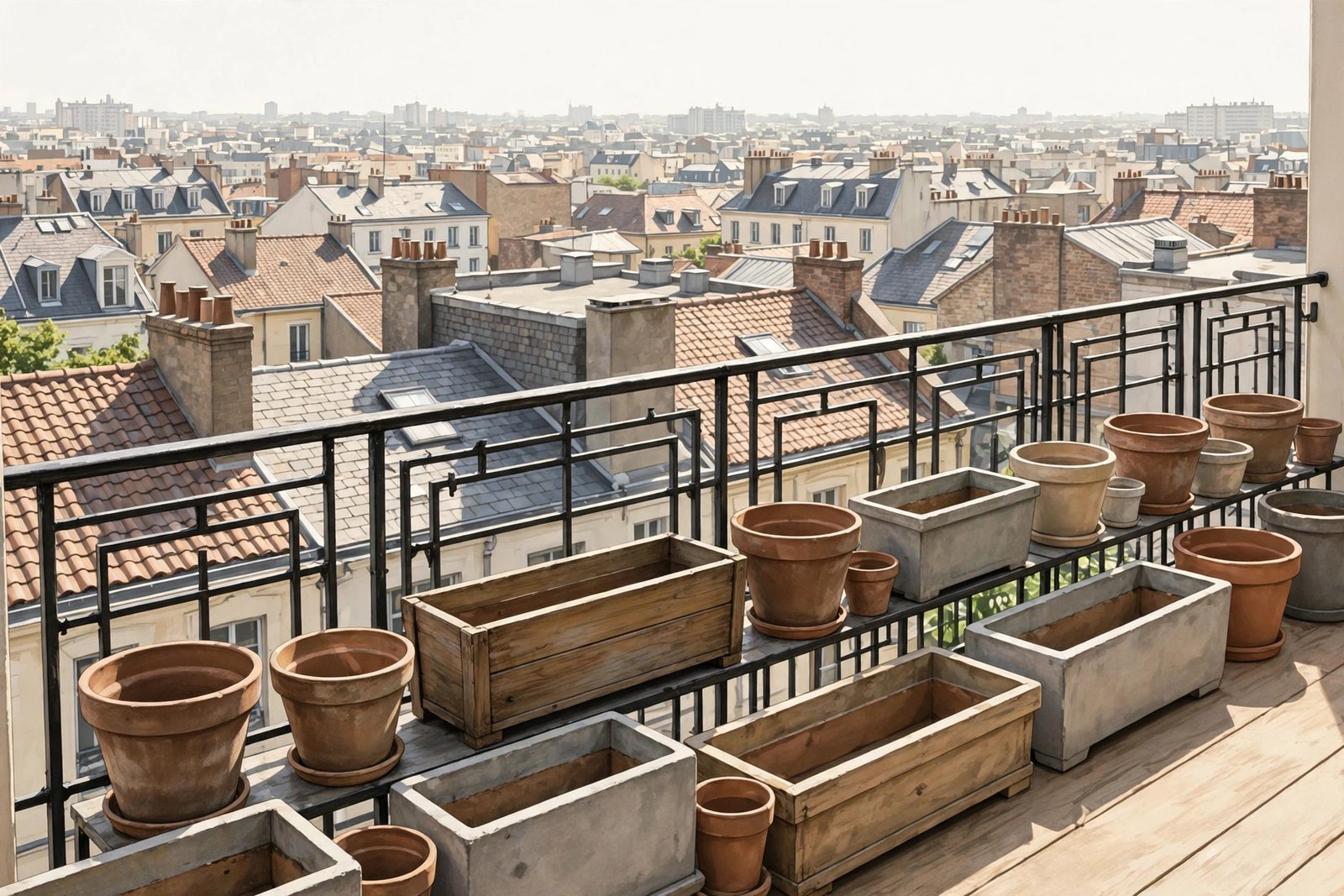
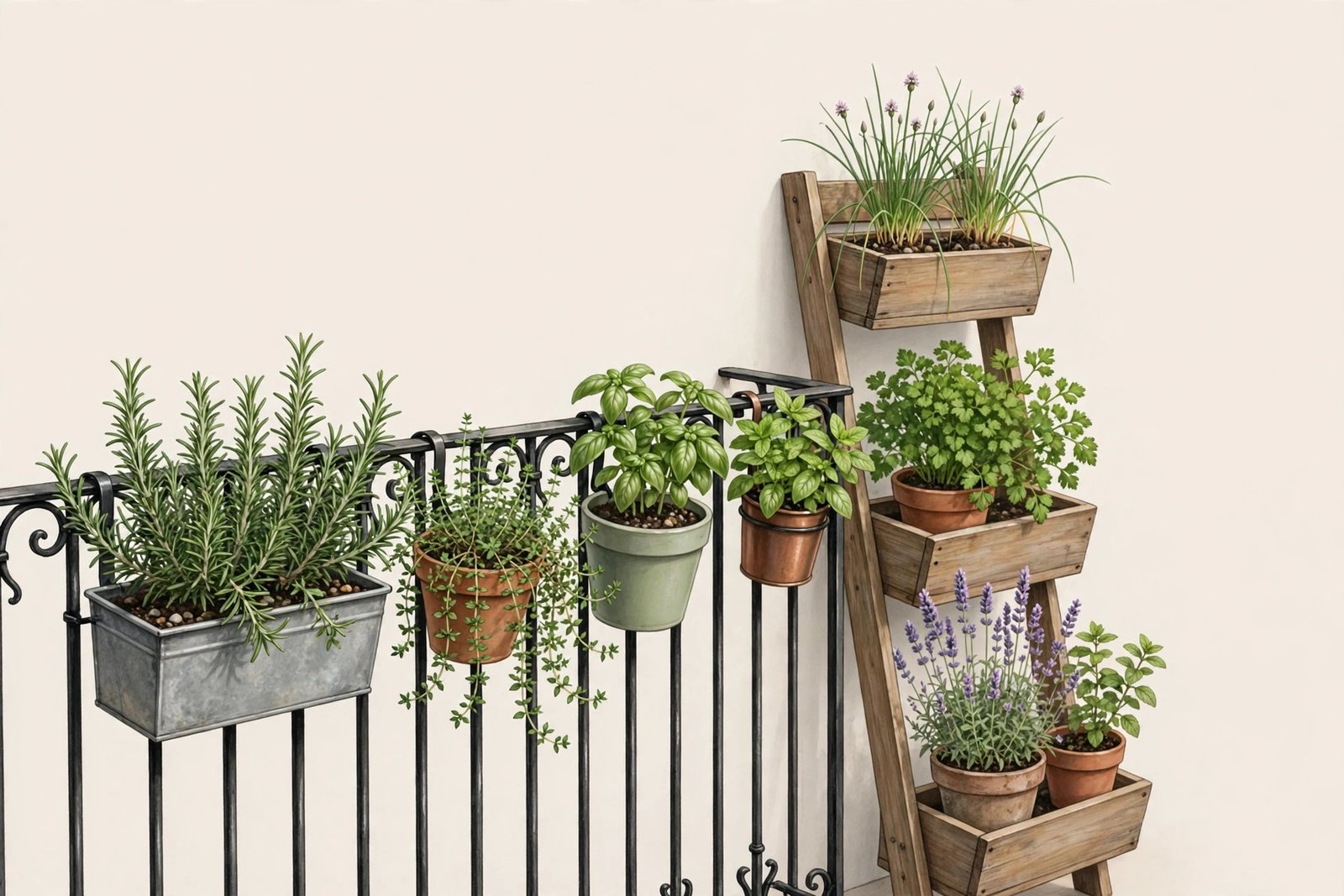
On a balcony, the containers are the garden, and the trick is to use the vertical space as well as the floor. Rail planters that hook over the balcony railing hold herbs and flowers without taking up any floor space at all, and they sit in the best light on the balcony — right at the edge, where the sun reaches. Wall-mounted pockets and hanging baskets do the same job on the walls, turning a bare wall into a green one.
Choose pots that suit the plants and the space. Herbs and salad leaves are happy in small pots and troughs, while tomatoes, peppers and courgettes need a large pot — at least 20 litres — with room for their roots and a stake or a cane to support them. Make sure every pot has drainage holes in the bottom, because plants sitting in water will rot, and always stand the pots on a saucer or a tray to catch the drips. A pot without drainage is a plant that will not last the season.
Stacking and tiered planters are made for balconies. A tiered planter holds a dozen small plants in the footprint of a single pot, and a set of steps or shelves against the wall lets you grow on three levels instead of one. Put the sun-lovers on the top shelf, where the light is best, and the shade-tolerant plants on the lower shelves, where the plants above shelter them. A vertical garden like this can hold more plants than a small ground-level bed, all in a square metre of balcony.
Think about the look as well as the function. Pots in a matching colour or material make a small balcony feel calm and put-together, while a jumble of different pots can look messy — though a few terracotta pots mixed with glazed ones can look charming too. Whatever you choose, group the pots in odd numbers and vary the heights, with a tall plant at the back and low ones at the front, and the balcony will look like a garden rather than a collection of pots.
Pick Plants That Forgive Beginners
Your first balcony garden should be a success, and the surest way to guarantee that is to pick plants that are hard to kill. Herbs are the best place to start: basil, mint, parsley, chives and rosemary grow quickly, forgive a missed watering, and you can use them in the kitchen the same day you pick them.
Salad leaves are the next easy win. Lettuce, rocket, spinach and mixed salad leaves grow fast — you can be picking leaves within a month of sowing — and they are happy in shallow troughs and rail planters. Sow a little every two weeks rather than all at once, and you will have a steady supply all season instead of a glut followed by nothing. Cut the outer leaves and leave the centre to keep growing, and a single sowing will feed you for weeks.
For something bigger, try a tomato plant or a pepper plant in the sunniest spot. A single cherry tomato plant in a large pot, with a cane to support it and regular watering, can produce a surprising amount of fruit through the summer. Chillies are even easier — they love the heat of a sunny balcony, need little attention, and a single plant will give you chillies for months. And if your balcony is shady, do not worry: mint, parsley, lettuce and ferns all grow happily out of direct sun.
Add a few flowers for colour and for the bees. Marigolds, nasturtiums and lavender are all easy, bright and tough, and nasturtiums have the bonus of edible flowers and leaves for salads. A flower or two among the vegetables also helps the garden look like a garden, not just a vegetable patch — and on a city balcony, a flower that brings in a bee or a butterfly is a small triumph worth having.

Water, Feed and Keep It Tidy
Pots dry out far faster than garden soil, and watering is the one job a balcony garden needs every day in summer. Water in the morning or the evening, when the water soaks in instead of evaporating, and water the soil rather than the leaves. Check the soil with a finger: if the top few centimetres are dry, it is time to water, and water until a little runs out of the drainage holes, so you know the whole pot is wet. In hot weather, a large pot may need watering twice a day.
Make watering easier with a few simple tricks. A layer of mulch — bark, straw or even small stones — over the surface of the pot slows evaporation and keeps the soil moist for longer. A self-watering pot, with a reservoir at the bottom, lets the plant drink as it needs and buys you a day or two if you go away. And a simple drip system on a timer, fed from a tap or a water butt, will water the whole balcony while you are on holiday — the single best investment for a balcony gardener who travels.
Feed the plants lightly and regularly. Potting compost runs out of nutrients after a few weeks, so a liquid feed every couple of weeks through the growing season keeps the plants growing well. A general-purpose liquid feed is fine for most plants, and a tomato feed suits fruiting plants like tomatoes and peppers. Do not over-feed: more feed does not mean more growth, and too much can burn the roots. A little, often, is the rule.
Finally, keep the balcony tidy and the plants healthy. Pick off dead leaves, pinch out the growing tips of herbs to keep them bushy, and check the plants for pests — a few aphids on a leaf can be washed off with water, and a plant that is struggling is usually one that needs water, light or a bigger pot. A tidy balcony garden is a healthy one, and a few minutes a day is all it takes to keep it that way. By the end of the first season, you will know your balcony, your plants and your routine — and the second season will be even better.

Final Thoughts
Starting a balcony garden in the city is a small project with a big reward. Read the balcony first — the sun, the wind, the weight — choose containers that use the walls and the railings as well as the floor, pick plants that forgive beginners, and set up a simple watering routine. That is the whole method, and it works on the smallest balcony as well as the largest.
Start with a pot of herbs and a trough of salad leaves this weekend, and see how it goes. The first leaf you pick and eat from your own balcony is the moment a balcony becomes a garden — and once it does, you will be planning the next pot before the first season is over.
More Guides You’ll Like
For the gadgets that make all of this easier — self-watering planters, balcony rail planters, grow lights and more — see our product guide to the Best Garden Gadgets for Balcony Gardeners in the City, which rounds up twelve picks chosen for city balcony gardens. And for lighting the balcony after dark, Best Solar Lighting Gadgets for Patios and Pathways covers the solar lights that make a small outdoor space glow in the evening.
Frequently Asked Questions
What grows best on a city balcony?
Herbs like basil, mint and parsley, salad leaves like lettuce and rocket, cherry tomatoes and chillies in a sunny spot, and ferns and mint in shade. All of them grow well in pots, forgive a missed watering, and give you something to pick within weeks.
How much sun does a balcony garden need?
Most vegetables and herbs need four to six hours of direct sun a day, but salad leaves, mint and parsley will grow happily with less. Watch your balcony for a few days to see how much sun it actually gets, and choose plants for the light you have, not the light you wish you had.
How often should I water balcony plants?
Every day in summer, and sometimes twice a day in hot weather, because pots dry out far faster than garden soil. Water in the morning or evening, check the soil with a finger, and water until a little runs out of the drainage holes. Mulch and self-watering pots help the soil stay moist for longer.
Can I have a balcony garden on a windy high-rise balcony?
Yes, with the right choices. Use heavy pots that will not blow over, choose sturdy low-growing plants, and shelter them behind a windbreak like a bamboo screen or a row of tough shrubs. Avoid tall, top-heavy plants in light pots, and check that everything is secure before a storm.