
How to Reduce Dust in Your Home
Dust is the most patient guest in any house. You wipe a shelf on Saturday, and by Thursday a grey film is back, as if it never left. It settles on books, picture frames, skirting boards and the tops of doors, and it drifts into the air every time a cushion is plumped or a curtain is drawn. Learning how to reduce dust in your home is not about winning a war against it once and for all — that war cannot be won — but about making it arrive more slowly, settle in fewer places, and leave more easily when you clean.
The important thing to understand is where dust comes from. Most of it is not mysterious dirt blowing in from outside; it is generated indoors, by the home itself and the people and pets in it. Fabric fibres from clothes, bedding and upholstery, skin flakes, pet dander and hair, pollen and soil carried in on shoes, and the fine debris from cooking and heating all feed the layer that builds up on every surface. Because the sources are mostly inside, the habits that control dust are mostly inside too — laundry routines, cleaning order, entryway habits and simple airflow.
What follows is a practical system rather than a single trick. None of it needs special equipment, and none of it asks for a full day of cleaning. It works in layers: keep the biggest dust factories — beds and soft furnishings — under control; clean in an order that moves dust out instead of around; stop new dust at the door; and use air and routine to keep the whole house at a lower baseline. A home managed this way never becomes dust-free, but it stays visibly cleaner for far longer between cleans.
Bedding and Soft Furnishings: Where Most Dust Is Born
If dust has a headquarters, it is the bed. Sheets, duvets, pillows and blankets shed fibres constantly, collect skin flakes and hair, and get shaken into the room’s air every morning when the bed is made. A bedroom can look tidy and still be the dustiest room in the house simply because of what happens in it every night. The fix is a simple, regular bedding routine: wash sheets and pillowcases weekly in a hot wash if the fabric allows it, and wash duvets, blankets and mattress protectors every few months rather than once a year.
How you handle bedding matters as much as how often you wash it. Shake duvets and blankets outdoors, or at least out of an open window, rather than in the middle of the bedroom, so the fibres and flakes you dislodge leave the house instead of settling on the carpet and furniture. Let the bed air for a while in the morning before making it — pulling the covers back and opening a window lets overnight moisture escape, and a drier bed sheds less and smells fresher.
The same thinking applies to the rest of the home’s soft furnishings. Cushion covers, throws and curtains are dust reservoirs that release a small cloud every time they are touched. Wash or shake out cushion covers and throws every few weeks, take curtains down for a wash or a thorough outdoor shake a couple of times a year, and vacuum upholstered sofas and armchairs with an upholstery attachment as part of the regular clean, paying attention to the seams and the gap behind the cushions where dust and crumbs gather undisturbed.

Clean Top to Bottom, and Damp Rather Than Dry
The order you clean in decides whether dust leaves the house or simply relocates. Dust falls, always — so start high and finish low. Begin with ceiling corners, light fittings, the tops of wardrobes and tall shelves, then work down through tables and worktops, and vacuum or mop the floor last, once everything knocked loose has had a chance to settle on it. Cleaning the floor first and dusting afterwards just rains a fresh layer onto your clean floor.
The tool matters too. A dry feather duster or a dry cloth mostly pushes dust off one surface and into the air, from where it settles somewhere else within the hour. A slightly damp microfibre cloth works differently: the moisture and the fibres trap the dust so it comes away with the cloth. Rinse the cloth regularly as you go, work through a room methodically rather than wandering, and do not forget the forgotten places — the tops of picture frames, door frames, skirting boards, window sills and the backs of televisions and monitors, where static pulls dust into a stubborn grey felt.
Vacuum after dusting, and vacuum more than the middle of the room. Dust concentrates where air is still and feet rarely go: along skirting boards, under beds and sofas, behind furniture and in corners. A crevice tool along the edges and a pass under the bed once a week removes the reservoirs that keep re-seeding the room. Empty the vacuum’s container or change its bag before it is full, because a full vacuum blows fine dust back out as fast as it collects it.

Stop Dust at the Door
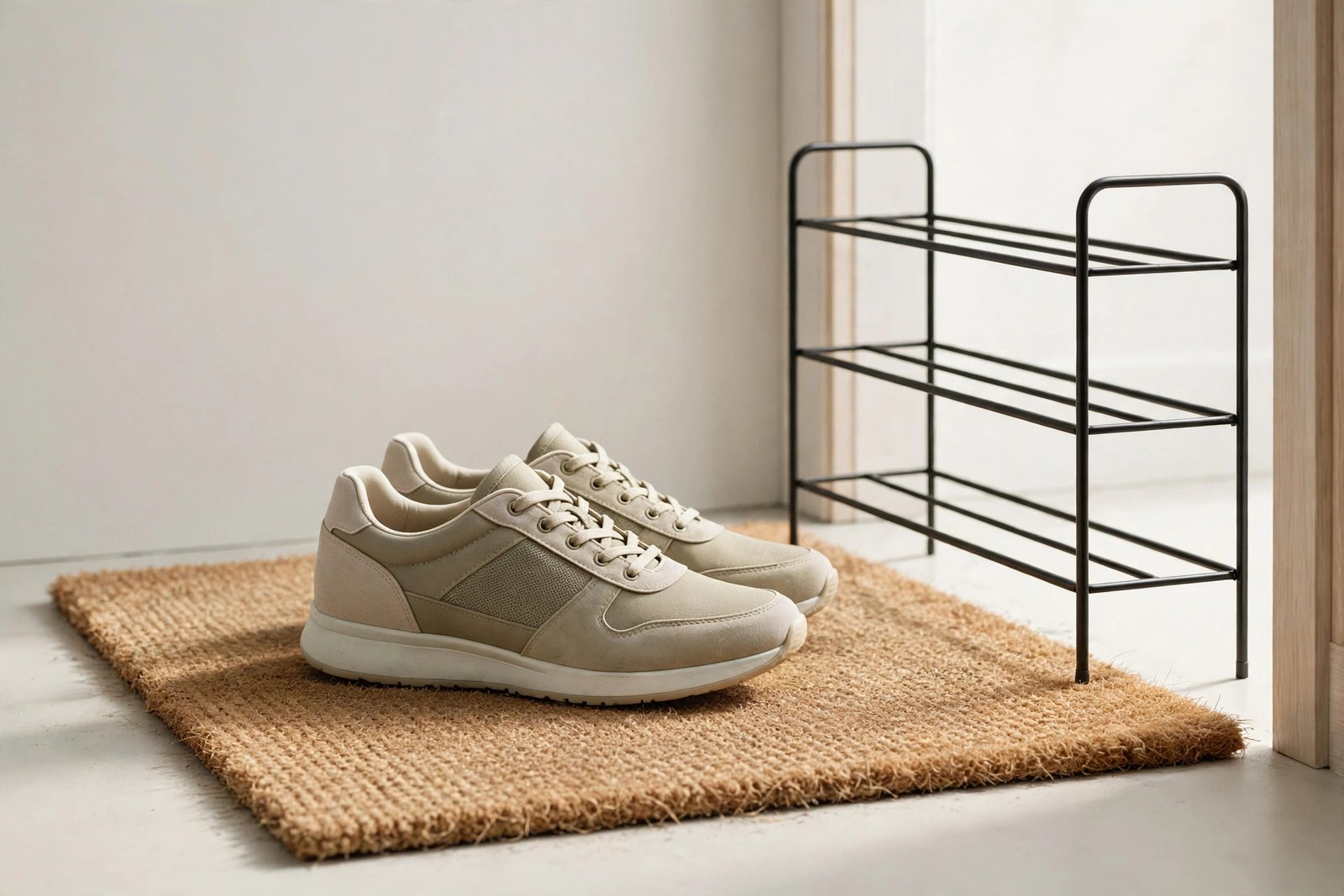
A surprising share of household dust walks in through the front door. Soil, grit, pollen and fine street dust arrive on shoe soles, coat hems, bags and pet paws, and then get ground into carpets and spread through the house on socks and bare feet. The entryway is therefore the cheapest place in the home to fight dust: a stiff doormat outside the door and a washable mat inside it catch the bulk of what shoes carry before it gets any further.
The habit that makes the mats work is simple: shoes off at the door. A small shoe rack or basket by the entrance makes it easy for family and guests, and it keeps the grittiest dust — the kind that scratches hard floors and dulls carpets — in one small, easily cleaned area. Wipe the entryway floor more often than the rest of the house, and shake both mats outside at least weekly; a mat that is never cleaned becomes a dust source of its own, shedding into the hallway with every footstep.
Pets deserve a mention here too, because they are enthusiastic dust distributors. A quick wipe of paws with an old towel kept by the door after walks stops mud and grit at the threshold, and a washable throw over the pet’s favourite chair or sofa spot concentrates hair and dander in one place that can be shaken out and washed weekly, instead of across every cushion in the room.
Air, Ventilation and the Things That Stir Dust Up
Dust spends part of its life in the air, and the air in a closed, still house lets it settle slowly onto everything. A few minutes of ventilation each day — windows open on opposite sides of the home if you can, to create a through-draught — carries a share of the airborne dust outside and replaces stale air with fresher air. Ten minutes in the morning is enough to make a room feel clearer, and it costs nothing.
Heating and cooling systems deserve attention, because they move air around the house and can move dust with it. Wipe vent covers and radiator tops regularly — radiators gather a hidden layer that rises into the room on warm air currents all winter — and if your home has fans or an air purifier with a replaceable filter, check and change the filter on the maker’s schedule, since a clogged filter stops catching anything and can end up recirculating what it already holds.
Finally, notice what stirs dust up. Plumping cushions, shaking rugs indoors, folding laundry on the bed and enthusiastic dry sweeping all launch settled dust back into the air. Shake rugs and beat cushions outdoors whenever possible, fold laundry on a table rather than the bed, and prefer a damp mop or a vacuum to a dry broom on hard floors. These small choices do not remove dust by themselves, but they stop you undoing the rest of your work in the last five minutes.

Floors and Carpets: The Final Catch
Whatever dust escapes the bedding, the entryway and the air eventually lands on the floor, which makes floors the final catch in the system. Hard floors show dust quickly but surrender it easily — a microfibre mop or a vacuum pass a couple of times a week keeps them clear. Carpets and rugs hide dust much better, which is both their virtue and their problem: they trap dust where it cannot be seen, then release it back into the air with every footstep.
Vacuum carpets slowly, with overlapping strokes, and give high-traffic lanes an extra pass, because the brush and suction need time to lift what is worked down into the pile. Once or twice a year, take rugs outside for a proper beating and airing — the amount of dust that comes out of a rug that is vacuumed weekly is always a surprise. And reduce the dust traps you do not need: piles of magazines, open shelves of ornaments and clothes draped over chairs all collect dust and make the real cleaning slower, so a little decluttering is quietly one of the most effective dust measures of all.
Final Thoughts
Reducing dust is a game of small hinges. No single habit transforms a house, but a weekly bedding routine, a top-to-bottom cleaning order with a damp cloth, shoes left at the door, a few minutes of daily ventilation and unhurried vacuuming add up to a home where the grey film builds far more slowly — and where a quick tidy genuinely makes the place look clean, instead of just moving the problem from the shelf to the floor.
Start with the two changes that give the fastest return: wash the bedding weekly and shake it outdoors, and clean in the top-to-bottom order from now on. Add the doormat and shoe habit next, then the short daily airing. Within a few weeks you will notice the difference in the most honest test there is — the sunlight on the furniture, and how long it takes before the surfaces need doing again.
More Guides You’ll Like
For the tools that make dust control easier — vacuum attachments, air purifiers, washable mats and microfibre systems — see our product guide to the Best Cleaning Gadgets for People with Dust Allergies, which rounds up twelve picks chosen for dusty homes. And if pet hair is part of your dust problem, see How to Remove Pet Hair from Your Home, which covers grooming at the source, loosening hair before you vacuum, and the daily habits that keep it under control.
Frequently Asked Questions
How often should I dust my home?
Once a week for most rooms is enough if you work top to bottom with a damp microfibre cloth, and high-traffic or high-dust spots — the bedroom, the entryway, the tops of radiators — benefit from a quicker midweek pass. The goal is a steady routine that stops the layer building up, rather than marathon sessions every few months.
Why does my house get dusty again so quickly after cleaning?
Usually because the dust was moved rather than removed: dry dusting pushes it into the air, cleaning the floor before the shelves rains it back down, and bedding and rugs keep releasing fresh fibres and flakes. Damp cloths, the top-to-bottom order and a weekly bedding routine slow the return noticeably.
Do carpets make a house dustier?
Carpets trap dust in the pile, which keeps it out of the air until footsteps release it again, while hard floors let dust drift and resettle on furniture. Neither is automatically worse — carpets need slower, more thorough vacuuming and the occasional outdoor beating for rugs, while hard floors need more frequent but quicker mopping.
What is the single easiest habit for reducing dust?
Shoes off at the door, with a mat on both sides of it. A large share of household dust arrives on shoe soles, and stopping it at the threshold is free, takes seconds, and makes every other cleaning habit in the house work better.




One Comment