

Best Home Safety Gadgets for People Who Live Alone
Affiliate Disclosure: As an Amazon Associate, we earn from qualifying purchases made through links on this page, at no extra cost to you. This helps support our work and keeps our guides free to read.
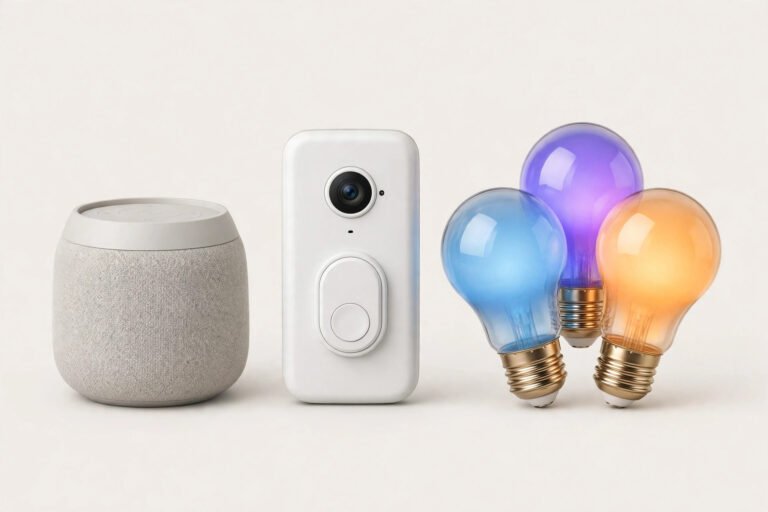
A quick note on prices: prices change often, so we never quote a fixed price here. Please check the latest price on Amazon before you buy, using the yellow buttons in this guide. The product pictures in this article are original illustrations created for this guide, not manufacturer photos.
Living alone has a particular kind of quiet: nobody else hears the knock at the door, nobody else notices the smoke alarm, and nobody else is there if you fall. That is why the best home safety gadgets for people who live alone are worth fitting thoughtfully — they answer the door for you, watch the quiet hours, and make sure help can reach you even when you cannot reach the phone.
Good home safety for solo living is built in layers. The first layer is the door: seeing who is there before you open it. The second is the house itself: alarms and sensors that notice smoke, a stranger, or a window forced open. The third is you: a pendant, a watch or a phone routine that can call for help when you cannot. Together they cover the risks that matter most when there is only one person in the house.
The gadgets in this guide were chosen for people who live alone at any age, not for any medical condition. Nothing here diagnoses, treats or monitors health, and nothing replaces professional advice — if you have a health worry, speak to your doctor. What these tools do is simpler and more practical: they make a solo household safer, more connected and easier to live in with confidence.
You do not need all twelve gadgets. Most solo households need a video doorbell, a smart lock, a smoke and carbon monoxide alarm, and one way to call for help — then one or two extras for the rooms and hours that worry you most. Used together, these tools turn living alone from a quiet risk into a comfortable, well-watched home. A pendant or watch gives you an emergency alert for people living alone, personal safety gadgets at home like the doorbell and the camera watch the door, smart security for single households covers the windows, and fall detection at home means a fall is noticed even when you cannot call for help yourself.
How We Chose
Every gadget here had to pass one test first: would it help someone who is alone, in the moment they need it? That ruled out gadgets that need two people to use, alarms too quiet to hear from another room, and tools that only work when you remember to switch them on. What survived works automatically, alerts loudly, or calls for help with a single press.
We also weighed everyday practicality: gadgets that fit a normal home without rewiring, batteries that last months, and tools simple enough to use in the dark or in a hurry — because a safety gadget only protects a home if it works on the worst night, not the best one. Where a gadget needs Wi-Fi or an app, we say so plainly, and where a simple battery alarm is the better choice, we say that too.
Quick List
- Video Doorbell with Motion Alerts — see who is at the door before you open it.
- Personal Emergency Alarm Pendant — call for help with one press, anywhere in the house.
- Smart Lock with Auto-Lock — locks itself behind you, every time.
- Indoor Camera with Two-Way Audio — see and speak to anyone inside the house.
- Smart Smoke and Carbon Monoxide Alarm — alerts your phone as well as the house.
- Motion Sensor Night Lights — light the hallway before you step into it.
- Window and Door Contact Sensors — know the moment a door or window opens.
- Wall-Mounted Key Safe — a safe place for a spare key a helper can reach.
- Personal Safety Alarm Keychain — a loud alarm you can carry everywhere.
- Smart Plug with Remote Control — control lights and appliances from anywhere.
- Fall Detection Smartwatch — calls a chosen contact if it detects a hard fall.
- Emergency Torch and Power Bank — light and phone power when the power goes out.
1. Video Doorbell with Motion Alerts
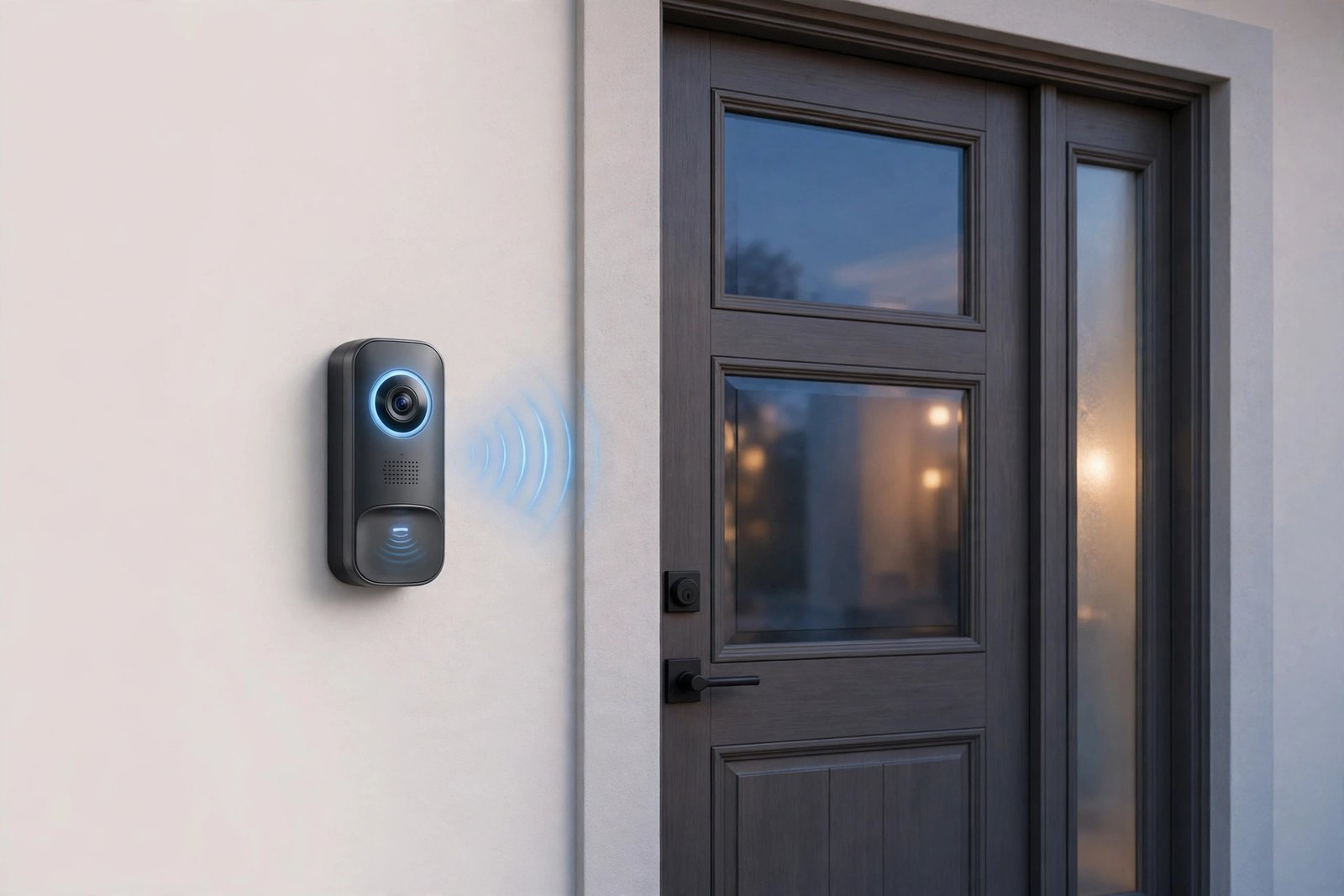
If you buy only one tool from this guide, make it a Video Doorbell with Motion Alerts. When you live alone, the knock at the door is the moment you are most exposed — and a video doorbell lets you see who is there, speak to them, and decide whether to open the door, all without standing at it. Motion alerts warn you before the bell is even rung, so nobody arrives unnoticed.
It also records every visitor, so you can check later who came and when, and you can answer a courier or a stranger from the kitchen, the garden or another town. Keep it charged or wired, test the two-way talk before relying on it, and set the motion zone to your doorstep so you are alerted to people, not passing cars. For home safety for solo living, the doorbell is the gadget that takes the guesswork out of the front door.
Pros
- 👍 See and speak to visitors before opening the door
- 👍 Motion alerts warn you before the bell rings
- 👍 Records every visitor, day and night
- 👍 Answer the door from anywhere
Cons
- 👎 Needs Wi-Fi and a charged battery or wiring
- 👎 Too many motion alerts becomes noise
- 👎 Video storage may need a subscription
Best for: every solo household, as the front door’s eyes and voice.
Check Price And User Reviews on Amazon
2. Personal Emergency Alarm Pendant
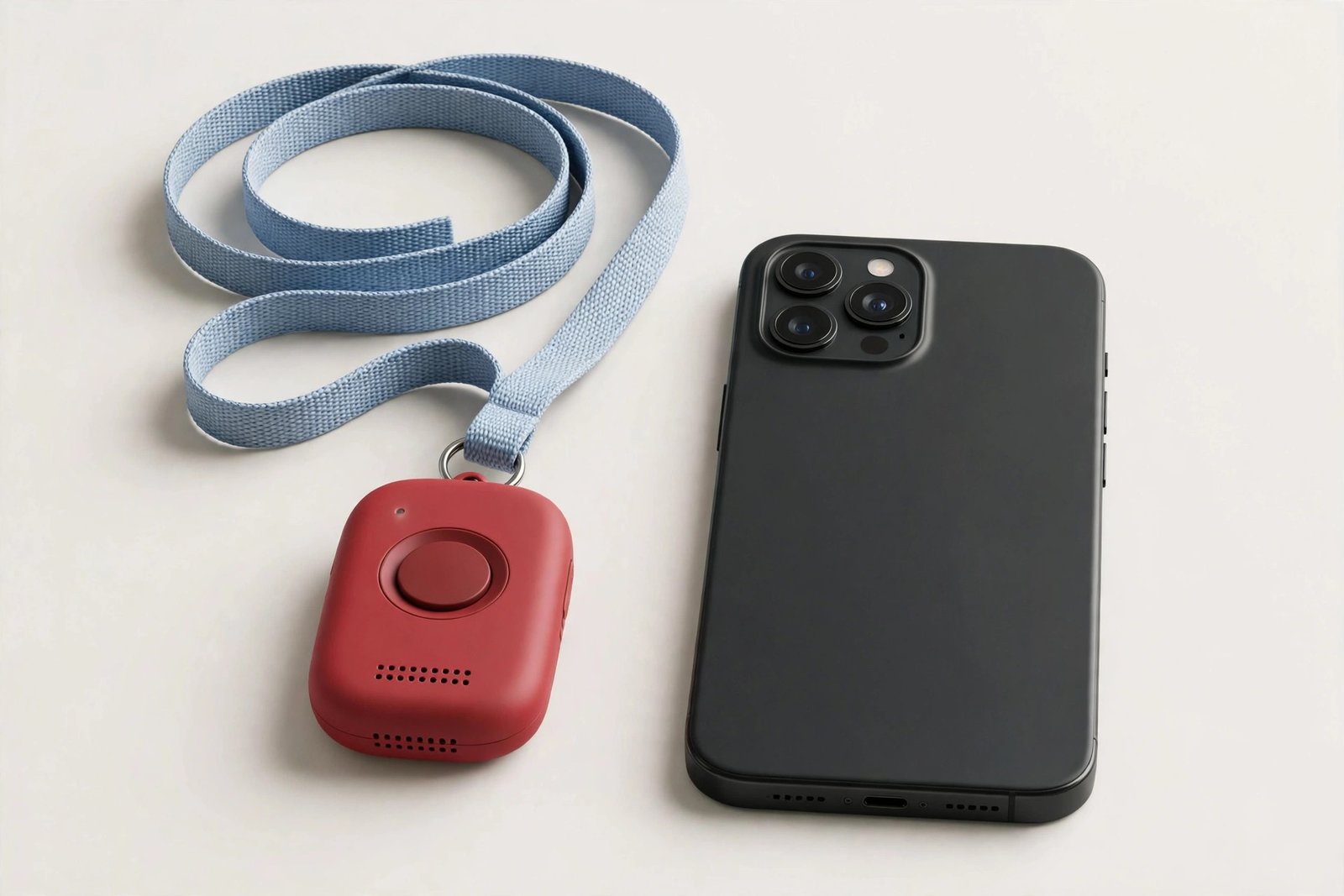
If you fall, feel unwell or simply need help and the phone is in another room, a Personal Emergency Alarm Pendant is the gadget that reaches help for you. Worn on a lanyard or wrist, one press calls a chosen contact or a monitoring centre — and some models also detect a hard fall and call automatically, even if you cannot press anything.
Wear it at home, not in a drawer: a pendant only helps if it is on you when you need it. Keep the battery charged, test the button monthly, and make sure the contact it calls knows what to do when it rings — a pendant that calls a neighbour who is away is no help at all. This is an emergency alert for people living alone in its simplest form: one button, one call, and someone who knows you are in trouble. If you have any health condition, discuss the right alert setup with your doctor.
Pros
- 👍 Calls for help with one press
- 👍 Works anywhere in the house
- 👍 Fall detection models call automatically
- 👍 Simple enough to use in a hurry
Cons
- 👎 Only helps if it is worn, not stored away
- 👎 Battery must be charged and tested
- 👎 The contact it calls must be reliable
Best for: anyone living alone who wants help one button away.
Check Price And User Reviews on Amazon
3. Smart Lock with Auto-Lock
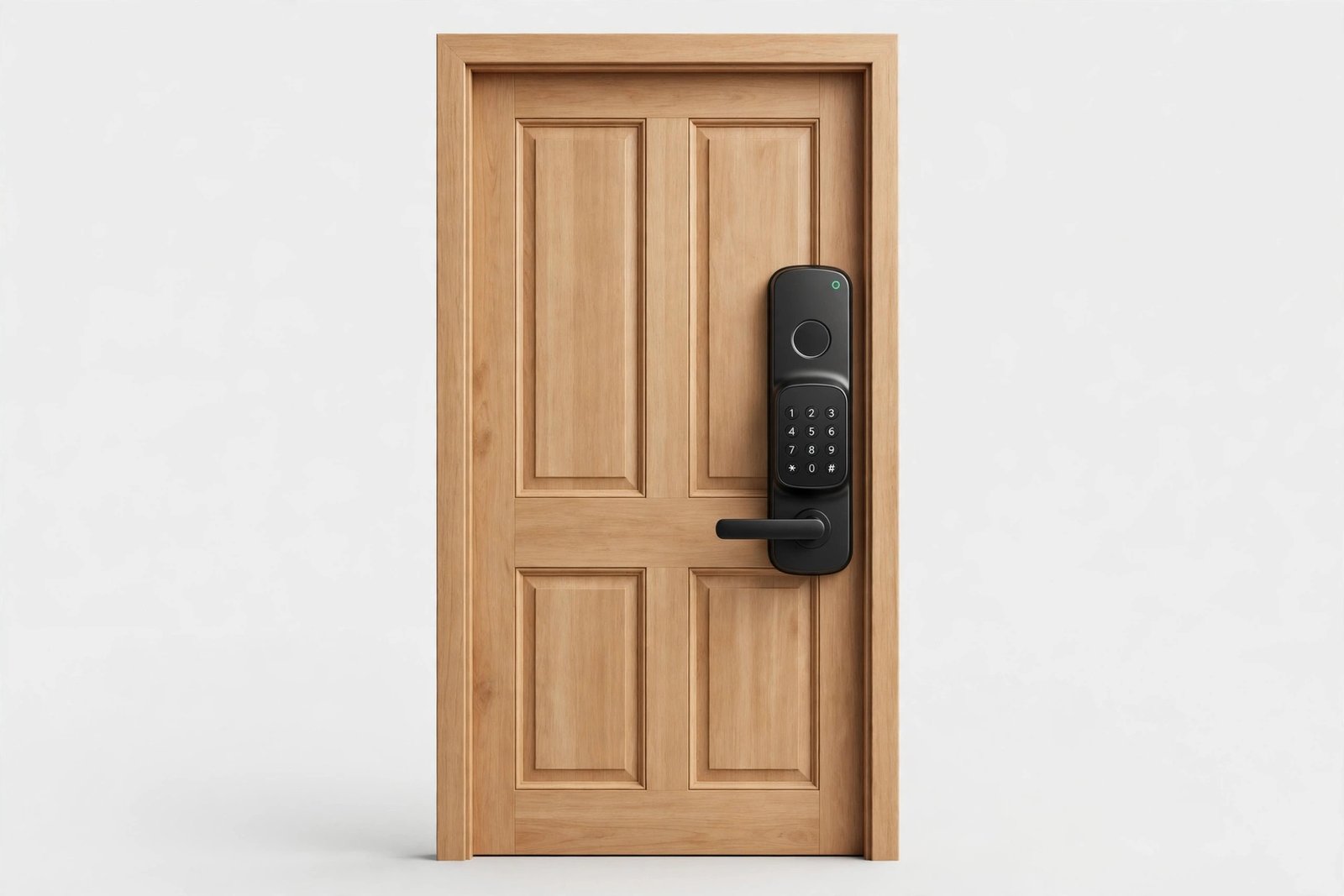
When you live alone, a door left unlocked is a door nobody else will check — and a Smart Lock with Auto-Lock removes the worry entirely. It locks itself a few seconds after the door closes, so there is never a night when you wonder whether you locked up, and a keypad means no key to lose, copy or leave under the mat.
It also lets a trusted person in with a temporary code — a family member, a neighbour, a carer — and tells you in the app every time the door is opened. Change the codes when a helper changes, keep a physical key somewhere safe as a backup, and check the battery monthly, because a lock with a dead battery still needs opening. For smart security for single households, the auto-lock is the gadget that makes the front door safe by habit, not by memory.
Pros
- 👍 Locks itself every time the door closes
- 👍 No key to lose or leave under the mat
- 👍 Temporary codes for trusted visitors
- 👍 App shows every time the door opens
Cons
- 👎 Needs a backup key for a dead battery
- 👎 Codes must be changed when helpers change
- 👎 Fitting needs care with your existing lock
Best for: solo households that want the door locked without thinking about it.
Check Price And User Reviews on Amazon
4. Indoor Camera with Two-Way Audio

A noise in the night is harder to ignore when you live alone, and an Indoor Camera with Two-Way Audio lets you check it without leaving the bedroom. Open the app and you can see the living room and the hallway in seconds, and if someone is there, you can speak through the camera — or call for help — without walking into the room yourself.
Place one camera where it sees the main entrance and one where it sees the living room, and set the alerts to people only, so a curtain moving in a draught does not wake you at 3 a.m. Keep the password strong and the software updated, because a camera is only as secure as its login. For personal safety gadgets at home, the indoor camera is the one that turns a frightening noise into a thirty-second check.
Pros
- 👍 Check a noise without leaving the bedroom
- 👍 Two-way audio lets you speak to anyone inside
- 👍 People-only alerts avoid false alarms
- 👍 Small and easy to place
Cons
- 👎 Needs Wi-Fi to view remotely
- 👎 Password must be strong and unique
- 👎 Video storage may need a subscription
Best for: anyone who wants to check the house at night without getting up.
Check Price And User Reviews on Amazon
5. Smart Smoke and Carbon Monoxide Alarm

A smoke alarm only helps if you hear it, and a Smart Smoke and Carbon Monoxide Alarm makes sure you do — wherever you are. It sounds loudly in the house like any alarm, and it also sends an alert to your phone, so a fire or a carbon monoxide leak while you are in the garden, asleep, or out shopping is caught the moment it starts.
Fit one on every floor, in the hallway outside the bedrooms and near the kitchen — never inside the kitchen itself, where cooking sets it off — and test it monthly by pressing the test button. Carbon monoxide has no smell and no colour, so an alarm that watches for it is the only way to know it is there. If an alarm ever sounds for carbon monoxide, leave the house immediately and call the emergency services from outside. For home safety for solo living, this is the alarm that watches the danger you cannot see or smell.
Pros
- 👍 Alerts your phone as well as the house
- 👍 Watches for carbon monoxide you cannot see or smell
- 👍 One alarm per floor covers the whole house
- 👍 Monthly test takes ten seconds
Cons
- 👎 Needs Wi-Fi for phone alerts
- 👎 Must be fitted on every floor
- 👎 Kitchen placement causes false alarms
Best for: every solo household, on every floor, without exception.
Check Price And User Reviews on Amazon
6. Motion Sensor Night Lights
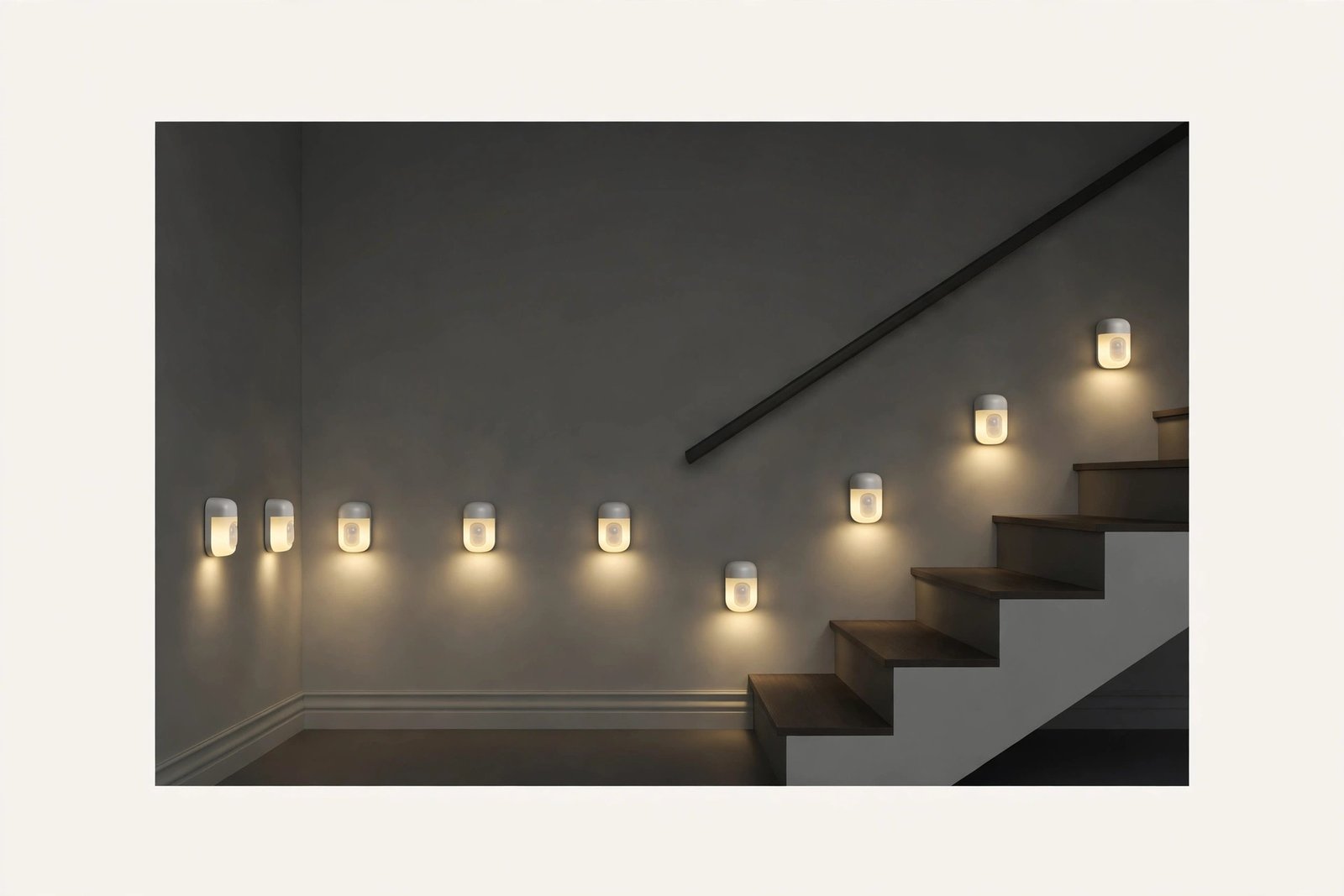
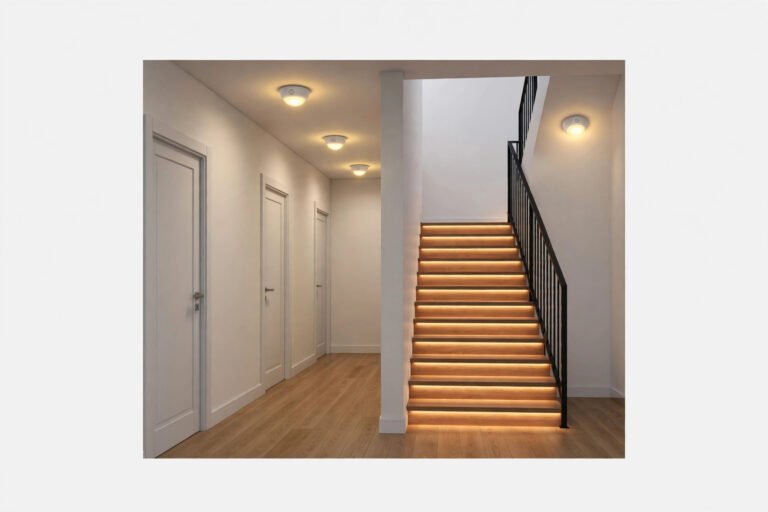
Most falls at home happen at night, in the dark, on the way to the bathroom — and Motion Sensor Night Lights light the way before you step into it. A small light by the bed, along the hallway and at the top of the stairs switches on the moment it senses movement, so you never walk a dark hallway or a dark staircase half asleep.
Place them low, along the skirting board, where they light the floor and the next step without dazzling you — a bright light at eye level wakes you fully and ruins the rest of the night. Battery models stick anywhere with no wiring, and mains models suit the hallway where the light matters every night. For fall detection at home in its simplest form, a lit hallway prevents the fall that a watch can only report.
Pros
- 👍 Lights the hallway before you step into it
- 👍 Prevents the night-time falls that matter most
- 👍 Low, soft light does not wake you fully
- 👍 Battery models fit anywhere with no wiring
Cons
- 👎 Batteries need checking every few months
- 👎 Too bright a light ruins sleep
- 👎 One light per hallway stretch is needed
Best for: bedrooms, hallways and staircases, for safe night-time trips to the bathroom.
Check Price And User Reviews on Amazon
7. Window and Door Contact Sensors

A window forced open at 3 a.m. is the break-in nobody hears, and Window and Door Contact Sensors make sure it is heard. A small sensor on the frame and a magnet on the door or window sound an alarm and send a phone alert the moment the two separate — so an opened window wakes you, and an opened door while you are out alerts you.
Fit them on every ground-floor door and window, and on the back door first, because that is the entry most often tried. They also tell you something useful every day: whether a window was left open when you went to bed, or whether the back door is shut when you leave. For smart security for single households, contact sensors are the cheapest way to know the house is closed up tight — and the first to know when it is not.
Pros
- 👍 Alerts the moment any door or window opens
- 👍 Shows whether the house is closed up at night
- 👍 Cheap enough for every ground-floor opening
- 👍 Works with most smart home hubs
Cons
- 👎 Batteries need checking twice a year
- 👎 Needs a hub or alarm system to alert you
- 👎 Must be fitted on every opening, not just some
Best for: every ground-floor door and window, starting with the back door.
Check Price And User Reviews on Amazon
8. Wall-Mounted Key Safe
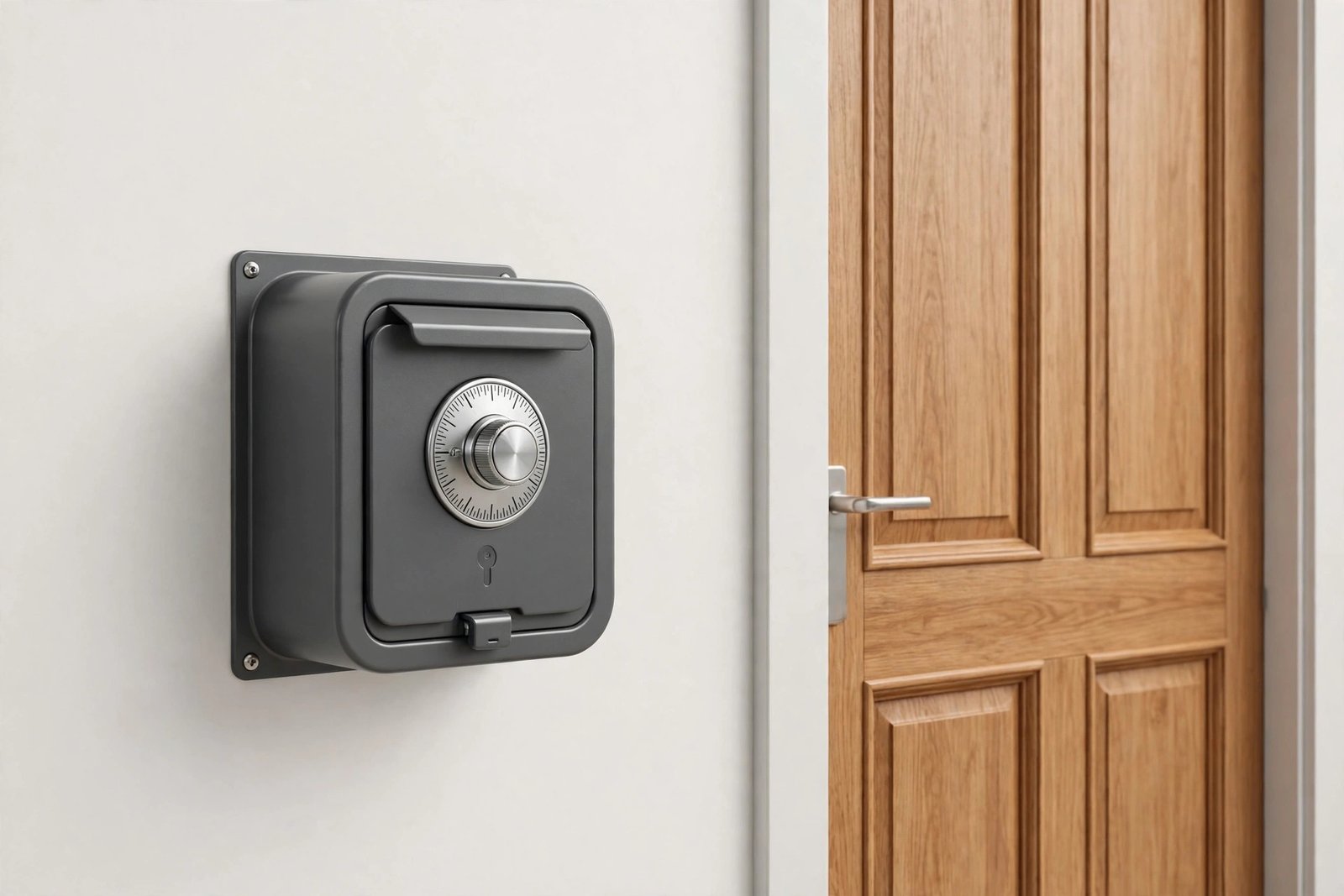
When you live alone, a locked door with nobody else holding a key is a problem twice over — a helper cannot get in when you need them, and you cannot get in if you lose your key — and a Wall-Mounted Key Safe solves both. A small, strong box bolted beside the door holds a spare key behind a combination only your trusted people know.
Choose a police-approved model with a solid metal body, bolt it to brick rather than wood, and give the code only to the people you would trust with the key itself — a family member, a neighbour, a carer. Change the code whenever someone stops needing it, and never put the code where it can be found near the box. For personal safety gadgets at home, the key safe is the quiet one: it does nothing until the day you need it, and then it is the most important gadget in the house.
Pros
- 👍 Trusted helpers can get in when you need them
- 👍 No spare key hidden under a mat
- 👍 Strong metal body resists attack
- 👍 Code can be changed in seconds
Cons
- 👎 Must be bolted to brick, not wood
- 👎 Code must be shared only with trusted people
- 👎 Cheap boxes are easy to force open
Best for: solo households with a trusted neighbour, family member or carer.
Check Price And User Reviews on Amazon
9. Personal Safety Alarm Keychain
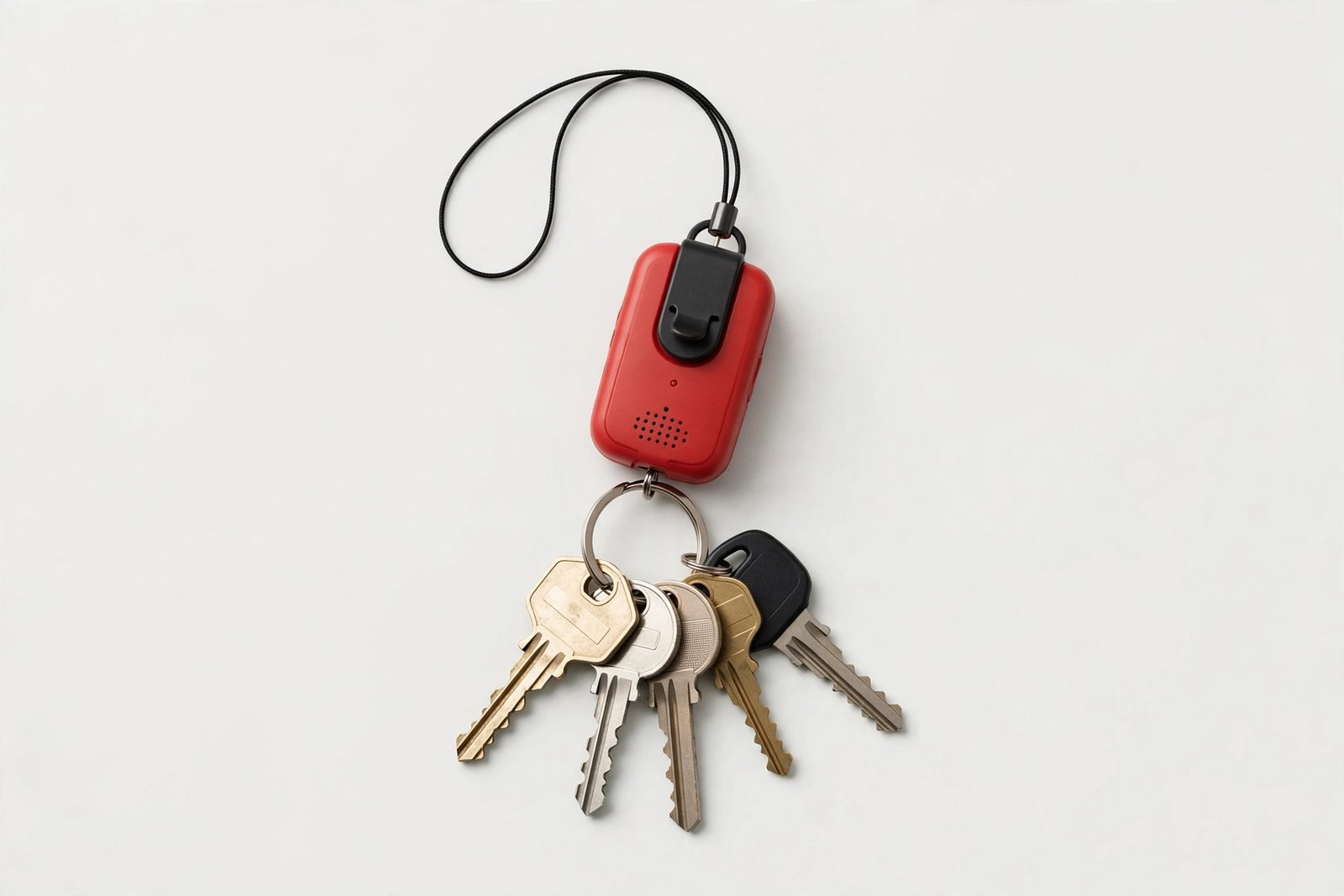
Alarms are not only for the house — a Personal Safety Alarm Keychain is the one you carry. Pull the pin and it sounds a piercing alarm that can be heard down the street, drawing attention and startling anyone who means harm. It clips to your keys, so it is with you on the walk home, at the door, and in the house.
Keep it on the keyring you use every day, not in a bag pocket, and test it once a month so you know the sound and the battery is good. It needs no Wi-Fi, no app and no subscription — just a pull. For personal safety gadgets at home and out, the keychain alarm is the simplest protection there is: loud, immediate, and always in your hand when you reach for your keys.
Pros
- 👍 Piercing alarm heard down the street
- 👍 No Wi-Fi, app or subscription needed
- 👍 Clips to the keys you carry every day
- 👍 Simple pull-pin activation in a hurry
Cons
- 👎 Only helps if it is on your keyring
- 👎 Battery must be tested monthly
- 👎 Cannot call anyone by itself
Best for: anyone living alone who walks home in the dark.
Check Price And User Reviews on Amazon
10. Smart Plug with Remote Control

Coming home to a dark house is the worst part of living alone, and a Smart Plug with Remote Control fixes it from anywhere. Switch the hall light on from the train, the porch light from the shop, or the bedroom lamp from the sofa — and set a schedule so the lights are on before you reach the door, every evening.
It also watches what is plugged into it: a heater or iron left on can be switched off from your phone, and a lamp left on all day can be turned off without a trip home. Set a different schedule for each room, and keep the app’s notifications on so you know if a plug loses connection. For home safety for solo living, the smart plug is the small gadget that makes a house feel lived in — and makes coming home feel safe.
Pros
- 👍 Lights on before you reach the door
- 👍 Switch off a forgotten heater from anywhere
- 👍 Schedules make the house look lived in
- 👍 Works with the lamps you already own
Cons
- 👎 Needs Wi-Fi for remote control
- 👎 One plug per appliance
- 👎 The appliance’s own switch must stay on
Best for: anyone who comes home to a dark house in the evening.
Check Price And User Reviews on Amazon
11. Fall Detection Smartwatch

A fall at home is frightening enough; a fall when nobody is there to notice is worse, and a Fall Detection Smartwatch is the gadget that notices. If it detects a hard fall and you do not respond, it calls a chosen contact or an emergency number automatically — and it is on your wrist all day, in the shower, in the garden and at night, unlike a phone in another room.
Choose a model whose fall detection can be tested safely and whose emergency contact is someone reliable, and wear it every day — a watch in a drawer helps nobody. Keep it charged overnight or during a routine you will not forget, and remember that it is a safety alert, not a medical device: it does not diagnose or treat anything, and any health worry should be discussed with your doctor. For fall detection at home, the watch is the safety net that works when you cannot reach for help yourself.
Pros
- 👍 Calls for help automatically after a hard fall
- 👍 Worn all day, unlike a phone in another room
- 👍 Also shows time, messages and alerts
- 👍 Emergency contact can be a family member
Cons
- 👎 Only helps if it is worn every day
- 👎 Must be charged regularly
- 👎 Not a medical device — see a doctor for health worries
Best for: anyone living alone who wants a fall to be noticed immediately.
Check Price And User Reviews on Amazon
12. Emergency Torch and Power Bank

A power cut at night, alone in a dark house, is the moment every other gadget stops working — and an Emergency Torch and Power Bank is the gadget that keeps working. A bright torch lights the hallway and the fuse box, and the built-in power bank charges your phone, so you can call for help, check the power company’s updates, and stay connected until the lights come back.
Keep it charged and in the same place always — beside the bed or by the front door — so you can find it in the dark without thinking. Test it monthly, keep the power bank topped up, and choose a model bright enough to light a staircase, not just a keyhole. For emergency alert for people living alone in its most basic form, a charged phone and a working torch are the two things that matter when everything else goes dark.
Pros
- 👍 Light and phone power in one gadget
- 👍 Works when the power is out
- 👍 Bright enough for stairs and the fuse box
- 👍 Cheap and lasts for years
Cons
- 👎 Only helps if it is kept charged
- 👎 Must live in one place you can find in the dark
- 👎 Power bank needs regular top-ups
Best for: every solo household, kept beside the bed for power cuts.
Check Price And User Reviews on Amazon
What to Look for Before You Buy
Start with the risks in your own home, because every solo household is different. Walk each room and note what worries you most: the front door you cannot see through, the dark hallway at night, the smoke alarm nobody else would hear, the fall nobody would notice. That walk tells you which of these twelve gadgets you actually need first, and it is the foundation of home safety for solo living that fits your home rather than a generic list.
Judge every gadget by whether it works when you need it most — in the dark, in a hurry, or when you cannot reach the phone. A pendant you wear beats a phone in another room, an auto-lock beats a lock you must remember, and a night light that switches itself on beats a switch you must find. Test each gadget after fitting, and retest monthly — a smoke alarm with a dead battery and a pendant that has never been tested are guesses, not protection. And remember that emergency alert for people living alone only works if the person it calls is reliable, so choose your contacts carefully and tell them what to do when they get the call.
Build your kit in layers, not all at once. The first layer is the door: a video doorbell and a smart lock. The second is the house: smoke and carbon monoxide alarms, contact sensors and night lights. The third is you: a pendant or a fall detection watch, and a charged torch by the bed. A house with all three layers is a house where the door answers, the alarms watch, and help can be called with one press — and a house with only one layer is a house with a single gadget doing a job that needs three.
Finally, build the human layer too, because no gadget replaces a person who checks in. Agree a daily check-in with a family member, a neighbour or a friend — a text, a call, a knock — and keep a key safe or a temporary code so they can get in if you do not answer. The gadgets in this guide make a solo home safer, but the check-in is what makes it a home where someone would notice. That, more than any feature list, is what living alone safely really means.
Final Thoughts
Living alone does not have to mean living unprotected. A doorbell that shows who is there, a lock that locks itself, alarms that watch for smoke and carbon monoxide, night lights that guide you safely to the bathroom, and a pendant or watch that can call for help: that is the whole job, and these twelve gadgets cover it from the front door to the bedside.
Start with the video doorbell, the smart lock and the smoke alarm if your kit is empty — those three protect the door and the house itself — then add the pendant, the night lights and the contact sensors in the order your home needs them. Test everything monthly, keep the batteries charged, and agree a daily check-in with someone you trust. A solo home, well watched and well connected, is a comfortable place to live — and these gadgets make it one.
More Guides You’ll Like
For the step-by-step method behind this kit, read our companion guide How to Stay Safe at Home When You Live Alone, which covers the daily check-in routine and the emergency plan. If you travel often, see Best Gadgets to Make Your Home Look Occupied While You Travel, and for toddler safety at family visits, Best Home Safety Gadgets for Families with Toddlers covers the grandchildren’s visits too.
Frequently Asked Questions
What is the most important safety gadget for someone living alone?
A video doorbell, because the front door is where you are most exposed when you live alone — and seeing who is there before you open it removes the riskiest moment of the day. After that, a smart smoke and carbon monoxide alarm, because it watches the danger you cannot see or smell, and an emergency alert for people living alone such as a pendant or a fall detection watch, because it calls for help when you cannot reach the phone.
Should I tell anyone my smart lock code?
Only the people you would trust with a key — a family member, a neighbour or a carer — and only as a temporary code that you can change or delete. Never share your main code, never leave a key under the mat, and change the codes whenever a helper changes. A key safe with a combination known only to your trusted people is the safer way to give access, and smart security for single households works best when the codes are treated like keys.
How can I make my home safer at night?
Light the path before you walk it: motion sensor night lights in the bedroom, hallway and at the top of the stairs, so you never cross a dark room half asleep. Lock the doors with an auto-lock, check the contact sensors, and keep a charged torch and your phone beside the bed. Fall detection at home starts with preventing the fall, and a lit hallway is the simplest prevention there is.
What should I do if my smoke alarm goes off?
Leave the house immediately, taking your phone if it is beside you, and call the emergency services from outside — do not go back inside to investigate. If the alarm is for carbon monoxide, the same rule applies, and do not re-enter until the emergency services say it is safe. A personal safety gadget at home like a smart alarm earns its place by alerting your phone too, so even if you are out, you know the moment it sounds.


One Comment