Best Home Safety Gadgets for Families with Toddlers
Affiliate Disclosure: As an Amazon Associate, we earn from qualifying purchases made through links on this page, at no extra cost to you. This helps support our work and keeps our guides free to read.
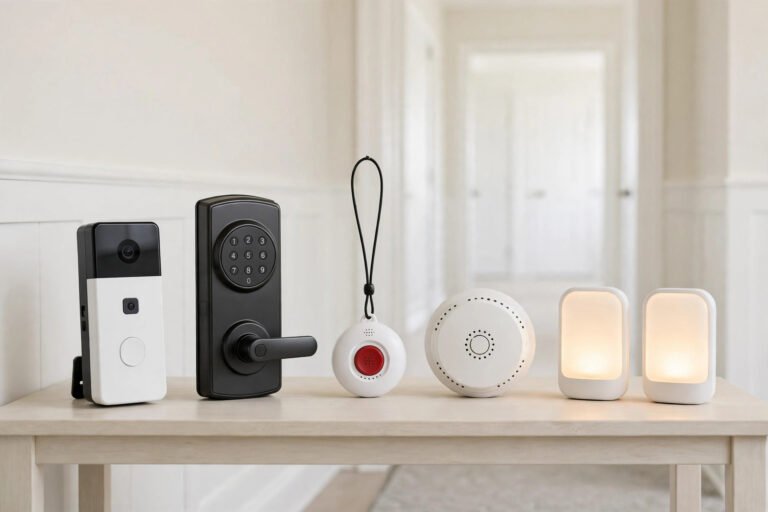
A quick note on prices: prices change often, so we never quote a fixed price here. Please check the latest price on Amazon before you buy, using the yellow buttons in this guide. The product pictures in this article are original illustrations created for this guide, not manufacturer photos.
A toddler can cross a room, open a drawer and reach a hot stove in the time it takes to answer a text. That speed is exactly why the best home safety gadgets for families with toddlers are worth fitting before your child needs them, not after. The right gates, locks and guards turn a house full of small dangers into a space where a little explorer can roam safely while you stay close.
Good childproofing gadgets for toddlers share one quality: they work quietly in the background. A magnetic cabinet lock you cannot see, a gate that swings shut on its own, an outlet cover that never comes loose — none of them ask for attention, and none of them get in the way of everyday life. That matters, because safety gear that is annoying gets removed, and removed gear protects nobody.
Toddlers explore in a predictable order: first they crawl to what is low, then they pull up on what is near, then they climb what is in reach. So the work follows the same order — floors and low drawers first, then stairs and doors, then windows, cords and anything that tips. This is home safety for crawling babies grown up one stage at a time, and every gadget below fits somewhere in that order.
No gadget replaces watching your child. These tools buy you time and block the worst accidents, but an adult should always be nearby when a toddler is awake and moving, and any safety question about your own home is worth raising with your child’s doctor or a child safety professional. Used that way, these twelve picks make a home calmer for everyone in it — parents included. From baby safety gates for stairs to toddler proofing door locks on the rooms a child should not enter, these are the child safe home gadgets that work quietly in the background while your toddler explores.
How We Chose
Every gadget here had to pass one test first: could a determined toddler defeat it in under a minute? That ruled out flimsy latches, suction-cup guards and outlet plugs a small hand can pull out. What survived uses magnetic locks, screw-fixed straps, pressure gates that hold firm, and covers that need an adult’s grip to open.
We also weighed everyday practicality: locks adults can open one-handed while carrying a child, gates that swing both ways, and guards that fit standard furniture without drilling where possible — because safety gear only protects a home if it stays fitted. Where a gadget needs screws, we say so plainly, and where it needs adult supervision, we say that too.
Quick List
- Pressure-Mounted Baby Safety Gate — blocks stairs and rooms with no drilling.
- Magnetic Cabinet and Drawer Locks — invisible locks for kitchens and bathrooms.
- Outlet Covers and Plug Protectors — keeps little fingers out of sockets.
- Corner Guards for Furniture — softens sharp edges at toddler head height.
- Door Knob Covers — stops toddlers opening doors to rooms they should not enter.
- Anti-Tip Furniture Straps — anchors bookcases and dressers to the wall.
- Window Safety Locks — limits how far a window can open.
- Blind Cord Winders — keeps blind cords short and out of reach.
- Stove Knob Covers — stops little hands turning on the hob.
- Toilet Lock — keeps the toilet lid shut and little hands out of the bowl.
- Finger Pinch Door Guards — stops doors slamming on small fingers.
- Video Baby Monitor with Temperature Sensor — see and hear your toddler from another room.
1. Pressure-Mounted Baby Safety Gate
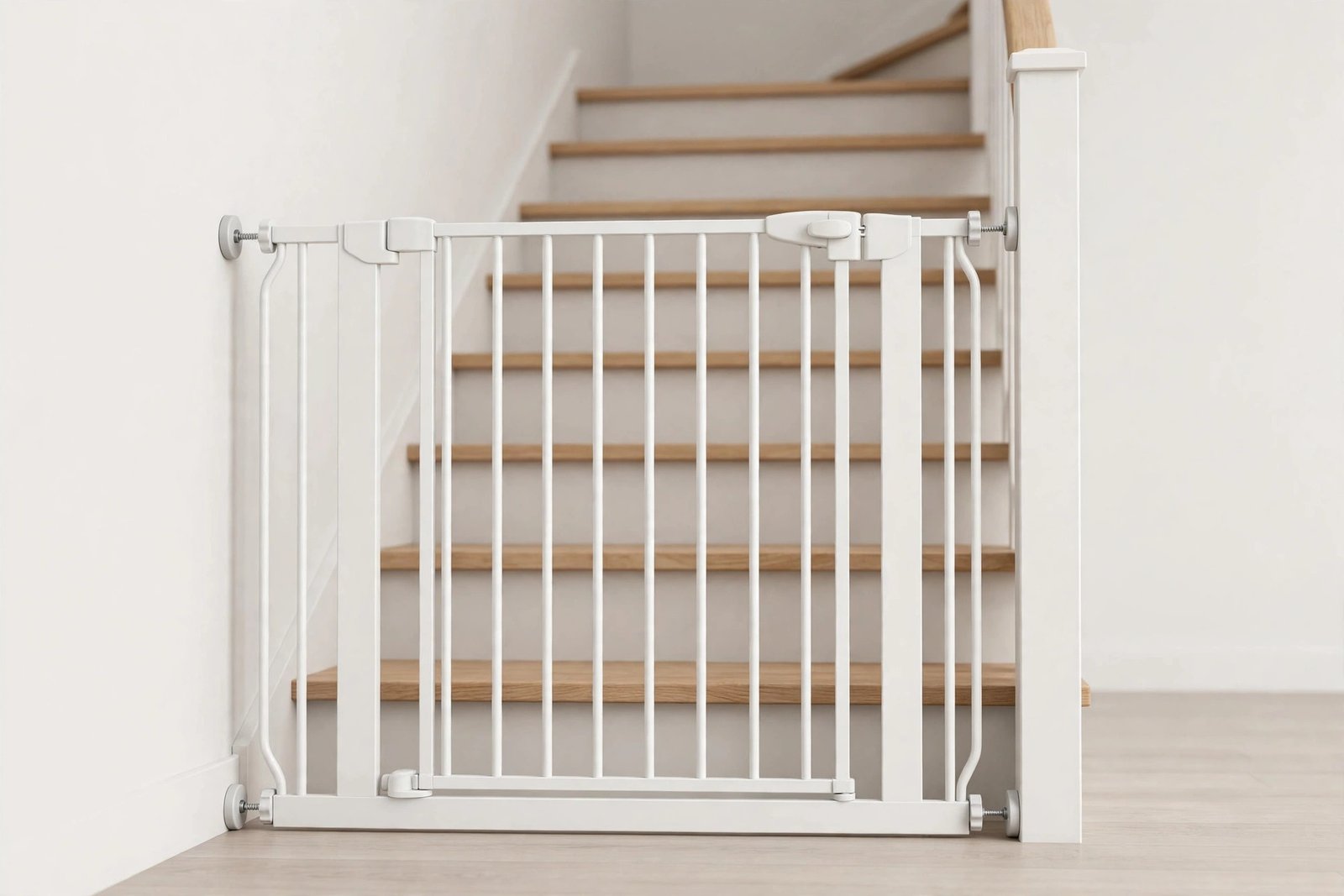
If you buy only one tool from this guide, make it a Pressure-Mounted Baby Safety Gate. Stairs are the single biggest fall risk for a toddler, and a gate at the top and bottom of the stairs removes it completely. Pressure-mounted gates grip the doorframe or banister without screws, so they fit rented homes as well as owned ones, and they come down cleanly when your child outgrows them.
Fit the gate so an adult can open it one-handed — you will often be carrying a child — and check the latch every week, because a gate that does not click shut is just decoration. For the top of the stairs, a hardware-mounted gate is the safer choice, since pressure gates can be pushed over by a determined climber leaning on them; use pressure gates at the bottom of the stairs and in doorways, and screw-fixed gates at the top. That is the first rule of childproofing gadgets for toddlers: match the fixing to the fall.
Pros
- 👍 Blocks the biggest fall risk in the house
- 👍 No drilling, so it suits rented homes
- 👍 One-handed opening for busy parents
- 👍 Auto-close models shut themselves
Cons
- 👎 Top of stairs needs a screw-fixed gate instead
- 👎 Latch must be checked weekly
- 👎 Wide openings need an extension
Best for: every home with stairs, as the first safety gadget to fit.
Check Price And User Reviews on Amazon
2. Magnetic Cabinet and Drawer Locks
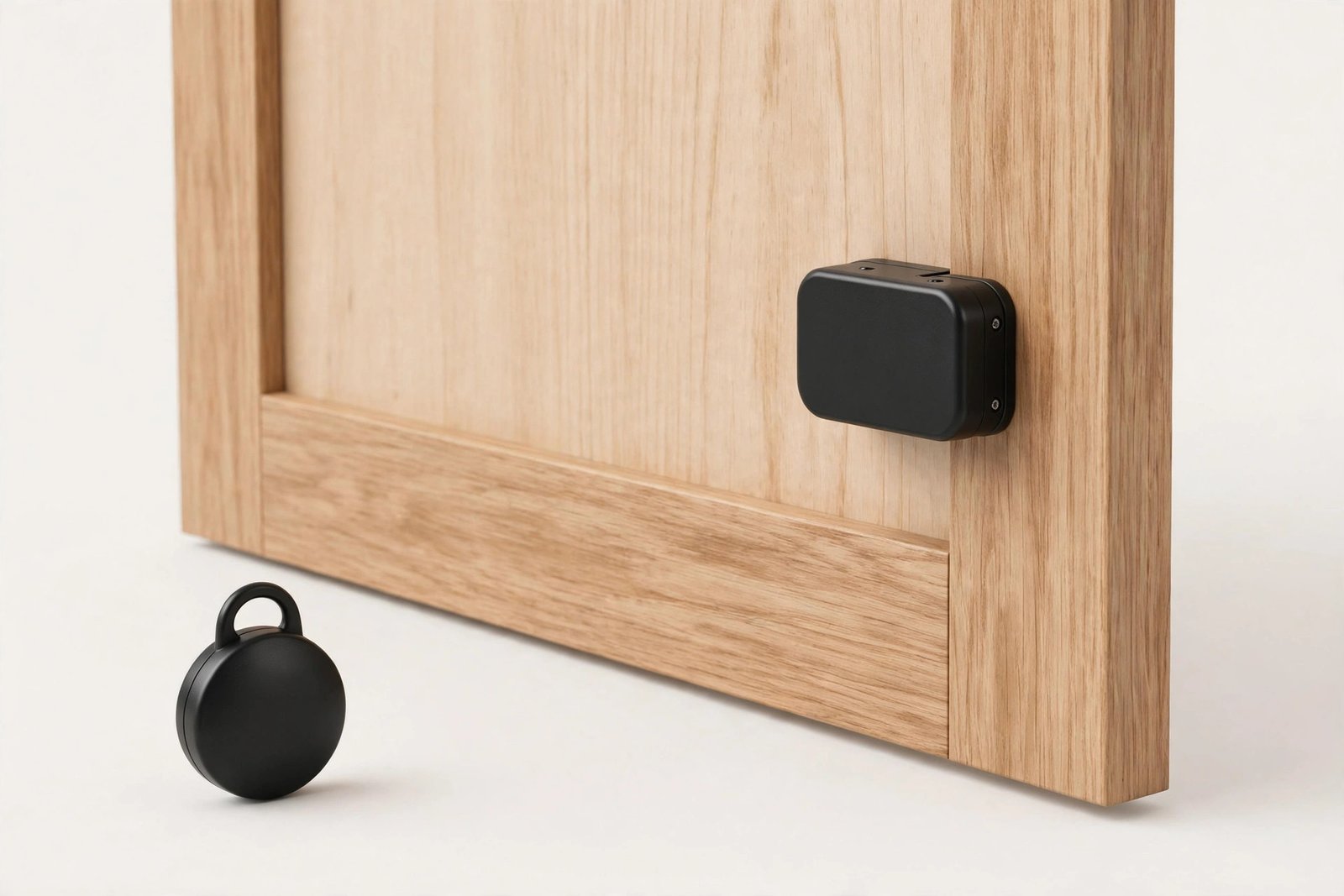
Cleaning products, medicines and sharp knives all live in low cupboards at exactly toddler height, and Magnetic Cabinet and Drawer Locks keep them shut without changing how the kitchen looks. A small lock hides inside the cupboard and releases only with a magnetic key held against the door, so a toddler pulling at the handle gets nowhere — while an adult opens it with one hand and no visible latch.
Fit them on every cupboard that holds anything harmful, not just the obvious ones: cleaning cupboards under the sink, medicine drawers, and any drawer with knives or scissors. Keep the magnetic key somewhere an adult can reach in a hurry but a child cannot, and test each lock after fitting by pulling firmly on the door. For toddler proofing door locks of all kinds, the test is simple — if a small hand can beat it, it does not count.
Pros
- 👍 Invisible from outside — kitchen looks unchanged
- 👍 Adults open it one-handed with the key
- 👍 No drilling on most models
- 👍 Strong enough for determined toddlers
Cons
- 👎 The magnetic key must be kept handy
- 👎 Adhesive mounts can fail on damp wood
- 👎 Each lock needs individual fitting
Best for: kitchens and bathrooms, on every cupboard holding chemicals or sharp tools.
Check Price And User Reviews on Amazon
3. Outlet Covers and Plug Protectors
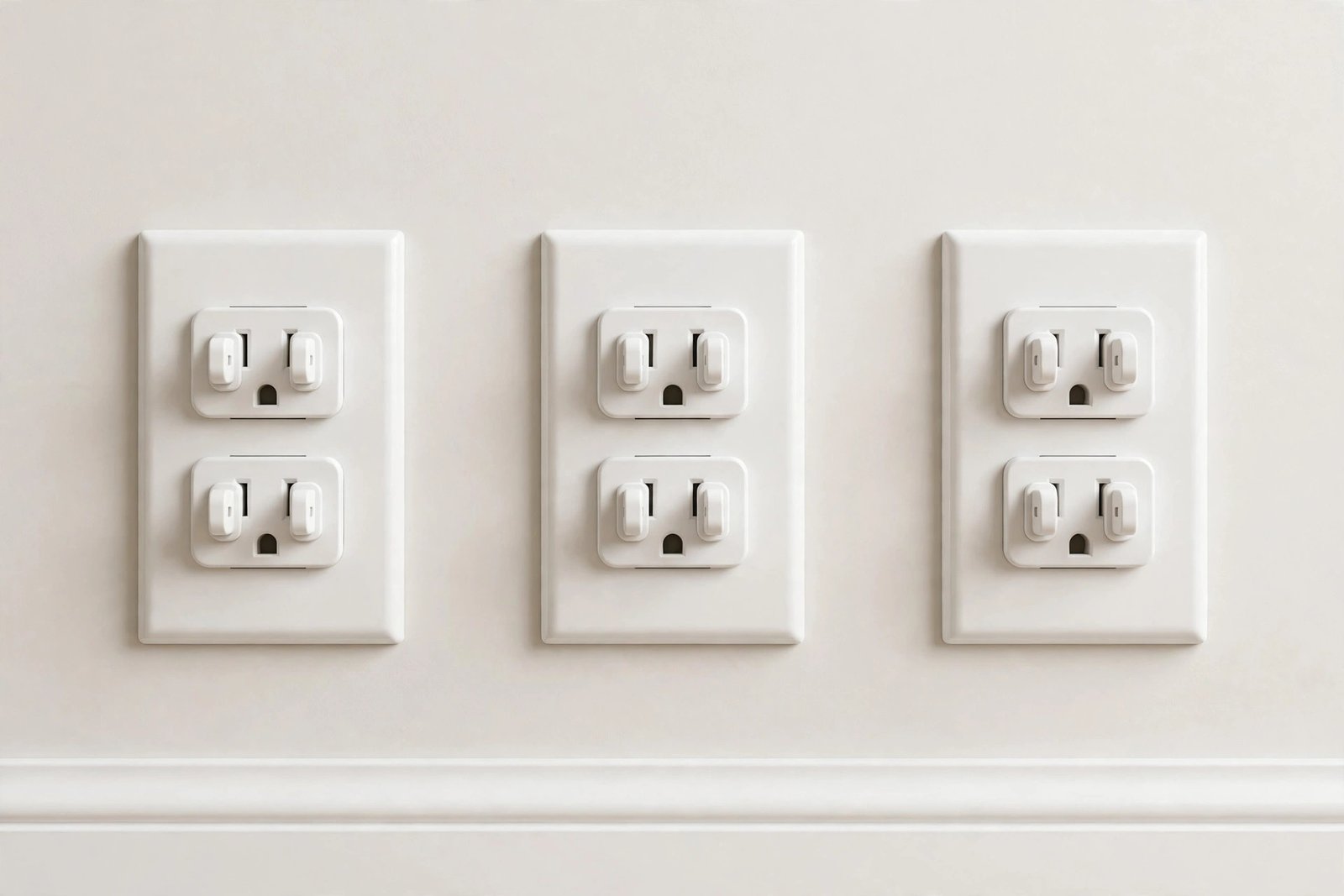
Sockets sit at crawling height, they look interesting, and they are exactly where a toddler’s fingers go first — which is why Outlet Covers and Plug Protectors belong in every room a toddler enters. Sliding-plate covers close automatically when a plug is removed, so the socket is never left open, and plug protectors cover the plugs that stay in, stopping little fingers reaching the prongs.
Cover every socket in the rooms your toddler uses, including the ones behind furniture — toddlers find the ones you forgot. Avoid loose plug caps that a child can pull out and put in their mouth; sliding covers or box-style protectors that screw or grip firmly are the safer choice. This is child safe home gadgets at their simplest: cheap, quick to fit, and quietly working all day.
Pros
- 👍 Sliding covers close by themselves
- 👍 Protects sockets behind furniture too
- 👍 Cheap enough to fit the whole house
- 👍 Adults use sockets normally
Cons
- 👎 Loose caps are a choking risk — avoid them
- 👎 Some covers are fiddly with bulky plugs
- 👎 Must be fitted on every socket, not just some
Best for: every room a toddler crawls or walks through, on all sockets.
Check Price And User Reviews on Amazon
4. Corner Guards for Furniture

A toddler learning to walk falls dozens of times a day, and the corner of a coffee table is exactly at head height when they do — so Corner Guards for Furniture turn a hard edge into a soft one. Thick silicone or foam guards stick to the sharp corners of tables, TV stands and counters, cushioning the bumps that are part of learning to walk.
Fit them on every sharp corner below waist height in the rooms your toddler plays in, and press them on firmly — a guard that peels off becomes a small object a toddler can chew. Clear guards suit glass and light wood, while darker ones blend into dark furniture; either way, check the adhesive every few weeks, because heat and cleaning sprays loosen it over time. In home safety for crawling babies, the low corners matter most, because that is where little heads are.
Pros
- 👍 Softens the hardest edges at head height
- 👍 Fits in minutes with no tools
- 👍 Clear versions barely show
- 👍 Cheap enough for every corner
Cons
- 👎 Adhesive loosens with heat and cleaning
- 👎 A peeled guard is a choking risk
- 👎 Does not suit rounded or very thin edges
Best for: coffee tables, TV stands and counters in rooms where toddlers play.
Check Price And User Reviews on Amazon
5. Door Knob Covers
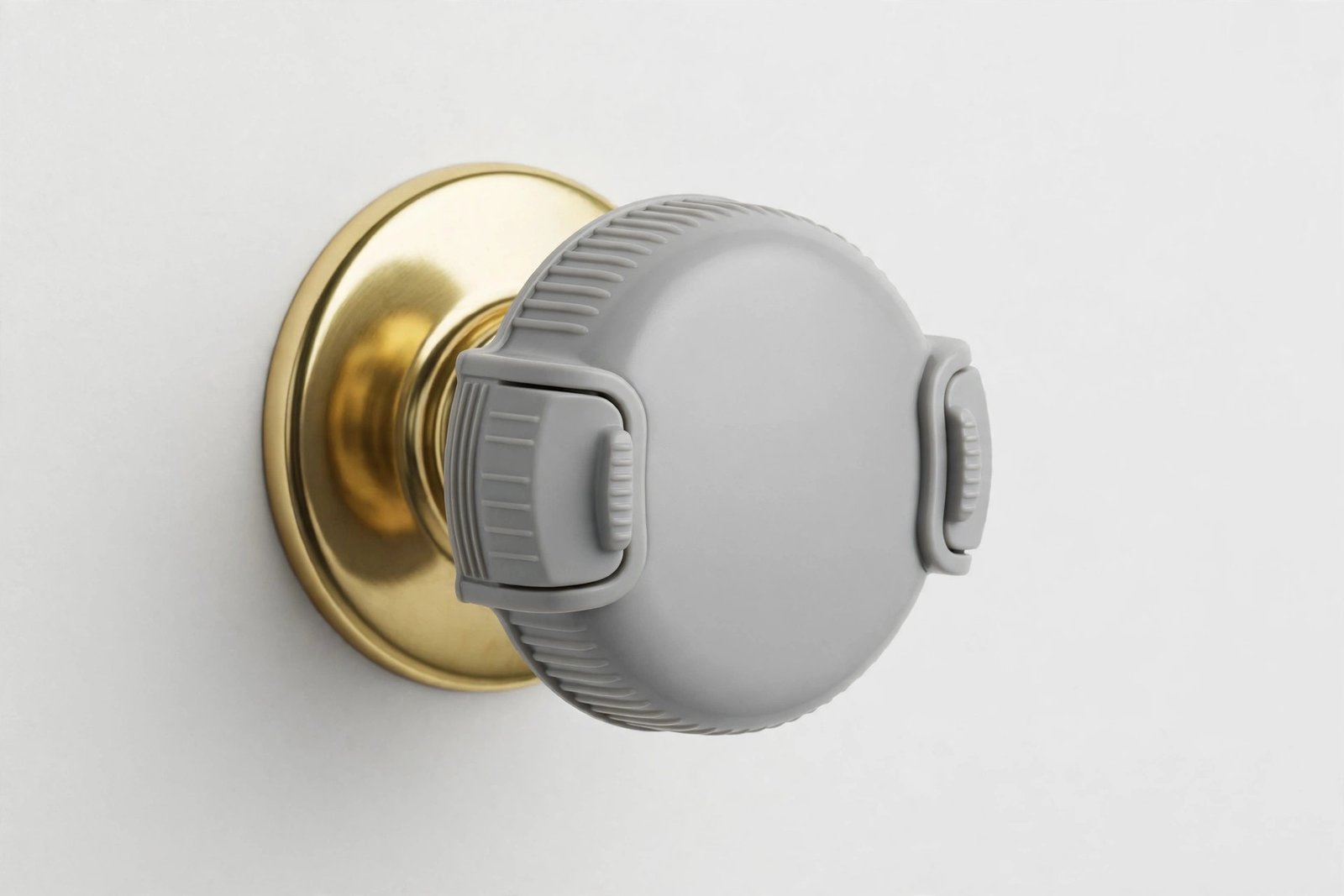
Once a toddler can reach a door knob, every room in the house is open to them — including the bathroom, the garage and the room with the cleaning cupboard — and Door Knob Covers keep those doors shut. A smooth cover spins freely around the knob, so small hands cannot grip or turn it, while an adult squeezes the cover and turns the knob normally.
Fit them on the doors to rooms a toddler should not enter alone, and on the inside of the front door if your toddler can reach it. Test each cover after fitting — a toddler should not be able to turn the knob at all — and remember that a cover only works on round knobs, so lever handles need a different guard. As toddler proofing door locks go, this is the cheapest way to keep a child in the safe rooms and out of the risky ones.
Pros
- 👍 Keeps toddlers out of risky rooms
- 👍 Adults open the door normally
- 👍 Fits in seconds with no tools
- 👍 Works on both sides of a door
Cons
- 👎 Only fits round knobs, not levers
- 👎 A determined toddler may learn the squeeze
- 👎 Must be fitted on every risky door
Best for: bathroom, garage and front doors in homes with newly walking toddlers.
Check Price And User Reviews on Amazon
6. Anti-Tip Furniture Straps
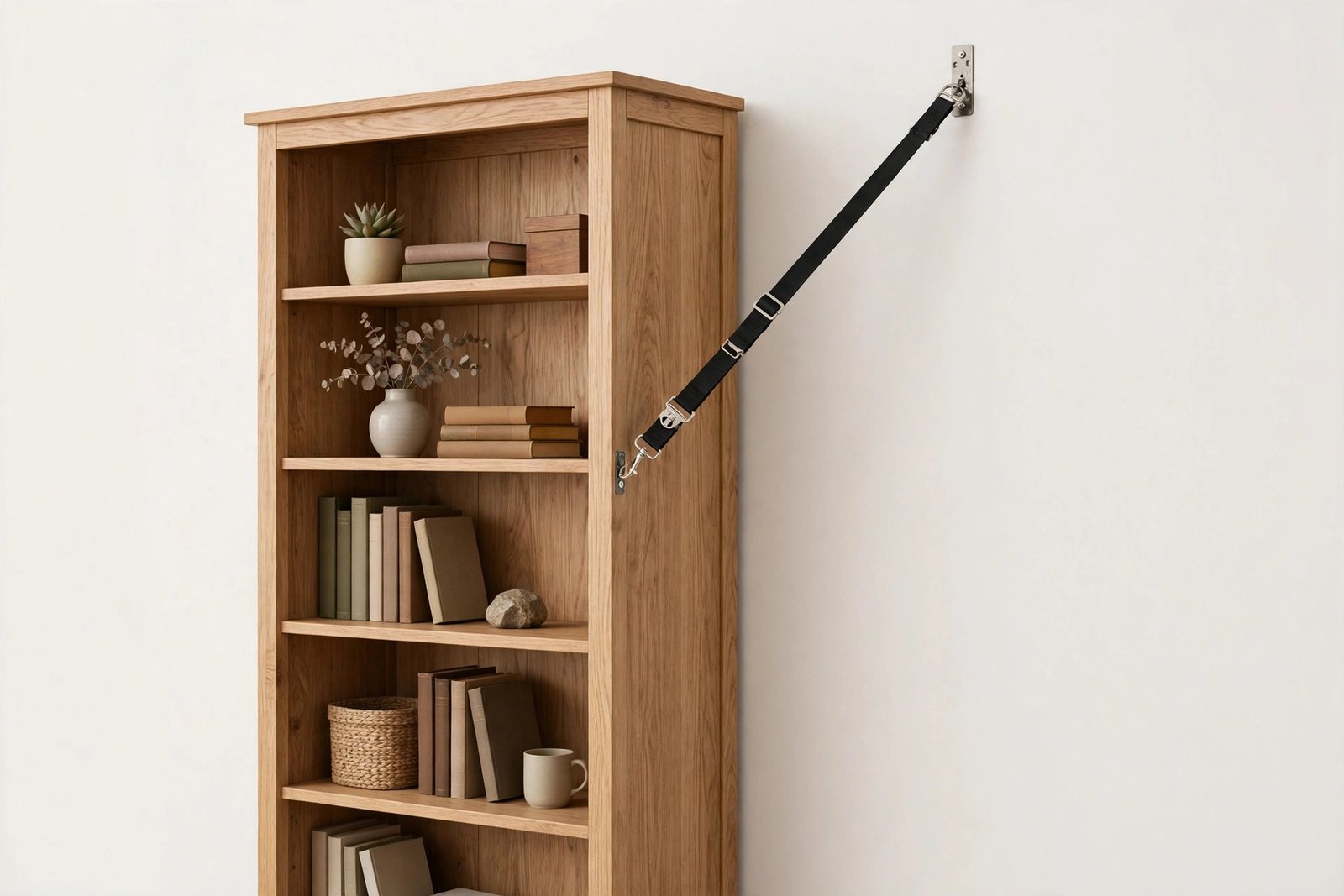
A toddler pulling up on a bookshelf or opening every drawer of a dresser can tip furniture that an adult would never think twice about, and Anti-Tip Furniture Straps are the fix that matters most. A strong strap bolts the top of the furniture to a wall stud, so even a child climbing the drawers cannot pull it over — and it is the one safety job that safety experts put above all others.
Anchor every tall or heavy piece in a room your toddler enters: bookcases, dressers, wardrobes and TV stands, and anchor the television itself to its stand or the wall. Screw into a wall stud or use proper wall anchors — plasterboard fixings alone are not enough for heavy furniture — and check the straps every few months, because they loosen as the furniture is moved. No other item in this guide prevents a more serious accident, so fit these first, before the decorative guards.
Pros
- 👍 Prevents the most serious furniture accidents
- 👍 Strong straps hold heavy furniture
- 👍 Nearly invisible once fitted
- 👍 Works on bookcases, dressers and TVs
Cons
- 👎 Needs drilling into a wall stud
- 👎 Straps loosen and need rechecking
- 👎 Not suitable for rented homes without permission
Best for: every tall or heavy piece of furniture in a toddler’s rooms — fit these first.
Check Price And User Reviews on Amazon
7. Window Safety Locks
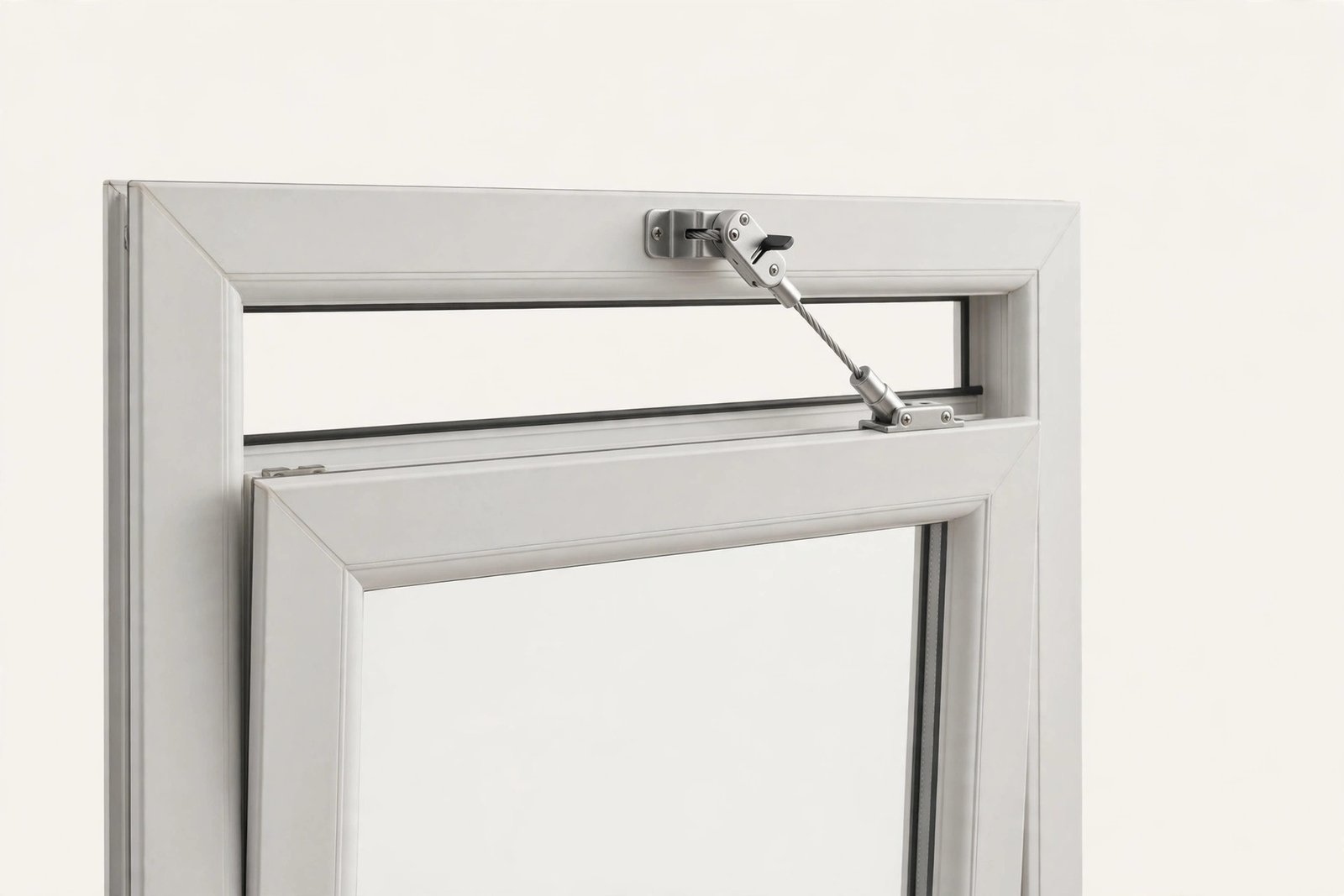
A toddler can climb onto a windowsill faster than most parents expect, and Window Safety Locks make sure the window they find there cannot open wide enough to climb through. A small lock or restrictor cable limits the opening to a few centimetres — enough for fresh air, never enough for a child — and an adult can release it fully when the window needs cleaning.
Fit them on every window above the ground floor, and on ground-floor windows near furniture a toddler can climb. Move cots, chairs and toy boxes away from windows too, because a lock limits the window but a climbable sill is still a risk. Check the locks each spring when windows start opening again, because a restrictor that has worked loose is no protection at all. In childproofing gadgets for toddlers, windows are the risk people forget — until a child climbs.
Pros
- 👍 Limits window opening to a safe few centimetres
- 👍 Still allows fresh air through
- 👍 Adults can release it fully for cleaning
- 👍 Fits most window types
Cons
- 👎 Must be fitted on every upstairs window
- 👎 Some locks need screws in the frame
- 👎 Furniture near windows still needs moving
Best for: every window above the ground floor, and any window near climbable furniture.
Check Price And User Reviews on Amazon
8. Blind Cord Winders
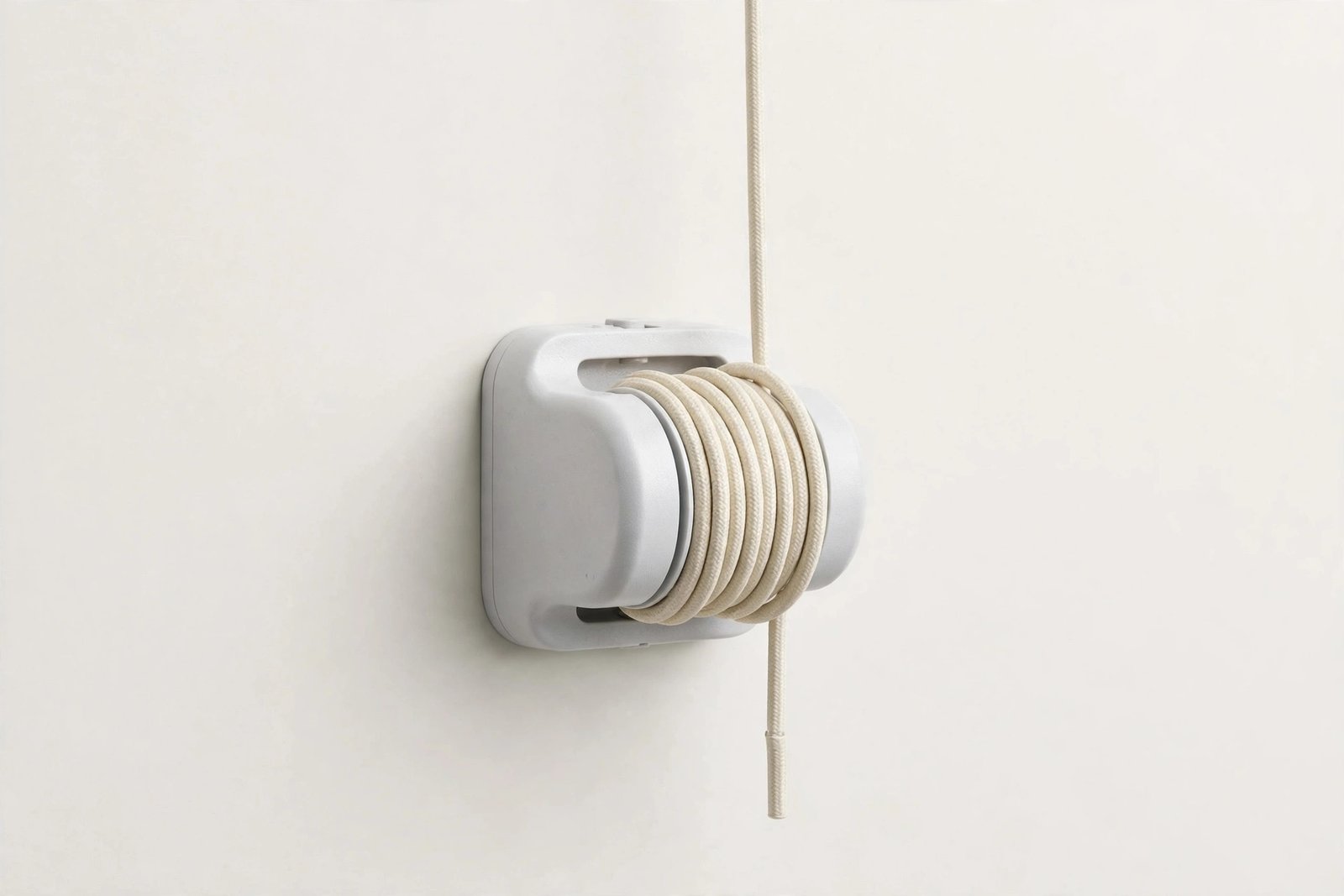
A looped blind cord hanging beside a cot or a chair is one of the most dangerous things in a toddler’s room, and Blind Cord Winders remove the danger for the price of a coffee. The winder winds the cord up short and holds it flat against the wall, so there is no loop for a child to reach — and it works on the blinds you already own.
Fit a winder on every blind in a room where a toddler sleeps or plays, and check that no loop remains anywhere: cut continuous loop cords or fit a tension device that holds them tight to the wall. The safest choice of all for a nursery is a cordless blind, but where cords exist, a winder is the minimum. Keep cots and beds away from windows with blinds, because a cord a toddler can reach is a risk no winder can fix if the furniture puts them within arm’s length.
Pros
- 👍 Removes the loop from blind cords
- 👍 Fits the blinds you already own
- 👍 Costs very little for a serious risk
- 👍 Keeps cords tidy and out of reach
Cons
- 👎 Must be fitted on every blind in the room
- 👎 Cots near windows still need moving
- 👎 Cordless blinds are safer still
Best for: nurseries and playrooms with any corded blinds.
Check Price And User Reviews on Amazon
9. Stove Knob Covers
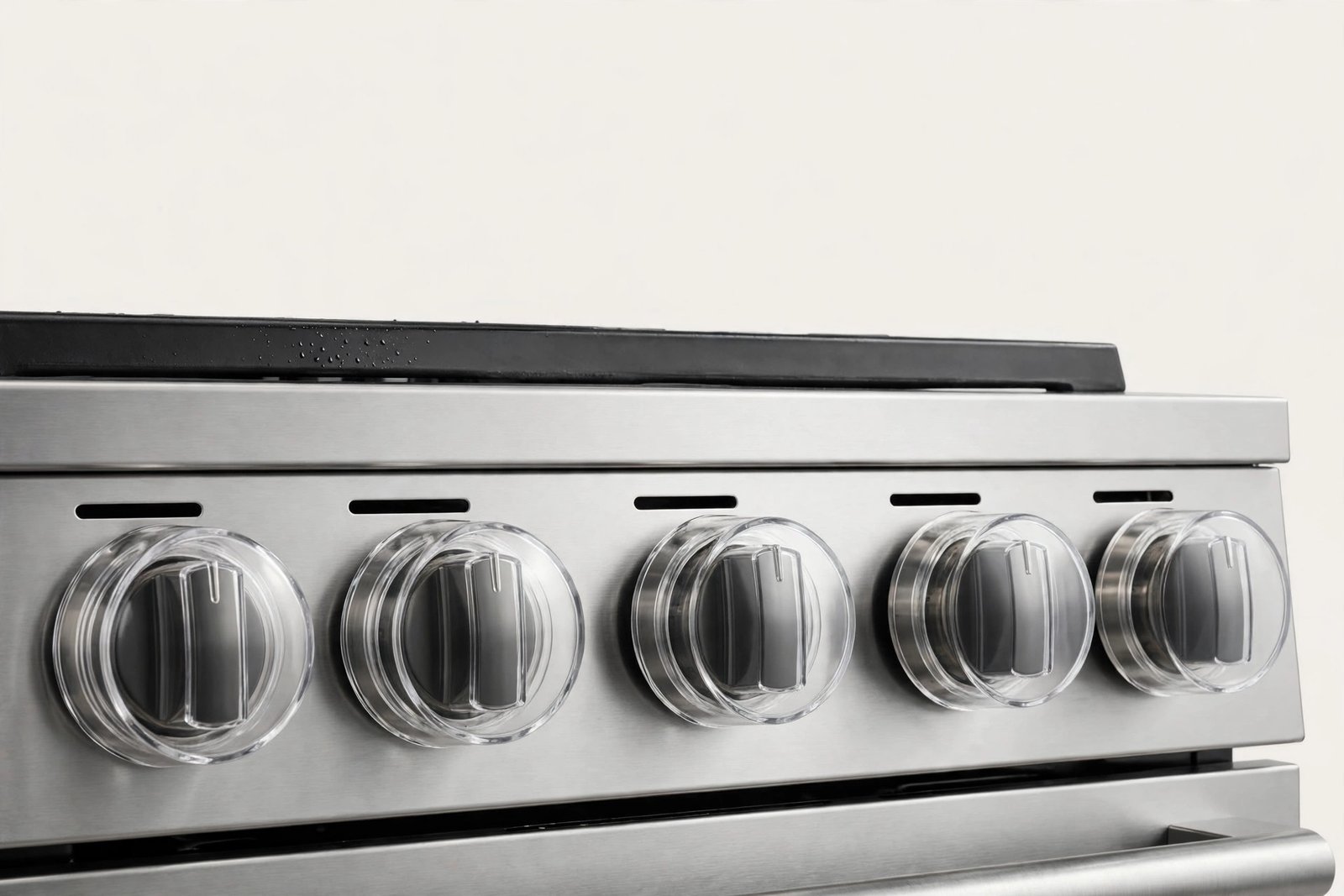
A toddler standing at the cooker can turn a knob before a parent crosses the kitchen, and Stove Knob Covers make that impossible. Clear covers snap over the knobs, so a small hand cannot grip or turn them, while an adult lifts the cover and turns the knob normally — and because they are clear, you can still see the setting at a glance.
Fit them on every knob, including the oven, and use them alongside a stove guard rail if your toddler can reach the hob surface. Always turn pot handles inward and cook on the back burners when a toddler is in the kitchen, because a cover stops the knobs being turned but not a pot being pulled. For baby safety gates for stairs and stove covers alike, the rule is the same: the barrier only works if it is fitted before the child can reach it.
Pros
- 👍 Stops toddlers turning on the hob or oven
- 👍 Clear covers still show the setting
- 👍 Adults open them with one hand
- 👍 Fits most cooker knob shapes
Cons
- 👎 Does not stop a pot being pulled
- 👎 Some knob shapes need a different cover
- 👎 Covers must be replaced if they crack
Best for: any kitchen where a toddler can reach the cooker knobs.
Check Price And User Reviews on Amazon
10. Toilet Lock
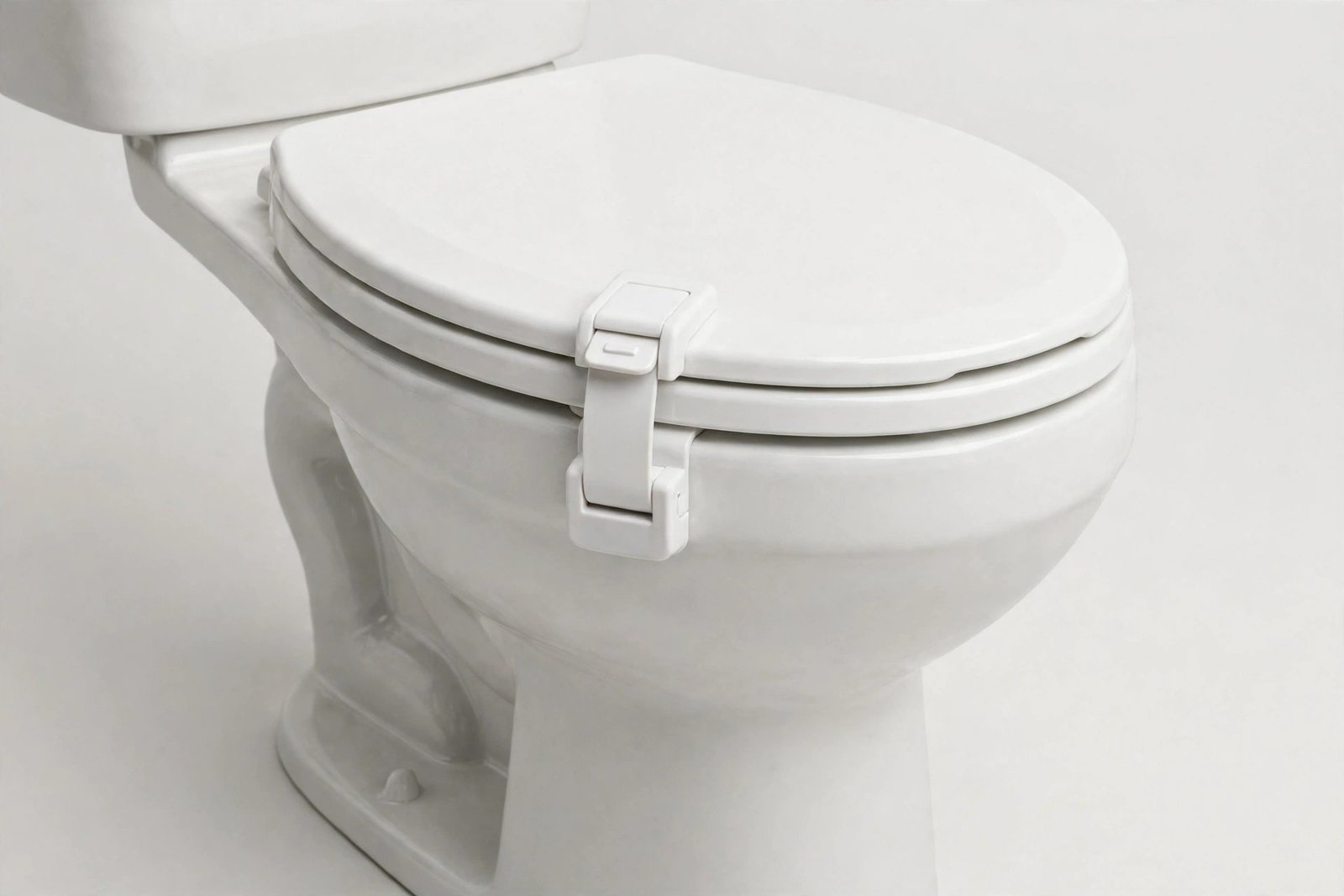
A toilet is a small pool of water at exactly the height a toddler can topple into head-first, and a Toilet Lock keeps the lid firmly shut. A strap or latch holds the lid down so a small child cannot lift it, while an adult releases it with one hand — and it also stops toys, phones and anything else a toddler is carrying from going in.
Fit one on every toilet in the house, and keep the bathroom door shut or gated as a second layer, because a lock only works while it is on. Choose a lock with a strong adhesive or screw fixing rather than a suction cup, and test it by pulling the lid firmly after fitting. Among child safe home gadgets, this is the one parents most often forget — and the one that matters in a room full of water.
Pros
- 👍 Keeps the lid shut against small hands
- 👍 Stops toys and objects going in too
- 👍 Adults release it one-handed
- 👍 Fits most toilet shapes
Cons
- 👎 Only works while the lock is on
- 👎 Suction-cup versions fall off — avoid them
- 👎 Needs fitting on every toilet
Best for: every bathroom in a home with a crawling or walking toddler.
Check Price And User Reviews on Amazon
11. Finger Pinch Door Guards
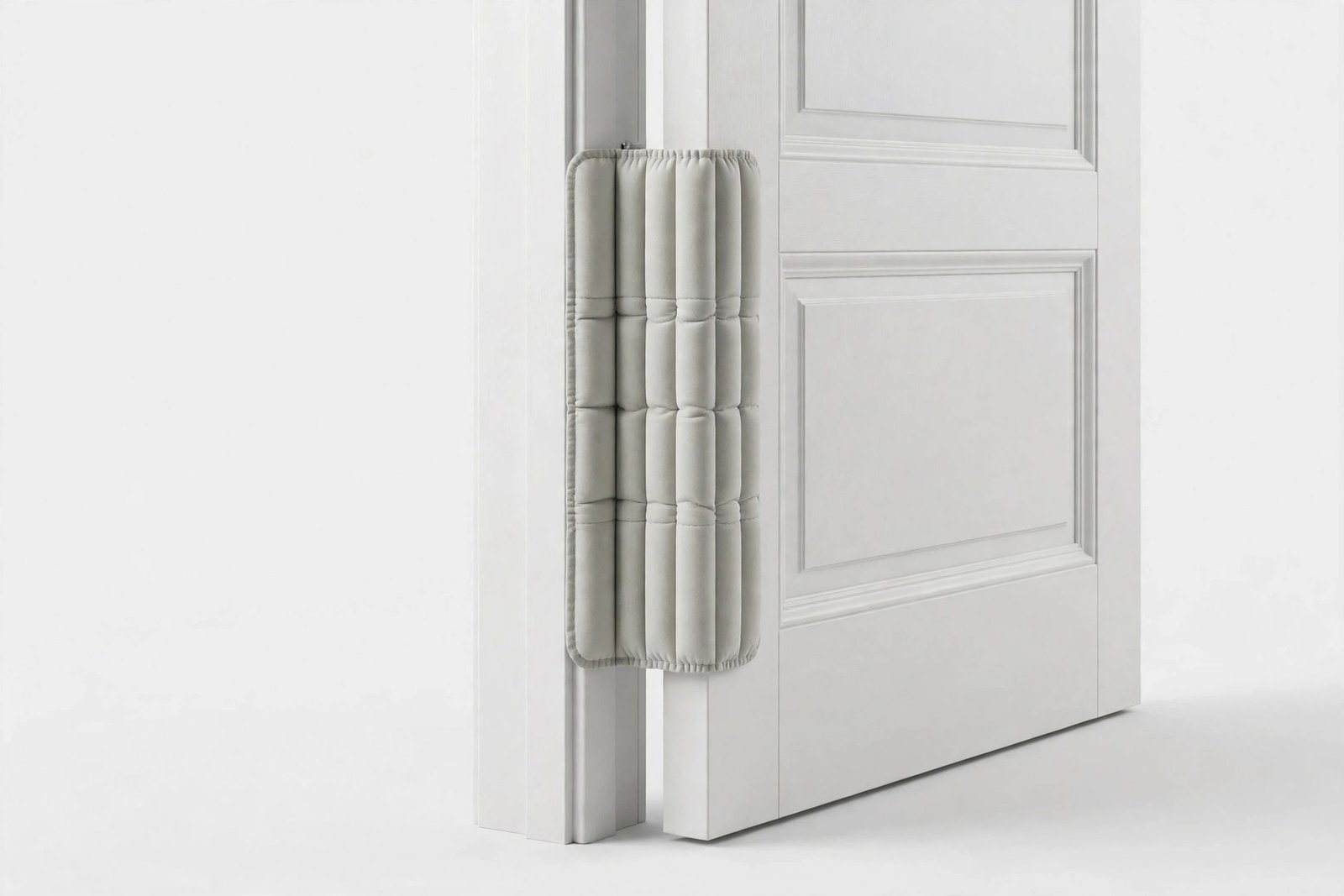
A door swinging shut on a toddler’s fingers is one of the commonest household injuries, and Finger Pinch Door Guards stop it happening. A soft foam guard clips over the hinge side of the door and holds it a few centimetres open, so the gap never closes on small fingers — and the door still opens and closes normally for adults.
Fit them on the doors your toddler uses most, especially bedroom and bathroom doors, and on any door that swings in the wind or slams shut. They suit hinged doors of all kinds, and they come off cleanly when your child is older. Check them after cleaning, because a guard knocked loose is no protection at all. In home safety for crawling babies, fingers are the injury that happens most often — and this is the cheapest way to stop it.
Pros
- 👍 Stops doors closing on small fingers
- 👍 Door still opens and closes normally
- 👍 Fits in seconds with no tools
- 👍 Removes cleanly when outgrown
Cons
- 👎 Only works while the guard is on
- 👎 Some guards slip on thick doors
- 👎 Must be fitted on every busy door
Best for: bedroom and bathroom doors, and any door that slams shut.
Check Price And User Reviews on Amazon
12. Video Baby Monitor with Temperature Sensor
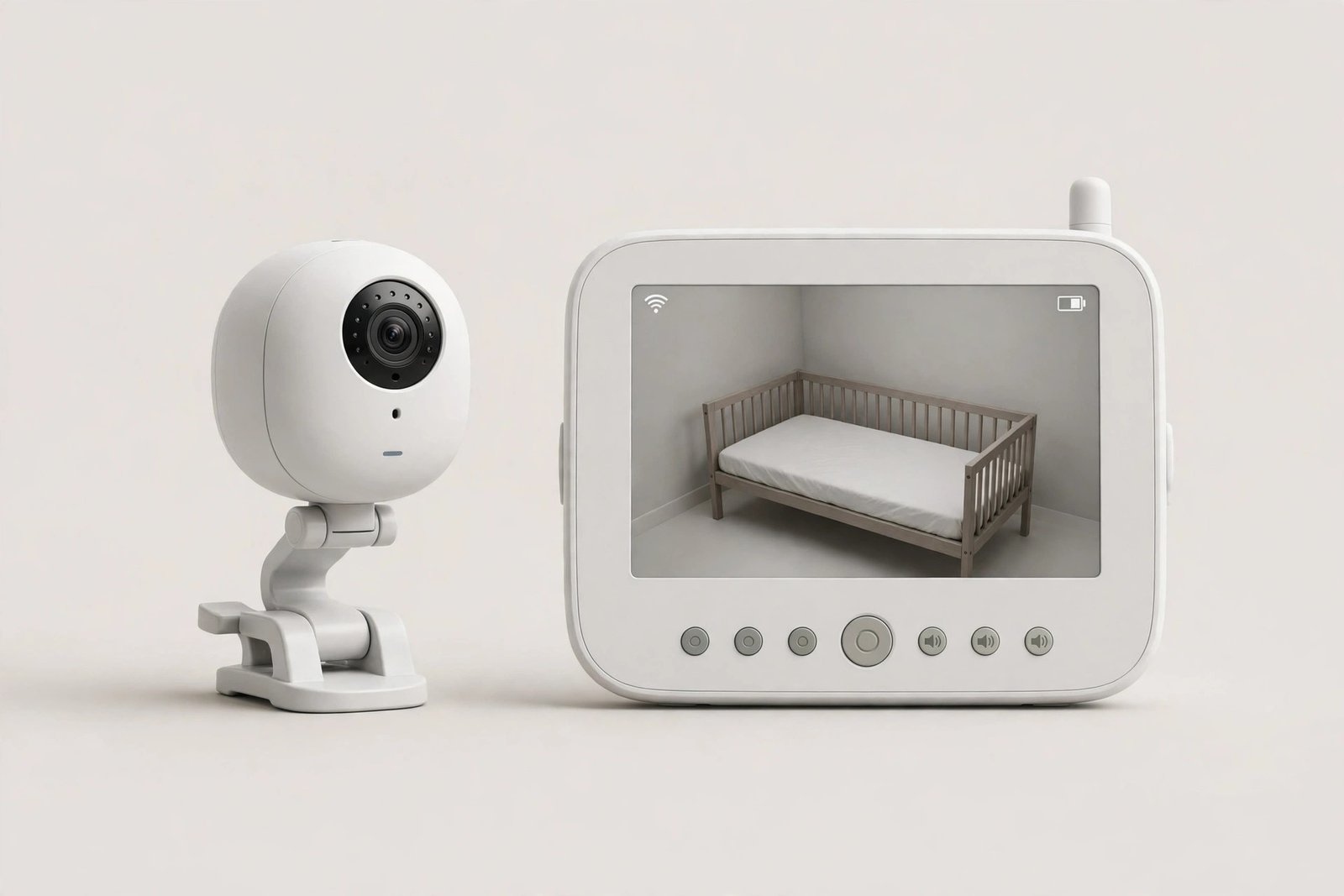
Every other gadget in this guide blocks a danger; a Video Baby Monitor with Temperature Sensor watches over the room itself. A camera over the cot shows you your toddler on a parent unit or phone, and the temperature sensor warns you if the room gets too hot or too cold — the two things that matter most while a little one sleeps.
Choose a model with a secure connection and a clear night view, and mount the camera where it sees the whole cot but stays well out of reach, with its cord fixed to the wall and never trailing near the cot. A monitor is a helper, not a substitute for checking on your child in person, and no monitor replaces adult supervision while a toddler is awake. Used that way, it is the calmest way to keep an eye on a sleeping child from the next room.
Pros
- 👍 See and hear your toddler from another room
- 👍 Temperature alerts for the nursery
- 👍 Clear night view for sleep checks
- 👍 Two-way talk soothes from afar
Cons
- 👎 Camera cord must be kept away from the cot
- 👎 No monitor replaces checking in person
- 👎 Cheaper models have weaker night view
Best for: parents who want to watch a sleeping toddler from another room.
Check Price And User Reviews on Amazon
What to Look for Before You Buy
Start with the risks in your own home, because every house is different. Walk each room at toddler height — on your knees — and note what a crawling child can reach: low cupboards, sockets, sharp corners, stairs, windows and anything that tips. That walk tells you which of these twelve gadgets you actually need first, and it is the foundation of childproofing gadgets for toddlers that fit your home rather than a generic list.
Judge every gadget by whether a toddler can beat it, not by how it looks. Magnetic locks beat adhesive latches, screw-fixed straps beat stick-on ones, and sliding outlet covers beat loose caps. Test each one after fitting by pulling, pushing and tugging the way a determined toddler would — if it gives way in your hands, it will give way in theirs. And remember that toddler proofing door locks and gates only work when they are closed and latched, so build the habit of shutting them every single time.
Build your kit in the order your child develops, not all at once. Before crawling, fit the outlet covers and the monitor; once crawling starts, add the gates, cabinet locks and corner guards; once walking and climbing begin, add the anti-tip straps, window locks and stove covers. Fitting everything at once is fine too, but the order matters more than the speed — the gate at the stairs matters the day your child first crawls, not the month after.
Finally, plan for the day the gadgets come off, because they all do. Choose locks and guards that remove cleanly where you can, keep the instructions and spare keys together, and revisit the whole house every few months as your child grows — a gate that was perfect at twelve months is a climbing frame at two years. The goal of child safe home gadgets is a home where a toddler can explore safely today, and where the protection grows with them tomorrow.
Final Thoughts
A toddler-proof home is not a home full of plastic — it is a home where the big risks are blocked quietly and the small ones are softened. Anchor the furniture, gate the stairs, lock the cupboards that hold harm, cover the sockets and the stove knobs, and keep the cords and windows safe. That is the whole job, and these twelve gadgets cover it room by room.
Start with the anti-tip straps and the stair gates if your kit is empty — those two prevent the most serious accidents — then work through the rest in the order your child reaches them. No gadget replaces watching your child, and any worry about your own home is worth raising with your child’s doctor or a child safety professional. But with the risks blocked and an adult nearby, a toddler’s exploring becomes what it should be: the best part of the day.
More Guides You’ll Like
For the step-by-step method behind this kit, read our companion guide How to Childproof Your Home for Toddlers, which walks through the house room by room. If leak safety is also on your list, see Best Water Leak Detector Gadgets for Basements and Under Sinks, and for bath-time safety, Best Bathroom Gadgets for Kids Bath Time Without the Mess covers the bathroom in detail.
Frequently Asked Questions
When should I start childproofing my home?
Before your baby starts crawling — usually around six to nine months — because crawling arrives suddenly and a baby who could not reach the stairs yesterday can reach them today. Fit the outlet covers, the monitor and the cabinet locks early, then add the gates and straps as your child starts moving. Childproofing gadgets for toddlers work best when they are already fitted on the day your child first needs them.
Do I need a gate at the top of the stairs or just the bottom?
Both. A gate at the bottom stops a crawling baby climbing up, and a gate at the top stops a walking toddler falling down — and the top gate is the more important of the two. Use a hardware-mounted, screw-fixed gate at the top of the stairs, because a pressure gate can be pushed over by a child leaning on it, and use pressure gates at the bottom and in doorways.
Are magnetic cabinet locks really toddler-proof?
They are among the strongest options, because a toddler cannot see the lock and has no key to open it — the release needs a strong magnet held in exactly the right spot. Fit them properly, test each one by pulling firmly on the door, and keep the key somewhere adults can reach quickly. Like all toddler proofing door locks, they protect only the cupboards they are fitted on, so cover every cupboard that holds anything harmful.
What is the single most important safety gadget for toddlers?
Anti-tip furniture straps, because a tipping bookcase or dresser is the most serious accident a toddler can have at home — and it is entirely preventable. Anchor every tall or heavy piece to a wall stud, then add the stair gates. After those two, the rest of the kit — locks, covers, guards and monitors — fills in the everyday risks that make a home safe for exploring.