

How to Brighten a Dark Kitchen
A dark kitchen is a kitchen you cook in with one eye on the shadows: the chopping board is dim, the hob is hard to read, and the back of the worktop disappears into gloom by late afternoon. Learning how to brighten a dark kitchen starts with one simple idea: light the worktop, not the room. A ceiling light throws shadows where you stand, but a light under the wall cabinets throws light exactly where your hands are — onto the chopping board, the hob and the sink — and that one change makes the whole kitchen feel brighter.
The method is simple, and it works in any kitchen. The first layer is under the cabinets: a bar or a strip of light that throws a clean, even light across the whole worktop. The second is layering: a second, softer light for the evening, so the kitchen is bright for cooking and gentle for dinner. The third is colour: warm light that flatters the food and the wood, instead of cold light that makes the kitchen feel like a laboratory. And the fourth is the small fixes: the dark corner, the pantry, the sink under the high cabinet. This guide walks through each layer, so a dim kitchen becomes a bright, comfortable room to cook in.
Start Under the Cabinets
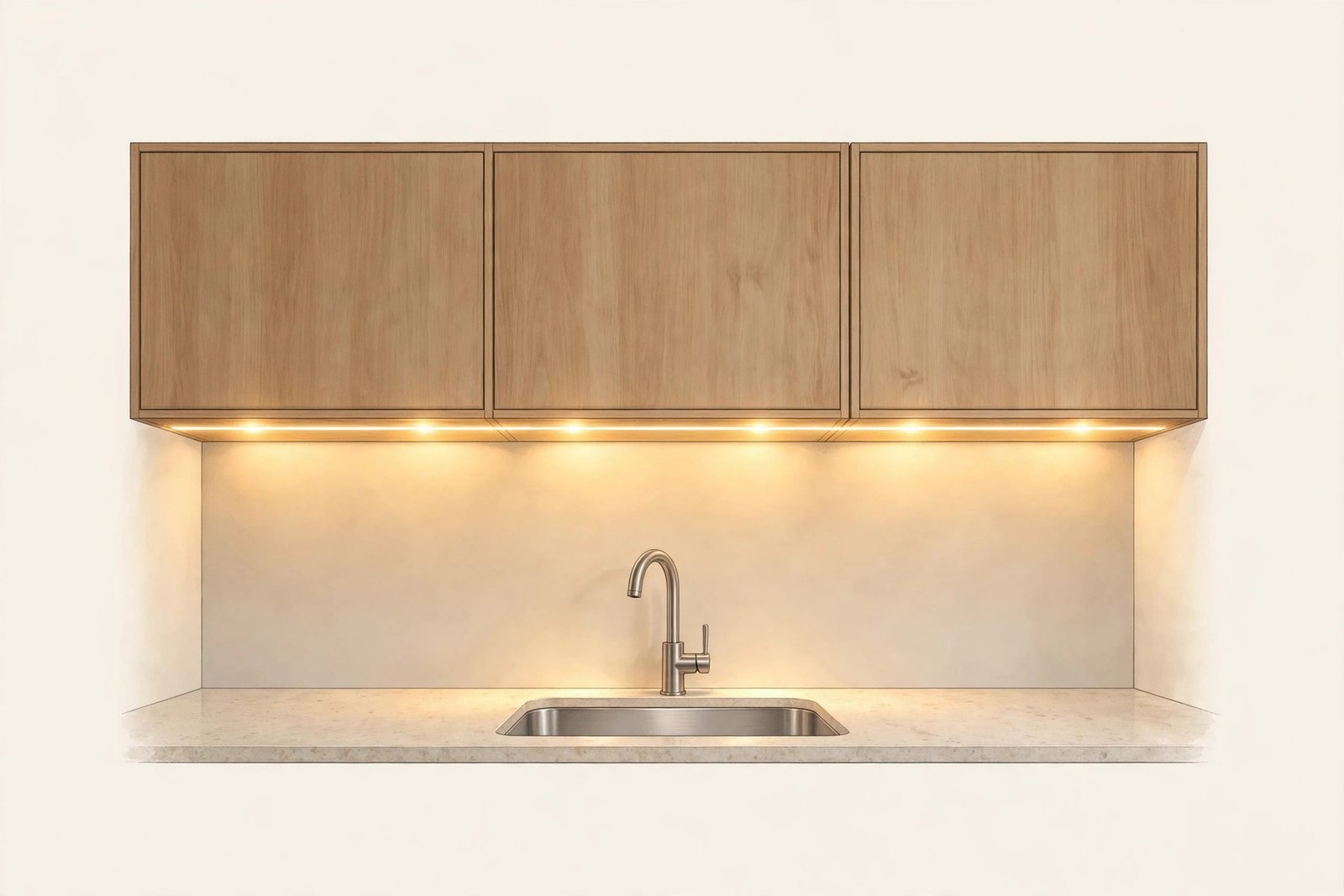
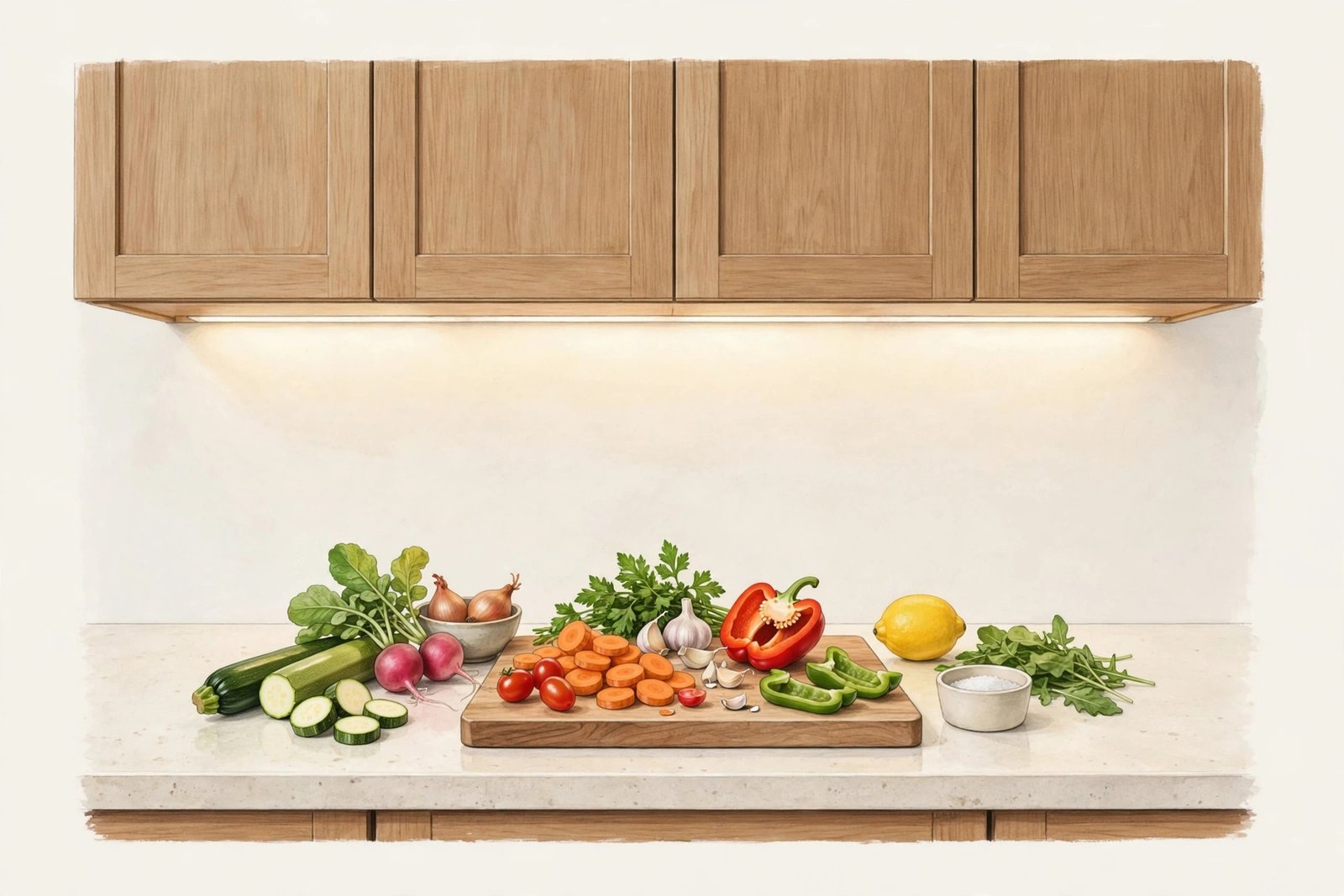
The single most effective change in a dark kitchen is a light under the wall cabinets, because it lights the surface you actually use. A ceiling light sits behind you when you stand at the counter, so your body throws a shadow exactly where you are chopping — but a light under the cabinet sits in front of you, throwing light down onto the worktop with no shadow at all. The difference is immediate: chopping is easier, reading a recipe is easier, and the kitchen feels bigger.
Fit the light towards the front edge of the cabinet, so the light falls on the worktop and not on the wall behind it, and choose a bar or a strip long enough to cover the whole run of cabinets with no dark gap. A warm white light suits most kitchens better than a cold white one, and a dimmer lets you turn it up for food prep and down for the evening. If your kitchen has no socket under the cabinets, battery or USB lights stick under the cabinet with adhesive and need no wiring at all.
Start with the main run of cabinets — the stretch where you do most of your cooking — and add lights to the other runs once you have seen the difference. One long bar lights a run of cabinets, two bars light a whole kitchen, and the change from a dim worktop to a bright one is the kind of change you notice every time you cook.
If the cabinets have a gap at the top, a strip of light up there throws a soft glow onto the ceiling and makes the whole room feel taller and brighter, even though it lights nothing you work on. It is a small trick, but it is the one that makes a low-ceilinged kitchen feel bigger — and it costs nothing more than a strip and a socket.

Layer the Light
One light is never enough for a kitchen, because a kitchen is used for two different jobs: cooking, which needs bright light, and eating and talking, which needs soft light. The answer is to layer the light — a bright layer for the worktop, and a softer layer for the room — so you can switch between them as the hour changes.
The bright layer is the under-cabinet light: a bar or a strip that lights the worktop evenly. The soft layer can be a dimmable table lamp on the counter, a pendant over the table, or the same under-cabinet lights turned down with a dimmer. In the morning, turn the worktop lights up bright for breakfast and food prep; in the evening, dim them down and let the soft layer take over for dinner.
Add a third layer for the spots that stay dark: a puck light over the sink, a small light in the pantry, a strip under the shelf where the spices live. These small lights are cheap and easy to fit, and they remove the dark corners that make a kitchen feel gloomy even when the main lights are on. A kitchen with three layers of light — worktop, room and corners — is a kitchen that feels bright at every hour.
Use the dimmer as the switch between the layers. In the morning, turn the worktop lights up bright for breakfast and food prep; in the evening, dim them down and let the soft layer take over for dinner. A kitchen that can change its light through the day is a kitchen that works for cooking and for sitting in — and a dimmer is the cheapest way to get both from the same lights.

Mind the Colour
The colour of the light matters as much as its brightness, and it is the detail most people get wrong. Cold white light makes a kitchen feel like a laboratory: it is crisp and bright, but it flatters nothing, and in the evening it feels harsh. Warm white light flatters the food, the wood and the tiles, and it makes the kitchen feel cosy rather than clinical — the kind of light you want to sit in after dinner.
The best answer is a light with adjustable colour temperature, so you can slide from a bright, cool white for chopping to a warm, soft white for the evening. If your lights do not adjust, choose warm white for the kitchen you live in and cool white only for the kitchen you cook in and leave — and never mix the two in the same room, because a warm bar next to a cool bar looks uneven and makes the kitchen feel patched together.
Check the colour at night, not in the daytime, because daylight hides the colour of a lamp. Switch the kitchen lights on after dark, stand at the worktop, and ask whether the light feels comfortable — if it feels harsh, change the colour before you change the brightness. A warm, even light across the whole worktop is the goal, and it is the colour that makes a dark kitchen feel like home.
Small Fixes That Help
Once the main lights are fitted, the small fixes are what finish the job. The dark corner by the fridge, the pantry with no light at all, the sink under the high cabinet, the shelf where the spices live: these are the places that stay dark even when the main lights are on, and each one has a simple fix.
A puck light sticks under the shelf or inside the pantry and switches on with a tap or a motion sensor, so the inside of the cupboard is lit the moment you open it. A strip light under the shelf over the sink lights the washing up. A small light on the windowsill or the top of the cabinets throws a soft glow onto the ceiling and makes the room feel taller. None of these fixes needs wiring, and most of them cost very little — but together they remove the last dark corners.
Keep the worktop clear as well as lit. A lit worktop covered in clutter is still hard to cook on, and a clear worktop with a good light is a pleasure to use. Wipe the lights down when you clean the cabinets, because a film of grease and steam dims a light faster than you would think, and check the batteries in the battery lights every few months. A bright kitchen is a kitchen you look after — and a kitchen you look after stays bright.
Finally, check the light at the time you actually cook, not in the middle of the day. Daylight through the window hides a dim lamp, and a kitchen that looks bright at noon can be gloomy at six in the evening, when most cooking happens. Switch the lights on after dark, stand at the chopping board, and ask whether you can see the work clearly — if there is a shadow where your hands are, move the light or add a puck light, until the whole worktop glows.
Final Thoughts
Brightening a dark kitchen is not about a bigger ceiling light — it is about lighting the worktop, layering the light, and choosing a warm colour that makes the room feel like home. A bar or a strip under the main run of cabinets, a softer layer for the evening, and a few small lights for the dark corners: that is the whole method, and it needs no wiring and no electrician.
Start with the under-cabinet lights if you have not begun yet — one bar under the main run of cabinets changes the kitchen more than any other single fix — then add the layers and the small fixes in the order your kitchen needs them. Cook a meal under the new lights, move any light that leaves a dark patch, and wipe the lights down when you clean. A kitchen where every worktop is lit is a comfortable place to cook — and these habits make it one.
More Guides You’ll Like
For the lights that make all of this easier — LED bars, puck lights, dimmable strips and USB bars — see our product guide to the Best Under Cabinet Lighting Gadgets for Dark Kitchens, which rounds up twelve picks chosen for dark kitchens. And for a kitchen that stays clean as well as bright, Best Kitchen Cleaning Gadgets for Greasy Stovetops and Ovens covers the greasy hob and the oven.
Frequently Asked Questions
What is the best way to brighten a dark kitchen?
Fit a light under the wall cabinets, because it throws light exactly where your hands are — onto the chopping board, the hob and the sink — instead of throwing shadows where you stand. A long LED bar or a dimmable strip under the main run of cabinets is the single most effective change, and it needs no wiring if you choose a battery or USB model.
What colour light is best in a kitchen?
Warm white for most kitchens, because it flatters the food, the wood and the tiles and feels cosy in the evening. Cool white is crisper for fine chopping in the morning, so a light with adjustable colour temperature gives you both — bright white for food prep and warm white for the evening — and you should never mix warm and cool lights in the same room.
Do under cabinet lights need an electrician?
Most of them do not: battery and USB lights stick under the cabinet with adhesive, and plug-in bars and strips plug into an ordinary socket. Mains spotlights and some linkable sets need basic wiring, and if you are unsure, ask an electrician rather than guessing — a kitchen light lives in steam and splashes, so the fitting matters as much as the light.
How do I light a kitchen with no socket under the cabinets?
Use battery or USB rechargeable lights: they stick under the cabinet with adhesive, need no socket and no wiring, and a single charge or a set of batteries lasts weeks of evening cooking. Keep spare batteries in the drawer, choose a magnetic mount so the USB bar lifts off to charge, and place a puck light exactly where the dark spot is.




One Comment