How to Grow Herbs Indoors All Year Round
Fresh herbs make everyday cooking taste brighter, and learning how to grow herbs indoors all year round means you never have to wait for spring to enjoy them. A pot of basil on a sunny windowsill, a row of mint by the kitchen door, a small tray of parsley on the counter — these are simple pleasures, and they are available in January just as easily as in June. You do not need a garden, a greenhouse or any experience to start.
The method in this guide works in any home, from a small flat to a large house. First, find the brightest spot you have and match each herb to the light it likes. Second, choose pots and soil that drain well, so the roots stay healthy. Third, water little and often, and harvest little and often, so the plants stay bushy and productive. And fourth, adjust your care through the seasons, so the herbs keep growing when the days get short and the air gets dry. Start with three or four herbs you actually cook with, and grow from there.
Pick the Right Spot for Light and Air
Light is the most important thing for indoor herbs, and the first job is to watch your windows before you buy a single plant. A south-facing window gives the strongest light, and it suits sun-loving herbs like basil, rosemary and thyme. An east-facing window gives gentle morning sun, which suits parsley, chives and mint. A west-facing window gives warm afternoon light, which most herbs enjoy, while a north-facing window gives the least light and suits only the toughest herbs. Note which windows get direct sun and for how long, and place each herb where the light matches its needs.
Most herbs need at least four to six hours of bright light a day to grow well indoors. If your brightest window gives less than that in winter, move the pots to the sunniest spot you have, or rotate them every few days so each side of the plant gets its turn in the light. Turn the pot a quarter turn every few days to keep the growth even and upright.
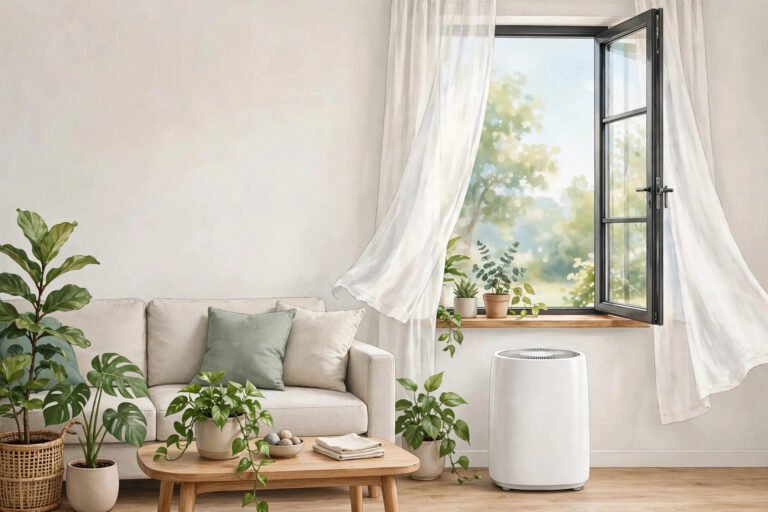
Air matters almost as much as light. Herbs like fresh air moving gently around their leaves, and a stuffy room with still air can encourage weak growth and mould on the soil surface. Open a window nearby when the weather allows, or keep the pots in a room where air moves naturally, like the kitchen. Avoid placing herbs right above a radiator or next to a hot oven, where the dry heat can scorch the leaves, and avoid cold draughts from a door that opens onto the street in winter.
Think about convenience as well as light. Herbs you can reach while you cook are herbs you will actually use, so keep the pots you harvest most often close to the chopping board or the stove. A small shelf by the kitchen window, a narrow ledge above the sink, or a tiered stand on the counter all work well. When the herbs are within arm’s reach, snipping a few leaves becomes part of cooking, not a separate chore, and the plants stay in regular use.

Choose Pots, Soil and Herbs That Suit Indoors
Choosing the right pots makes indoor herb growing far easier. Every pot needs drainage holes in the bottom, because herbs sitting in water will rot at the roots, and a saucer or tray underneath catches the drips and protects the windowsill. Terracotta pots are a classic choice because they breathe and let the soil dry out between waterings, while glazed ceramic pots hold moisture for longer and suit herbs that like steady dampness. Choose pots that are wide enough for the roots, with room for the plant to grow for a season.
Soil matters just as much as the pot. Use a light, free-draining potting compost rather than heavy garden soil, which compacts in a pot and stays wet for too long. A good potting compost holds moisture without becoming soggy, and a handful of perlite or coarse grit mixed through it improves drainage even further. Fill the pot loosely, leave a small gap at the top for watering, and press the compost down gently around the roots so the plant sits firm without being packed tight.
Start with herbs that forgive beginners and suit indoor life. Basil grows quickly and gives you leaves within weeks, mint grows so vigorously that it deserves its own pot, parsley is steady and reliable through the year, and chives grow back quickly after every cut. Rosemary and thyme are slower and woodier, but they are tough and long-lived once they settle in. Choose herbs you actually cook with, because a plant you harvest regularly stays healthier than a plant you admire and leave alone.
You can start herbs from seed, from a small plant bought at a garden centre, or from a cutting taken from a friend’s plant. Seeds are the cheapest way to start and give you the widest choice, but they take patience. Small plants give you leaves to pick within days, which is encouraging for a beginner. Cuttings of mint, basil and rosemary root easily in a glass of water on the windowsill, and once the roots appear you can pot them up. Whichever way you start, label each pot so you know what is growing where.

Water, Feed and Harvest Little and Often
Watering is the one job indoor herbs need most often, and the rule is simple: water when the top of the soil feels dry, and water until a little runs out of the drainage holes. Push a finger into the compost to check, because the surface can look dry while the soil below is still damp. In summer, a sunny windowsill can dry a pot out in a day, while in winter the same pot may need water only once or twice a week. Always water the soil, not the leaves, and empty the saucer after half an hour so the roots are not sitting in water.
Different herbs like different amounts of water. Basil, mint and parsley like steady moisture and will droop quickly when they are thirsty, so check them often. Rosemary, thyme and sage prefer drier soil and will suffer if they are watered too often, so let the compost dry out more between waterings for these. Learning the preference of each herb is the heart of indoor growing, and it takes only a few weeks of watching to get a feel for each pot.
Feeding keeps herbs growing well through the year. Potting compost runs out of nutrients after a few weeks, so a light liquid feed every two or three weeks through the growing season keeps the leaves green and the growth steady. Use a general-purpose liquid feed at half the strength on the label, because herbs grown for flavour do best with gentle feeding rather than a heavy dose. Too much feed makes soft, leafy growth with less flavour, while too little leaves the plant pale and slow. A little, often, is the rule.
Harvesting is part of caring for the plant, not just taking from it. Snip the top leaves and stems regularly, and the plant will branch out and grow bushier instead of growing tall and leggy. Never take more than a third of a plant at once, and always leave enough leaves for it to keep growing. Pinch out the growing tip of basil to encourage side shoots, cut chives down to a few centimetres above the soil and let them regrow, and pick the outer leaves of parsley first. Regular picking is the secret to a productive herb pot.

Keep Herbs Healthy Through Every Season
Each season brings a different challenge for indoor herbs, and a small adjustment keeps them growing all year. In spring, the days lengthen and the plants wake up, so increase watering and feeding gradually and repot any herb that has outgrown its pot. Fresh compost and a slightly larger pot give the roots room to grow, and a spring trim removes any tired winter growth and encourages fresh shoots. Spring is also the best time to start new herbs from seed, while the light is improving day by day.
Summer is the easiest season for indoor herbs, with long days and plenty of light, but the heat can dry pots out quickly. Check the soil every day in hot weather, move pots back from a scorching south-facing window if the leaves start to pale, and give the plants a little extra water in the morning so they can cope with the heat of the day. A saucer of water with pebbles under the pots can raise the humidity around the leaves, which most herbs enjoy in dry summer air.
Autumn is the time to prepare for winter. Bring any herbs that spent the summer outside back indoors before the first cold nights, trim them back lightly, and check the leaves for any pests that might have hitched a ride. Reduce feeding as the growth slows, and move the pots to the brightest window you have, because the light will fade fast over the coming weeks. A tidy autumn, with clean pots and healthy plants, sets the herbs up for the hardest season.
Winter is the test of year-round growing, with short days and dry heated air. Give the herbs the brightest spot in the house, keep them away from radiators and cold draughts, and water less often because the plants are growing slowly. A grow light can help if your windows are dark, giving the plants a few extra hours of light each day. Do not expect fast growth in winter — the goal is to keep the plants alive and healthy, so they burst back into growth when spring returns. A little patience in winter is rewarded many times over.

Final Thoughts
Growing herbs indoors all year round is a small habit with a steady reward. Find the brightest spot you have, choose pots and soil that drain well, water little and often, harvest little and often, and adjust your care as the seasons change. That is the whole method, and it works on the smallest windowsill as well as the largest kitchen.
Start with three herbs you cook with every week — basil, mint and parsley are a good trio — and see how they do. The first time you snip fresh leaves in the middle of winter and add them to a meal, you will know why indoor herbs are worth the small daily effort, and you will be planning the next pot before the season is over.
More Guides You’ll Like
For the gadgets that make all of this easier — grow lights, self-watering planters, herb garden kits and more — see our product guide to the Best Gadgets for Growing Herbs Indoors All Year Round, which rounds up twelve picks chosen for indoor herb gardens. And for growing on a city balcony in the warmer months, Best Garden Gadgets for Balcony Gardeners in the City covers the planters and tools that suit small outdoor spaces.
Frequently Asked Questions
Which herbs are easiest to grow indoors?
Basil, mint, parsley and chives are the easiest herbs to grow indoors. They grow quickly, forgive a missed watering, and give you leaves to pick within weeks. Mint should always have its own pot, because it spreads fast and will crowd out anything planted beside it.
How much light do indoor herbs need?
Most herbs need four to six hours of bright light a day. A south-facing window is best, followed by east and west windows. If your windows are dark in winter, move the pots to the brightest spot you have and turn them every few days so each side gets light.
How often should I water indoor herbs?
Water when the top of the soil feels dry, and water until a little runs out of the drainage holes. In summer that may be every day, while in winter it may be only once or twice a week. Always empty the saucer after half an hour so the roots are not sitting in water.
Can I grow herbs indoors all winter?
Yes, with the right spot and a little patience. Give the herbs the brightest window you have, keep them away from radiators and cold draughts, and water less often while growth is slow. A grow light can add a few hours of light each day if your windows are very dark.