

Best Cordless Kitchen Gadgets for Clutter Free Counters: 12 Rechargeable Picks That Free Up Your Worktop
As an Amazon Associate, we earn from qualifying purchases made through links on this page, at no extra cost to you. This helps support our work and keeps our guides free to read.
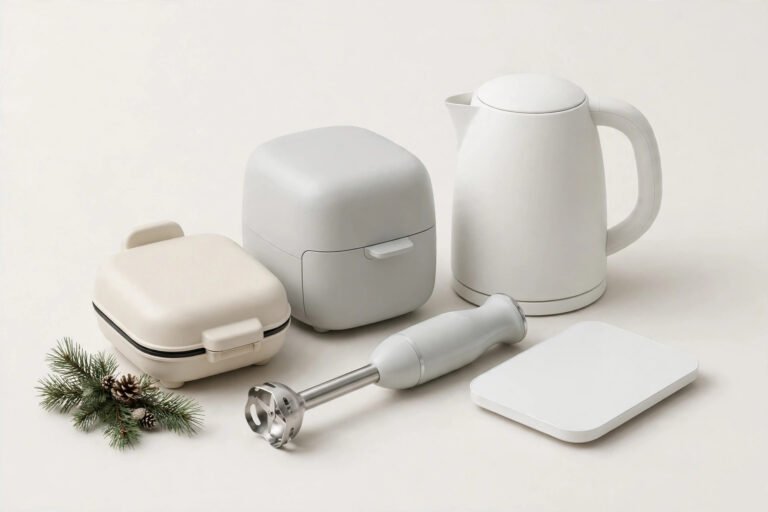
A quick note on prices: prices change often, so we never quote a fixed price here. Please check the latest price on Amazon before you buy, using the yellow buttons in this guide. The product pictures in this article are original illustrations created for this guide, not manufacturer photos.
Introduction
If you are looking for the best cordless kitchen gadgets for clutter free counters, your real enemy is probably not a shortage of gadgets — it is the cables. Every corded appliance claims a permanent parking spot near a socket, trails a wire across your worktop, and turns a simple job like blending soup or chopping an onion into a small exercise in counter management. In a small kitchen, that tangle is often the difference between a counter you cook on and a counter you merely store things on.
This guide rounds up twelve rechargeable kitchen gadgets that cut the cord entirely. Each one charges over USB or from a compact dock, works wherever you set it down — the counter, the table, the hob, even outside by the grill — and then goes back into a drawer or cupboard when the job is done. Every pick is a proven product type rather than a gimmick: blenders, choppers, mixers, grinders and openers that do the same work as their corded versions, without claiming a socket for life.
We have spread the list across the whole cooking routine. Some picks are daily drivers, the cordless kitchen appliances you will reach for at breakfast, lunch and dinner. Others are occasional heroes — the electric knife that appears on roast days, the wine opener that lives in a drawer until guests arrive. What they share is the same payoff: a clear worktop, no cable spaghetti behind the toaster, and gadgets that live where you put them rather than where the nearest socket happens to be.
We have been honest about the trade-offs, too. Cordless means batteries, and batteries mean charging routines and a little less raw power than the biggest corded machines. Read the pros and cons, think about which cables annoy you most, and start there. For most kitchens, swapping just two or three daily gadgets is enough to make the whole counter feel twice the size — that is the quiet promise of battery powered kitchen tools done well.
How We Chose
We chose these twelve products by asking two questions of each candidate: does going cordless genuinely make this job easier, and does the gadget earn its freedom from the counter by storing small? A gadget earned its place if the corded version is a known counter-hog or socket-blocker, if the rechargeable version performs the same core job credibly, and if it charges simply — ideally over USB-C, from the same cables already in your kitchen drawer.
We also favoured product types with a track record: categories where rechargeable models have been refined over several generations, with sensible battery life measured in weeks of typical use rather than minutes. Anything that needed a bulky proprietary charging stand permanently parked on the worktop defeated its own purpose and was left out. Finally, we spread the picks across prep, cooking, serving and storage, so the list reads like a plan for the whole counter, not just one corner of it.
Quick List
- Cordless Electric Kettle — boils anywhere and lifts off its base with no trailing flex.
- Rechargeable Mini Food Chopper — cable-free chopping for onions, garlic, herbs and nuts.
- Cordless Immersion Blender — blend soup in the pot and smoothies at the table, socket-free.
- USB Rechargeable Electric Spice Grinder — fresh-ground spices at the push of a button, anywhere.
- Cordless Hand Mixer — whisk and beat wherever the bowl happens to be.
- Rechargeable Milk Frother — café-style foam for coffee and matcha in seconds.
- Cordless Electric Can Opener — walks around the can rim and stops by itself, hands-free.
- Rechargeable Salt and Pepper Grinder Set — one-handed seasoning with a button press at the hob or table.
- Cordless Vacuum Sealer — handheld sealing that keeps food fresher without a countertop machine.
- Rechargeable Electric Knife — effortless, even slices of roasts and bread, then back in the drawer.
- Cordless Electric Wine Opener — removes corks in seconds and lives in a drawer between uses.
- USB Rechargeable Kitchen Scale — a slim, flat scale that charges like your phone.
1. Cordless Electric Kettle

A Cordless Electric Kettle is the original clutter-free kitchen gadget, and it still earns the top spot. The kettle lifts cleanly off its powered swivel base, so you carry just the jug to the table, the teapot or the cafetière — no flex trailing across the worktop, no dragging the base behind you. When it goes back, it lands on the base from any angle, and the short cable stays coiled underneath where nobody has to look at it.
The models worth having add the details daily tea and coffee drinkers notice: a concealed element that makes descaling easier, a water window you can read in poor light, and an automatic shut-off that actually works every time. Because the jug is free of the base, it is also easier to fill under the tap and to rinse. In a kitchen where the kettle is used ten times a day, removing its cable from your life is a small change you feel constantly — and it pairs naturally with the other kettle-side clutter cures in our guide to kitchen gadgets for cooking for one person, where every centimetre of counter matters.
Pros
- 👍 Lifts off the base — pour anywhere with no trailing cable.
- 👍 360-degree swivel base suits left- and right-handers alike.
- 👍 Cable stores inside the base, keeping the counter tidy.
- 👍 Easier to fill, rinse and descale than a fixed-cord jug.
Cons
- 👎 The powered base still needs one socket on the counter.
- 👎 Glass models show limescale more than steel ones.
- 👎 Cheaper bases can feel wobbly when the jug is docked.
Best for: tea and coffee drinkers, small kitchens, and anyone tired of a kettle flex crossing the worktop.
Check Price And User Reviews on Amazon
2. Rechargeable Mini Food Chopper
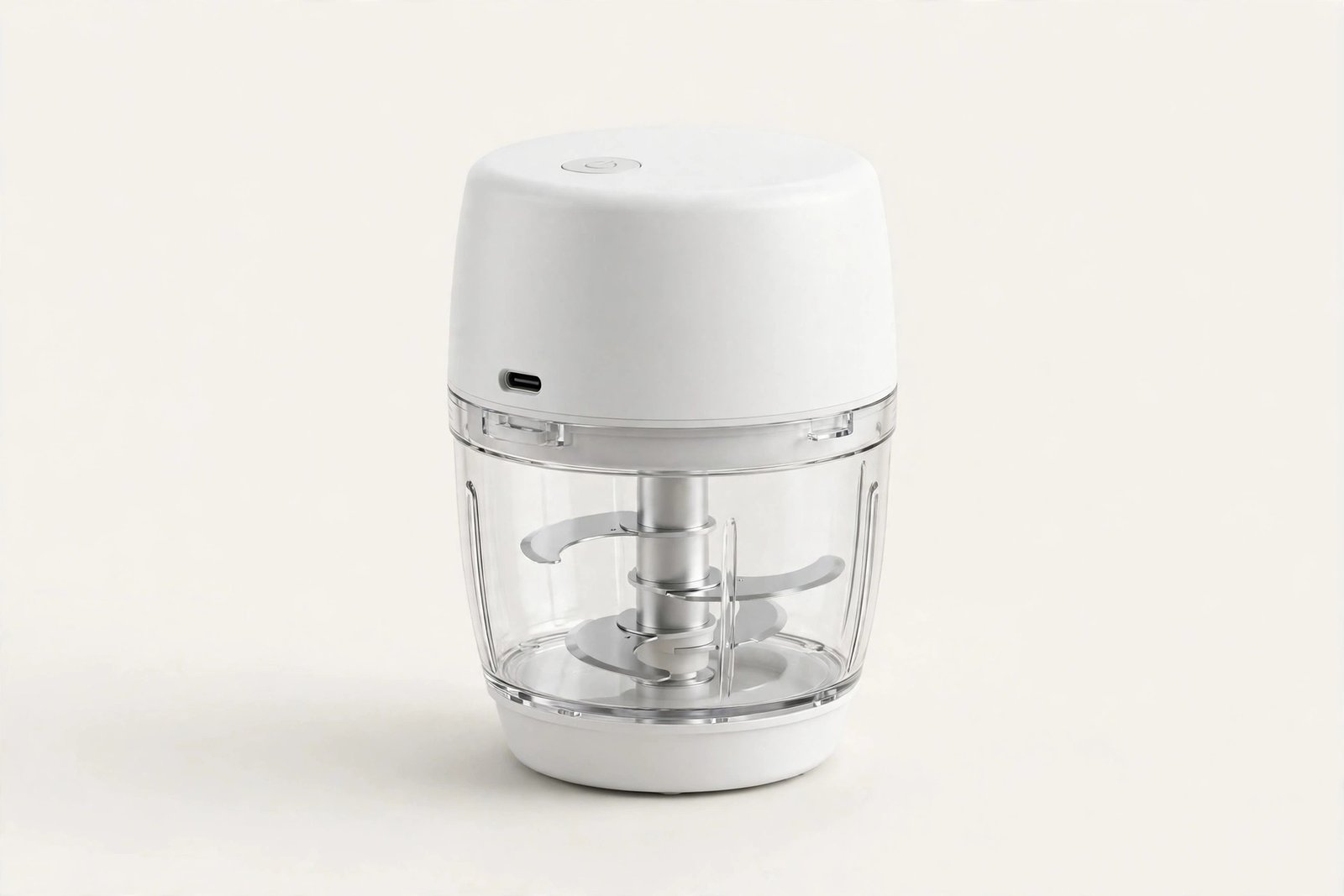
A Rechargeable Mini Food Chopper does the job that makes home cooks reach for a knife and board out of habit — onions, garlic, herbs, nuts, breadcrumbs — in a small sealed bowl, at the press of a button, wherever you set it down. No cable means you can chop at the counter, carry the bowl to the hob, and tip the contents straight into the pan. A few short pulses give a coarse chop; hold longer for a fine mince or a rough purée.
The clutter maths is what sells it. A full-size food processor owns a cupboard shelf and a permanent cable; this chopper is roughly the size of a large mug, rinses under the tap in seconds, and typically runs for dozens of chopping sessions on a single USB charge. It will not knead dough or slice a kilo of carrots, and it is not trying to — it is the everyday prep jobs, done quickly, with almost nothing to wash and nothing to plug in. Among battery powered kitchen tools, this is the one most people end up using daily.
Pros
- 👍 Chops anywhere — counter, table or beside the hob.
- 👍 Mug-sized footprint stores in a drawer or cupboard corner.
- 👍 One charge typically covers weeks of small prep jobs.
- 👍 Bowl and blades rinse clean in seconds.
Cons
- 👎 Small bowl means big batches need several rounds.
- 👎 Not a substitute for a full food processor on heavy jobs.
- 👎 Over-processing turns herbs and nuts to paste quickly.
Best for: everyday cooks, small households, and anyone who dreads chopping onions and garlic.
Check Price And User Reviews on Amazon
3. Cordless Immersion Blender

A Cordless Immersion Blender fixes the most awkward cable in the kitchen. A corded stick blender has to stretch from the socket to the soup pot, usually across the hob, and the flex limits where you can stand and how freely you can move the blender through the pan. Cut the cord and you blend soup directly in the pot, whip cream in any bowl, and make a smoothie at the breakfast table — then the shaft detaches for rinsing and the whole thing goes in a drawer.
Modern rechargeable models have closed most of the power gap for everyday jobs: soups, sauces, smoothies, baby food and whipped cream are all handled comfortably, with variable speeds on better models so you are not blasting soup up the walls at full power. Battery life is typically rated in minutes of blending rather than sessions, and a full charge covers many pots of soup. It will not crush ice like a countertop blender — keep expectations honest — but as cordless kitchen appliances go, this is the one that most transforms how a small kitchen feels to cook in, especially alongside the other worktop-savers in our kitchen gadgets for small apartments guide.
Pros
- 👍 Blend in the pot, bowl or jug — no cable across the hob.
- 👍 Detachable shaft rinses clean and stores in a drawer.
- 👍 Variable speeds on many models for better control.
- 👍 Handles soups, sauces, smoothies and cream with ease.
Cons
- 👎 Not built for crushing ice or frozen fruit like a jug blender.
- 👎 Heavier in the hand than a corded stick blender.
- 👎 A flat battery mid-soup means a short charging pause.
Best for: soup makers, smoothie drinkers, small kitchens, and anyone whose blender cable crosses the hob.
Check Price And User Reviews on Amazon
4. USB Rechargeable Electric Spice Grinder

A USB Rechargeable Electric Spice Grinder is a small motorised mill that grinds peppercorns, rock salt, chilli flakes and whole spices at the push of a button, one-handed, wherever you are standing. That matters more than it sounds: seasoning a pan with one hand while stirring with the other is something a manual mill simply cannot do, and a mortar and pestle — lovely as it is — lives on the counter permanently and takes real effort for a teaspoon of pepper.
Look for adjustable coarseness, because the grind you want for a salad is not the grind you want for a rub, and a clear chamber so you can see when it is running low. These grinders are slim enough to live in a spice drawer or stand in a row inside a cupboard door, and a single USB charge typically lasts for weeks of daily seasoning. Wipe the chamber rather than washing it, keep a separate grinder for salt to avoid corrosion, and fresh-ground flavour becomes a no-effort default rather than a special-occasion project.
Pros
- 👍 One-handed grinding while your other hand stirs.
- 👍 Adjustable coarseness for different dishes.
- 👍 Slim body stores in a drawer — nothing lives on the counter.
- 👍 Weeks of seasoning from a single USB charge.
Cons
- 👎 Small chamber needs refilling more often than a big mill.
- 👎 Very hard spices can strain the smallest motors.
- 👎 Grinding is slower than a mains-powered mill.
Best for: keen seasoners, one-handed cooks, and anyone retiring a counter-hogging mortar and pestle.
Check Price And User Reviews on Amazon
5. Cordless Hand Mixer

A Cordless Hand Mixer frees baking from the socket map of your kitchen. A corded mixer tethers you to whichever corner has a free outlet, and the flex has a special talent for dragging through the batter bowl. Cordless, you mix where the bowl is: cake batter on the counter, whipped cream at the table, mashed potato in the pan it cooked in. When you finish, the beaters eject for washing and the mixer goes back in a drawer instead of living permanently beside the toaster.
Judge these by the jobs you actually do. Multiple speed settings with a genuinely slow start matter more than top speed, because a slow start is what stops flour clouds and icing sugar snowstorms. Battery life on current models comfortably covers several mixing sessions — cakes, batters, frostings and cream — and most charge over USB, so topping up is painless. Heavy bread dough remains stand-mixer territory, honestly stated, but for the great majority of home baking a cordless hand mixer is all the mixer a clutter free counter needs.
Pros
- 👍 Mix in any bowl, anywhere — no socket hunting mid-recipe.
- 👍 Slow-start speeds prevent flour and icing sugar clouds.
- 👍 Stores in a drawer instead of owning counter space.
- 👍 Beaters eject for quick washing.
Cons
- 👎 Not built for stiff bread dough — that is stand-mixer work.
- 👎 Slightly heavier than a corded mixer due to the battery.
- 👎 Long mixing sessions drain the battery faster.
Best for: home bakers, small kitchens, and anyone whose only free socket is in the wrong corner.
Check Price And User Reviews on Amazon
6. Rechargeable Milk Frother

A Rechargeable Milk Frother is the smallest gadget in this guide and possibly the most used per centimetre of drawer space. This slim wand spins a tiny whisk at high speed to turn warm milk into proper café foam for lattes and cappuccinos, whisk matcha, mix protein shakes and hot chocolate, and emulsify small dressings — all in the cup or jug you are already using, with no cable and no countertop espresso machine required.
The rechargeable versions fix the one annoyance of the classic battery frother: no more hunting for AA batteries when the whisk slows down. A USB charge lasts through weeks of daily coffees, and the better models offer two or three speeds, because full power in a small cup mostly paints the counter. Rinse the whisk head under the tap straight after use and it never needs scrubbing. It is the clearest possible example of what rechargeable kitchen gadgets do best — a small daily pleasure, delivered by something that stores in the cutlery drawer.
Pros
- 👍 Café-style foam in seconds, straight in the cup.
- 👍 Also whisks matcha, shakes and small dressings.
- 👍 Stores in the cutlery drawer — zero counter footprint.
- 👍 USB charging ends the dead-battery frother problem.
Cons
- 👎 Froths small amounts — not a whole pan of milk at once.
- 👎 High speed in a small cup can splash without care.
- 👎 Foam is lighter than steamed milk from an espresso machine.
Best for: coffee and matcha lovers, small kitchens, and anyone skipping the café queue.
Check Price And User Reviews on Amazon
7. Cordless Electric Can Opener

A Cordless Electric Can Opener sits on top of the can, walks itself around the rim at the press of a button, and stops when the lid is free — then lifts the lid away on its magnet, leaving a smooth edge instead of the jagged metal fringe a manual opener produces. There is no cord, no countertop opener bolted to the worktop, and no wrestling with a stiff tin while the other ingredients wait.
For anyone with weak grip strength, arthritis or one hand busy, this is a genuinely kind gadget: position it, press once, and it does the whole job hands-free while you do something else. It lives in a drawer between uses, runs for many cans on a charge or set of batteries depending on the model, and the cutting wheel wipes clean. It is slower than a strong hand with a good manual opener, and very small or oddly shaped cans can defeat cheaper models — but for standard tins, few battery powered kitchen tools feel this close to magic the first time you use one. It also makes a thoughtful companion pick to the ideas in our guide to quiet kitchen gadgets for open plan apartments, where small, calm appliances earn their keep.
Pros
- 👍 Fully hands-free — press once and it walks the rim itself.
- 👍 Leaves a smooth, safe edge and lifts the lid on a magnet.
- 👍 A real help for weak grip or limited hand strength.
- 👍 Drawer-sized — no countertop opener permanently parked.
Cons
- 👎 Slower than a good manual opener in strong hands.
- 👎 Struggles with very small or unusual can shapes.
- 👎 Needs the rim clean and dry to grip properly.
Best for: anyone with grip or arthritis issues, busy cooks, and drawer-storage devotees.
Check Price And User Reviews on Amazon
8. Rechargeable Salt and Pepper Grinder Set
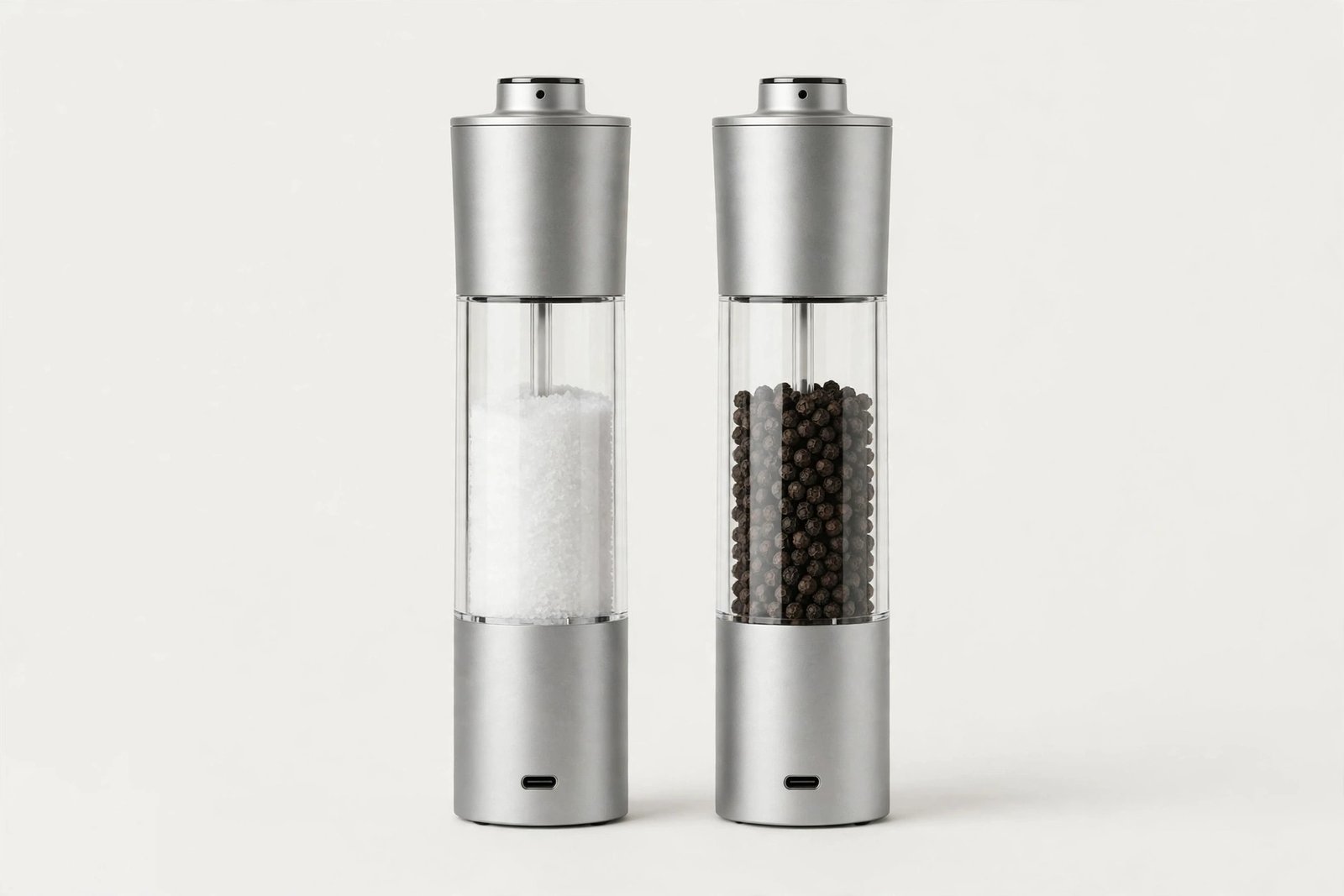
A Rechargeable Salt and Pepper Grinder Set takes the spice grinder idea above and turns it into the smartest seat at the table: a matched pair of electric mills, often with gravity switches that start grinding the moment you tilt them over the plate. Seasoning becomes one-handed and effortless — no two-handed twisting over a steaming pan, no mill permanently stationed beside the hob gathering grease.
The details that separate a good set are adjustable grind on both mills, LED lights on the better models so you can actually see how much seasoning is landing (genuinely useful on dark food in evening light), clear chambers, and a shared charging base or individual USB charging. Because they are a table item as much as a kitchen one, a set like this earns its place twice — cooking at the hob, then straight to the table for serving. Stored on a small tray in a cupboard between meals, they keep yet another pair of objects off the counter for good.
Pros
- 👍 Tilt-to-grind or one-button, fully one-handed seasoning.
- 👍 Adjustable grind with a light to see seasoning land.
- 👍 Works at the hob and then goes straight to the table.
- 👍 Matched pair stores neatly on one small tray.
Cons
- 👎 Two mills means two batteries to keep charged.
- 👎 Gravity-switch models can grind if knocked over carelessly.
- 👎 Smaller chambers than traditional table mills.
Best for: entertainers, keen seasoners, and anyone who cooks and serves with the same tools.
Check Price And User Reviews on Amazon
9. Cordless Vacuum Sealer

A Cordless Vacuum Sealer shrinks the bulkiest countertop appliance in many kitchens down to something the size of a torch. Traditional vacuum sealers are wide, corded machines that either live on the counter permanently or hide in a cupboard so deep they never get used. A handheld rechargeable sealer works with zipper-style vacuum bags or a hose attachment for jars and canisters: place the nozzle, press, and it pulls the air out and seals, keeping cheese, coffee, leftovers and freezer food fresher for far longer.
The honest framing: a handheld sealer is not quite as powerful as a full countertop machine, and sealing liquids takes more care. But for the everyday jobs — the half-block of cheese, the opened coffee beans, the leftovers going into the freezer without freezer burn — it does the work in seconds, then disappears into a drawer. That trade is exactly what a clutter free counter philosophy is about: slightly less maximum power, in exchange for an appliance you actually use daily instead of one you store. One charge typically seals dozens of bags.
Pros
- 👍 Handheld size replaces a bulky countertop machine entirely.
- 👍 Keeps cheese, coffee and freezer food fresher for longer.
- 👍 Works with vacuum bags, jars and canisters on many models.
- 👍 One charge typically seals dozens of bags.
Cons
- 👎 Less vacuum power than a full-size countertop sealer.
- 👎 Needs compatible bags rather than any bag to hand.
- 👎 Liquids require care so they are not drawn into the nozzle.
Best for: batch cooks, freezer organisers, and anyone whose big sealer never leaves its cupboard.
Check Price And User Reviews on Amazon
10. Rechargeable Electric Knife

A Rechargeable Electric Knife is an occasion gadget done right: it appears for roasts, hams, turkeys and crusty loaves, produces even slices with almost no sawing effort, and then goes back into a drawer until the next occasion. The corded versions always managed to be at the wrong end of the table from the socket, with the flex crossing the gravy; a rechargeable model carves wherever the joint is resting, including at the table in front of your guests.
Twin reciprocating blades do the work while you simply guide, so slices come out uniform whether it is a rib of beef or a sandwich loaf — the kind of consistency that is genuinely hard to achieve by hand when something is hot and slippery. Look for a comfortable grip, a safety lock so it cannot start in the drawer, and blades that release for washing. It is not an everyday knife and should not replace your chef’s knife; it is a specialist that makes two dozen occasions a year noticeably easier, and its drawer footprint is the size of the knife itself.
Pros
- 👍 Even, effortless slices of roasts, hams and crusty bread.
- 👍 Carve anywhere — at the counter or at the table.
- 👍 Blades release for easy washing.
- 👍 Stores in a drawer, the size of the knife itself.
Cons
- 👎 An occasion tool, not a replacement for a chef’s knife.
- 👎 Needs charging before big cooking days if rarely used.
- 👎 Serrated blades need careful storage to protect fingers.
Best for: roast dinners, holiday cooking, bread bakers, and anyone who carves at the table.
Check Price And User Reviews on Amazon
11. Cordless Electric Wine Opener

A Cordless Electric Wine Opener removes a cork in about seven seconds: place it over the bottle, press down, and the spiral drives in and draws the cork out cleanly; press again and it ejects. For anyone who has wrestled a stubborn cork with a waiter’s friend in front of guests — or worse, pushed a crumbling cork into the bottle — the calm reliability is the whole appeal. Most sets include a foil cutter, and the opener then lives in a drawer or stands discreetly in a cupboard.
Rechargeable models typically open twenty to thirty bottles per charge, which for most households is months of dinners, and they handle synthetic corks that can defeat lightweight manual openers. Two honest notes: natural corks that have dried out can still crumble regardless of the tool, and this is a convenience gadget, not a necessity — nobody’s kitchen fails without one. But as cordless kitchen appliances go, it is the one guests comment on, and it completely earns its small drawer footprint if you entertain regularly.
Pros
- 👍 Removes corks in seconds with no strength or skill needed.
- 👍 Handles synthetic corks that defeat light manual openers.
- 👍 Dozens of bottles per charge for most models.
- 👍 Foil cutter usually included in the set.
Cons
- 👎 A convenience, not a necessity, for confident corkscrew users.
- 👎 Very old, dry natural corks can still crumble.
- 👎 Needs occasional charging despite infrequent use.
Best for: entertainers, wine lovers, and anyone with grip issues who still enjoys a bottle.
Check Price And User Reviews on Amazon
12. USB Rechargeable Kitchen Scale

A USB Rechargeable Kitchen Scale closes the list by fixing the quietest annoyance in baking: the scale that dies mid-recipe because its coin batteries gave up months ago. A rechargeable scale charges from the same USB cable as everything else in this guide, lasts for months of weighing per charge, and — because it needs no battery compartment — can be made remarkably slim and flat, sliding into a drawer or standing upright between cookbooks.
Accuracy and responsiveness are what matter in a scale, and the current generation delivers both: one-gram precision for baking, a tare function that actually responds instantly, and a display you can read with a bowl on top. The flat glass top wipes clean in a second, which matters when flour gets everywhere — and it always does. It is a fitting final pick because it shows the real point of this whole category: rechargeable kitchen gadgets are not about novelty. They remove the small frictions — dead batteries, tangled cables, permanent counter residents — that make a kitchen feel cluttered even when it is technically tidy.
Pros
- 👍 No coin batteries to die mid-recipe ever again.
- 👍 Slim, flat design stores in a drawer or upright.
- 👍 Accurate to the gram with an instant tare function.
- 👍 Glass top wipes clean in seconds.
Cons
- 👎 Still needs an occasional charge — set a routine.
- 👎 Very heavy items can exceed the maximum capacity.
- 👎 Touch controls can respond to splashes of water.
Best for: bakers, meal preppers, and anyone whose scale batteries always die at the worst moment.
Check Price And User Reviews on Amazon
Buying Guide
1. Start With the Cables That Annoy You Most
The best way to shop this list is to stand in your kitchen and name the cable that irritates you daily. Is it the blender flex crossing the hob? The kettle cord trailing to the table? The food processor that owns a whole corner because moving it is a chore? Buy the cordless replacement for that gadget first, because frequency is what turns a rechargeable gadget into a life improvement. One well-chosen swap usually convinces people faster than any list can — including this one. If two candidates tie, start with the one used most often, then work down your own annoyance ranking.
2. Battery Life and Charging: What to Check
With cordless kitchen appliances, the charging details decide whether you love or abandon them. Check three things before you buy. First, the connector: USB-C models charge from the cables already in your home, while proprietary docks add exactly the kind of counter clutter you are trying to escape. Second, realistic battery life for your usage — manufacturers quote sessions or minutes of runtime, and heavy users of a hand mixer need more than occasional users of a wine opener. Third, whether the gadget can be used while charging; the best designs can, which means a flat battery is a pause, not a cancelled recipe.
3. Give Every Gadget a Home Off the Counter
Going cordless only declutters your counter if the gadgets actually leave it. The system that works is boring and effective: one drawer or one cupboard shelf becomes the cordless station, gadgets go back there straight after washing, and a single multi-port USB charger lives inside or beside that drawer so everything tops up in one place. Slim, flat and stackable designs — the scale, the frother, the chopper — reward this system most. Measure your drawer before buying several gadgets, and keep the charging cables in the drawer too, not trailing across the worktop you just freed. The same small-space thinking runs through our space saving gadgets for studio apartments guide.
4. Looking After Rechargeable Kitchen Gadgets
Rechargeable batteries last longest with unremarkable care. Top gadgets up when they slow down rather than running them completely flat every time, and avoid storing them empty for months — an occasional-use gadget like the electric knife appreciates a charge before big cooking days. Keep charging ports dry, since kitchen splashes and USB sockets are poor friends, and wash only the parts the maker says can get wet; most motor bodies are wipe-clean only. Follow those habits and a set of battery powered kitchen tools will serve for years, which is when the cordless swap properly pays for itself.
Conclusion
The best cordless kitchen gadgets for clutter free counters are not really about gadgets — they are about who owns your worktop. Every corded appliance demands a permanent parking space near a socket; every cordless one simply visits the counter, does its job, and goes home to a drawer. The twelve picks above cover the whole cooking day between them: boiling, chopping, blending, grinding, mixing, frothing, opening, sealing, carving and weighing, with not one trailing flex among them.
If you want one safe place to start, the mini chopper and the immersion blender change daily cooking the most, and the milk frother delivers the most pleasure per centimetre of storage. Whatever you choose, check the latest price on Amazon before you buy, confirm the charging connector suits your home, and enjoy cooking on a counter that is finally yours again.
More Guides You’ll Like
If clutter is the enemy, our guide to kitchen gadgets for small apartments is the natural next read, and our roundup of kitchen gadgets for cooking for one person is full of compact picks that store small and work solo. Sharing your kitchen with the whole flat? Our quiet kitchen gadgets for open plan apartments keeps the peace in shared spaces. Beyond the kitchen, our space saving gadgets for small bathrooms applies the same thinking to the smallest room, and our list of useful gadgets under $25 for everyday use is full of small problem-solvers at friendly prices.
FAQs
Are cordless kitchen gadgets as powerful as corded ones?
For everyday jobs, mostly yes — and that qualification matters. Modern rechargeable motors handle soup blending, cake mixing, chopping, grinding and frothing without drama. Where corded still wins is sustained heavy work: thick bread dough, crushing ice, or processing kilo after kilo without a pause. The honest way to choose is by your actual routine. If your blender makes soup twice a week, cordless power is plenty. If you run a small bakery from your kitchen, keep the big corded machines and declutter selectively instead.
How long do rechargeable kitchen gadgets last on one charge?
It varies by gadget and by how hard it works. Light-duty tools like milk frothers, spice grinders and kitchen scales typically run for weeks or even months of normal use per charge. Motor-heavy tools like immersion blenders and hand mixers are measured in minutes of active use — usually enough for many cooking sessions, but heavy baking days may need a top-up. The practical habit that makes this a non-issue is a charging spot in your gadget drawer: put the gadget back, plug it in occasionally, and it is always ready.
Which cordless gadget should I buy first for a cluttered counter?
Buy the cordless version of the corded gadget you use most — that is where the daily payoff is. For most kitchens that means the immersion blender or the mini food chopper, both of which replace a permanent counter resident with a drawer-sized tool you will use several times a week. If your clutter problem is really about morning drinks, start with the cordless kettle and the rechargeable milk frother and reclaim the whole drinks corner in one go.
How do I keep counters clutter free once I have gone cordless?
Give every gadget a home that is not the counter — one drawer or shelf — and return it there straight after washing, every time, until it becomes automatic. Keep one multi-port charger in or beside that drawer so charging never migrates back onto the worktop. Finally, apply a one-in-one-out rule to the counter itself: a new resident has to displace an old one. Cordless gadgets make this system possible because none of them needs to live near a socket; the discipline is the easy part once the cables are gone.
Are cordless kitchen gadgets more expensive than corded ones?
Usually a little, because you are paying for the battery as well as the gadget — but the gap has narrowed as rechargeable models have become mainstream, and the difference is typically modest for the same quality tier. What you are buying with the difference is storage freedom: a gadget that lives in a drawer instead of on the counter is, in a small kitchen, effectively buying you worktop space. Check the latest price on Amazon for each pick using the yellow buttons, since prices move often and we deliberately quote no fixed figures here.
Can cordless gadgets handle cooking for a family?
Yes, with sensible expectations and the right order of work. A cordless hand mixer handles family cake batters, an immersion blender handles a family pot of soup, and a mini chopper works happily in a couple of quick batches. The two habits that make cordless work at family scale are charging as a routine rather than an emergency, and choosing the larger-capacity version of a gadget when one exists. Families who cook in big single batches every day may still prefer one or two corded work horses — a mixed kitchen is a perfectly sensible outcome.



One Comment