
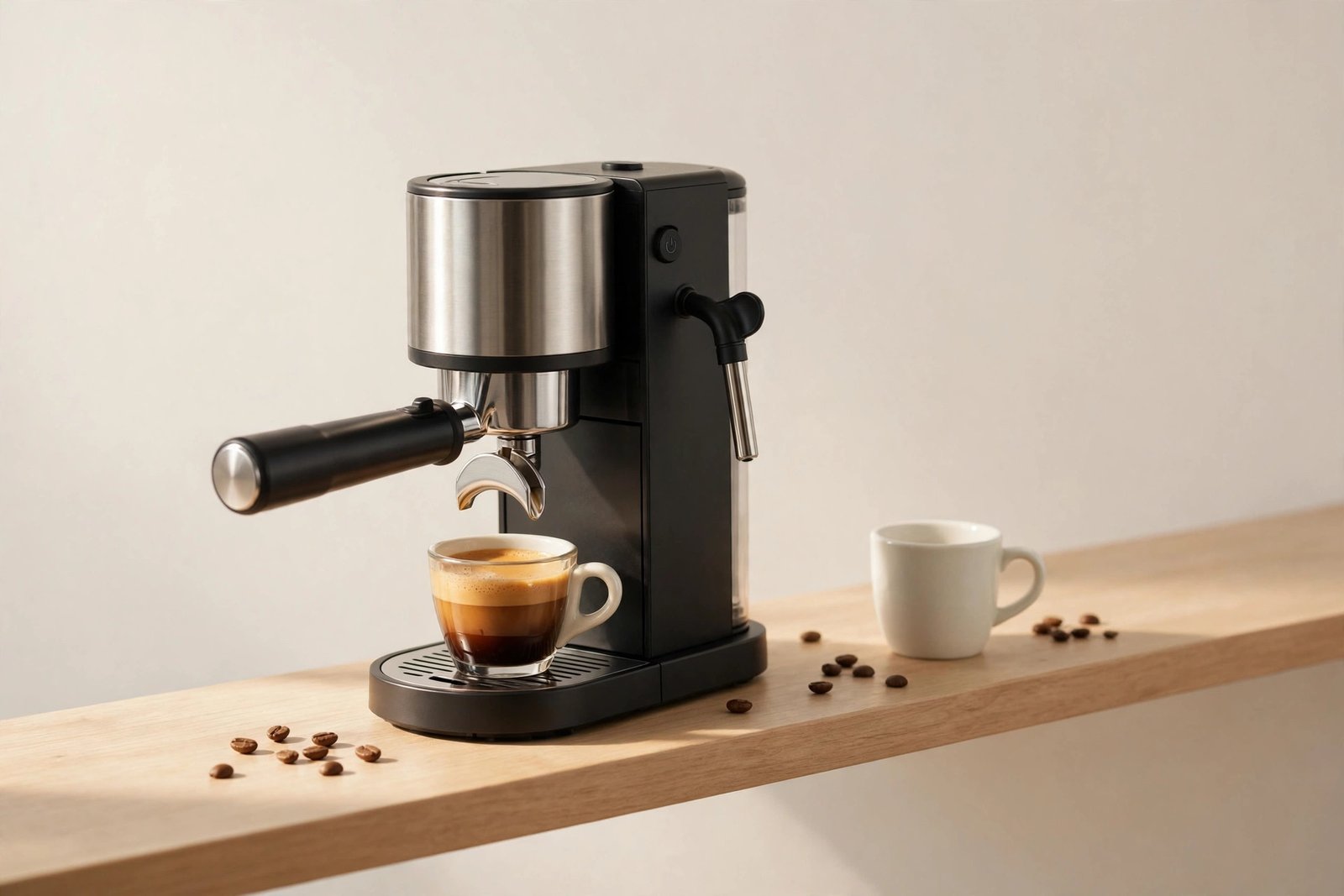
Best Espresso Machines for Home Baristas With Very Small Kitchen Counters
Affiliate Disclosure: As an Amazon Associate, we earn from qualifying purchases made through links on this page, at no extra cost to you. This helps support our work and keeps our guides free to read.
A quick note on prices: prices change often, so we never quote a fixed price here. Please check the latest price on Amazon before you buy, using the yellow buttons in this guide. The product pictures in this article are original illustrations created for this guide, not manufacturer photos.
Finding the best espresso machines for home baristas with very small kitchen counters is easier than it used to be: a compact espresso machine for small kitchen spaces is now a proper category of its own. The twelve machines below were chosen for narrow widths, shallow depths and sensible water tank access, so they can live permanently on a crowded counter in a galley kitchen, studio flat or busy family home without being shuffled into a cupboard after every use.
Depth matters more than width in most small kitchens. Tall cupboards and low wall cabinets leave very little room above the counter, so an espresso machine that fits under cabinets — ideally with a front- or top-loading tank you can refill without dragging the whole machine forward — saves daily frustration. An espresso machine for tiny counter space also needs a footprint you can work around: room for a tamper, a knock box and a couple of cups, not a machine that swallows the entire worktop.
Grinding fresh is the other space question. A separate grinder can take up as much room as the machine itself, which is why a small espresso machine with built-in grinder earns its place on this list alongside slimmer models for people who already own a grinder. Milk drinkers are covered too, from automatic frothers to a traditional steam wand, and we note the best small footprint espresso machine options for cappuccino fans whose counters are measured in centimetres rather than metres.
Every pick below is a generic machine type rather than a single brand model, so you can shop around, compare current versions and pick the finish that suits your kitchen. For each one we explain where it saves space, where it compromises, and who it suits best — whether that is a first-time home barista in a rental flat or an experienced coffee lover downsizing from a much bigger setup. If you already have a larger machine, several of these also work happily as a second setup in an office corner or a holiday let.
How We Chose
We measured every machine type against the realities of a small counter. Width and depth came first: anything wider than about 30 cm or deeper than about 42 cm struggles in a galley kitchen, so narrower designs scored highest. We also checked how the water tank is accessed, because a rear tank you cannot reach under low cabinets is a daily annoyance, and we favoured front- and top-loading designs.
Beyond size, we looked at the things home baristas actually use every day: a pump that holds steady pressure, a steam wand or frother that fits a small milk jug, a drip tray that copes with both espresso cups and taller glasses, and controls that are easy to wipe clean. Machines that heat up quickly and can be descaled without special tools scored extra points for busy households.
Quick List
- Slim Pump Espresso Machine with Front-Facing Water Tank — refill the tank without moving the machine an inch.
- Compact Espresso Machine with Built-In Burr Grinder — one footprint for grinding and brewing.
- Narrow Espresso Machine with Automatic Milk Frother — one-touch cappuccinos from a slim body.
- Mini Manual Lever Espresso Machine — the tiniest footprint here, with full hands-on control.
- Compact Espresso Machine with Top-Loading Water Tank — lift the lid and refill from above.
- Slim Espresso Machine with Folding Cup Tray — folds flat for cups, flips down for tall glasses.
- Compact Capsule Espresso Machine for Tiny Counters — the fastest route to espresso in the smallest space.
- Compact Espresso Machine with Detachable Milk Carafe — fresh milk, frothed automatically, stored in the fridge.
- Slim Espresso Machine with Programmable Shot Timer — repeatable shots from a narrow digital machine.
- Compact Espresso Machine with Dual Thermoblock Heating — brew and steam back to back, no waiting.
- Narrow Espresso Machine with Space-Saving Steam Wand — a folding wand for proper manual frothing.
- Compact Semi-Automatic Espresso Machine with Pressure Gauge — dial in extraction with a classic dial.
1. Slim Pump Espresso Machine with Front-Facing Water Tank
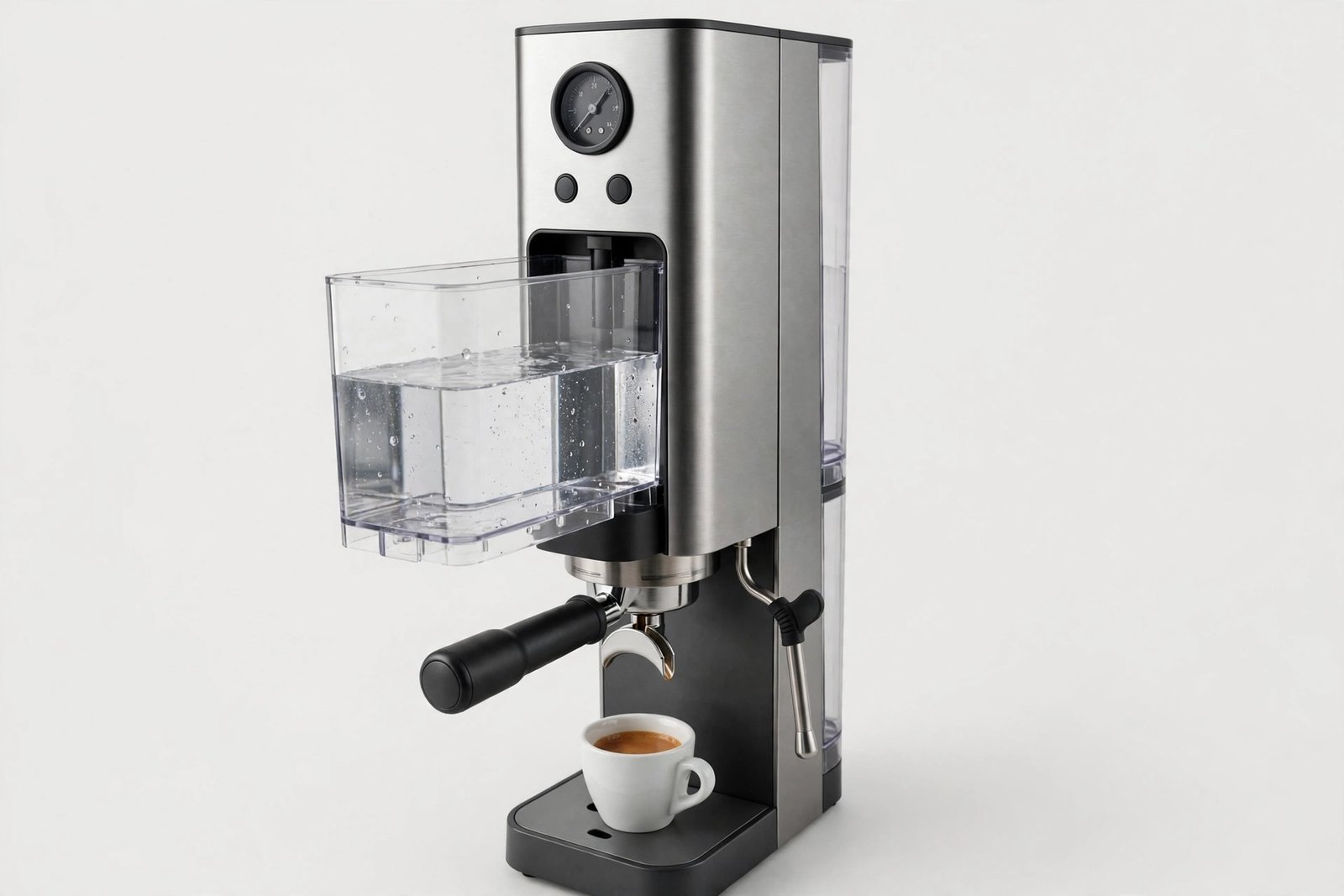
The Slim Pump Espresso Machine with Front-Facing Water Tank solves the most common small-kitchen problem first: refilling. Instead of sliding the whole machine out from under the cabinets, you pull the tank straight out of the front, fill it at the tap and slide it back. The body is typically only 15 to 20 cm wide, so it tucks beside a kettle or toaster without dominating the worktop, and the pump still delivers a proper shot with a decent crema.
The steam wand sits on the side and angles out just enough for a small milk jug, though very large jugs feel cramped. Cup clearance is modest, so short espresso cups work best. Check the tank capacity if you make several drinks in a row, and confirm the drip tray lifts out for rinsing — on a shallow counter, small details like that decide whether a machine stays out or gets hidden away.
Pros
- 👍 Front tank refills without moving the machine
- 👍 Very narrow body suits galley counters
- 👍 Fast heat-up for weekday mornings
- 👍 Removable drip tray is easy to rinse
Cons
- 👎 Side wand is tight for large milk jugs
- 👎 Modest cup clearance for tall glasses
- 👎 Smaller tank needs frequent refills
Best for: renters and flat-shares where the machine must stay tucked under low cabinets.
Check Price And User Reviews on Amazon
2. Compact Espresso Machine with Built-In Burr Grinder

A Compact Espresso Machine with Built-In Burr Grinder is the classic two-boxes-in-one answer to a crowded counter: a small espresso machine with built-in grinder takes the space of a single appliance while still letting you grind fresh for every shot. The hopper sits on top and the grounds fall straight into the portafilter, so there is no separate grinder, no extra cable and no second footprint to find room for.
The trade-off is height. With the hopper fitted, many models need generous clearance, so measure from counter to cabinet underside before ordering and check whether the hopper can be removed for filling. Burr grinders are also the part most likely to need cleaning, so look for an accessible burr chamber. As a small espresso machine with built-in grinder setup, it suits households that drink espresso daily and want the freshest results with the least clutter.
Pros
- 👍 Grinds fresh with no second appliance
- 👍 One footprint, one plug, one cable
- 👍 Adjustable grind settings to dial in shots
- 👍 Hopper feeds the portafilter directly
Cons
- 👎 Hopper adds height under cabinets
- 👎 Burrs need regular cleaning
- 👎 Grinder quality varies between models
Best for: daily espresso drinkers who want fresh grounds without a separate grinder.
Check Price And User Reviews on Amazon
3. Narrow Espresso Machine with Automatic Milk Frother

The Narrow Espresso Machine with Automatic Milk Frother is built for people who love cappuccinos and lattes but have neither the counter space nor the patience for a big manual setup. Press one button and the machine textures the milk for you, dispensing it straight into the cup before or after the espresso. The slim body keeps the footprint small, and because there is no frothing technique to learn, weekday milk drinks become genuinely quick.
Automatic systems need rinsing after each use, so pick a model whose milk tube and container come apart easily for a wash. Milk containers that detach and go in the fridge save waste between drinks. Steam power is gentler than a manual wand, so the foam is soft rather than silky microfoam, but for most home drinkers the convenience easily wins.
Pros
- 👍 One-touch cappuccinos and lattes
- 👍 Detachable milk container stores in the fridge
- 👍 No frothing skill needed
- 👍 Slim body suits narrow counters
Cons
- 👎 Milk parts need daily rinsing
- 👎 Foam less silky than a manual wand
- 👎 Extra components to store
Best for: cappuccino lovers who want milk drinks without learning wand technique.
Check Price And User Reviews on Amazon
4. Mini Manual Lever Espresso Machine
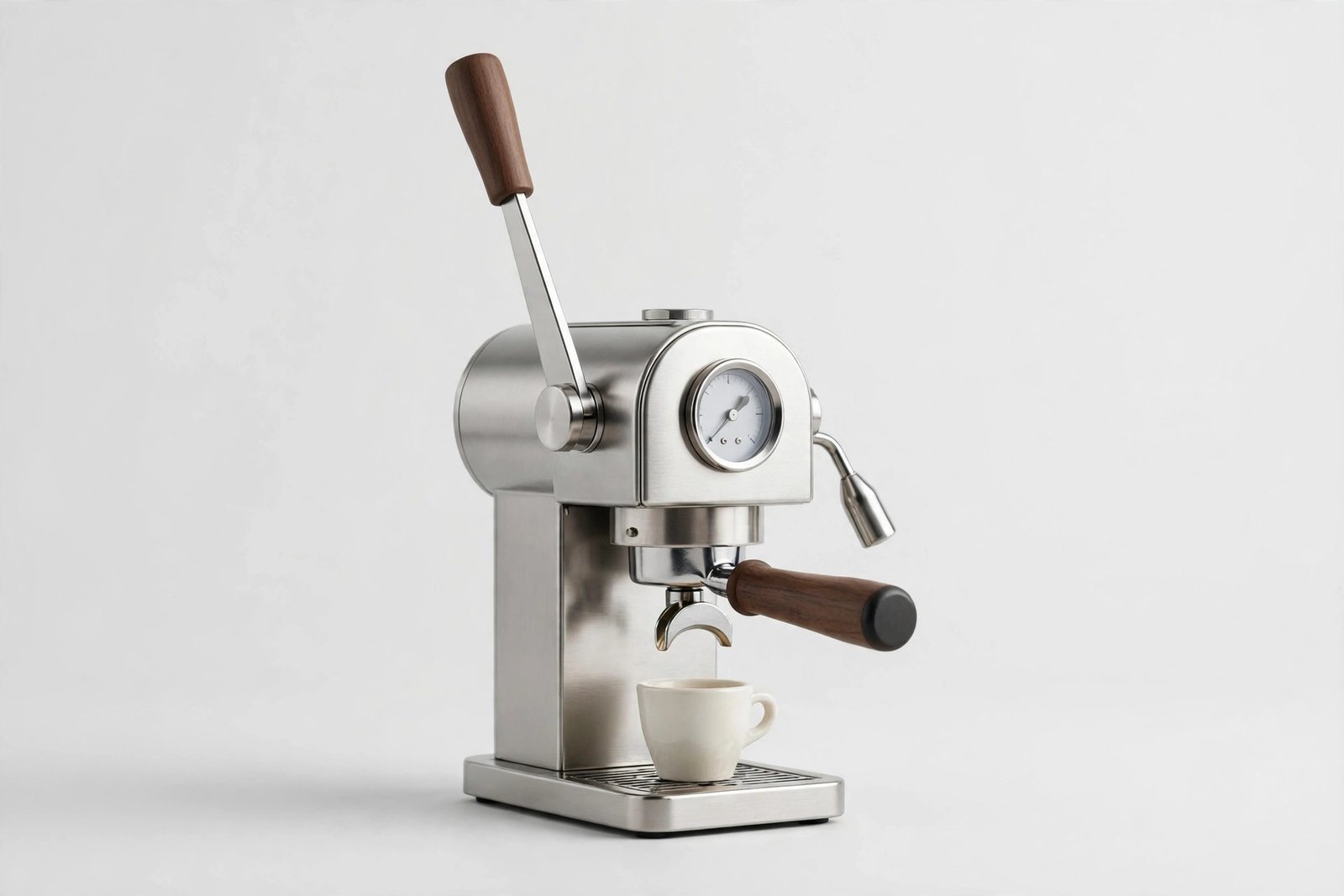
The Mini Manual Lever Espresso Machine is the smallest option in this guide and arguably the best small footprint espresso machine for anyone who enjoys the ritual. There is no pump and no bulky boiler — you add hot water, lock in the portafilter and pull the lever yourself, controlling pressure by hand. The whole machine can be narrower than a toaster and light enough to move with one hand.
That control comes with a learning curve. Shots vary until your grind, dose and pull become consistent, and making drinks for a group takes time because each shot is made one at a time. You will also need a separate kettle and grinder. In return you get quiet, hands-on espresso and a machine that asks for almost no permanent counter space at all.
Pros
- 👍 Smallest footprint in this guide
- 👍 Quiet, pump-free operation
- 👍 Full manual pressure control
- 👍 Light enough to store in a cupboard
Cons
- 👎 Steep learning curve for beginners
- 👎 Needs a separate kettle and grinder
- 👎 Slow when making drinks for guests
Best for: patient learners who enjoy the ritual and have almost no spare counter.
Check Price And User Reviews on Amazon
5. Compact Espresso Machine with Top-Loading Water Tank
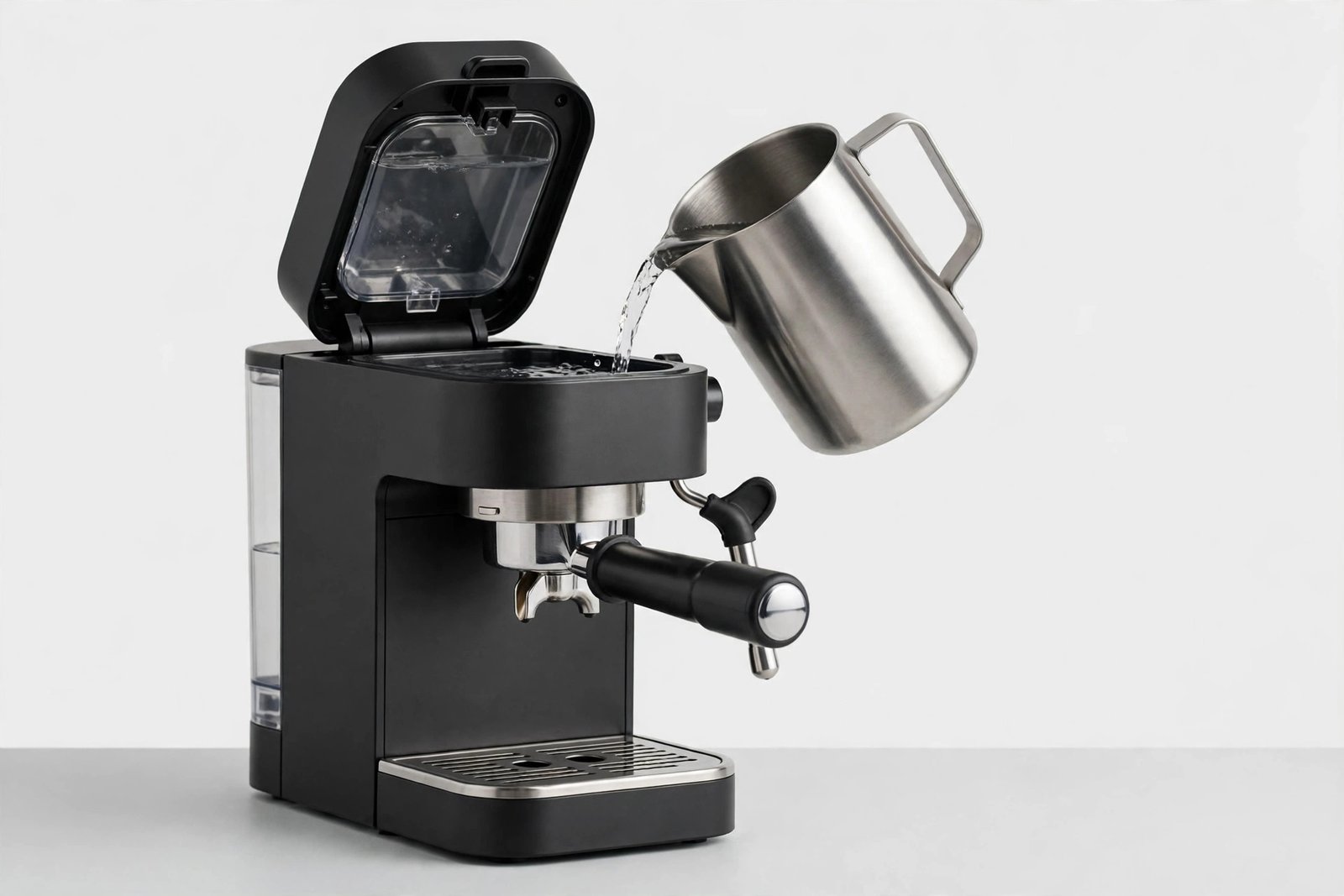
A Compact Espresso Machine with Top-Loading Water Tank flips the usual design: the tank lid opens at the top, so you pour water in from a jug without sliding the machine forward or reaching behind it. For a compact espresso machine for small kitchen counters where the machine sits in a corner with walls on two sides, that top access can be the difference between easy refills and a daily wrestle.
The catch is vertical clearance. You need enough room above the machine to lift the lid and tip a jug, so this design suits counters under open shelving better than the tightest under-cabinet spots — although as an espresso machine that fits under cabinets in many kitchens, models with a low lid arc still work if you measure carefully. Look for a visible water level window and a tank you can also lift out completely for descaling.
Pros
- 👍 Refill by pouring from a jug
- 👍 Easy to place in a corner
- 👍 Visible water level window
- 👍 Tank lifts out for descaling
Cons
- 👎 Needs clearance above to open the lid
- 👎 Jug refills can splash if rushed
- 👎 Not ideal under the lowest cabinets
Best for: corner counters where front and back access are both awkward.
Check Price And User Reviews on Amazon
6. Slim Espresso Machine with Folding Cup Tray
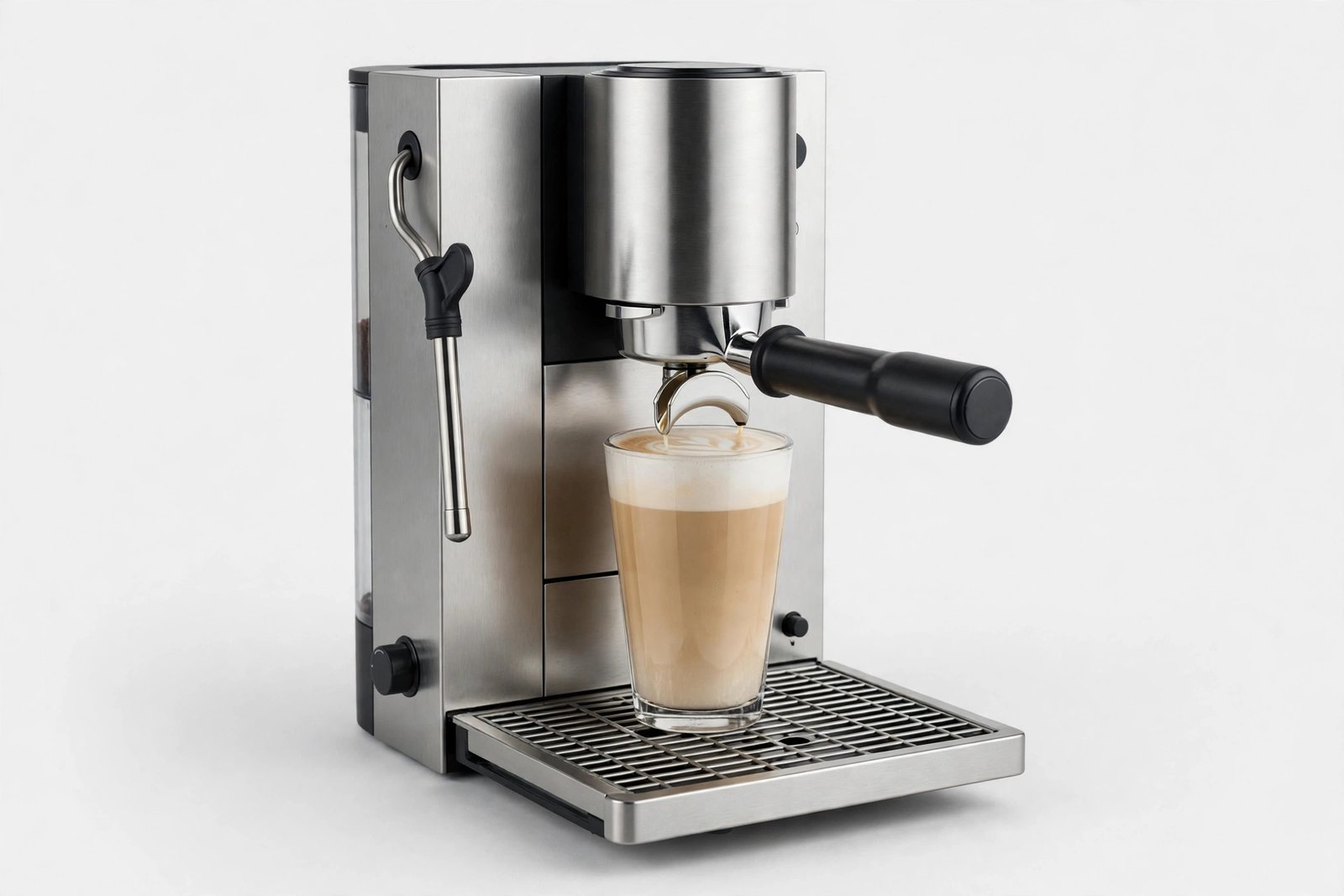
The Slim Espresso Machine with Folding Cup Tray pays attention to the space under the spouts. The tray folds flat against the machine for short espresso cups, keeping the cup close to the spouts so shots do not splash, then folds down or slides away to make room for a tall latte glass. It is a small idea that fixes a daily annoyance in kitchens where one machine handles both morning espressos and weekend lattes.
Check how sturdy the tray feels in both positions and whether it rattles during extraction. A tray that removes completely is easiest to rinse. Because the body stays slim, the boiler and tank are modest, so this style suits one or two drinkers rather than a household queuing for coffee at breakfast.
Pros
- 👍 Fits both espresso cups and tall glasses
- 👍 Less splashing with cups raised close
- 👍 Tray removes for quick rinsing
- 👍 Slim body suits narrow worktops
Cons
- 👎 Tray mechanisms vary in sturdiness
- 👎 Modest tank for several drinks
- 👎 Folding parts need a wipe to stay clean
Best for: households that switch between espressos and tall lattes every day.
Check Price And User Reviews on Amazon
7. Compact Capsule Espresso Machine for Tiny Counters
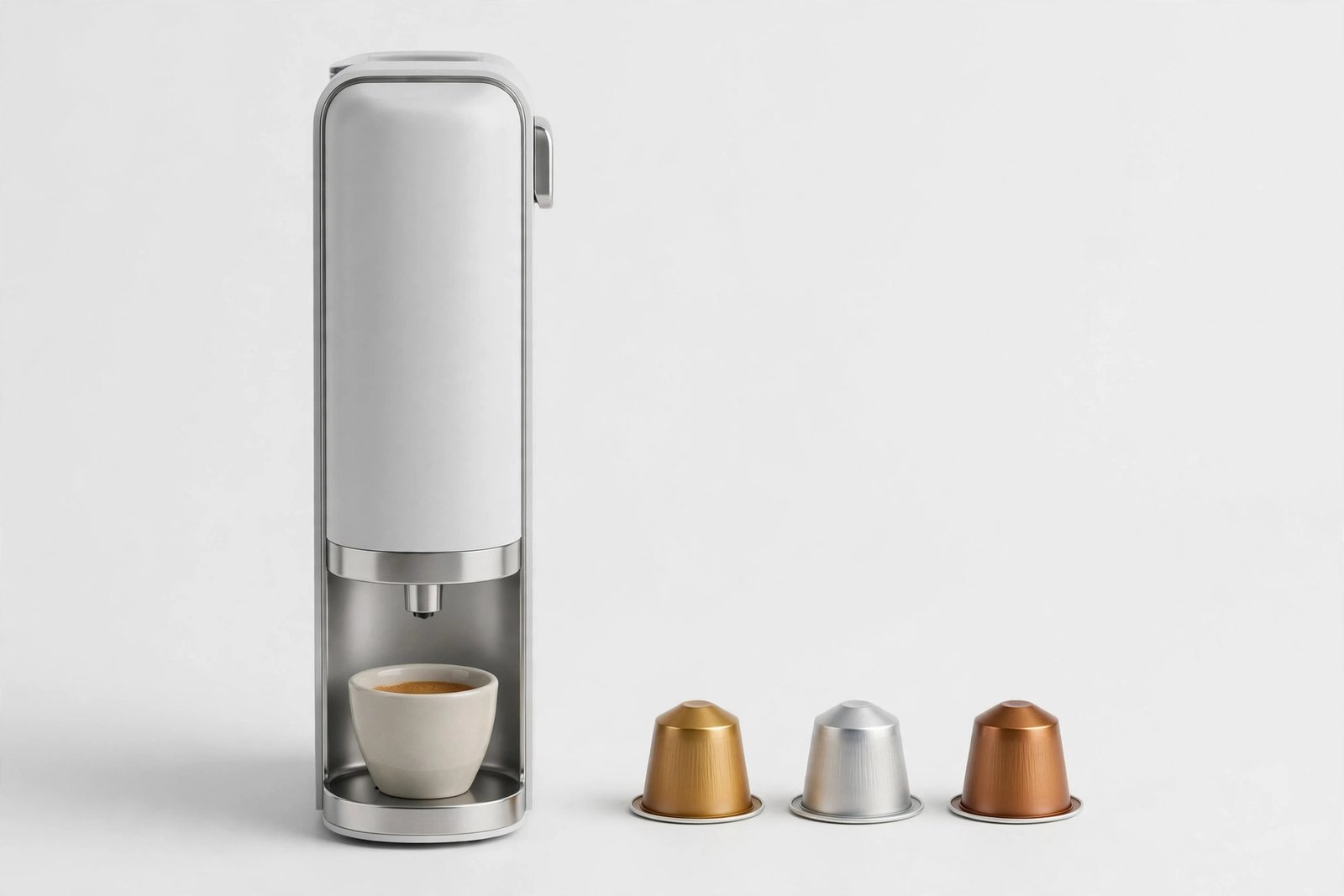
The Compact Capsule Espresso Machine for Tiny Counters is the simplest espresso machine for tiny counter space you can buy: insert a capsule, press a button, and the drink is ready in under a minute with almost no cleaning. These machines are often the narrowest of all, some barely wider than the cup they fill, and the used capsule drops into an internal container so the counter stays tidy.
The compromises are cost and control. Capsules cost more per drink than ground coffee and create extra packaging waste, although recycling schemes and refillable capsules soften both points. You also cannot adjust grind or dose, so the flavour range depends on the capsules available. For busy beginners who value speed and a permanently clear counter, those trade-offs are often worth it.
Pros
- 👍 Espresso in under a minute
- 👍 Almost no cleaning or maintenance
- 👍 Among the narrowest machines available
- 👍 Consistent results with no skill needed
Cons
- 👎 Capsules cost more per drink
- 👎 Extra packaging waste per cup
- 👎 No control over grind or strength
Best for: busy beginners who want speed and a permanently clear counter.
Check Price And User Reviews on Amazon
8. Compact Espresso Machine with Detachable Milk Carafe
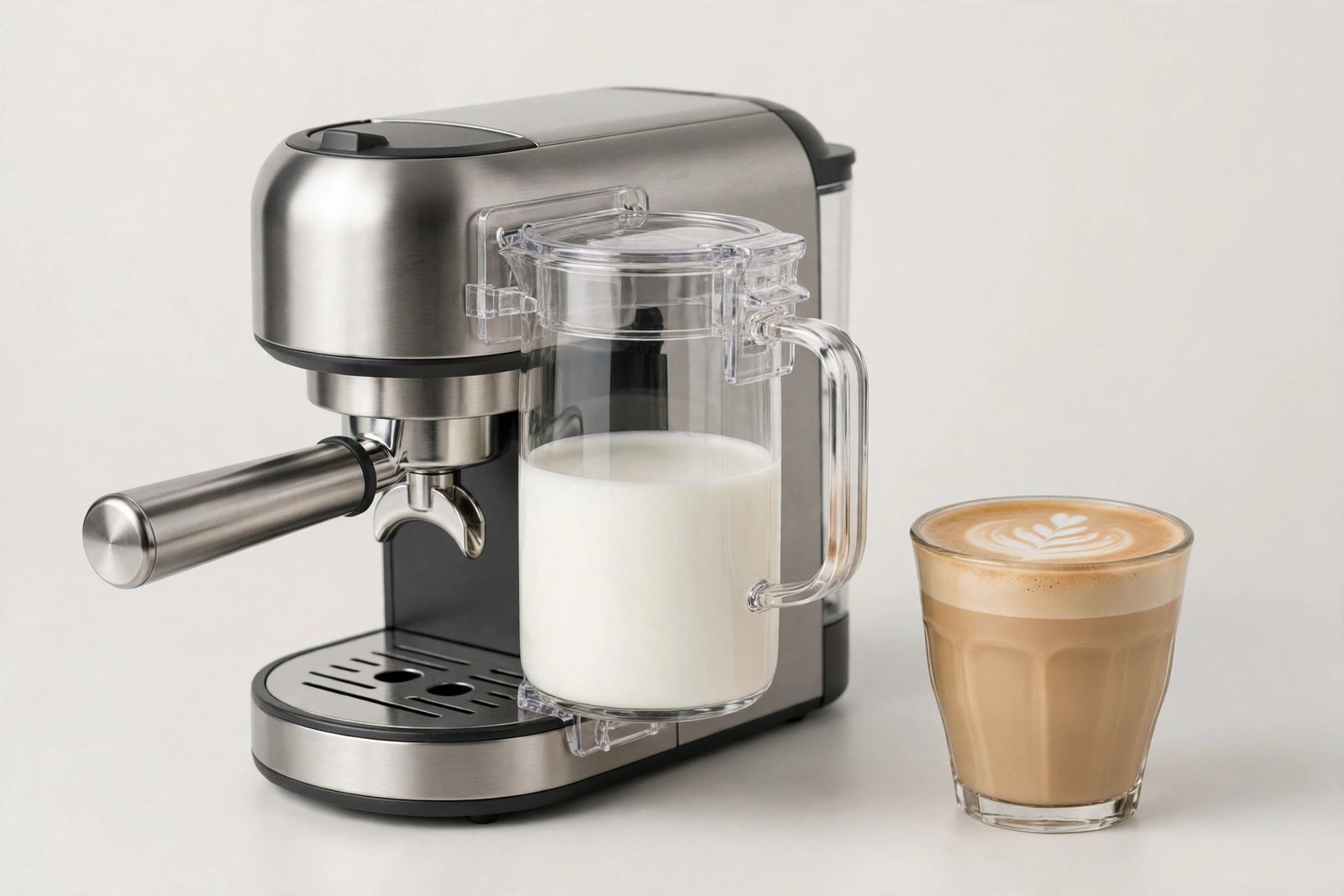
A Compact Espresso Machine with Detachable Milk Carafe keeps fresh milk ready without a separate jug taking up counter space. The carafe clips onto the front, froths and pours automatically, then unclips and goes straight into the fridge door between drinks. On a small counter that matters: the milk lives in the fridge, not beside the machine, and there is no wand to wipe down after every cappuccino.
Look for a carafe that comes apart fully for washing, because milk residue hides in tubes and lids. Auto-clean cycles that flush the spout with steam or water help between deep cleans. Drink size is usually preset, so check the cup clearance if you like large lattes, and confirm spare carafes are available if yours will be in daily use.
Pros
- 👍 Milk stores in the fridge, not on the counter
- 👍 Automatic frothing with no jug skills
- 👍 No steam wand to wipe down
- 👍 Consistent one-touch milk drinks
Cons
- 👎 Carafe parts need thorough washing
- 👎 Preset drink sizes may feel limiting
- 👎 Spare carafes add extra cost
Best for: latte and cappuccino drinkers who dislike cleaning a steam wand.
Check Price And User Reviews on Amazon
9. Slim Espresso Machine with Programmable Shot Timer
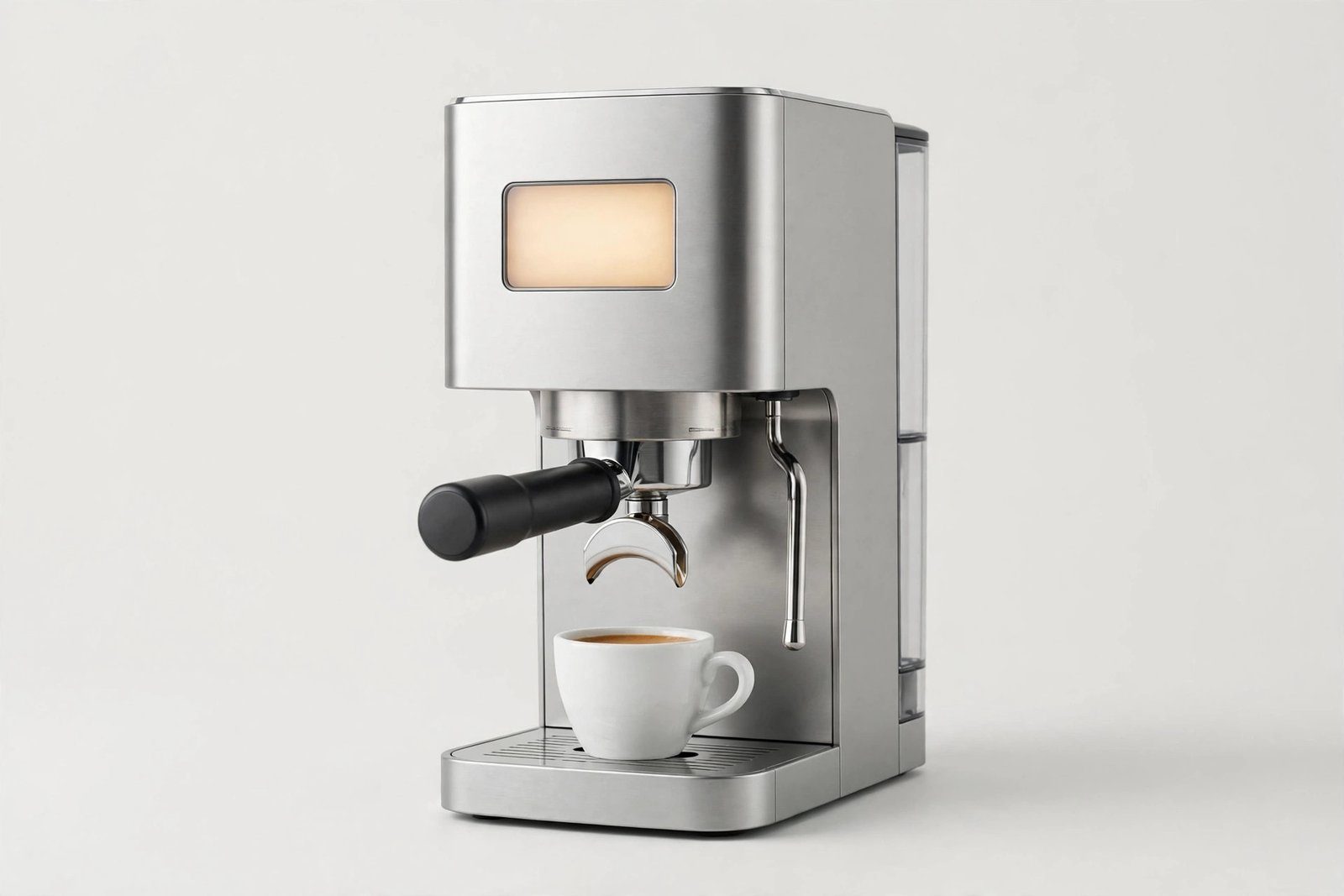
The Slim Espresso Machine with Programmable Shot Timer is for the home barista who likes repeatable results. You set the shot length once — by time or by volume, depending on the model — and the machine stops at the same point every morning. For a compact espresso machine for small kitchen setups, the digital controls also replace chunky dials, keeping the front panel flat and easy to wipe.
A timer does not fix a bad grind, so pair this machine with a consistent grinder and fresh beans. Check that the display is readable in bright kitchen light and that the buttons still work with wet fingers. Memory settings for two cup sizes are genuinely useful in households where one person drinks single shots and another prefers doubles.
Pros
- 👍 Repeatable shots once programmed
- 👍 Flat digital panel is easy to wipe
- 👍 Two cup-size memories on many models
- 👍 Slim shape suits narrow counters
Cons
- 👎 Timer cannot fix poor grind quality
- 👎 Displays vary in bright light
- 👎 More electronics than basic models
Best for: routine lovers who want the same shot every single morning.
Check Price And User Reviews on Amazon
10. Compact Espresso Machine with Dual Thermoblock Heating

A Compact Espresso Machine with Dual Thermoblock Heating uses two separate heaters — one for brewing, one for steam — so you can froth milk straight after pulling a shot instead of waiting for a single boiler to change temperature. In a compact body that is a real luxury, and it makes back-to-back cappuccinos for two people much less of a production on a Sunday morning.
Dual heaters usually mean a slightly deeper body and a higher price than basic models, so measure your counter depth carefully. Heat-up is fast because thermoblocks heat water on demand rather than storing it. Descaling matters more with two water paths, so follow the manufacturer’s descaling guidance to keep both heaters flowing freely.
Pros
- 👍 Brew and steam with no waiting
- 👍 Fast heat-up from cold
- 👍 Great for back-to-back milk drinks
- 👍 Compact for its capability
Cons
- 👎 Usually deeper than basic models
- 👎 Higher price than single-heater machines
- 👎 Two heaters to keep descaled
Best for: couples making two cappuccinos at the same time each morning.
Check Price And User Reviews on Amazon
11. Narrow Espresso Machine with Space-Saving Steam Wand

The Narrow Espresso Machine with Space-Saving Steam Wand keeps the manual frothing experience without letting the wand dictate the machine’s width. The wand folds or tucks flat against the body when not in use, then swings out over the drip tray when you need it. As an espresso machine for tiny counter space that still makes proper microfoam, it is a clever compromise for latte art learners.
Check the wand’s range of movement: it should angle into a small jug without the jug hitting the machine’s side. A wand with a single-hole tip gives beginners gentler, more controllable steam. The hinge or joint should feel firm, not floppy, and the wand tip should unscrew for cleaning, because dried milk blocks small steam holes quickly.
Pros
- 👍 Wand tucks away to save width
- 👍 Proper manual microfoam for latte art
- 👍 Single-hole tip is beginner friendly
- 👍 Narrow body for tight counters
Cons
- 👎 Wand joint must stay firm over time
- 👎 Small jugs work better than large ones
- 👎 Steam tip needs regular cleaning
Best for: latte art learners working in a narrow galley kitchen.
Check Price And User Reviews on Amazon
12. Compact Semi-Automatic Espresso Machine with Pressure Gauge
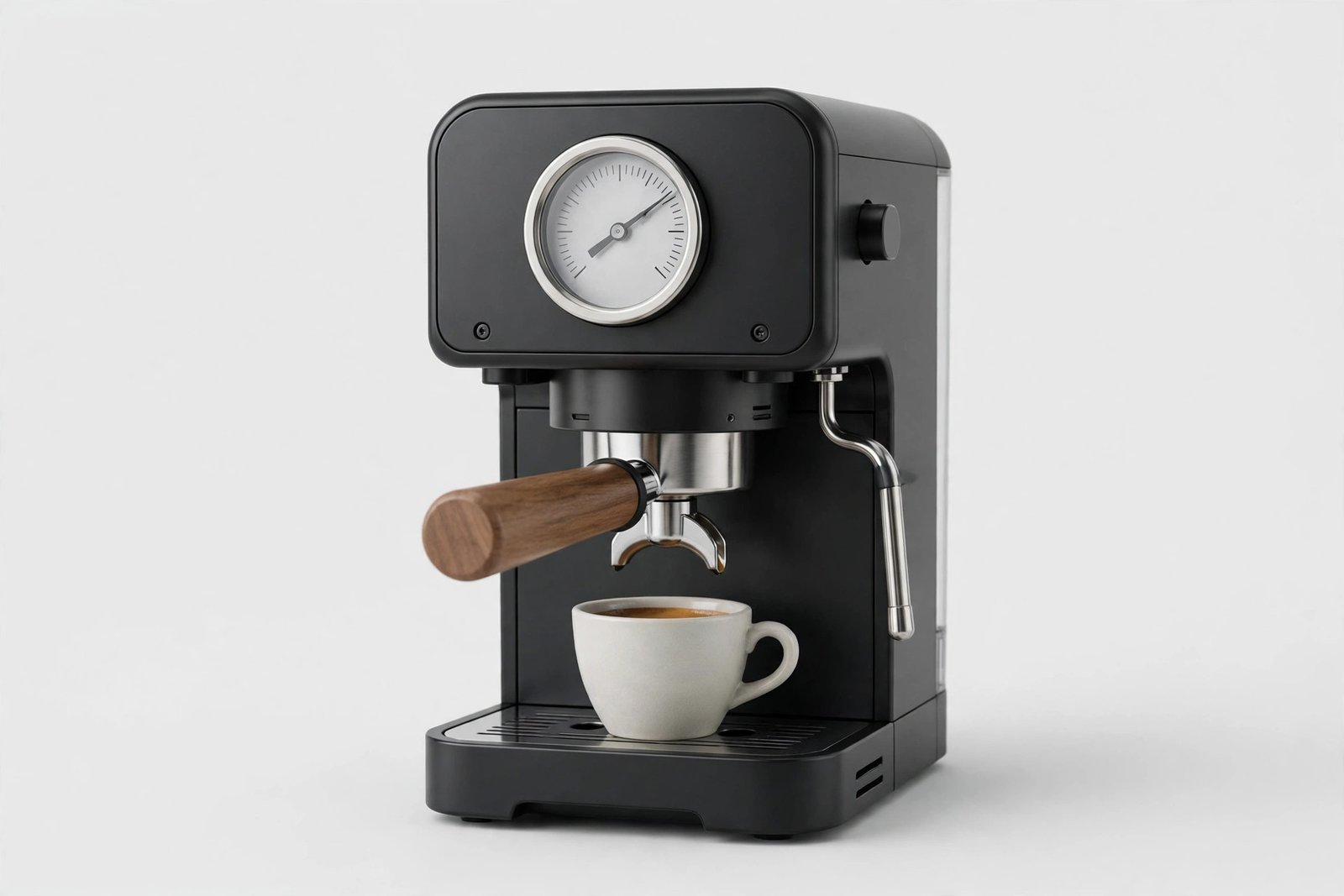
A Compact Semi-Automatic Espresso Machine with Pressure Gauge puts a classic round gauge on the front so you can watch extraction pressure in real time. If the needle sits too low, your grind is too coarse or the dose too light; too high and the shot chokes. For learners, that instant feedback teaches more in a week than guesswork does in a month, all from a machine sized for a small counter.
You still control the start and stop of every shot, which suits baristas who enjoy the process. Gauges are a guide rather than a guarantee — fresh beans and a good grinder matter just as much. Check that the gauge face is large enough to read at arm’s length and that the portafilter is a standard size if you plan to add accessories later.
Pros
- 👍 Gauge gives instant extraction feedback
- 👍 Teaches grind and dose quickly
- 👍 Classic manual control of every shot
- 👍 Standard parts on many models
Cons
- 👎 Gauge alone cannot fix stale beans
- 👎 Manual start and stop every shot
- 👎 Dial needs a clear view to read
Best for: learners who want to understand extraction, not just drink it.
Check Price And User Reviews on Amazon
What to Look for Before You Buy
Measure width, depth and height first
Start with a tape measure, not a product page. Note the width of clear counter, the depth from wall to front edge, and the height from the worktop to the underside of your wall cabinets. The best small footprint espresso machine for your home is simply the one whose measurements you checked twice. Remember that an espresso machine that fits under cabinets also needs a few centimetres of breathing room above it, and the plug socket position matters on shallow counters where cables cannot hide behind the machine.
Check how the water tank is accessed
Tank access decides daily happiness. When you choose a compact espresso machine for small kitchen use, ask one question: can I refill this without moving it? Front-loading tanks slide toward you, top-loading tanks need headroom for the lid and a jug, and rear tanks are the worst choice under low cabinets. An espresso machine for tiny counter space earns its keep when refilling takes seconds, not a rearrangement of the whole worktop, so favour a visible water level and a tank that lifts out fully for descaling.
Decide on a grinder strategy
Fresh grounds make the biggest difference to taste, but a separate grinder is a second footprint. If you do not own one, a small espresso machine with built-in grinder saves space and keeps the counter to a single appliance. If you already own a good grinder, a slimmer machine without one leaves more room beside it. Either way, budget counter space for the accessories you will use daily: a tamper, a small knock box and somewhere for cups to live.
Match the milk system to your drinks
Be honest about what you actually drink. Straight espresso drinkers can ignore milk features entirely and buy the narrowest machine available. Cappuccino and latte drinkers should choose between a manual wand, which teaches real frothing skill and cleans with a wipe, and an automatic frother or carafe system, which is quicker but has more parts to wash. In a small kitchen, the system you will genuinely clean every day is the right one.
Think about cleaning and descaling
Compact machines collect the same limescale and coffee oils as big ones. Look for a drip tray that lifts out in one piece, a brew group or portafilter that rinses under the tap, and a descaling programme that runs from the front panel. Follow the manufacturer’s descaling guidance for your water hardness, and wipe steam wands straight after use — small machines stay pleasant only when the daily two-minute clean stays easy.
Final Thoughts
A small counter is a constraint, not a verdict. The right compact espresso machine for small kitchen life turns a forgotten corner of worktop into a proper coffee spot: tank you can reach, wand that fits your jug, and a footprint that leaves room to actually prepare breakfast around it. Start from your measurements, pick the tank style that suits your cabinets, and let your milk habits decide the rest.
Whichever type you choose, remember that the best small footprint espresso machine is the one that stays out on the counter and gets used every day, not the cleverest one hidden in a cupboard. Buy the machine that fits your space and your routine, keep it descaled, feed it fresh beans, and a very small kitchen can still produce genuinely café-level espresso at home.
More Guides You’ll Like
If your whole kitchen is compact, start with Best Kitchen Gadgets for Small Apartments for wider space-saving picks, then see Best Compact Kitchen Gadgets for Galley Kitchens for narrow-layout ideas that work in the tightest spaces. For affordable extras that pair well with a new machine, Best Smart Kitchen Gadgets Under $100 rounds up useful upgrades that will not crowd the counter you have just freed.
Frequently Asked Questions
How much counter space does a compact espresso machine really need?
Most compact models need a footprint of roughly 20 to 30 cm wide by 35 to 42 cm deep, plus working room in front for the portafilter and a cup. Leave height clearance too: an espresso machine that fits under cabinets still needs space above for a hopper, a top-loading lid or simply steam to escape. Measure your exact spot, including where the cable and plug will sit, before you order.
Is a built-in grinder worth it in a small kitchen?
Usually, yes. A small espresso machine with built-in grinder replaces two appliances with one footprint and one plug, and fresh-ground coffee tastes noticeably better than pre-ground. The compromises are extra height from the bean hopper and one more component to clean, so check your cabinet clearance and look for a grinder chamber you can open easily for a weekly brush-out.
Can a small espresso machine make good milk drinks?
Yes. An espresso machine for tiny counter space with a decent steam wand or an automatic frother handles cappuccinos and lattes perfectly well; the smaller boiler or thermoblock may just need a short pause between drinks for a crowd. Small milk jugs suit small wands best, and keeping the wand or frother clean is what keeps the foam tasting fresh.
How do I keep a compact espresso machine clean in a tiny kitchen?
Little and often wins. Empty and rinse the drip tray daily, wipe the wand or rinse the frother straight after milk drinks, and knock out used coffee grounds rather than leaving them sitting in the portafilter overnight. Descale on the schedule the manufacturer recommends for your water hardness, using their guidance for the product and dose, so the machine keeps heating and flowing properly.


One Comment