
How to Clean and Descale Your Coffee Machine at Home
Affiliate Disclosure: As an Amazon Associate, we earn from qualifying purchases made through links on this page, at no extra cost to you. This helps us keep testing and reviewing home gadgets and publishing free guides for readers.
Prices change often on Amazon, so please check the current price on the product page before you buy. Product images on this page are original images created for this guide to show each gadget’s design and key features, not photos taken from a retailer listing.
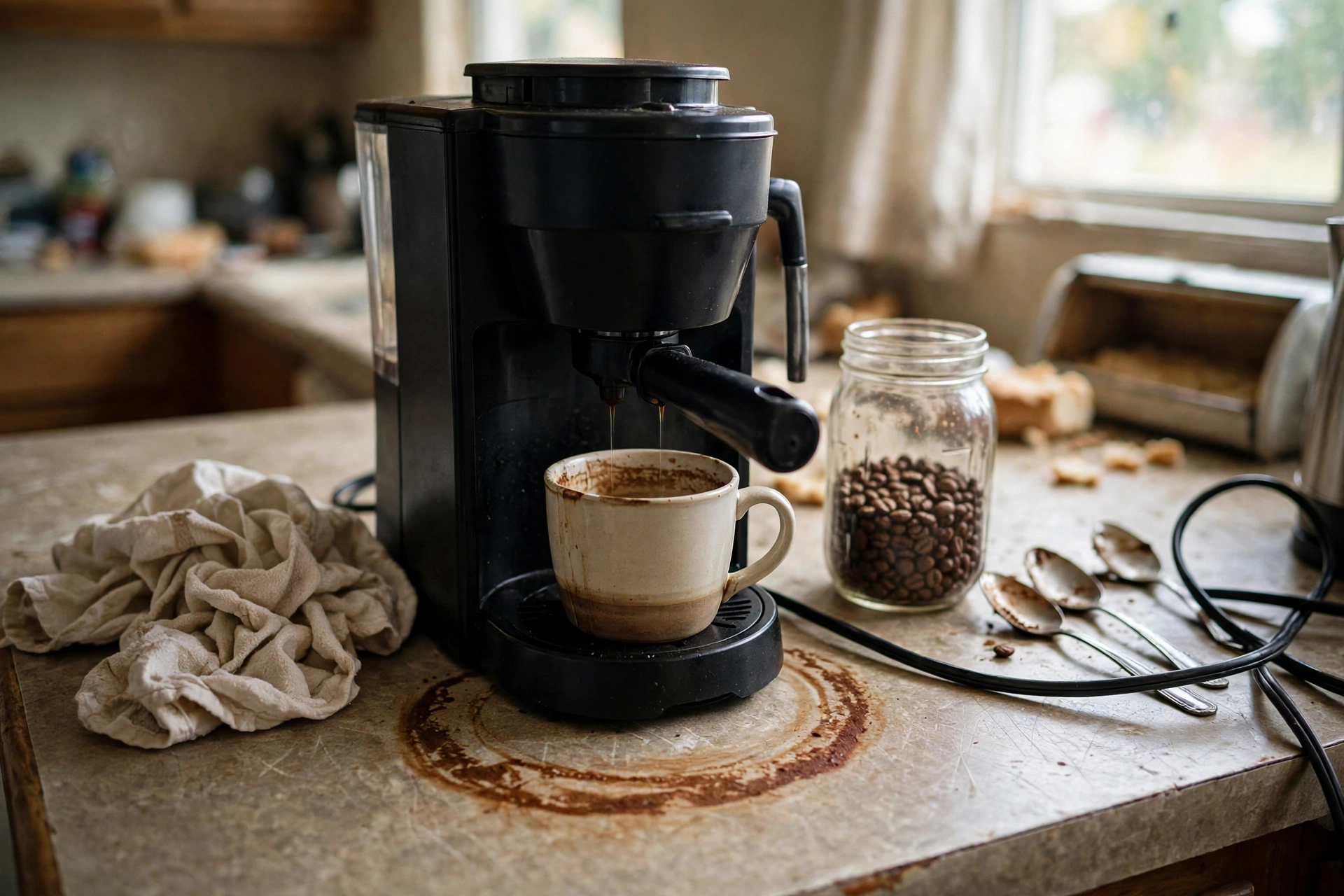
Learning how to clean and descale your coffee machine at home is the cheapest way to fix a cup that has started tasting bitter, weak, or just a little stale. The machine looks fine from the outside, but inside, old coffee oils coat the pipes and limescale from hard water slowly narrows them, so the water runs cooler and slower.
This guide walks through the whole routine in order: a quick daily and weekly clean, then a full descale, then the habits that keep the machine brewing properly between deep cleans. Nothing here needs special tools, and the descale takes about half an hour, most of it waiting while the machine does the work.
Why Your Coffee Starts Tasting Bitter
A machine that has never been cleaned hurts the taste in two ways. First, the oils from brewed coffee turn rancid on the filter basket, the carafe, and the pipes, adding a stale, sour note to every fresh pot. Second, limescale builds up on the heating element and inside the water lines, so the water never quite reaches the right temperature, and under-heated water pulls the bitter flavours out while leaving the good ones behind.
The warning signs are easy to spot. The coffee takes longer to brew, the stream slows to a thin trickle, and you may see white flakes in the pot or hear the machine gurgling halfway through a brew. A sour or oddly flat taste is the most common clue, and it appears weeks before any other problem. If the coffee has changed and the beans have not, the machine is almost always the cause, and a clean and a descale will bring the flavour back.
What You Need Before You Start
For the regular clean you need very little: a soft cloth, mild washing-up liquid, a small brush for the tight corners, and a large mug to catch the water during a descale. For the descale itself you need plain white vinegar or a descaling product made for coffee machines, plus fresh water for rinsing. Keep a towel under the machine, because a descale always spills a little somewhere.
Before you start, check the manual for your model. Most drip and pod machines are happy with vinegar, but some espresso machines, especially those with aluminium boilers, warn against it and ask for the maker’s own descaler instead. If your machine has a descale setting, use it: the built-in programme runs the solution at the right pace. Never use bleach, oven cleaner, or any harsh chemical inside a coffee machine, and never use flavoured or malt vinegar, which leaves a smell that takes many rinses to shift.
How to Clean Your Coffee Machine Step by Step
Start with the daily habit, which takes about two minutes. After the last brew, throw away the used grounds, rinse the carafe and the filter basket under warm water, and wipe the drip tray and the warming plate with a damp cloth. Leave the water tank lid open overnight so the inside dries out instead of sitting damp.
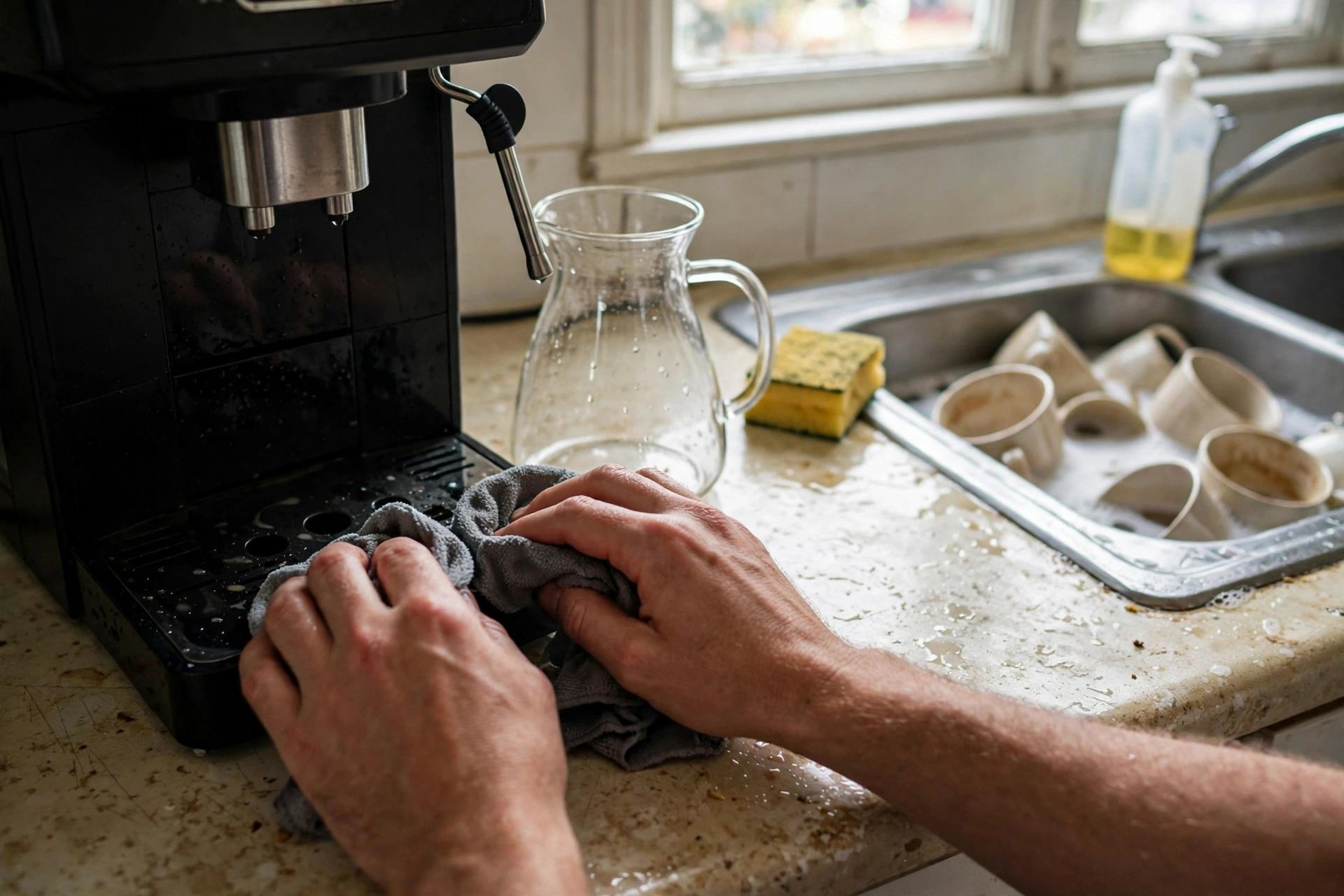
Once a week, give the removable parts a proper wash. Soak the carafe, the filter basket, and the water tank in warm water with a drop of washing-up liquid, then scrub the corners and rinse everything well. Wipe the outside of the machine and the warming plate, and check the seal around the carafe lid, where old coffee collects and goes sour. If your machine has a reusable mesh filter, rinse it under running water and tap it gently to clear the fine grounds, since a clogged filter is a common cause of slow brewing.
Once a month, look at the parts you normally ignore. Wipe the spray head above the filter basket, where coffee oils dry into a crust, and run a plain water cycle to flush the pipes. If the machine has a milk frother or steam wand, purge it with steam after every use and wipe it straight away, because dried milk is a hygiene problem and a quick way to block a wand. Cleaned this way, a machine rarely needs more than its regular descale.
How to Descale Your Coffee Machine
Descaling is the deep clean that removes limescale a normal wash cannot touch. To remove limescale from coffee machine pipes and heating elements you need an acidic solution run through a full brew cycle, left to work, then rinsed out completely with fresh water. It is a simple job, but the rinse matters as much as the descale: any solution left behind will flavour the next pot.
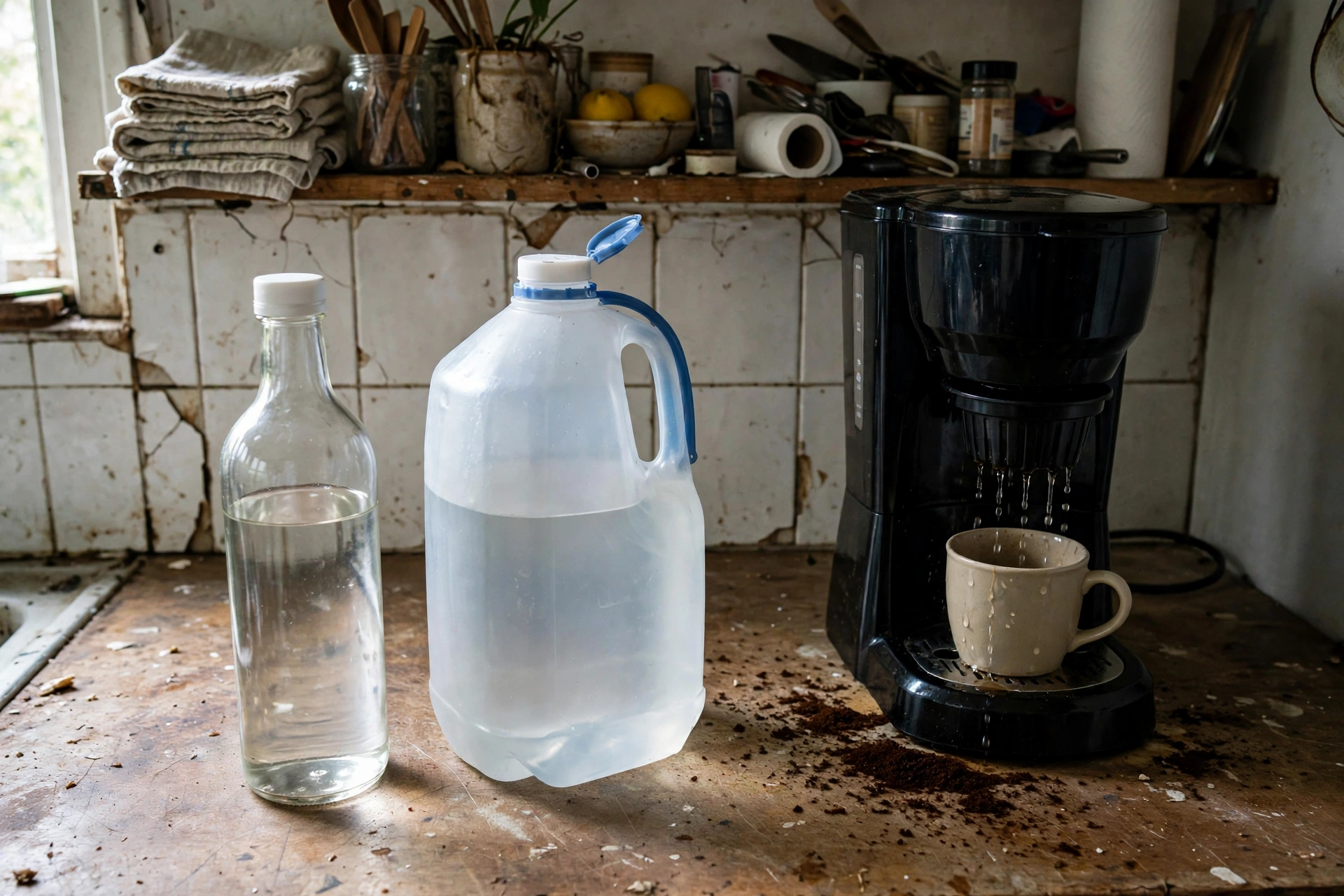
The cheapest way to clean coffee machine with vinegar is to mix equal parts plain white vinegar and fresh water and pour the mix into the water tank. Put a large mug under the spout, start a brew cycle, and switch the machine off halfway through, leaving the hot vinegar solution in the pipes for about half an hour. Then switch it back on and let the rest of the cycle finish. The vinegar smell is normal and disappears once the rinsing is done.
The other option is coffee machine cleaning tablets or a liquid descaler made for the job. Drop the tablet or the measured dose into the tank with fresh water, run the machine’s descale programme if it has one, or run a normal brew cycle and pause halfway as with vinegar. Tablets are pre-measured, so there is no guessing about the strength, and they are gentler on seals and gaskets than vinegar, which is why the machine makers recommend them. Whichever method you use, run two full tanks of fresh water through afterwards, brewing into the sink, and taste a small sip of the rinse water before you make coffee again.
Vinegar suits most drip machines and costs almost nothing, while tablets suit espresso machines and anyone who wants a measured dose with no smell. What matters is not which one you pick but that you do it on schedule: a descale done late is still far better than one never done.
How Often Should You Descale a Coffee Machine
How often should you descale a coffee machine depends on your water and how much coffee you drink. In a hard-water area, descale every month to every six weeks. In a soft-water area, every two to three months is usually enough. A household that brews two or three pots a day should descale more often than one that makes a single cup at the weekend.
Watch for the signs rather than the calendar alone. Slow brewing, a weaker cup, white flakes, a gurgling machine, or the descale light are all prompts to descale now rather than next month. Many modern machines light up when a descale is due, and that light is worth obeying: running a scaled-up machine for months can strain the pump and the heater, and a repair costs far more than a bottle of descaler. To descale coffee maker at home on a regular schedule, pick a date you will remember, such as the first Sunday of the month.
Mistakes That Can Damage Your Coffee Machine
The most common mistake is skipping the rinse. One tank of fresh water after a descale is not enough: vinegar or descaler left in the pipes will taint the next few pots and can irritate the seals over time, so always run two full tanks and taste the rinse water before brewing coffee. The second mistake is leaving the vinegar solution in the machine overnight, which is too long and can attack gaskets and rubber parts. Half an hour is the right pause.
Other mistakes are smaller but still worth avoiding. Never put the glass carafe in the dishwasher unless the manual says it is safe, since the heat can crack it or cloud the glass. Never use abrasive scourers on the warming plate or the outside of the machine, which scratch the coating and leave marks that collect grime. And never descale a machine with a water filter cartridge fitted without removing it first, because the filter will soak up the solution and need replacing. A little care here keeps a good machine brewing well for years.
Products That Make Cleaning Easier
If you descale often, keeping the right supplies on hand makes the job a five-minute task instead of a chore. A dedicated coffee machine descaling solution is simpler than measuring vinegar, since the dose is printed on the bottle and it is gentle on the seals inside your machine. Keep a bottle in the cupboard next to the machine so the next descale is ready to go.
For a quick monthly clean between descales, coffee machine cleaning tablets are the easiest option: one tablet in a tank of water, one cycle, and the pipes and brew group get a proper clean without measuring or smell. And if you live in a hard-water area, a coffee machine water filter in the tank slows scale build-up from the start, which stretches the time between descales and keeps the coffee tasting cleaner.

Final Thoughts
A coffee machine is one of the hardest-working gadgets in the kitchen, and it asks for very little: a two-minute rinse every day, a wash of the removable parts every week, and a descale every month or two. Learning to descale coffee maker at home takes one afternoon to learn and half an hour to do, and the reward is a cup that tastes the way it did when the machine was new. Start with a clean and a descale this weekend, set a reminder for the next one, and your morning coffee will thank you for it.
More Guides You’ll Like
- Best Espresso Machines for Home Baristas With Very Small Kitchen Counters
- Best Smart Kitchen Gadgets Under $100
- How to Speed Up Your Morning Routine
- Best Kitchen Gadgets for Small Apartments
Frequently Asked Questions
How often do I need to descale my coffee machine?
Every one to three months, depending on your water. Hard water needs a descale once a month, soft water once every three months, and heavy use means descaling more often. Slow brewing, white flakes, or the descale light mean it is time now.
Can I clean my coffee machine with vinegar?
Yes, for most drip and pod machines. To clean coffee machine with vinegar safely, mix equal parts plain white vinegar and water, run half a brew cycle, pause for about half an hour, then finish the cycle and rinse with two full tanks of fresh water. Check the manual first: some espresso machines ask for their own descaler.
How do I remove limescale from a coffee machine without vinegar?
To remove limescale from coffee machine pipes without vinegar, use a descaling solution or cleaning tablets made for coffee machines, which leave no smell behind. Dissolve the dose in a tank of fresh water, run the machine’s descale programme or a normal brew cycle, pause halfway for half an hour, then rinse with two full tanks of fresh water. Citric acid mixed with water is another vinegar-free option.
Why does my coffee taste bitter even after descaling?
Descaling fixes scale, but it does not fix stale beans, grounds left sitting in the filter, or a carafe that has not been washed. Try fresh beans, wash the carafe and filter basket with warm soapy water, and check the water is hot enough. If the bitterness stays, the heating element itself may be failing, and it is worth having the machine checked.




One Comment