

How to Light Hallways and Stairs Safely at Night
Every home has a dark route that only shows itself at night: the hallway between the bedroom and the bathroom, the stairs you climb half asleep, the landing where the switch is never where your hand expects it. Learning how to light hallways and stairs safely at night starts with one simple idea: light the path, not the room. You do not need a bright ceiling light blazing at 3 a.m. — you need a soft glow on the floor in front of you, showing the next step, the doorway and the handrail.
The method is simple, and it works in any home. The first layer is the floor: low lights along the skirting board that show you where to put your feet. The second is the stairs: a light on every tread, or a strip that outlines each step. The third is the sensor: lights that switch themselves on when you approach and off when you leave, so you never fumble for a switch in the dark. And the fourth is the habit: walking the route once in the dark to find the gaps, then filling them. This guide walks through each layer, so the night-time trip to the bathroom becomes a short, well-lit walk instead of a careful shuffle in the dark.
Light the Path, Not the Room
The mistake most people make with night lighting is reaching for brightness. A bright ceiling light at 3 a.m. wakes you fully, dazzles your eyes and ruins the rest of the night — and it is not even the safest light, because a bright light in your eyes makes the shadows beyond it look darker. What you actually need is a low, soft light that shows the floor: the next step, the doorway, the edge of the rug, the handrail.
Fit the lights low, near the skirting board, where they light the floor and not your eyes. A warm white glow is kinder at night than a cold blue one, and a light that stays on for twenty or thirty seconds is long enough to cross a hallway without switching off mid-step. Place one light by the bedroom door, one in the middle of the hallway and one at the top of the stairs, so the lights overlap slightly and there is no dark gap between them.
Keep the room light off at night. The path lights are the night lights — the ceiling light is for the daytime, when you are fully awake and need to see the whole room. If you can walk from your bed to the bathroom and back without touching a switch, the path is lit well enough, and that is the test that matters.
Choose lights you can dim or that are dim by design. A night light should be bright enough to show the floor and no brighter — if you can read a book by it, it is too bright for the hallway at night. A soft glow that you barely notice is the right level, and a light with two brightness settings lets you set a gentle glow for the small hours and a brighter one for the early evening, when the house is still awake.
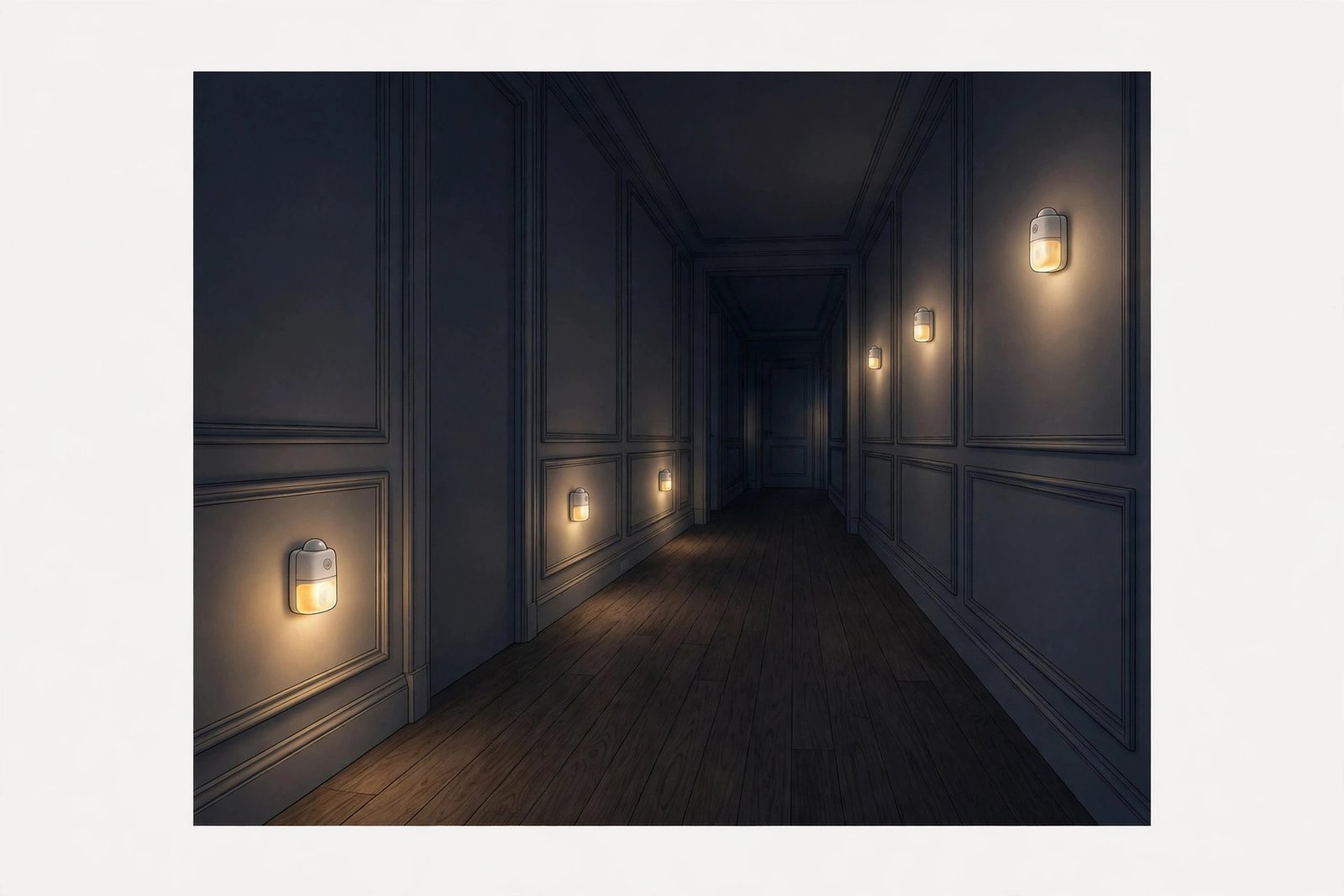
Stairs Need Their Own Lights
Stairs are the most dangerous place in a home at night, and they need their own lights — a hallway light is not enough. A light at the top of the stairs lights the landing, but it leaves the steps themselves in shadow, and it is the steps you need to see. The rule for stairs is simple: light every step, or at least light the step you are about to take.
The best way to do that is a strip of light along the edge of each tread, or a small light on every tread. A strip under the tread nosing lights the step below without shining in your eyes, and a light on every tread gives you the clearest possible view of the staircase. Either way, the light should be warm and dim enough not to wake you fully, and it should switch on before your foot reaches the first step — a sensor at the top and the bottom of the stairs does that.
Check the handrail too. A staircase with a lit handrail is a staircase you can hold onto with confidence, and a handrail you cannot see is a handrail you will not reach for. If the stairs have a turn, light the turn as well — a landing halfway down is a place where people hesitate, and a small light there removes the hesitation. Walk the stairs in the dark once after fitting the lights, and move any light that leaves a step in shadow until every tread glows.

Sensors Do the Work
The best night light is one you never have to think about, and that is what a motion sensor does. A sensor light switches on the moment you step into the hallway and off a minute later, so you never fumble for a switch with full hands, never leave a light burning all night, and never walk into a dark room because you forgot to switch the light on. The sensor does the work, and you just walk.
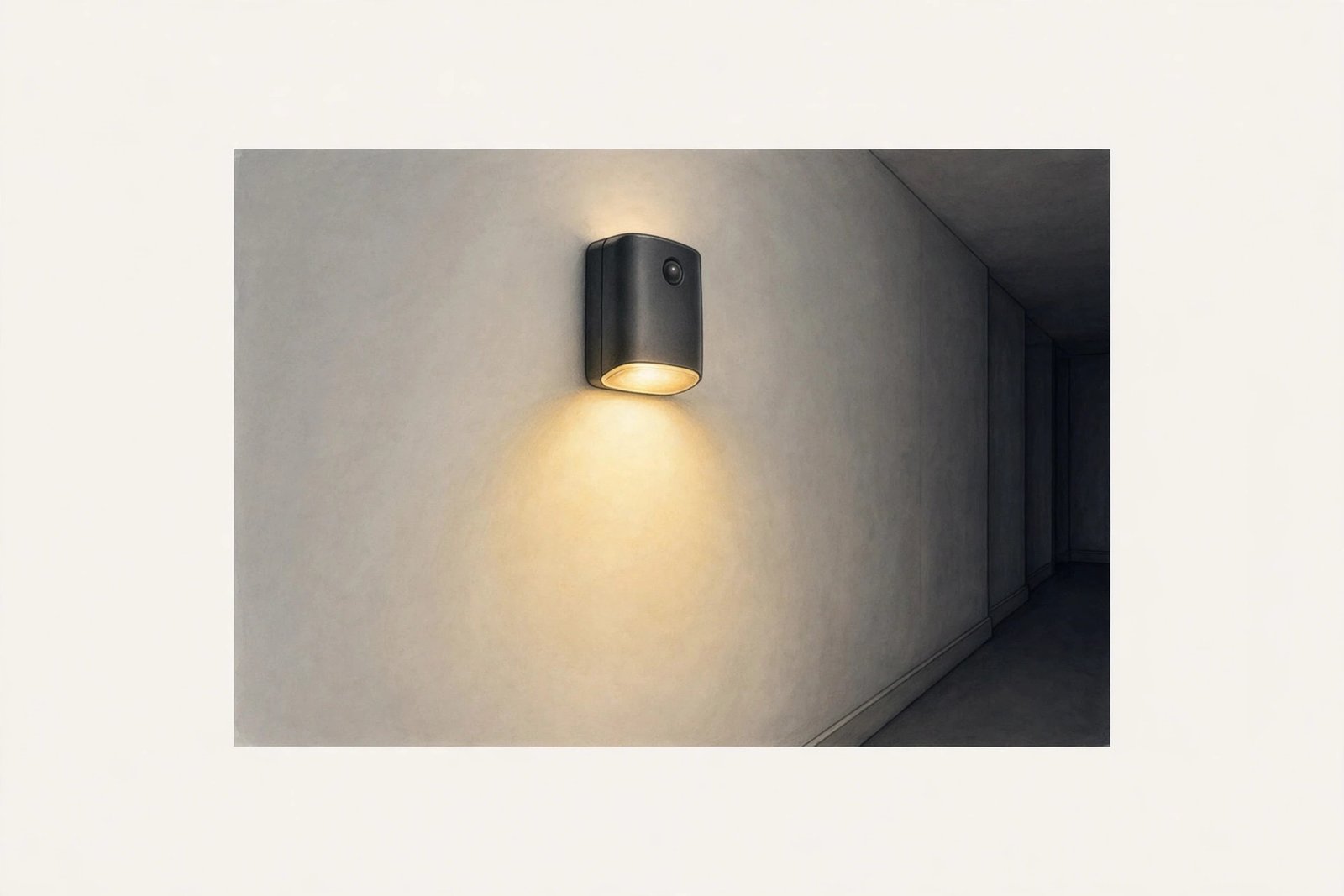
Choose sensors that react fast — a sensor that takes two seconds to switch on is too slow for a staircase, because you will already be on the first step in the dark. Look for a dusk sensor as well as a motion sensor, so the lights only work when the room is actually dark, which saves battery and stops false triggers in daylight. And set the timer to twenty seconds or more, so the light does not switch off halfway down the stairs.
Place the sensors where they can see you coming, not where they can see the room. A sensor at the bedroom door catches you as you leave the bed, a sensor at the top of the stairs catches you as you approach, and a sensor in the bathroom catches you as you walk in. A sensor facing a window or a radiator will trigger from sunlight or heat, so aim it down the hallway, not across it — and test it at night, when it matters, not in the daytime.
Keep It Simple and Safe
Night lighting should be simple, because the person using it is half asleep. Avoid anything that needs an app, a remote or a sequence of buttons at 3 a.m. — the lights that work best at night are the ones that work by themselves. Battery lights that stick to the wall, plug-in lights that never need charging, and strips that switch on with a sensor: these are the lights for the night, and they need nothing from you except a battery check every few months.
Keep the route clear as well as lit. A lit hallway with a pair of shoes in the middle of it is still a trip hazard, and a lit staircase with a laundry basket on the steps is still dangerous. The light shows you the hazard — it does not remove it — so keep the night-time route clear every evening: shoes by the door, laundry in the basket, the rug flat on the floor. A clear, lit path is the safest path there is.
And keep a torch by the bed as well, charged and in the same place always. A power cut at night is the moment every other light stops working, and a torch is the one that keeps working — light for the hallway, the fuse box and the phone, until the power comes back. Test the night lights monthly, keep spare batteries in the drawer, and walk the route in the dark after any change, so the path stays lit and the house stays safe at night.
Finally, tell the rest of the household where the lights are and how they work, so nobody switches them off by mistake or moves one to another room. A night light that has been switched off at the socket or taken away to light a cupboard is a gap in the path, and the gap is always found at 3 a.m. — the worst time to discover it. A quick check of every light on the route once a week keeps the whole system working, and it takes less than a minute.
Final Thoughts
Lighting hallways and stairs safely at night is not about brightness — it is about lighting the floor in front of you, one step at a time. Low lights along the skirting board, a strip or a light on every stair tread, sensors that switch the lights on before you reach them and off after you leave: that is the whole method, and it costs very little and needs no wiring at all.
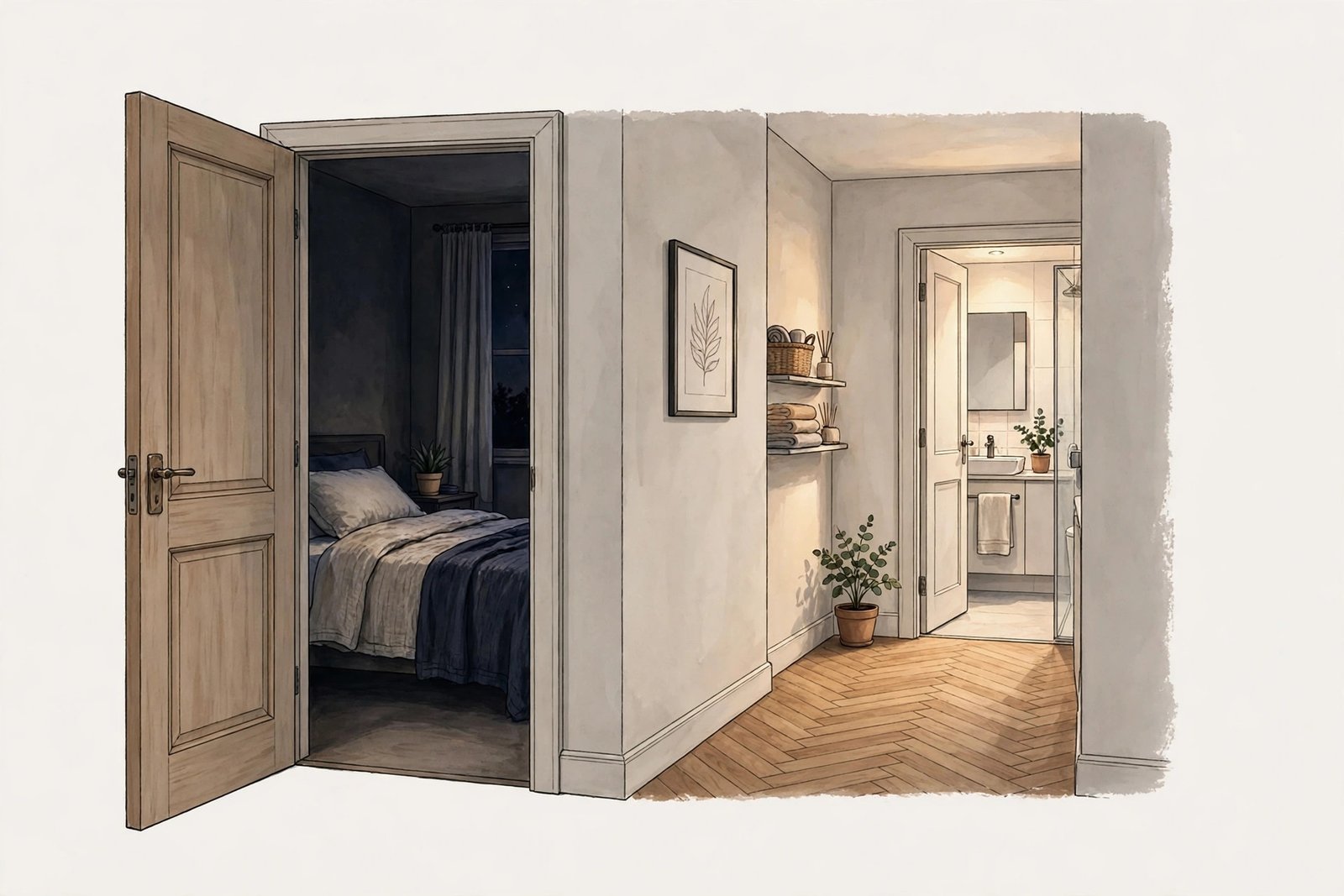
Start with the bedroom door and the hallway if you have not begun yet — a set of battery night lights there covers the first steps out of bed — then add the stair lights and the landing light in the order your home needs them. Walk the route in the dark after fitting, move any light that leaves a dark patch, and keep the path clear. A home where every night-time step is lit is a comfortable place to live at night — and these habits make it one.
More Guides You’ll Like
For the lights that make all of this easier — battery night lights, stair strips, plug-in lights and tread lights — see our product guide to the Best Motion Sensor Light Gadgets for Hallways and Stairs, which rounds up twelve picks chosen for hallways and stairs. And for a calmer bedroom at night, Best Smart Bedroom Gadgets for a Relaxing Bedtime Routine covers the room where the night starts.
Frequently Asked Questions
Where should I put night lights in a hallway?
Low, near the skirting board, at intervals of a few steps — one by the bedroom door, one in the middle of the hallway and one at the top of the stairs. Low lights show the floor and the next step without shining in your eyes, and the lights should overlap slightly, so there is no dark gap between them.
How do I light stairs safely at night?
Light every step, or at least the step you are about to take: a strip along the edge of each tread, or a small light on every tread, with a sensor at the top and the bottom of the stairs that switches the lights on before your foot reaches the first step. A light at the top of the stairs alone is not enough, because it leaves the steps themselves in shadow.
Are motion sensor lights better than leaving a light on all night?
Yes, for most homes: a motion sensor light only switches on when someone is actually there, so it saves electricity, it does not disturb anyone sleeping nearby, and it is always ready when you need it. A light left on all night is wasteful and can disturb sleep, while a sensor light gives you light exactly when you walk in.
What colour light is best for night-time hallways?
Warm white, because it is kinder on eyes that have adjusted to the dark and it does not wake you fully. Cold white light feels harsh at 3 a.m. and can make the shadows beyond it look darker, while a warm glow shows the floor clearly without dazzling you — and a dimmer lets you set it to the level that suits your home.



One Comment