
Best Outdoor Gadgets for Beginner Campers Going on Weekend Trips
Affiliate Disclosure: As an Amazon Associate, we earn from qualifying purchases made through links on this page, at no extra cost to you. This helps support our work and keeps our guides free to read.
A quick note on prices: prices change often, so we never quote a fixed price here. Please check the latest price on Amazon before you buy, using the yellow buttons in this guide. The product pictures in this article are original illustrations created for this guide, not manufacturer photos.
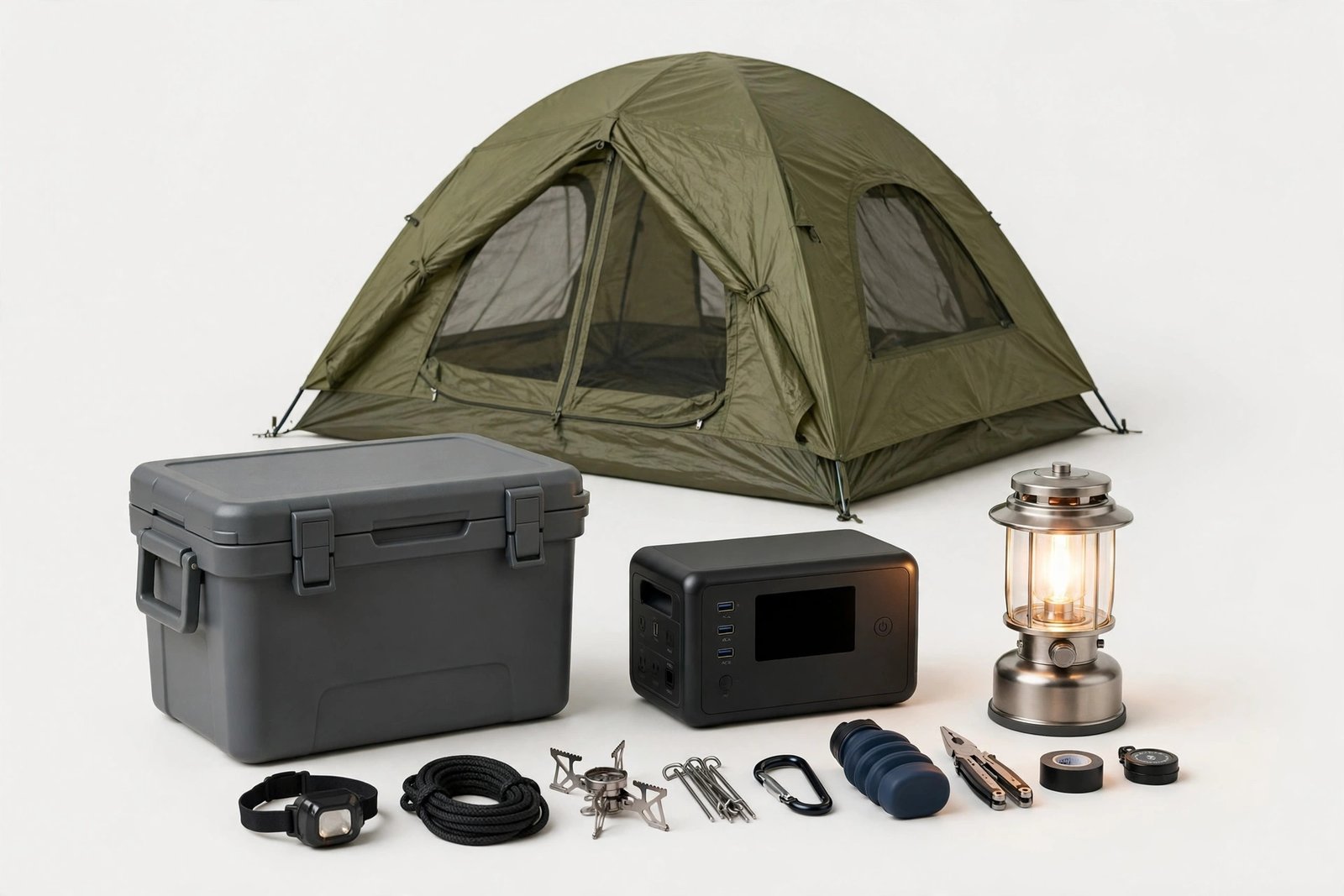
A first camping trip rarely goes wrong because of the big things. The tent goes up, the sleeping bags come out, and then the small things start to bite: it gets properly dark by nine, the air bed is still flat, the phone is on 12 percent, and nobody can find the matches. That is why the best outdoor gadgets for beginner campers going on weekend trips are not luxury extras — they are the difference between a weekend that feels like hard work and one that feels like a holiday. A handful of well-chosen beginner camping gear essentials covers light, power, water and comfort, and suddenly the whole trip runs smoothly.
The good news is that a beginner does not need much. Most camping gadgets for beginners do one simple job — light the tent, pump the bed, charge the phone, chill the milk — and do it without instructions, apps or a toolbox. The essential camping gadgets are the ones that work straight out of the box on a Friday evening when you are tired, hungry and losing the light, and they keep working trip after trip.
Almost every first trip is car camping: you drive to a pitch, unload at the tent, and nothing has to be carried further than a few metres. That makes life easier, because weekend camping gear for the car can be a little bigger and sturdier than backpacking kit. Most of the car camping essentials below run on rechargeable batteries or USB power, so one small power station or power bank can keep the whole set topped up from Friday to Sunday.
You do not need all twelve picks for your first weekend. Start with light and sleep — a lantern, a headlamp and a pump for the air bed — then add the rest as you learn what your own trips are missing. Every pick below comes with honest pros and cons, a straight answer on who it suits best, and a yellow button so you can check the latest price on Amazon before you buy.
How We Chose
We compared camping gadgets against one beginner-friendly test: could someone on their very first trip unpack this at a pitch, understand it in a minute, and have it work all weekend without fuss? We favoured gadgets that are rechargeable rather than battery-hungry, tough enough to be dropped on grass and packed wet, and honest about their limits — a small solar panel is a top-up tool, not a power station, and this guide says so.
We also read owner feedback for the usual failure points: lanterns that die before midnight, pumps with nozzles that fit nothing, coolers that drain a car battery overnight. Anything with a pattern of those complaints was dropped. What remains is a set of simple, sturdy picks that solve the problems beginners actually meet on a two-night trip: darkness, flat beds, dead phones, warm milk and biting insects.
Quick List
- Rechargeable LED Camping Lantern — warm, even light for the whole tent and table.
- Portable Power Station for Camping — one box that charges everything all weekend.
- Rechargeable LED Headlamp — hands-free light for pitching, cooking and night walks.
- Foldable Solar Charger — free top-ups for phones and power banks in the sun.
- Portable Water Filter — safer-tasting refills at the tap and on day walks.
- Electric Air Pump for Air Mattress — a fully inflated bed in minutes, not lung power.
- 12V Electric Cooler — properly cold food from Friday to Sunday, no ice runs.
- Rechargeable Camping Fan with Light — moving air and light for warm tent nights.
- USB LED String Lights — gentle light and a campsite that feels like yours.
- Rechargeable Bug Zapper Lantern — fewer bites around the evening table.
- Portable Camping Shower — a proper rinse after dusty walks and beach days.
- Power Bank with Torch — backup power and a backup light in one pocket gadget.
1. Rechargeable LED Camping Lantern

The first surprise of camping is how dark dark really is. A Rechargeable LED Camping Lantern answers it in one click, spreading soft, even light across the whole tent or picnic table instead of the narrow beam a torch gives you. Hang it from the tent loop and the whole space is lit for reading, cards and finding things; stand it on the table and cooking stops being guesswork. Of all the camping gadgets for beginners, this is the one that gets used every single evening.
Look for a lantern with a warm light setting as well as a bright white one — warm light is kinder on tired eyes and attracts fewer insects. A fold-out hook, a magnetic base or both give you hanging options, and a battery that lasts a full weekend of evenings between charges saves mid-trip stress. Charge it fully at home before you leave, top it up from a power bank if needed, and avoid leaving it out in heavy rain even if it is splash resistant.
Pros
- 👍 Lights the whole tent, not just a spot
- 👍 Hangs, stands or sticks to metal surfaces
- 👍 Rechargeable — no batteries to buy or carry
- 👍 Warm mode is gentle and draws fewer bugs
Cons
- 👎 Cheaper models dim quickly on full brightness
- 👎 Needs charging before every trip
- 👎 One lantern may not cover tent and table at once
Best for: every beginner — the first gadget to buy, and the one that lights everything else you do.
Check Price And User Reviews on Amazon
2. Portable Power Station for Camping

Phones, the lantern, the fan, the air pump — a modern weekend runs on batteries, and a Portable Power Station for Camping is the one box that keeps them all alive. It is a big rechargeable battery with USB ports, a mains-style socket and a 12V output, small enough to carry in one hand and quiet enough to sit in the tent porch. For beginners building their car camping essentials, this is the hub everything else plugs into.
Capacity is measured in watt-hours (Wh), and the maths is friendly: a gadget’s watts multiplied by the hours you run it tells you what you need. A small station happily covers phones, lights and a pump for a weekend; it will not run a kettle or a heater, which draw far more than camping batteries can give. Recharge it at home before the trip, top it up from the car or a solar panel on site, and keep it dry and off the ground inside the tent or car.
Pros
- 👍 Charges every gadget from one box
- 👍 Silent and fume-free — safe in the tent porch
- 👍 USB, mains-style and 12V outputs cover most gear
- 👍 Doubles as home backup power afterwards
Cons
- 👎 The heaviest single item on this list
- 👎 Cannot run kettles, heaters or hair dryers
- 👎 Must be charged at home before the trip
Best for: car campers taking several gadgets, and anyone who wants one simple power answer for the whole weekend.
Check Price And User Reviews on Amazon
3. Rechargeable LED Headlamp

A lantern lights a space; a headlamp lights whatever your hands are doing. A Rechargeable LED Headlamp keeps both hands free for pitching the tent at dusk, cooking, washing up and the midnight walk to the wash block — jobs that are oddly difficult one-handed while holding a phone torch in your teeth. It weighs almost nothing, lives in a jacket pocket, and earns its place within the first hour of the first evening.
The feature to look for is a red light mode: it preserves your night vision, lets you find the tent zip without waking everyone, and does not dazzle your camping companions. A tilting lamp head points the beam at the ground or the guy lines, a soft wide strap stays comfortable, and USB recharging means it tops up from the same power bank as everything else. Keep the brightness on low or medium most of the time and the battery will last the weekend easily.
Pros
- 👍 Hands-free light exactly where you look
- 👍 Red mode for night trips without glare
- 👍 Tiny and light — one per person is easy
- 👍 USB rechargeable like the rest of your kit
Cons
- 👎 Easy to leave switched on in a bag
- 👎 Tight straps can annoy on long evenings
- 👎 Beam is narrow compared with a lantern
Best for: every camper, one each — pitching late, cooking after dark and night-time trips across the site.
Check Price And User Reviews on Amazon
4. Foldable Solar Charger

Spread it on the tent roof or the picnic table in the morning, and by lunch your power bank is quietly fuller than it was. A Foldable Solar Charger turns a sunny pitch into free electricity for phones, lanterns and power banks, then folds flat into the car door pocket for the drive home. It is one of those essential camping gadgets that asks for nothing — no fuel, no noise, no effort — once it is aimed at the sun.
Expectations matter here: solar charging is slow, and a panel this size is a top-up tool, not a way to run a campsite. It works best charging a power bank during the day — which then charges your phone quickly in the evening — rather than plugging the phone in directly. Angle the panel towards the sun, move it as the sun moves, and keep the device being charged in the shade, because phones and batteries dislike direct heat. On a bright weekend it easily keeps lights and phones going; on a grey one, treat anything it gives you as a bonus.
Pros
- 👍 Free power whenever the sun is out
- 👍 Folds flat — takes almost no packing space
- 👍 Silent, simple and nothing to wear out
- 👍 Keeps power banks topped up on longer stays
Cons
- 👎 Slow — a top-up, not a full charge solution
- 👎 Output drops sharply on cloudy days
- 👎 Needs repositioning as the sun moves
Best for: sunny pitches and longer weekends, as a top-up partner for a power bank or small power station.
Check Price And User Reviews on Amazon
5. Portable Water Filter

Most campsites have a drinking-water tap, and you should use it — but a Portable Water Filter still earns a corner of your bag. It takes the odd taste out of site tap water, gives you confidence refilling bottles on a day walk from a stream, and means the group is never one closed tap away from going thirsty. Squeeze filters and straw-style filters are light, need no batteries, and filter as you drink or as you fill a bottle.
Be clear about what filters do and do not do. The common camping filters are rated by their makers to remove bacteria and protozoa such as giardia, but most do not remove viruses or chemicals, and no filter makes water safe if a local boil-water notice is in force — always follow site and local guidance first. Rinse or backflush the filter as the maker directs, let it dry out between trips, and never let a wet filter freeze, which can crack the fibres inside. Treated with that small amount of care, it is cheap insurance that lasts for many trips.
Pros
- 👍 Improves taste of campsite tap water
- 👍 Light, tiny and needs no power
- 👍 Handy backup on day walks away from site
- 👍 One filter lasts many trips
Cons
- 👎 Does not remove viruses or chemicals
- 👎 Slow flow when filtering for a whole group
- 👎 Must be cleaned and kept from freezing
Best for: peace of mind at the tap, walkers who refill on the trail, and groups camping away from mains water.
Check Price And User Reviews on Amazon
6. Electric Air Pump for Air Mattress
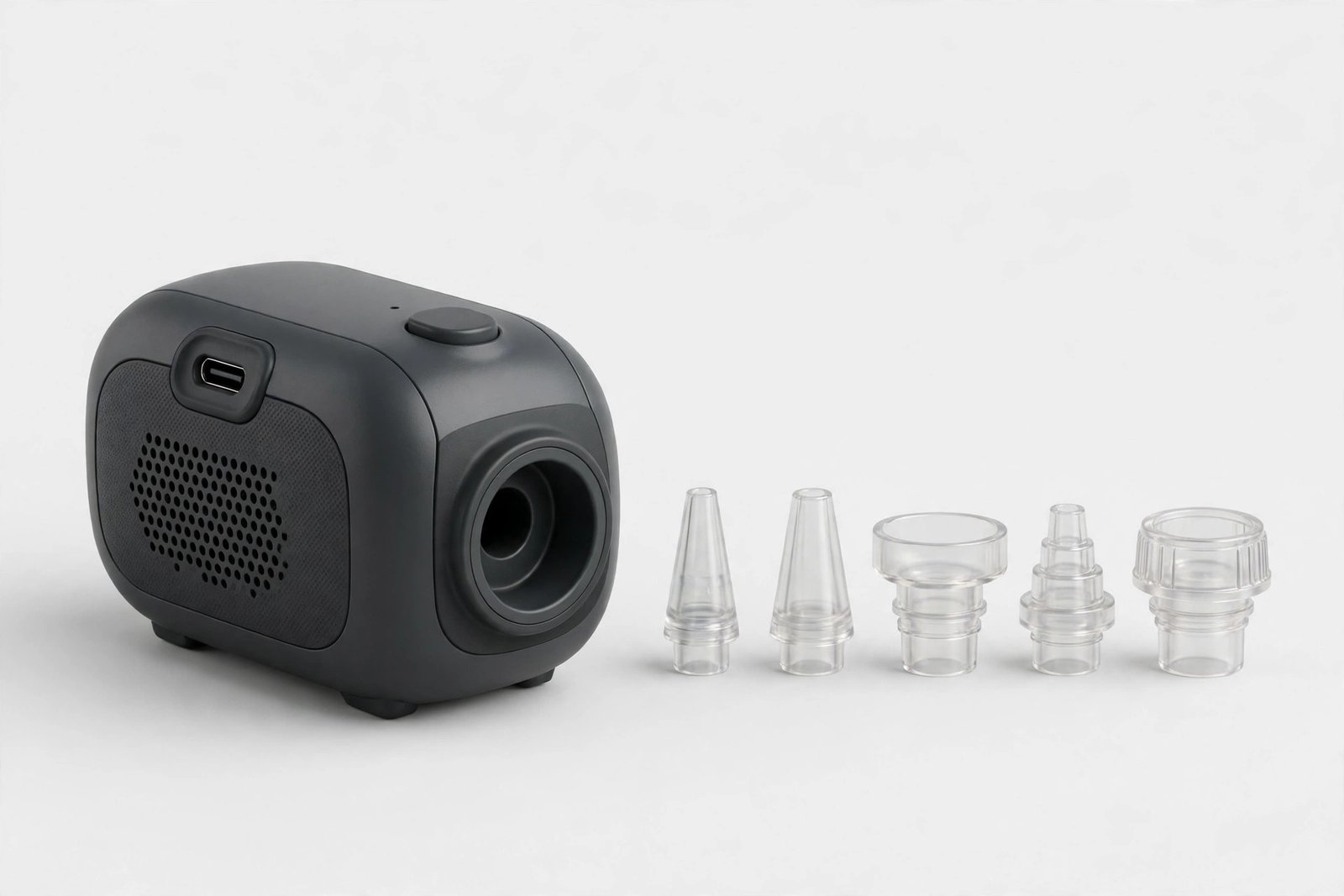
Nobody dreams of spending their first evening at camp red-faced, blowing up a double air bed by lung power. An Electric Air Pump for Air Mattress does the whole job in a few minutes while you put the kettle on, and most models deflate as well — pulling every last bit of air out on Sunday so the bed folds back into its bag instead of filling the car boot. A good night’s sleep is the foundation of a good trip, and this little pump is what makes it effortless.
Check the nozzle set before you buy: a pump is only useful if one of its nozzles fits your bed’s valve, and a set of three or four sizes covers almost everything, including paddling pools and inflatable chairs. Power options are flexible — rechargeable models work anywhere, 12V models run from the car, and both run happily from a power station. Inflate the bed until it feels firm but not drum-tight, because air expands as the tent warms up, and top it up a little on the second evening rather than over-filling on the first.
Pros
- 👍 A fully inflated bed in a few minutes
- 👍 Deflate mode makes packing up far easier
- 👍 Nozzles also fit pools, chairs and lilos
- 👍 Small enough to live in the tent bag
Cons
- 👎 Surprisingly loud for its size
- 👎 Useless if its nozzles do not fit your valve
- 👎 Not made for high-pressure items like paddle boards
Best for: anyone sleeping on an air bed — which, on a first trip, is almost every beginner.
Check Price And User Reviews on Amazon
7. 12V Electric Cooler

Warm milk, suspect sausages and a daily drive to buy ice — that is camping without a cooler. A 12V Electric Cooler runs from the car while you drive and from a power station at the pitch, keeping food properly cold from Friday’s first shop to Sunday’s last sandwich. For most beginners it is the single biggest upgrade to eating well outdoors, and it sits at the heart of many car camping essentials lists for good reason.
Know the two types before choosing. Thermoelectric coolers are lighter and cheaper, and they cool to a set amount below the surrounding air temperature — fine in mild weather, less impressive in a heatwave. Compressor coolers work like a home fridge, hold a steady temperature in any weather, and cost more. Either way, chill the food before it goes in, open the lid as little as possible, keep the cooler in the shade, and be careful running it from the car battery with the engine off — a power station or a site hook-up is the safer source at the pitch.
Pros
- 👍 Cold food all weekend — no ice to buy or melt
- 👍 Runs from the car, power station or hook-up
- 👍 Safer storage for milk, eggs and meat
- 👍 Doubles as a car fridge for road trips
Cons
- 👎 Thermoelectric models struggle in hot weather
- 👎 Can flatten a car battery if left running parked
- 👎 Takes real space in a small car
Best for: weekend campers who cook proper meals and want fridge-cold food without the ice runs.
Check Price And User Reviews on Amazon
8. Rechargeable Camping Fan with Light

A tent that was pleasantly warm at bedtime can feel airless by two in the morning, especially in summer. A Rechargeable Camping Fan with Light hangs from the tent loop and does two jobs at once: the fan keeps air moving over the sleeping bags, and the built-in light works as a gentle night light for reading or finding the zip. It is a small comfort that makes a big difference on warm nights, and children in particular sleep better with both the breeze and the soft glow.
Run it on its lowest speed overnight — it is quieter, and the battery lasts far longer than on full blast. A timer setting is worth having, so the fan switches itself off once everyone is asleep. Most models charge by USB from the same power bank as your other gear, and the hook-and-stand design also works on the picnic table during the day, where moving air keeps flies off the food. Keep it inside the tent rather than in the porch on dewy mornings, and wipe the blades before packing it away.
Pros
- 👍 Cooler, fresher air on warm tent nights
- 👍 Built-in light doubles as a night light
- 👍 Hangs in the tent or stands on the table
- 👍 Quiet on low, with a sleep timer on many models
Cons
- 👎 Full speed drains the battery fast
- 👎 Breeze is gentle, not air conditioning
- 👎 One more gadget to charge before the trip
Best for: summer campers, warm sleepers and families with children who like a night light.
Check Price And User Reviews on Amazon
9. USB LED String Lights

String lights are the smallest luxury on this list, and the one that most changes how a pitch feels. A set of USB LED String Lights runs from any power bank, strings along the tent entrance or the guy lines, and gives you soft light for finding zips, shoes and tent pegs after dark — plus a pitch that looks like home instead of a field. They are the finishing touch on a set of weekend camping gear: not essential, exactly, but the first thing people photograph.
Choose warm white rather than bright white, and a length that matches your tent — a very long string around a small tent just becomes a tangling exercise. Wind them up carefully on Sunday (around a piece of card or your hand) and they will untangle kindly next trip. Keep the power bank in a dry pocket of the tent with the cable run sensibly, turn the lights off when you go to bed to save the battery and spare your neighbours, and never leave them trailing where people walk in the dark.
Pros
- 👍 Runs for evenings from a small power bank
- 👍 Marks guy lines and pegs so nobody trips
- 👍 Makes the pitch feel welcoming instantly
- 👍 Packs down to almost nothing
Cons
- 👎 Tangles if packed away carelessly
- 👎 Atmosphere, not task lighting
- 👎 Needs a power bank kept dry nearby
Best for: anyone who wants their first pitch to feel like a place, not just a parking spot for a tent.
Check Price And User Reviews on Amazon
10. Rechargeable Bug Zapper Lantern
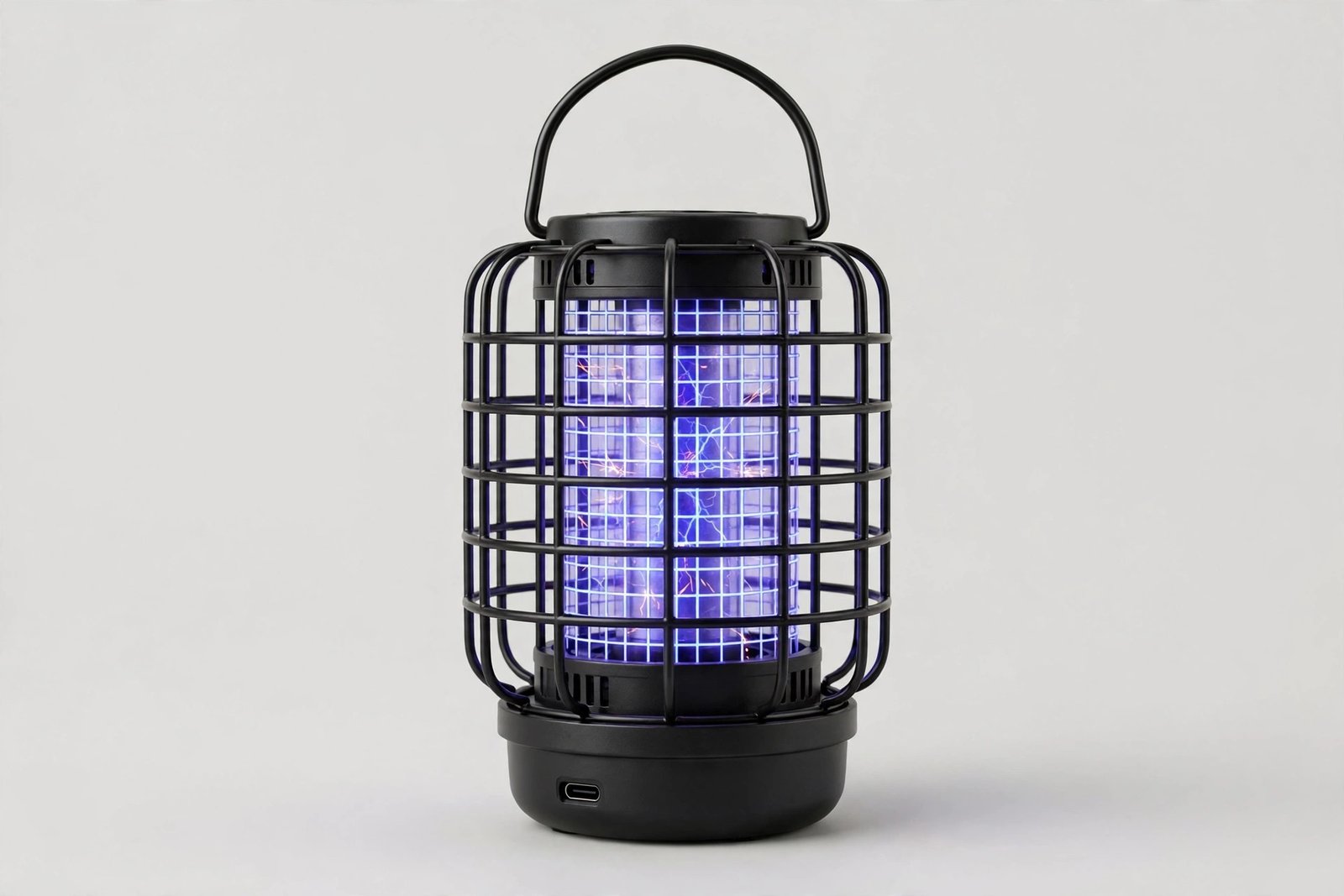
Evenings are the best part of camping — and the hour the biting insects have been waiting for. A Rechargeable Bug Zapper Lantern combines a soft camping light with a UV lamp and electric grid that draws flying insects away from you and deals with them quietly through the evening. Hang it at the edge of your sitting area before dusk, and dinner at the picnic table becomes a calmer, less swatted affair.
Set honest expectations: a zapper guards the few metres around your table, not the whole field, and it works best switched on a little before sunset so it is already running when the insects arrive. Position it a short distance from where you eat — the UV attracts insects, so you want them heading to the lantern, not gathering over your food. Empty the collection tray regularly, keep fingers and curious pets away from the grid behind its protective cage, and recharge it with the rest of your kit during the day.
Pros
- 👍 Lantern and insect control in one gadget
- 👍 No sprays, coils or chemicals around food
- 👍 Hangs or stands at the edge of the table
- 👍 Rechargeable — nothing to refill or replace
Cons
- 👎 Protects a small area, not the whole pitch
- 👎 Occasional zapping pops through the evening
- 👎 Tray needs emptying and the grid cleaning
Best for: evening campers near water, woods or anywhere midges and mosquitoes gather at dusk.
Check Price And User Reviews on Amazon
11. Portable Camping Shower

After a dusty walk, a swim or a day at the beach, a proper rinse changes how you feel about the whole evening. A Portable Camping Shower drops a small battery pump into a bucket or water bag and delivers a gentle shower through a hand-held head — enough to wash hair, rinse off sand and feel human again before dinner. For water warmed by the sun, fill a dark bag or bucket and leave it in the afternoon sun, then always test the temperature on your wrist before anyone steps under it.
Use it thoughtfully. Shower where the site allows, on grass or gravel well away from streams and lakes — even biodegradable soap should never go into waterways — and keep showers short, because a bucket holds less than you think. The pump charges by USB like the rest of your kit, and a full bucket is enough for a couple of quick rinses. Hang the head up, coil the hose once it is dry, and store the pump somewhere it will not be crushed in the boot.
Pros
- 👍 A real rinse without a shower block queue
- 👍 Works with any bucket or water bag
- 👍 Gentle flow uses surprisingly little water
- 👍 Great for sandy feet, hair and muddy dogs
Cons
- 👎 Pressure is gentle, not home-shower strong
- 👎 Water warms only as much as the sun manages
- 👎 Bucket refills needed for a family
Best for: beach and walking weekends, festival-style sites, and anyone who sleeps better properly rinsed.
Check Price And User Reviews on Amazon
12. Power Bank with Torch
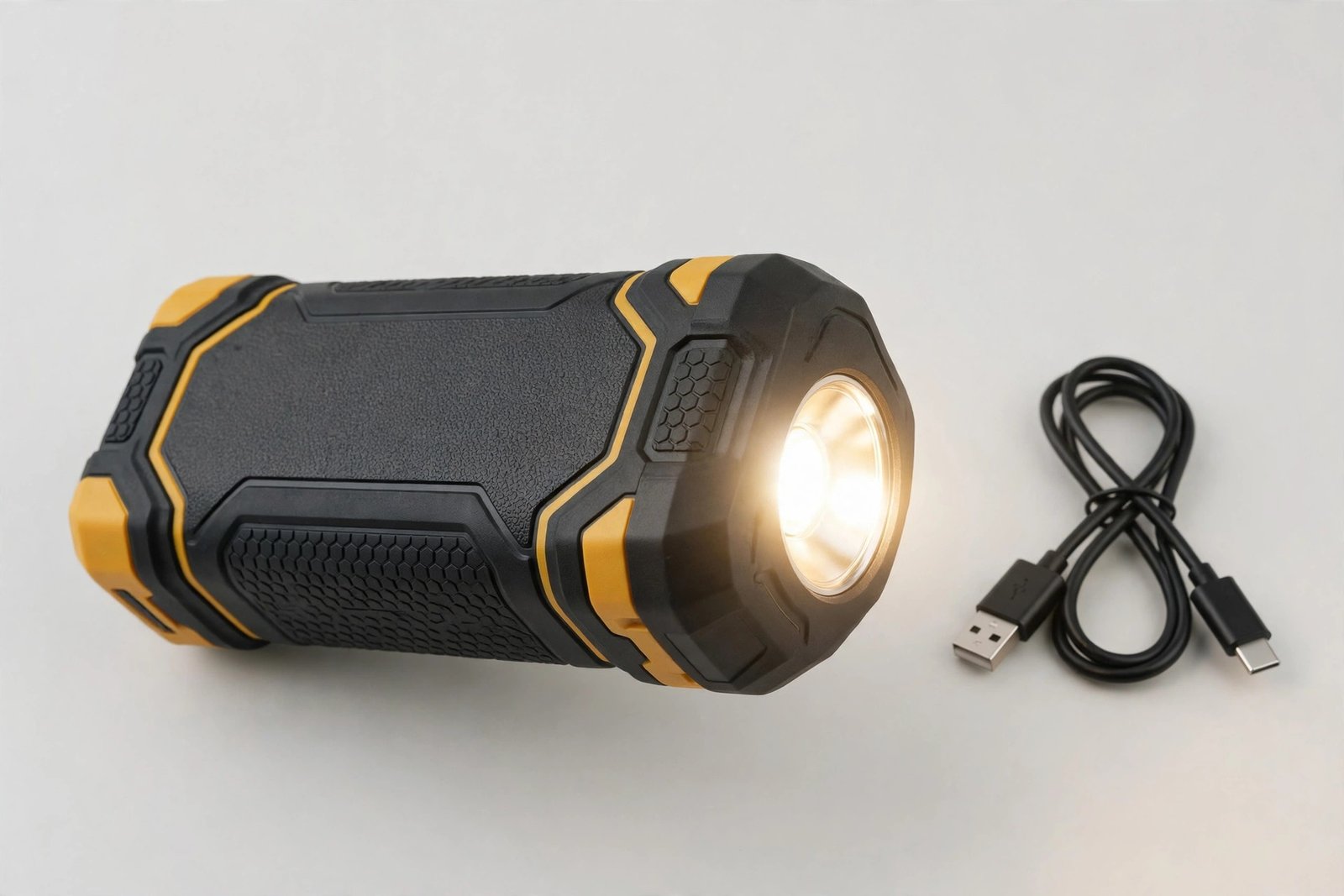
Your phone is the map, the camera, the campsite booking and the weather forecast — and on a first trip it is also the thing most likely to be flat by Saturday night. A Power Bank with Torch is the pocket-sized backup that quietly saves weekends: a full phone charge or two in reserve, plus a built-in torch for the moment the headlamp is in the tent and you are at the car. It is the last of the beginner camping gear essentials on this list, and for many beginners it turns out to be the most-used.
For a weekend, a mid-size bank gives most people one to two full phone charges with something spare for a lantern top-up; a larger one suits a couple sharing. Charge it fully at home — a flat power bank is just a weight — and pack one short cable per device type so the tent stays tidy. The torch, often with a flashing SOS mode, is a genuine safety extra as well as a convenience. Keep the bank dry in a sealed bag inside the tent, and recharge it from the solar panel or car on longer stays.
Pros
- 👍 Backup phone power in your pocket
- 👍 Built-in torch, often with an SOS mode
- 👍 Tops up lanterns, headlamps and fans too
- 👍 Small, light and useful all year round
Cons
- 👎 Only helps if you charged it before leaving
- 👎 Torch drains the reserve faster than expected
- 👎 Big capacities add noticeable weight
Best for: absolutely every beginner — the safety net for phones, lights and everything USB.
Check Price And User Reviews on Amazon
What to Look for Before You Buy
Start with the order that matters on the ground: light first, then sleep, then power, then comfort. A lantern and a headlamp per person, a pump that fits your air bed, and one way of charging a phone cover the beginner camping gear essentials for almost any first weekend. Everything else on this list — the cooler, the fan, the shower — is a comfort you add once you know you enjoy camping, and adding in that order keeps the cost sensible and the car boot manageable.
Match the kit to how you will actually camp. Weekend camping gear for car camping can be sturdier and a little heavier, because it travels in the boot, not on your back — but measure the boot before falling for a big cooler, and weigh a power station in your hand if you can. If there is any chance you will one day walk to a pitch, favour the lighter, USB-powered versions of everything from the start.
Build your gadgets around one charging system. The happiest pattern for camping gadgets for beginners is simple: everything recharges by USB, one power bank or small power station tops it all up, and a solar panel or the car refills the hub during the day. That means one cable type, no hunting for disposable batteries at a site shop, and a packing list you can check in a minute. Charge everything at home the night before, every time — most camping gadget failures are just flat batteries in a nice case.
Finally, be honest about what gadgets cannot do. Solar panels top up rather than power a pitch, thermoelectric coolers chill rather than freeze, and a bug zapper guards a table rather than a field. None of that makes them bad buys — it makes them correctly chosen ones. Borrow or hire the big items for a first trip if you can, note honestly what you missed, and buy only what your own weekends ask for.
Final Thoughts
A first camping weekend does not need a car full of equipment. It needs light you can trust, a bed that inflates in minutes, power in reserve and food kept properly cold — the essential camping gadgets that remove the small frustrations which put beginners off a second trip. Get those right and the parts people actually remember — the evening light, the quiet, the breakfast outside — take care of themselves.
Add the comforts one trip at a time, and let your own weekend camping gear grow out of experience rather than a shopping list: the fan after the first hot night, the shower after the first dusty walk, the string lights whenever you are ready for your pitch to feel like home. That way every gadget you own is there because a real trip asked for it.
More Guides You’ll Like
Taking the next step from tent to van? Our guide to the Best Gadgets for Van Life Beginners covers the kit that makes life on the road comfortable, and for packing light on the road, see Best Compact Gadgets for Van Life Road Trips on a Budget. Heading somewhere wetter instead? Best Waterproof Gadgets for Beach Vacations rounds up the gadgets that survive sand, spray and swims.
Frequently Asked Questions
What gadgets does a beginner camper actually need first?
Start with light, sleep and power: a rechargeable lantern, a headlamp for each person, an electric pump that fits your air bed, and a power bank with a torch. Those four are the core beginner camping gear essentials, and they cover the problems that spoil first trips — darkness, a half-inflated bed and a dead phone. Add the cooler, fan and comforts once you know camping is for you.
How do I charge my gadgets at a campsite without an electric hook-up?
Bring the power with you. Charge everything at home, carry a power bank for phones and lights, and use a small power station as the hub for bigger jobs like the cooler and pump. A foldable solar panel or the car’s 12V socket tops the hub up during the day. These self-contained car camping essentials work on any pitch, hook-up or not.
Are solar chargers worth it for a short weekend trip?
For a two-night trip, treat a solar panel as a helpful extra rather than your main plan: a charged power bank will usually see a weekend out on its own. Where solar earns its place is longer stays and sunny pitches, topping up the power bank during the day so the evenings never run short. Buy it after your first trip or two, once you know your power habits.
What should a beginner avoid buying?
Avoid giant all-in-one camping kits, single-use novelty tools, and anything that needs disposable batteries you will forget to pack. The most useful camping gadgets for beginners are simple, rechargeable and good at one job. Spend on the things you touch every day of the trip — light, sleep and power — and let the rest wait until a real weekend tells you it is missing.