How to Create a Spa Bath at Home: A Simple Routine for a Calmer Weekend
There is a particular kind of tired that only a long week can produce, and a plain bath never quite fixes it. The water is a little too hot or a little too cool, the bathroom light is glaring, your phone keeps lighting up on the side of the tub, and after ten minutes you are just sitting in warm water wondering what the fuss was about. A real spa bath feels completely different — and the difference has very little to do with the bath itself.
Spas are not selling hot water. They are selling a sequence of small, deliberate comforts: soft light, a calm scent, the right temperature held steady, and nothing asking for your attention. Every one of those things can be copied at home with what you probably already own, plus a few simple habits. Learning how to create a spa bath at home is mostly about slowing the whole thing down and arranging those comforts in the right order.
The routine below takes about ten minutes to set up and works in any bathroom, owned or rented, big or small. There is no single correct version of it — treat it as a framework and keep the parts that make you exhale when you sink into the water. That moment, done properly and often, is the whole point of a good spa bath routine.
1. Set the Scene with Light and Sound
A spa never greets you with a bright ceiling light, and neither should your bathroom. The single fastest atmosphere change is to switch off the main light and bathe by something softer: flameless candles on the tub edge, a small lamp in the corner, or a warm-toned night light. Low light tells your brain the day is over far more convincingly than hot water alone, and it makes an ordinary bathroom feel like a different room entirely.

Sound matters just as much. Queue up something slow before you run the water — a calm playlist, gentle piano, rain sounds, or simply silence if the house is quiet — and let it come from a speaker rather than your phone. That small separation is deliberate: the phone stays outside the room, face down, and for the length of one bath nothing is allowed to ping, buzz or demand a reply. If your bathroom echoes, a rolled towel along the bottom of the door softens the sound and keeps the warmth in at the same time. This combination of dim light and low sound is the foundation every relaxing bath at home is built on.
2. Get the Water Temperature and Timing Right
Temperature is where most home baths quietly go wrong. Too hot and you spend the soak perched on the edge cooling off; too cool and you are out again in ten minutes, faintly annoyed. Most people find water somewhere around 37–40 °C comfortably warm for a long soak — hot enough to feel indulgent, not so hot that you want to escape it. If you do not trust the elbow test, a simple floating bath thermometer takes the guesswork out completely.

Timing is the other half of the trick, and it is mostly about patience. Run the bath first and do your scene-setting while it fills, rather than climbing in and adjusting everything from inside the tub. Fill it a little deeper than usual if your tub allows — more water holds its warmth far longer. Once you are in, top up with small amounts of hot water as it cools instead of one big surge, and keep a cold drink within reach: a long, warm soak is far more pleasant when you are hydrated. Give yourself a gentle time frame too — twenty to forty minutes is plenty for most people, and getting out while the water is still warm always feels better than waiting until it turns tepid.
3. Add Scents and Salts
Scent is the sense that turns a bath into a memory. The classic route is bath salts: a generous handful of Epsom or sea salts swirled into the running water, with a few drops of essential oil if you like a fragrance — lavender for the evening, eucalyptus when you want to feel clear-headed, citrus for a cheerful weekend morning. Add the salts while the tap is running so they dissolve fully, and let the steam carry the scent around the room before you get in.

If you prefer the scent in the air rather than the water, an aromatherapy diffuser on a dry shelf does the same job continuously, and a scented candle (kept well away from towels and anything flammable) adds light as well as fragrance. Keep it simple and consistent: one scent per bath, used every time, becomes the signal your brain associates with switching off — which is exactly how spas use it. A small word of care: go easy on oils in the water itself, because they make the tub slippery, and always step in and out holding the side. Whatever you choose, these little additions are the bath soak essentials that cost almost nothing and change almost everything.
4. A Simple Soak Routine
Once the water, light and scent are right, the bath itself needs a loose shape rather than a schedule. Start by simply sitting still for the first few minutes. Let the warmth do its work, breathe slowly, and resist the urge to immediately reach for a book or a screen. This short, quiet pause at the beginning is the part most people skip, and it is the part that makes the rest of the soak feel genuinely calm rather than just warm.
After that, settle into whatever you enjoy most: a chapter of a book resting on a caddy tray, a favourite album playing through from the start, or a podcast episode saved for exactly this. A gentle scrub with a soft brush or a handful of salts midway through makes the soak feel like a ritual rather than a rest, and a cool flannel on your forehead is a lovely spa trick on a hot evening soak. The rule for all of it is the same — nothing in the bath should feel like a task. If an activity needs effort or attention, it belongs outside the bathroom door.
One habit makes the whole routine easier: keep a small spa basket ready. A basket or caddy holding your salts, a candle or flameless lights, a flannel and your book means setting up takes minutes rather than a treasure hunt around the house. Refill it when you put things away after each bath, and the next spa bath routine practically starts itself — which is exactly what you want on a Friday evening when your energy for organising anything is at its lowest.
End the routine deliberately rather than drifting out. When the water has cooled to comfortable, or your chosen time is up, sit for one last quiet minute, then stand up slowly, holding the side of the tub. Warm water and a long lie-down can make anyone light-headed for a moment, so there is no prize for springing out. What happens next matters just as much as the soak itself.
5. The After-Bath Wind-Down
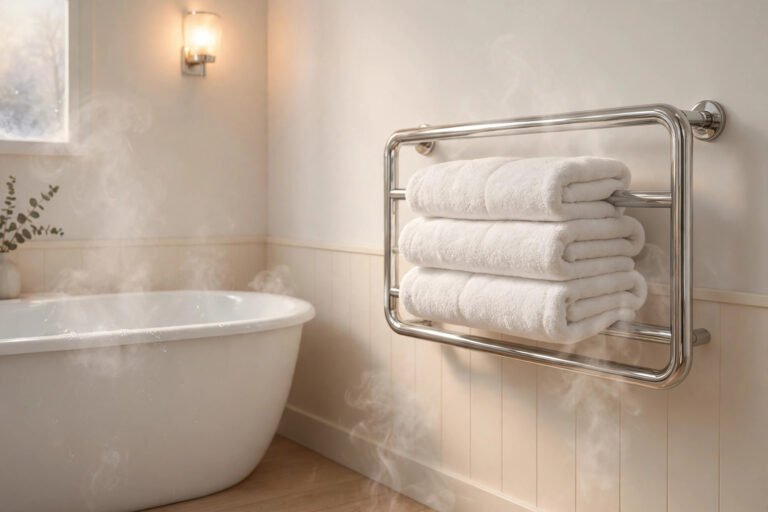
Spas never send you straight back to real life, and your home routine should not either. Have a towel — ideally a warm one, straight from a warmer or a heated rail — waiting within arm’s reach, and a robe if you have one. Pat dry rather than rubbing briskly, take your time, and let the slow pace of the bath carry on for a few more minutes while you get changed into something soft and comfortable.

A warm drink afterwards, a few pages of your book in bed, or simply an early night stretches the benefit of the whole routine — and it is the reason a good home spa bath tends to happen in the evening. Before bed, give the bathroom two minutes: rinse the tub while it is still easy to clean, hang the towels and bath mat up properly to dry, and leave the extractor fan running briefly so the steam clears. Future you, setting up the next bath in a clean and tidy room, will be grateful.
Final Thoughts
A spa bath at home is not a product you buy; it is a small sequence you practise. Soft light, steady warmth, one good scent, a quiet twenty minutes and a warm towel at the end — none of it is complicated, and all of it together feels like a genuine occasion. The first time takes a little thought; by the third or fourth time, setting it up will take ten unhurried minutes and feel like part of the treat itself.
Start with the version of this routine that fits your bathroom and your evenings, and adjust it until the moment you sink into the water makes you sigh. That is the only test that matters. Keep the phone outside, keep the light low, and let the weekend do the rest.
More Guides You’ll Like
If you would like the gadget side of this routine, our product guide to the Best Spa Gadgets for Relaxing Baths at Home on Weekends rounds up the pillows, caddy trays, floating lights and towel warmers that make a home spa bath effortless, with honest pros and cons for each pick. And if your bathroom runs cold, How to Keep a Bathroom Warm in Winter covers timers, warm towels and draught-proofing, so the room feels as welcoming as the water.
Frequently Asked Questions
How long should a spa bath at home last?
For most people, twenty to forty minutes is the sweet spot: long enough to feel like a proper occasion, short enough that the water stays comfortably warm. Top up with a little hot water as it cools, keep a cold drink nearby, and get out while the water is still pleasant rather than waiting for it to turn tepid. A regular spa bath routine at the weekend is worth far more than a rare, marathon soak.
What temperature should a relaxing bath be?
Most people find water around 37–40 °C comfortably warm for a long soak. If you are guessing with your elbow, you will often run it too hot at first and too cool by the middle; a floating bath thermometer makes it repeatable. Whatever temperature you settle on, step in carefully, take your time standing up afterwards, and if you have any health concerns about hot baths, check with your doctor first.
What can I use if I do not have bath salts?
Plenty. A few drops of essential oil on a flannel draped over the tap, a scented candle on a safe shelf, or an aromatherapy diffuser in the room will give you the fragrance without anything in the water at all. Even a handful of ordinary sea salt from the kitchen works in a pinch. The scent is one of the simplest bath soak essentials — the source matters far less than using the same one each time, so your brain learns it means bath time.
How often should I take a spa bath?
As often as it fits your life — once a week is a lovely rhythm for most people, and it makes the home spa bath something to look forward to rather than a chore to set up. Because the routine uses things you already own and ten minutes of preparation, it scales down happily too: a shorter soak with the lights low and the phone outside still counts.