
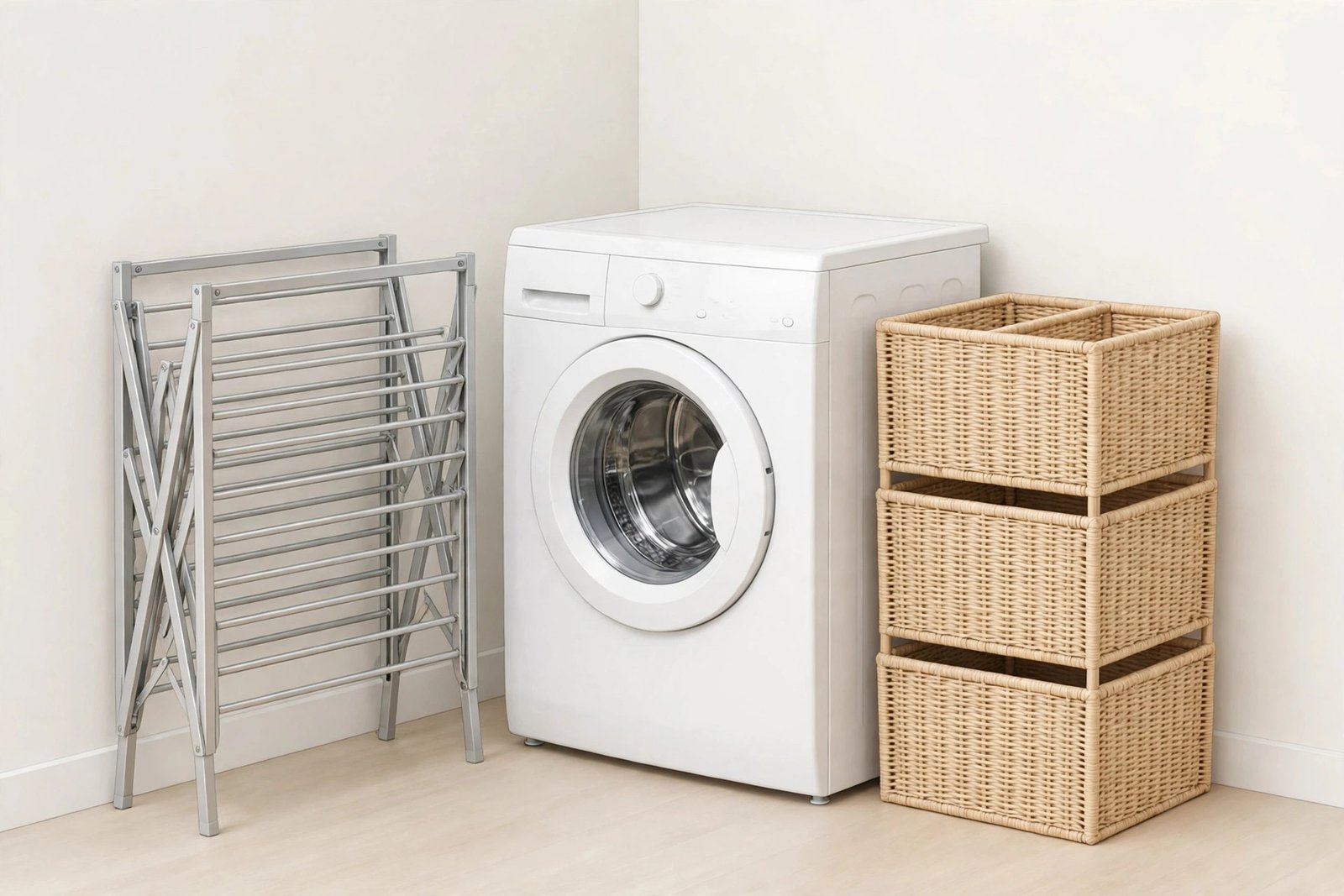
How to Do Laundry Without a Dedicated Laundry Room
Not every home has a laundry room. In flats, small houses and shared living spaces, the washing machine lives in the kitchen or the bathroom, the drying rack lives behind the sofa, and clean laundry has a habit of colonising every available surface. Doing laundry without a dedicated laundry room is not a problem to solve once — it is a system to design, and a good one makes the difference between a home that always feels half-finished and a home where laundry happens quietly in the background, in spaces that were never built for it.
The trick is to stop thinking of laundry as something that needs a room, and start thinking of it as a compact, mobile workflow with four stages — sorting, washing, drying and putting away — each of which needs only a small, defined patch of space. A cupboard, a corner, a hallway and a shelf can each hold one stage, and when the stages connect in a sensible order, the laundry stops spreading across the house.
Start by walking the route a load takes through your home. Where do dirty clothes collect? Where does the machine stand? Where could a rack dry without blocking a doorway? Where do clean clothes get folded? In most homes without a laundry room, the answers are scattered. The goal of this guide is to tighten that route until it is short, obvious and easy to repeat, because every extra step is a place where a load gets abandoned.
Creating a Compact Sorting and Washing Station
Sorting is the stage that needs the least space and saves the most time, and it works best exactly where clothes come off. In a home without a laundry room, that usually means the bedroom or the bathroom: a slim, stackable sorter with two or three compartments — lights, darks, colours — fits in a wardrobe, under a bed or in a bathroom corner, and it means the sorting happens the moment clothes are taken off, by the person taking them off, with no thinking required. A single bag or basket per person works just as well in a shared flat, where each person’s laundry stays separate until wash day.
The washing itself happens wherever the machine is, and in most small homes that is the kitchen or the bathroom. Keep everything the wash needs in one small caddy or basket beside the machine: detergent, stain remover, a mesh bag for delicates, and a small scoop. The caddy is the laundry room in miniature — when everything lives in one portable box, nothing gets scattered across kitchen worktops, and the whole kit can be moved out of sight when guests arrive. A wall-mounted shelf above the machine holds the same kit if counter space is short, and a magnetic shelf on the side of the machine works in the tightest kitchens.
Noise is the main complaint about a machine in a living space. A washing machine on a spin cycle is loud, and in a flat that matters to neighbours as well as to you. Run washes during the day rather than late at night, use the machine’s quiet or night mode if it has one, and make sure the machine is level — a machine that rocks on an uneven floor is dramatically louder than one that sits flat. Anti-vibration pads under the feet cost very little and cut both noise and the slow creep of a machine across a hard floor.

Drying Without a Laundry Room
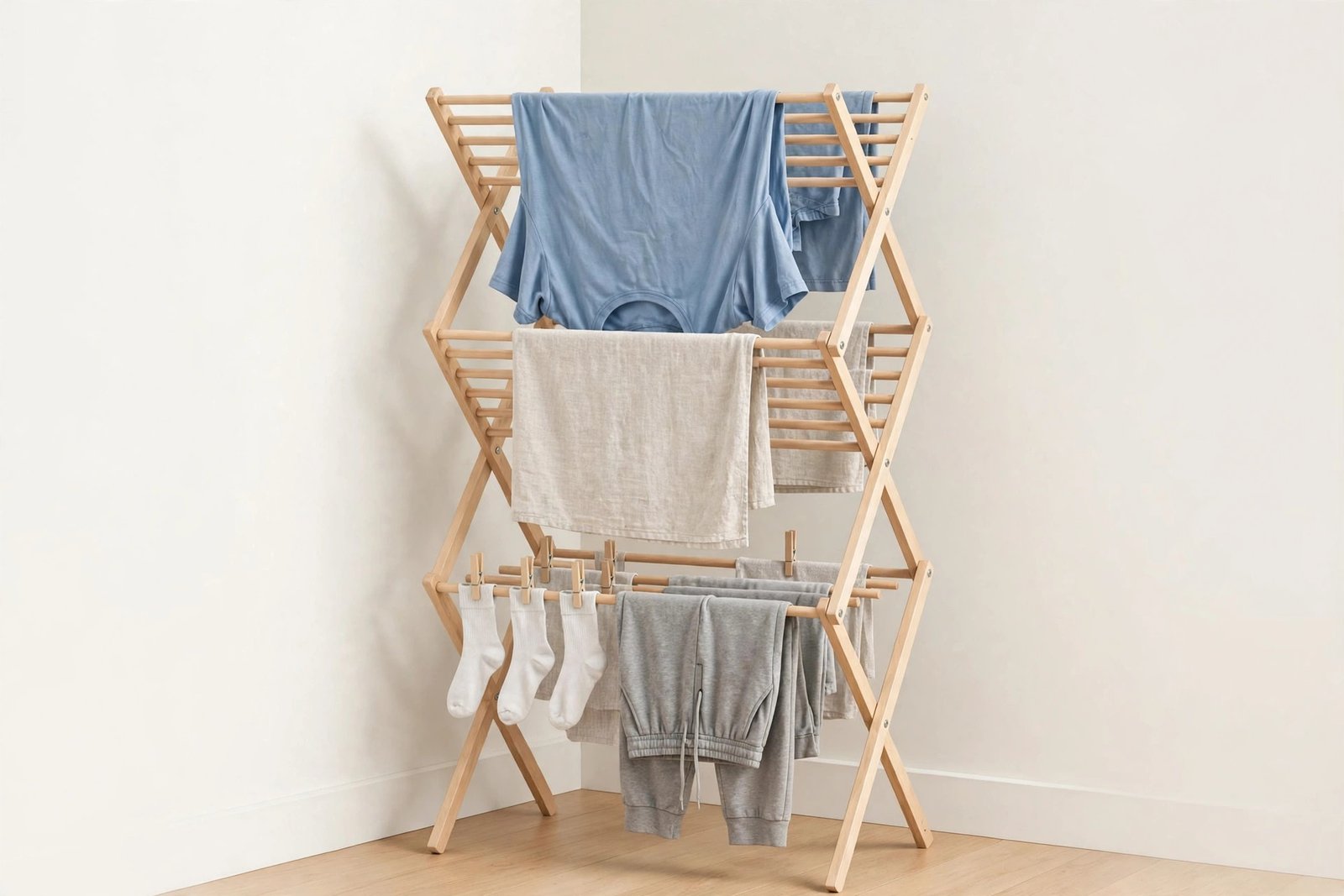
Drying is the stage that takes the most space, and the one that causes the most friction in a home without a laundry room — because a wet load has to live somewhere for a day, and the somewhere is usually the room you live in. The answer is a drying setup that is compact, mobile and easy to put away. A folding airer that stands in the living room during the day and folds flat behind a door at night is the standard solution, and it works well if you respect one rule: never overload it. A half-full rack in a living room dries faster than an overflowing one in a spare room, because air reaches every surface.
Vertical space is your friend. A tiered airer, a ceiling-mounted drying rack above a bath, or a heated airer that stands in a corner all dry a full load in the footprint of a single chair. In a bathroom, a tension rod across the shower or above the bath holds hangers of shirts that drip harmlessly into the tub — just remember to leave the bathroom door open and the extractor fan running, because a closed bathroom is the dampest room in the house.
Small items deserve their own system rather than a corner of the main rack. A mesh hanging dryer clipped to a door frame or a small peg bag holds socks and underwear where air circulates, and they dry in hours. And if the weather allows, use the outdoors even without a garden: a balcony rail, a retractable washing line across a small patio, or even a window ledge in dry weather gets a load dry in a fraction of the indoor time.
Folding, Storage and Keeping Clutter Down
Folding and putting away is where laundry systems in small homes most often collapse, because there is no laundry room surface to fold on and no obvious place for clean clothes to wait. The fix is to fold at the point of drying, in small batches, as each load comes in — ten minutes attached to a load, never an hour attached to a mountain. A folding board makes the job faster and produces uniform folds that stack neatly in drawers.
Storage needs to be ruthless in a home without a laundry room, because there is no spare shelf for “the pile that will be put away later”. The rule that protects the system is simple: nothing clean sleeps on a bed or a chair. Each person’s clean clothes go into their own basket or bag straight from the folding spot, and the basket’s owner puts it away. Children’s clothes go straight into their drawers from the basket, and the basket comes back empty to the drying area. It sounds strict for a week; then the pile simply stops existing.
Dealing with Damp, Smells and Shared Spaces
Laundry in a living space brings two problems a dedicated laundry room absorbs: moisture and smell. A load of washing releases around two litres of water into the air as it dries, and in a small flat that moisture has to go somewhere — usually onto cold windows and walls. Ventilate the drying room while the clothes are wettest, in the first few hours, by opening a window a crack or running a small dehumidifier. If the windows mist up heavily, the room needs more air, and the rack may need to move to a larger, better-aired room.
Smells follow the same logic. A load that sits in the machine after the cycle ends starts to smell within a few hours, and a load dried slowly on an overloaded rack in still air picks up a musty note. Move each load to the rack the moment the cycle finishes, give every item space, and keep the rack in moving air. If a load does come off smelling stale, a re-wash with a splash of white vinegar in the rinse usually clears it.
In shared flats and houses, laundry is also a social system, not just a physical one. Agree the basics early: whose turn the machine is, how long a finished load can sit before it is moved, and how long a rack can occupy the living room. A simple rota — each person has their wash days, and the rack is folded away by the evening — prevents the slow resentment that builds when one person’s laundry permanently occupies the shared space. The best laundry system in a shared home is the one everybody can live with, and that means it has to be negotiated, not just installed.

Small-Space Equipment That Earns Its Place
In a home without a laundry room, every piece of equipment has to earn the space it takes, and the test is simple: does it fold away, stack, or do two jobs? A folding airer passes — it holds a full load and disappears behind a door. A stackable sorter passes — three compartments in the footprint of one basket. A laundry caddy passes — detergent, stain remover and mesh bags in a single portable box. A folding board passes — it lives flat against a wardrobe and makes every fold faster.
The single most useful purchase for many small homes is a dehumidifier, and it is worth considering even though it is the bulkiest item on this list. A small, quiet dehumidifier in the drying room does double duty: it dries clothes faster by pulling moisture out of the air, and it protects the flat from the damp and condensation that indoor drying can cause. In winter, when windows stay shut and drying slows to a crawl, it is the difference between a load dry by morning and a load still damp two days later.

Final Thoughts
Doing laundry without a dedicated laundry room is a design problem, not a hardship. Four small stages — a sorting spot where clothes come off, a caddy beside the machine, a folding rack that lives in the airiest room and folds away, and a basket-per-person system for putting away — add up to a workflow that fits in a flat, a small house or a shared home without taking it over. The principles are the same as in a house with a laundry room: sort at the source, wash promptly, dry in moving air with space between items, and fold as each load comes in.
Start with the route. Walk a load through your home this week and notice where it stalls — the basket that overflows, the rack that blocks the door, the pile that lives on the chair. Fix the stall, not the whole system at once, and let the rest follow. Within a month, the laundry will have stopped colonising the house and become a quiet background process in a home that happens to have no laundry room, and does not need one.
More Guides You’ll Like
For the compact equipment that makes laundry without a laundry room easier — folding airers, stackable sorters, caddies and dehumidifiers — see our product guide to the Best Laundry Gadgets for Homes Without a Dedicated Laundry Room, which rounds up twelve picks that earn their space. And for the indoor drying techniques that make a rack in the living room work properly, see How to Dry Clothes Indoors Without a Tumble Dryer, which covers airflow, placement and the towel-roll trick.
Frequently Asked Questions
Where should I put a drying rack in a small flat?
In the airiest room you have, near a window or a radiator, with a gap between the rack and the wall so air reaches both sides. Avoid kitchens and closed bathrooms, which add humidity. A folding airer that stands in the living room during the day and folds flat behind a door at night is the usual solution, and a half-full rack dries faster than an overflowing one.
How do I stop indoor drying from causing damp?
Ventilate the drying room while the clothes are wettest — open a window a crack or run a small dehumidifier for the first few hours. A load releases around two litres of water into the air, so if windows mist up heavily or walls feel damp, the room needs more air.
What is the best way to sort laundry without space for multiple baskets?
Use a slim stackable sorter with two or three compartments, which fits in a wardrobe or a bathroom corner in the footprint of a single basket, or give each person a single bag that holds their own laundry. The sorting happens when clothes come off, by the person taking them off — that habit matters far more than the container.
How can I keep laundry from taking over a shared flat?
Agree the basics with housemates: wash days on a rota, finished loads moved out of the machine promptly, and the drying rack folded away by the evening. Keep all laundry equipment in one portable caddy and give every piece a home when not in use, so the shared space returns to normal between washes.






One Comment