

How to Make Your Home Look Occupied While You Travel
An empty home gives itself away in small ways: the same dark windows every night, the curtains that never move, the porch light that never comes on, the mail piling up by the door. Learning how to make your home look occupied while you travel starts with one simple idea: a house that looks lived in is a house that is left alone. The trick is not one big gesture but many small ones, copied from the ordinary rhythm of a household, and repeated every evening without you lifting a finger.
The signs of life a house gives are light, movement, sound and visitors. A light that comes on at seven and goes off at eleven, curtains that open in the morning and close at dusk, a television glow in the living room, a neighbour who visits in the afternoon — together they tell the same story a lived-in home tells. This guide walks through each layer, from the lights to the door to the pre-trip checklist, so your house keeps telling that story every night you are away.
Why an Empty Home Stands Out
Stand on the pavement in the evening and look at your own house the way a stranger would. Which rooms show light, and which are dark every night? Do the curtains move, or are they in the same position they were in last week? Is the porch light on, or is the front door in darkness? Is there mail by the door, a bin that has not moved, a garden that looks untended? Each of those details is a small clue, and together they are a clear message: nobody is home.
The most revealing clue is timing. A light that switches on at exactly the same minute every night looks like a timer, and a timer is a clue. A house where every light comes on together and goes off together looks programmed, not lived in. Real households are untidy in their timing: one room lights up at seven, another at half past, the bedroom last, and the times drift a few minutes each day. Copying that untidiness — not the brightness — is what makes a house look occupied.
The second clue is the outside of the house. Mail piling up, parcels left on the step, bins not put out, a lawn growing long — all of them say the house is empty, however good the lights are inside. The fix is human: a neighbour who takes in the mail, moves the bins and waters the plants is the most convincing occupancy gadget there is, and no device replaces them.

Lights That Follow a Lived-In Pattern
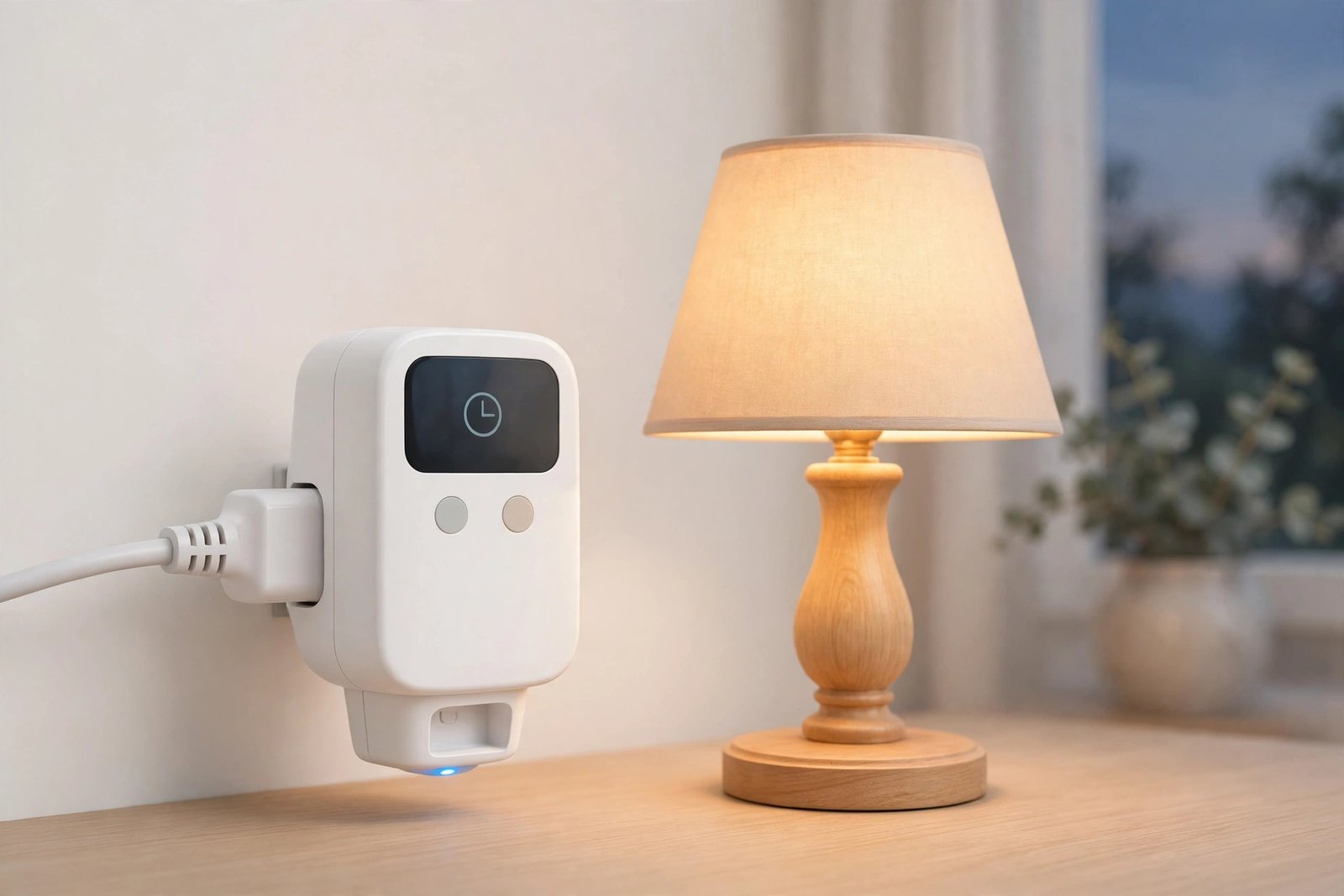
Light is the clearest sign of life a house gives, and the pattern matters more than the brightness. Put smart bulbs or timer plugs in the rooms visible from the street first — the front living room and the hallway — then the bedroom, so the house looks lived in from the pavement and the garden. Set each room on a different random pattern, so they do not all switch on together, and use the random mode, not a fixed time, so the timing drifts a few minutes each day.
The believable pattern is lights on in the evening, the bedroom last, and everything off by late night, with the porch light on a motion sensor. A house lit up all night looks as empty as a dark one, because nobody lives like that. And a fake TV simulator in the front room adds the most believable touch of all: the flicker of a television, changing colour and moving across the room, is the sign of someone at home that no lamp can copy.
Test the whole lighting pattern for three evenings before you travel, and watch the house from outside yourself. If you can spot the pattern, so can anyone else. Check that the schedules survive a power cut, and that the bulbs and plugs still work after the router restarts — a light that needs resetting after every outage is no protection at all on a long trip.
Sound, Movement and the Front Door
Movement is the second layer, and curtains are the biggest part of it. A smart curtain motor opens the curtains in the morning and closes them at dusk, on a schedule that follows the sunset — so the house opens and closes its eyes each day, exactly as it does when you are home. Fit it on the curtains most visible from the street, and set the timing to follow the light rather than a fixed hour, so the pattern shifts naturally through the seasons.
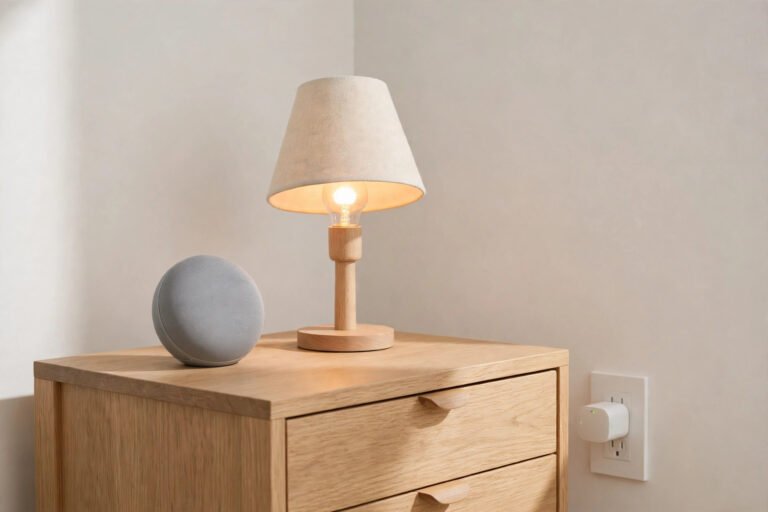
Sound is the third layer. A smart speaker in monitoring mode can play the radio or a podcast at intervals, so the house sounds occupied as well as looks it, and it listens for breaking glass and alarms while you are away. Keep the volume low, so it sounds like background noise from outside rather than a broadcast to the street.
The front door is the fourth layer, and the one a visitor tests first. A video doorbell lets you answer the door from anywhere — asking a courier to leave a parcel, or telling a stranger you are not interested — and it records every visitor while you are away. A smart lock with a temporary code lets a neighbour in without a spare key under the mat, so the house gets visited, the curtains get opened, and the mail gets taken in. Together, the doorbell and the lock turn a trusted neighbour into the best occupancy gadget of all: a real person, in the house, every day.

Timers, Plugs and Curtains
The tools themselves are simple, and the choice is mostly about your house. Smart bulbs fit the lamps you already own and vary their timing like a person would. Smart plugs with an away mode turn any lamp into a randomised light, and they work with a radio too, so the house can sound occupied. Plug-in timers with a random mode work with no Wi-Fi at all, which makes them the right choice for a holiday home or a house with unreliable internet.
Outdoor lights with motion sensors cover the outside of the house: a light that switches on the moment someone approaches the front door shows the visitor the house is watching, and shows anyone looking that the house is cared for. A camera with a spotlight does the same job with recording attached, and a driveway sensor warns you before a visitor even reaches the door.
Whatever you choose, keep the system simple enough that it runs itself. The best occupancy setup is the one you set once, test for three evenings, and then forget about — because the gadgets that need you to operate them by hand every evening are the ones that stop working on the third night of a two-week trip.

A Simple Checklist Before You Leave
Run through this list the day before you travel, and the house will look after itself. First, test every light schedule, curtain motor and camera for three evenings, and fix anything that fails. Second, charge every battery — doorbell, cameras, sensors — and check every bulb. Third, set the temporary code for your neighbour, give them your phone number, and agree what they will do: take in the mail, move the bins, water the plants, and open the curtains once or twice.
Fourth, stop the deliveries and the mail, or ask the neighbour to take them in, so nothing piles up by the door. Fifth, set the heating or cooling to a sensible level, so the house does not look abandoned in a cold snap or a heatwave. Sixth, lock every door and window, check the contact sensors, and make sure the video doorbell and the cameras are recording.
Seventh, tell someone you trust where you are going and when you will be back, and agree a check-in — a text, a call, a knock — so someone would notice if something went wrong. And finally, do not announce the trip on social media until you are home. A house that looks occupied is a house that is left alone, and the quietest part of the plan is not telling the world you are away.
Final Thoughts
A house that looks occupied is a house that is left alone. Random lights in two or three rooms, a television glow in the evening, curtains that open and close with the sun, a doorbell that answers and a neighbour who visits: that is the whole job, and it costs less than a single night in a hotel.
Start with the smart bulbs and the fake TV simulator if you have not begun yet — those two change the look of the house most for the least effort — then add the doorbell, the curtain motor and the cameras in the order your street needs them. Test everything for three evenings before you travel, and keep a neighbour in the loop. A house that looks lived in is a house that stays safe, and these habits make it look lived in every night you are away.
More Guides You’ll Like
For the tools that make all of this easier — smart bulbs, fake TV simulators, doorbells and curtain motors — see our product guide to the Best Gadgets to Make Your Home Look Occupied While You Travel, which rounds up twelve picks chosen for homes that need to look lived in. And for living-alone safety, Best Home Safety Gadgets for People Who Live Alone covers the rest of the house.
Frequently Asked Questions
Do timers really make a house look occupied?
Random ones do, fixed ones do not. A light that switches on at exactly 7 p.m. every night looks like a timer, but smart lights with random scheduling vary their timing by a few minutes each day, so the pattern looks human. Combine two or three rooms on different random patterns, add a curtain that follows the sunset, and the house looks lived in rather than programmed.
What is the best single gadget for making a house look occupied?
Smart light bulbs with random scheduling, in the rooms visible from the street. Light is the clearest sign of life a house gives, and a fake TV simulator in the front room adds the most believable touch of all. Together they cost little, need no fitting, and change the look of the house more than any other two gadgets.
Should I leave lights on all night while I am away?
No — a house lit up all night looks as empty as a dark one, because nobody lives like that. The believable pattern is lights on in the evening, the bedroom last, and everything off by late night, with the porch light on a motion sensor. That is the pattern timer plugs with random modes are made to copy, and it is the one that fools anyone watching.
How do I handle mail and deliveries while I am away?
Ask a neighbour to take them in, or pause them before you travel. Mail piling up by the door is one of the clearest signs of an empty house, however good the lights are inside. A neighbour who visits every day — to take in the mail, move the bins and open the curtains — is the most convincing occupancy gadget there is, and no device replaces them.
One Comment