What Is GaN Charging and How Does It Work? A Simple Explainer
What Is GaN Charging and How Does It Work? A Simple Explainer
So what is GaN charging, and why does every new charger seem to mention it? In plain terms, GaN charging is a newer way of building the electronics inside a charger, using a material called gallium nitride instead of the silicon that chargers have used for decades. That material change lets a charger switch power faster, waste less energy as heat, and pack the same power into a much smaller body. The result is the pocket-sized 65W charger that would have been a bulky brick only a few years ago.
This guide explains how GaN charging works without engineering jargon, with a GaN vs silicon charger comparison of a gallium nitride charger against a traditional silicon charger, and covers the practical GaN charger benefits you will actually notice: smaller size, cooler running, and the ability to charge a laptop and a phone from one small adapter. We also answer the safety questions people ask most, so you can decide whether GaN is worth it for your next charger.
GaN in Plain English
Inside every charger, electronic switches turn mains power into the low-voltage power your phone or laptop can use. In older chargers those switches are made of silicon, a material that works well but generates more heat and needs larger components to handle higher power. Gallium nitride is a semiconductor material that can handle higher voltages and switch faster than silicon, which means the components around it can be smaller and the charger can run more efficiently.
Think of it like a road: silicon is a narrow road with frequent traffic lights, while gallium nitride is a wider, faster road with fewer stops. More power gets through in the same time, with less energy lost as heat along the way. That efficiency is why GaN chargers feel smaller and cooler than their silicon equivalents, even when they deliver the same wattage.
GaN vs Silicon Charger: What Changes in Daily Use?
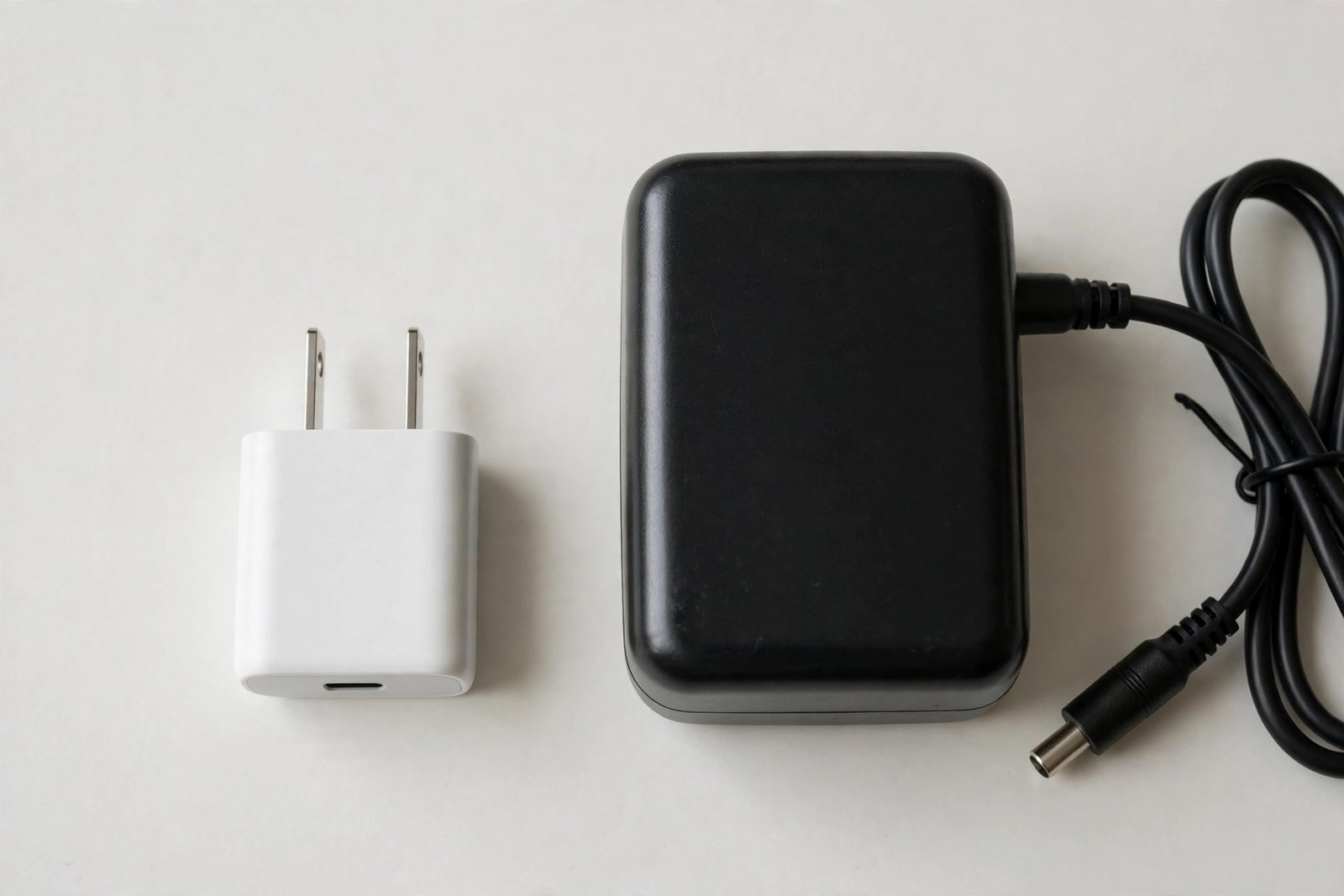
The most obvious GaN charger benefit is size. A 65W GaN charger can be roughly half the volume of an older 65W silicon brick, which makes a real difference in a bag, on a power strip, or in a hotel room with limited outlets. The second benefit is heat: because GaN wastes less energy, the charger stays cooler during long charging sessions, which is better for the charger itself and for the devices connected to it. The third benefit is multi-device power: a small GaN charger can now offer two or three ports with useful power on each, where an older charger of the same size could only manage one.
What does not change is the basics of charging. A GaN charger still needs a suitable cable, still negotiates power with your device, and still only delivers what the device accepts. A phone will not charge faster simply because the charger says GaN on the box — it charges faster because the GaN design allows a higher, more efficient power delivery in a practical size. The material is an enabler, not magic, and a well-made silicon charger can still be perfectly safe and adequate for a single phone.
How a GaN Charger Works, Step by Step
First, the charger takes mains power from the wall and converts it to a form the switching electronics can handle. Second, gallium nitride transistors switch that power on and off very rapidly, shaping it into the precise voltage and current your device requests. Third, because those transistors switch faster and lose less energy as heat, the supporting components — coils, capacitors and heatsinks — can be smaller. Finally, the charger communicates with your phone or laptop over USB-C, agreeing on a safe power level before delivering full power, and adjusting that level as the battery fills.
That communication step is important for safety. Modern USB-C charging is a negotiation, not a blind push of power: the device tells the charger what it can accept, and the charger respects that limit. GaN makes that negotiation happen in a smaller, cooler package, but the safety logic itself comes from the USB-C standard and the charger’s protection circuits, not from gallium nitride alone.
Is GaN Charging Safe?
Yes, when the charger is made by a reputable brand with proper safety protections. GaN itself does not make a charger unsafe or safe — the protection circuits, build quality and testing do. Look for temperature control, over-current and short-circuit protection, and a brand with a warranty you can actually use. Avoid no-name chargers that claim implausibly high wattage in a tiny body with no safety information, since those are risky regardless of whether they use GaN or silicon.
Heat is still worth watching. Even a good GaN charger will warm up during laptop charging, and a phone will warm up during fast charging. That warmth is normal, but excessive heat — a charger too hot to touch, or a phone that stays very hot for a long time — is a sign to stop, check the cable and case, and move the charger to a ventilated spot. As with any charger, do not cover it with bedding or leave it in direct sunlight while charging.
Should You Switch to GaN?
Switch to GaN when you want a smaller charger, a multi-port charger, or a laptop-capable charger that still fits in a pocket. If you only charge one phone overnight and already own a working charger, there is no urgent reason to replace it — your current charger will keep working. The best time to switch is when you buy a new charger anyway, travel more often, or want to replace two or three old bricks with one compact adapter.
For most people, a 65W GaN charger is the sweet spot: it covers phones, tablets and slim laptops, and it is small enough to travel with. Phone-only users can save money and space with a 30W or 45W GaN mini. Either way, you are buying the size and efficiency benefits of gallium nitride, not a different kind of electricity — and that distinction keeps expectations realistic.
Frequently Asked Questions
What does GaN stand for?
GaN stands for gallium nitride, the semiconductor material used in place of silicon in the charger’s switching electronics. It allows faster switching, less wasted heat and smaller components.
Does GaN charging damage batteries?
No more than any other fast charging. Battery wear depends mainly on heat, charge levels and time, not on whether the charger uses GaN or silicon. A quality GaN charger with proper protections is a normal, safe way to charge modern devices.
Do I need a special cable for GaN charging?
You need a good USB-C cable rated for the power you want, especially for laptop charging. The cable matters as much as the charger: a low-rated cable can limit speed even with an excellent GaN charger.
Is GaN worth the extra cost?
Usually yes, if you value size or multi-port charging. GaN chargers have become affordable enough that the size saving alone is worth it for travellers and desk users, even though a basic silicon charger still works for a single phone.
Related Guides
Ready to choose a model? See Best GaN Chargers Under $50, and learn how to pick the right wattage in How to Choose a GaN Charger.