How to Make Kids Bath Time Easier and Mess-Free
Bath time with young children has a reputation problem. It is supposed to be the gentle wind-down at the end of the day, yet in most family bathrooms it ends with a soaked floor, a fleet of dripping toys, a parent with wet sleeves and knees, and a child who has somehow drunk half the bathwater. The good news is that the chaos is not really about the child. It is about the setup — and the setup is entirely within your control.
Knowing how to make kids bath time easier and mess-free is mostly a matter of order and placement: what you arrange before the water runs, where the water is allowed to go, how many toys are in play, and how the whole thing ends. None of the five habits below needs special equipment or a bigger bathroom. They work in a family bathroom, a small ensuite or a borrowed tub at the grandparents’ house, because they are about routine rather than shopping.
One rule sits above all the others, and it is worth saying before anything else: a young child in a bath needs an adult in the room, within arm’s reach, the whole time. No routine, gadget or clever setup changes that. Everything in this guide assumes you are right there — the point is simply to make those twenty minutes calmer, drier and easier for both of you.
1. Set Up Before the Water Runs
Almost every bath time scramble begins the same way: the child is already in the water when you realise the towel is in another room, the shampoo is downstairs and the clean pyjamas are nowhere to be found. Every one of those errands means either leaving the room — which you should never do with a young child in the bath — or shouting for help. The fix is boring and total: lay everything out before a single drop of water runs.

Build a small staging routine. Towel open and ready on a hook or radiator within reach of the tub. Pyjamas laid out. Shampoo, soap and a rinse cup at the end of the bath where your hand falls naturally. A dry mat or towel on the floor where the child will stand to be dried. Parents who bathe children nightly often keep a small caddy or tray with the whole kit together, so setup takes one trip instead of five. Two minutes of preparation genuinely buys you a whole bath of calm, because it removes every reason to rush, reach or leave.
2. Keep the Water in the Tub
Water on the floor comes from a short list of predictable moments: an overfilled bath sloshing when a child climbs in, enthusiastic splashing during play, and the great rinse-cup waterfall during hair washing. Each has a simple counter-move, and using all three turns the nightly flood into the odd splash you can wipe with one hand.
Start with depth. Young children need far less water than most adults run — enough to sit in comfortably and keep warm, roughly up to a seated child’s waist, is plenty, and shallower water sloshes far less. Then manage the splashing rather than banning it: give the energy somewhere to go with pouring, filling and emptying games inside the tub, and keep a simple “water stays in the bath” rule for cups and jugs. Finally, change how you rinse hair. Tipping a child’s head back and pouring slowly from a cup held close to the head — ideally one with a soft rim that rests against the forehead — sends the water backwards over the hair instead of forwards over the face and floor.
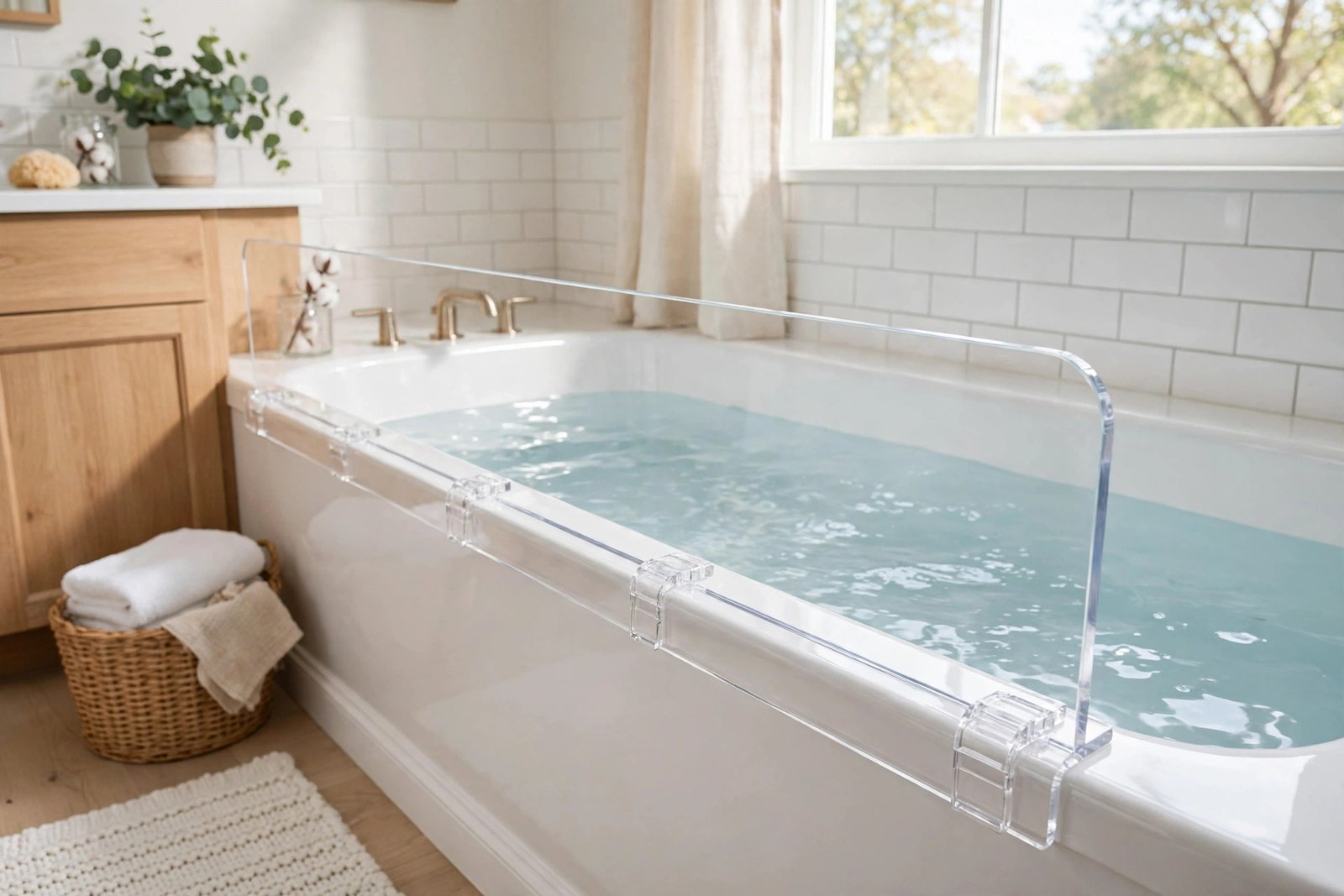
If splashing is a championship-level sport in your house, a splash guard along the play end of the tub or a shower screen kept closed during baths adds a physical barrier while the habit forms. And whatever happens, keep one dry towel within reach purely for the floor: a quick wipe mid-bath stops a small puddle becoming the slip hazard everyone steps in later.
3. Toy Control: Fewer Toys, Less Chaos
Here is a quiet truth about bath toys: most of the mess is caused by the sheer number of them. Twelve toys means twelve things dripping on the rim, floating into the plughole and needing to be gathered, squeezed and stored at the end. Cutting the fleet down is the single easiest bath time tidy up you will ever do, and children genuinely do not mind — they play just as happily with four well-chosen toys as with fourteen.
Try a rotation system. Keep a small set in the bath — something to pour with, something that floats, something that squirts, something to wash with — and store the rest dry in a cupboard, swapping a few each week so old toys feel new again. When the bath ends, make gathering the toys part of the game: scooping them up is a job most toddlers will fight to do themselves. What matters most is what happens next: every toy gets squeezed out and stored somewhere air can move around it, in an open basket, a draining organiser or a mesh net. Toys left sitting in a puddle in a closed box grow mould inside, and mouldy squirters are the one bath accessory nobody wants.

A weekly toy wash keeps the fleet healthy: a sink of warm soapy water, a rinse, and a thorough air dry. Check squeezy toys by squirting the water out and looking at what comes with it — if it is dark or slimy, the toy has had its day. Rotating, draining and washing sounds like effort, but it takes minutes and it is the difference between toys that last for years and a bag of replacements every season.
4. Safe Water Temperature, Every Time
Temperature is the part of bath time that deserves a routine rather than a guess. Water that feels fine to an adult hand can be too hot for a child’s skin, and a bath that starts comfortable can hide hot pockets straight from the tap. Building a fixed checking habit removes the worry entirely — and it takes less than a minute.
The reliable order is: cold tap first, then add hot water to warm it up, so the temperature climbs gently and can never overshoot into scalding before you notice. Swirl the water with your hand to mix it evenly, because the layer near the tap is always hotter than the rest. Then check. The inside of your wrist or your elbow is more sensitive than your palm and gives a truer reading; the water should feel warm, not hot. Many parents use a bath thermometer for a definite number — commonly recommended bath water for babies and young children is around 37°C (about 100°F) — and a floating thermometer doubles as a toy, which makes the check feel like part of the fun.

Two more habits complete the picture. Never top up the hot water while your child is in the bath — if the water cools, the bath is simply ending. And when the bath is over, empty the tub straight away rather than leaving it “for later”: a full tub is a hazard for any wandering toddler, and an empty one is part of a tidy finish anyway. These kids bath safety basics take no time once they are habits, and habits are exactly what tired evenings run on.
5. A Quick Clean-Up Routine That Sticks
The difference between a bathroom that recovers in three minutes and one that is still damp at midnight is a finishing routine so small it feels like nothing. The trick is to do it every time, in the same order, while the child is being dried — it becomes automatic within a week, and the room is reset for whoever uses it next.
Try this order. Toys scooped, squeezed and into their draining storage while the water is still in the tub. Child out, wrapped, standing on the dry mat. Water released. While the tub drains, one cloth goes around the rim and taps, the splash towel goes over the bath edge or into the wash, and the floor gets a ten-second check for puddles. Bath toys and mats dry fastest hung up or stood on edge rather than left flat in a wet tub, so the last gesture is lifting the bath mat to drain. That is the whole system: under three minutes, and tomorrow’s bath starts in a clean, dry room instead of yesterday’s leftovers.
Children can join the routine surprisingly early. Toddlers can be in charge of the toy scoop, older children can hang their own towel and check the floor. Giving the clean-up a name, a song or a race against the draining water turns it from a chore into the closing ceremony of bath time — and a routine the child owns is a routine that survives even the evenings when you are too tired to enforce it. A consistent kids bath time routine like this is what actually delivers the calm, dry bathroom: not willpower, just sequence.
Final Thoughts
An easier, mess-free bath time is not bought in one go; it is assembled from five small habits. Set everything up before the water runs. Keep the water shallow, contained and rinsed with care. Run a smaller, rotating fleet of toys that drains and dries properly. Check the temperature the same way every time, cold tap first. And finish with the same three-minute reset so every bath starts clean. Put together, those habits turn the nightly flood drill into what bath time was meant to be: the calmest twenty minutes of the day, for the child in the water and the adult kneeling beside it.
More Guides You’ll Like
If you would like the product side of this routine, our guide to the Best Bathroom Gadgets for Kids Bath Time Without the Mess rounds up the organisers, thermometers, rinse cups and splash guards that make each habit above effortless, with honest pros and cons for every pick. And for the room where your children spend the rest of the evening, How to Childproof Your Living Room covers the same safety-first thinking for sofas, screens and cables.
Frequently Asked Questions
How deep should the water be for a toddler’s bath?
Shallower than most people expect. Enough water for a seated toddler to sit comfortably and stay warm — roughly up to their waist when sitting — is plenty for washing and playing. Shallow water is also calmer water: it sloshes less, cools more slowly in proportion, and is a key part of everyday kids bath safety. Whatever the depth, an adult stays in the room and within arm’s reach for the whole bath.
How often should bath toys be cleaned?
A rinse and a proper air dry after every bath, and a wash in warm soapy water about once a week. Squeeze squeezy toys out every time — trapped water is what grows mould inside them. If a toy’s squirted water comes out dark or the toy smells musty even after washing, replace it. Storing toys somewhere open and draining, rather than in a sealed box, stretches the time between deep cleans considerably.
What is the best way to rinse a child’s hair without tears?
Most tears come from water and shampoo running forwards into eyes, so reverse the flow: tip the head gently back, rest the rim of the cup against the forehead, and pour slowly so the water runs backwards over the hair. A soft-rimmed rinse cup makes the seal easier. A dry flannel kept within reach for a quick face wipe, and letting the child hold it themselves, gives them a sense of control that prevents most of the flinching and standing up that soaks the floor.
Can an older child be left to finish a bath alone?
For babies and toddlers, never — supervision means being in the room, within arm’s reach, from the moment the water runs to the moment the tub is empty. Older children vary, and parents judge their own child’s maturity, but the habits in this guide still apply: a checked temperature, sensible water depth, no topping up with hot water, and the tub emptied straight afterwards. When in doubt, stay — bath time is short, and it is also, with the right routine, genuinely pleasant company.