How to Keep Your Car Organized: A Simple System That Actually Sticks
How to Keep Your Car Organized: A Simple System That Actually Sticks
Introduction
Learning how to keep your car organized is less about buying a dozen containers and more about building a simple system you can maintain on busy days. Most cars do not become messy overnight; they fill up one receipt, one water bottle, one toy, and one forgotten bag at a time. The fix is not a perfect, showroom-clean interior. It is a clear place for the things you actually use, a quick way to remove the things you do not, and a habit so small you will still do it when you are tired.
In this guide you will set up a cabin, boot, and glovebox system that works for real life, including commuting, family trips, and weekend errands. You will learn what to keep in the car, what to take out today, how to handle kids and pets without constant tidying, and how to do a seasonal reset in under an hour. If you also want a few practical upgrades, our guides to Best Car Gadgets Under 50 and Best Car Gadgets for Road Trips pair well with the system below, but the system itself costs almost nothing to start.
Start With a Full Reset, Not a Quick Tidy
Before you organise anything, empty the car completely. Take out the boot, the door pockets, the glovebox, the centre console, and the seat-back pockets, and put everything in one pile. This step feels dramatic, but it is the only way to see what you actually own in the car. Most drivers find duplicates, expired items, and things that belong in the house, not the vehicle.
Sort the pile into four groups: keep in the car, return to the house, throw away or recycle, and relocate to another bag or vehicle. Be ruthless with the keep pile. If you have not used something in the car in the past month, it probably does not need a permanent home there. A clean slate makes every later step easier, and it stops you from organising clutter instead of removing it.
The Cabin System: One Home for Every Daily Item
Your cabin should hold only what you reach for while driving or just after parking. That usually means your phone mount, sunglasses, a reusable water bottle, tissues, a pen, charging cable, and any work or school essentials for that day. Give each item a fixed spot: sunglasses in the overhead holder or centre console, cable coiled in the console tray, tissues in the door pocket or seat-back organiser, and nothing loose on the dashboard.
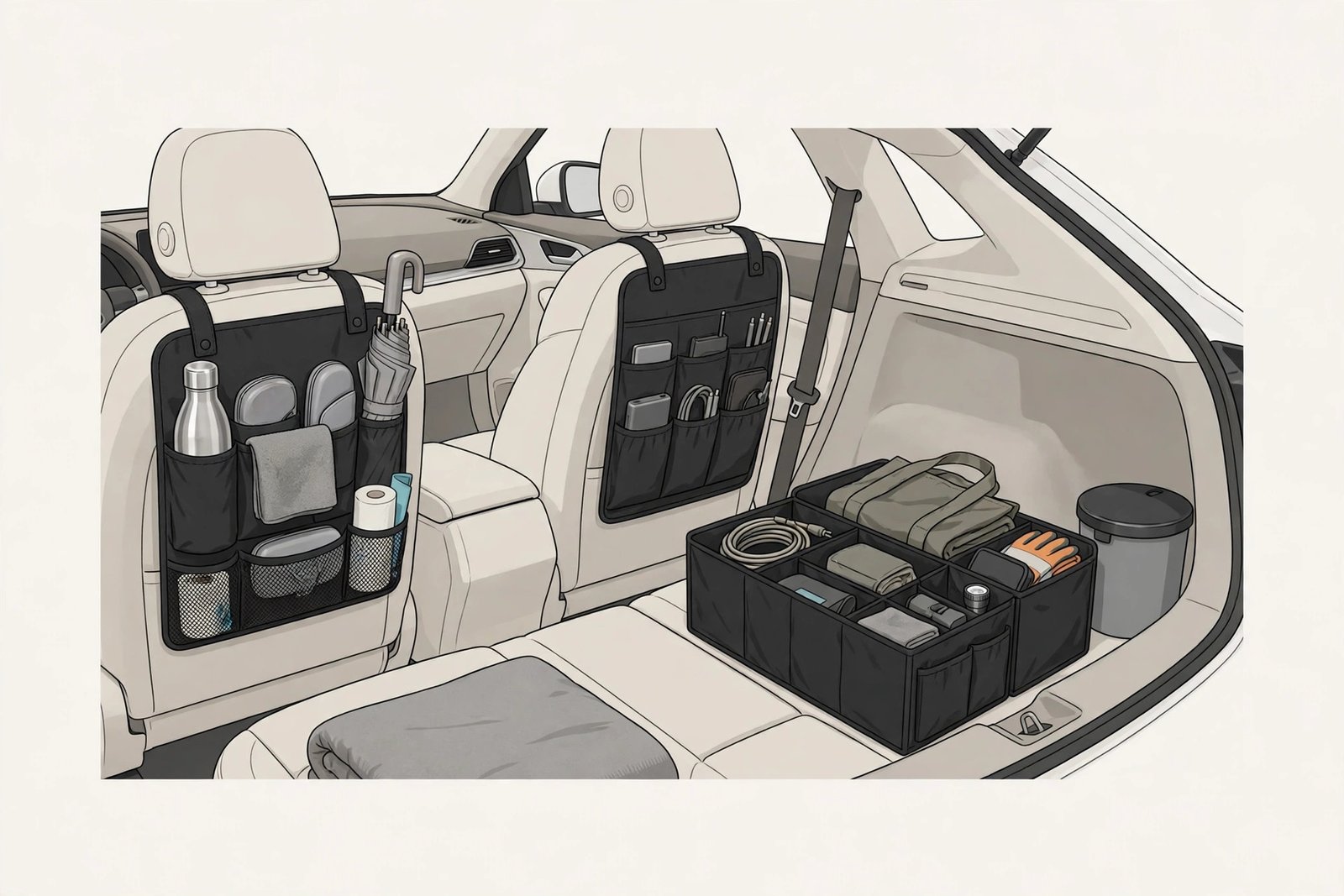
Use the smallest organiser that works. A seat-gap organiser can hold a phone and wallet without cluttering the cabin, a small console tray stops small items from sliding around, and a single hook or bag holder keeps a handbag or lunch bag off the floor. Avoid filling every pocket just because it exists. Empty pockets are not wasted space; they are breathing room that makes the car feel calm and easy to clean.
The Boot System: Zones, Not a Single Pile
The boot fails when it becomes one large pile where everything slides together. Divide it into zones instead: an everyday zone near the boot opening for bags and shopping, an emergency zone at the side or back for a first-aid kit, torch, blanket, and jump leads, and a flexible zone for sports gear, tools, or luggage when you need it. A simple boot organiser, a couple of small boxes, or even reusable shopping bags used as dividers can hold these zones in place.
Keep heavy items low and close to the back seats so they do not slide or tip when you brake. Keep the emergency zone accessible but out of the way, and check it every few months for expired items or flat batteries. When you load shopping or luggage, return items to their zone rather than dropping them anywhere. That one habit prevents the slow slide back into a single messy pile.
The Glovebox: Documents Only, Plus Two Essentials
The glovebox works best when it holds documents and almost nothing else: registration, insurance details, the car manual or a quick-reference card, and a pen. Add at most two essentials, such as a small torch or a tyre pressure gauge, and nothing more. If your glovebox is full of napkins, old receipts, and random cables, move those items to their proper homes or out of the car entirely.
Once a month, spend two minutes checking the glovebox. Remove old receipts, replace any out-of-date paperwork, and make sure you can find the documents you would need after a breakdown or an accident. A tidy glovebox is not about appearance; it is about being able to find important information quickly when you are stressed.
The Daily Reset: Two Minutes That Prevent Mess
The secret to a car that stays organised is a daily reset, not a weekly deep clean. Every time you arrive home, take two minutes to remove rubbish, cups, bags, and anything that came into the car for that trip only. Put your reusable bottle in the wash, return work items to the house, and leave only the permanent cabin items behind.
Make the reset easy by keeping a small bag for rubbish in the car and emptying it when you get home. If you drive children or colleagues regularly, ask everyone to take their items with them when they get out. It sounds strict at first, but it quickly becomes normal, and it saves you from becoming the only person who ever tidies the car.
What to Keep vs What to Remove
Keep in the car: emergency essentials, a first-aid kit, a torch, a phone charger, tissues, sunglasses, a reusable bottle, and any item you use at least weekly on the road. Remove from the car: old food packaging, single-use cups, clothes you are not wearing, books you finished weeks ago, multiple umbrellas, and bags of items waiting to be returned to a shop. If an item has been sitting in the car for a month without being used, it is storage, not organisation.
A useful rule is one in, one out. When a new item earns a permanent place in the car, an old item leaves. That rule stops gradual build-up and forces you to choose what really matters. It also makes cleaning faster, because there is simply less to move, wipe, and put back.
Kids and Pets: Contain the Clutter, Do Not Fight It
Kids will bring toys, snacks, and school items into the car, and pets will bring fur, mud, and the occasional wet paw print. The goal is containment, not perfection. Give each child a small seat-back organiser or a single bag for their items, with a clear rule: what fits in the bag stays, what does not fit goes back inside the house. Keep snacks in a sealed container and wipes within reach for quick clean-ups.
For pets, use a seat cover or boot liner that you can remove and wash, keep a towel and a small brush in the boot, and shake out the cover after muddy walks. A dedicated pet bag with a lead, water bowl, and waste bags stops pet gear from spreading across the boot. Accept that a family car will never look empty, and focus on keeping mess contained to one zone that is easy to clean.
Seasonal Reset: Four Times a Year, Under an Hour
Every season, do a fuller reset. In winter, add a blanket, an ice scraper, and warm gloves, and remove summer items you no longer need. In summer, swap in sunshades, extra water, and sunscreen, and check that heat-sensitive items are not stored in the car. In spring and autumn, check tyres, fluids, and emergency supplies, and give the interior a proper vacuum and wipe.
Use the seasonal reset to review your zones. Has the boot organiser stopped working? Has the glovebox filled up again? Has a new routine, like a new school run or a new job, changed what you need in the car? Adjust the system to fit your current life, rather than trying to force your life to fit an old system. Small adjustments four times a year keep the car feeling fresh without a major overhaul.
Simple Habits That Make It Stick
Organisation sticks when it is easier than mess. Keep a small bin or bag for rubbish, keep cleaning wipes in the door pocket, and keep the boot zones visible rather than hidden under a pile. Clean the interior little and often: a five-minute wipe once a week beats a two-hour deep clean once a quarter, and it makes the car far more pleasant to drive.
Finally, involve everyone who uses the car. A system only works if passengers follow it, so explain the zones, the daily reset, and the one-in, one-out rule in plain terms. When everyone knows where things belong, tidying becomes a shared habit rather than one person’s chore, and your car stays organised with far less effort.
Conclusion
Keeping your car organised does not require expensive products or a perfect routine. It requires a full reset, a clear home for daily items, zones in the boot, a documents-only glovebox, and a two-minute daily reset that stops clutter from building up. Add simple containment for kids and pets, and a seasonal reset to keep the system matched to your life, and you will have a car that feels calm, clean, and easy to use every day.
FAQs
How often should I clean out my car?
Do a two-minute reset daily, a quick tidy weekly, and a full seasonal reset four times a year. Daily resets prevent most mess, so the larger cleans stay quick and easy.
What should I always keep in my car?
Keep emergency essentials, a first-aid kit, a torch, a phone charger, tissues, and your car documents. Everything else should earn its place by being used regularly on the road.
How do I stop the boot from becoming a mess?
Divide the boot into zones for everyday items, emergency gear, and flexible storage, and return items to their zone every time you load the car. A simple organiser or a few small boxes will hold the zones in place.
How can I keep a car tidy with kids?
Give each child one bag or seat-back organiser, and use a simple rule: what fits in the bag stays, the rest goes back inside. Keep snacks sealed, wipes handy, and ask children to take their items with them when they get out.
What is the best way to handle pet mess in a car?
Use a washable seat cover or boot liner, keep a towel and waste bags in the boot, and shake out or wash the cover after muddy trips. Containing pet gear to one zone makes cleaning much faster.
Do I need special organisers to keep my car tidy?
No. A console tray, a boot organiser, and a small rubbish bag cover most needs. Start with the system first, then add only the organiser that solves a specific problem you actually have.